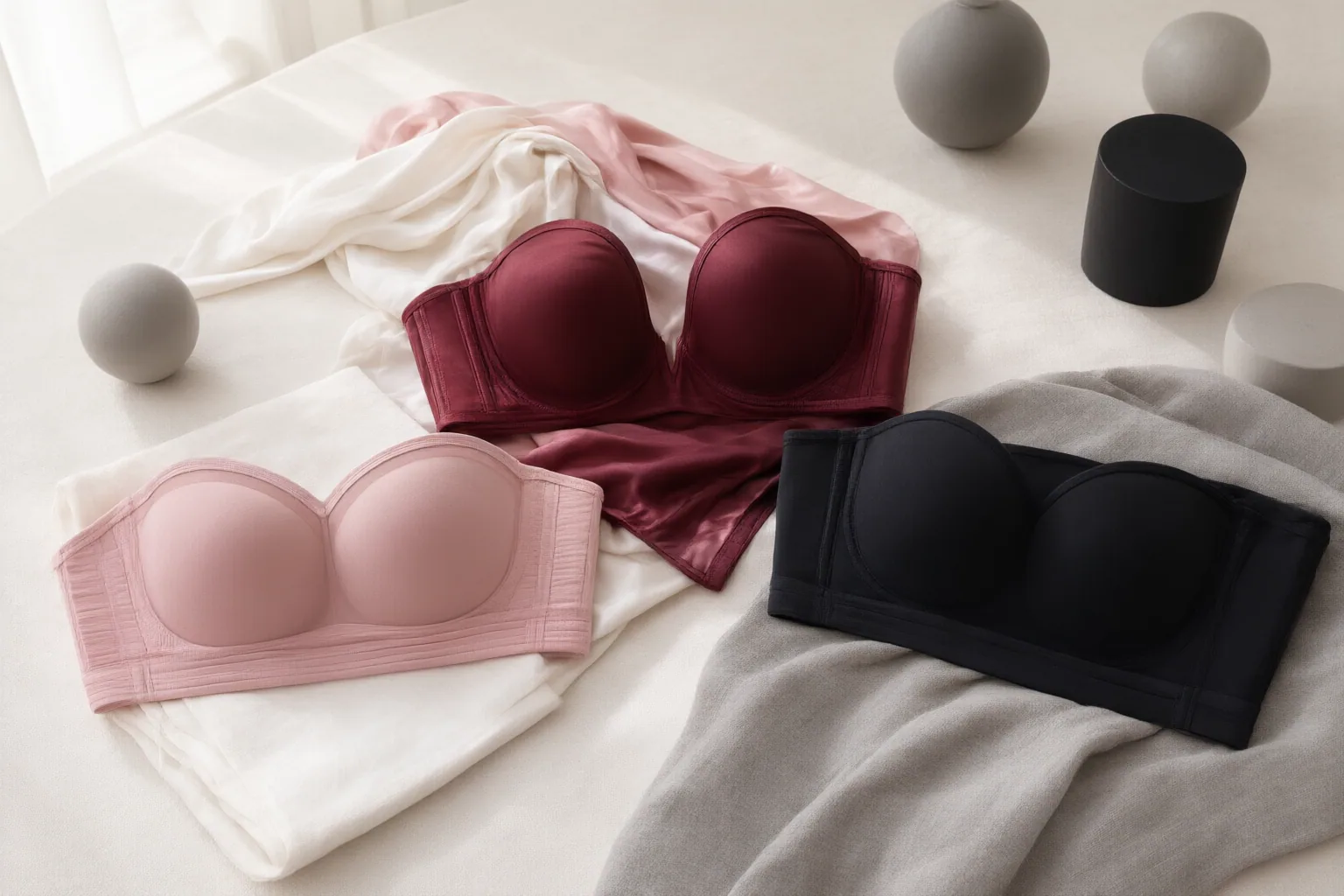
A supportive strapless bra relies primarily on a snug, level band and correctly fitted cups—not grip strips alone. Construction can improve stability, but the best configuration also depends on the garment: strapless for bare shoulders, convertible for many halter cuts, and carefully checked concealment for square necklines.
The Band Is the Main Anchor
Without shoulder straps, the band becomes the bra’s principal anchor around the rib cage. It should remain level and feel snug enough to resist sliding, but it should not pinch, restrict breathing, or require constant readjustment. A loose band cannot provide a stable base; excessive tightness creates a different fit problem rather than dependable support.
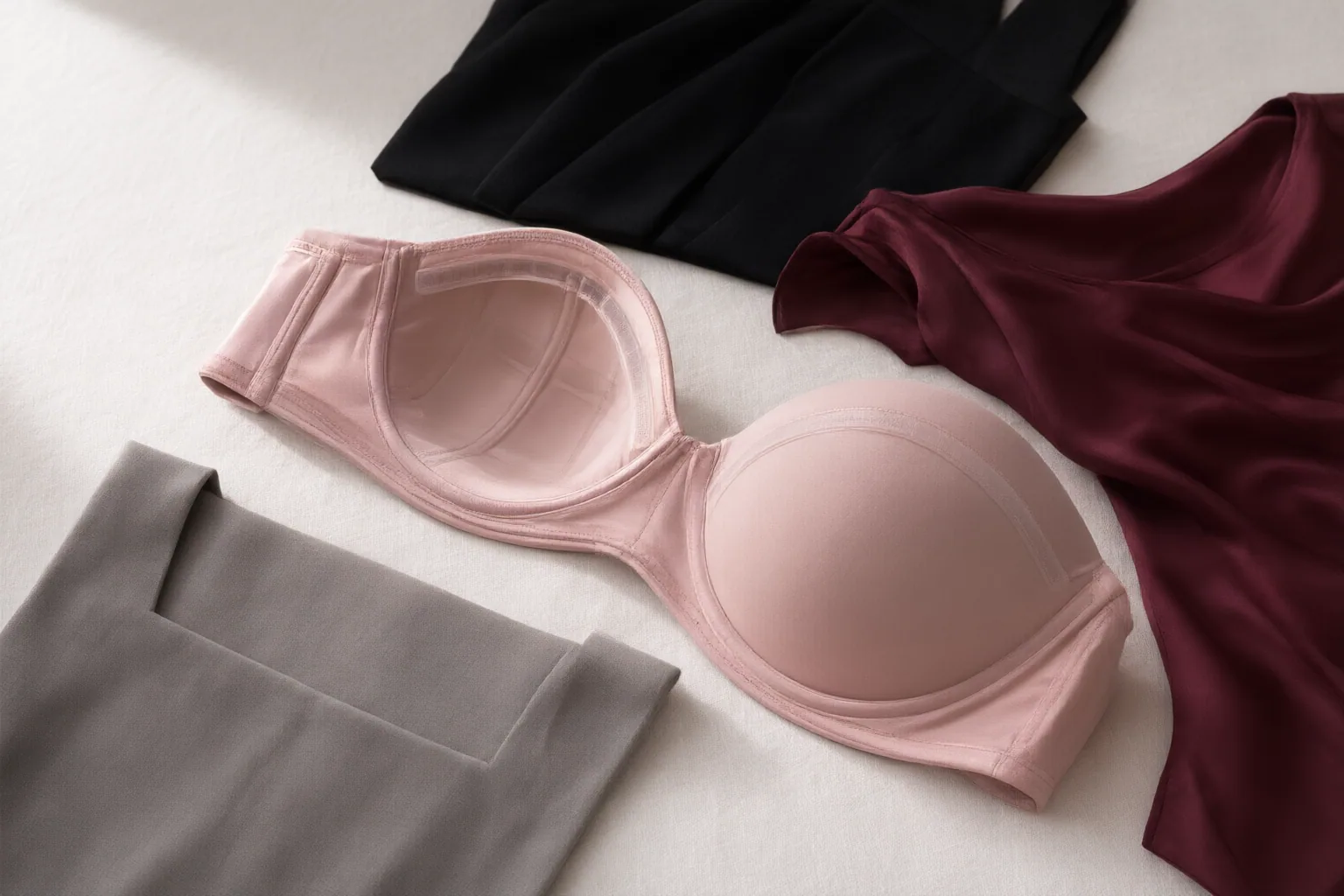
Cup fit matters at the same time. Cups that are too small can compress the breast tissue and push the bra downward, while oversized cups can leave gaps that allow shifting. Silicone grip strips may add useful friction against the skin, but they cannot compensate for an incorrectly sized band or poorly fitted cups. Support therefore comes from the fit working as a system, not from one anti-slip detail.
Construction Features That Improve Stability
Structured or molded cups can help preserve shape, while a wider band can distribute pressure across more of the torso. Reinforced side panels and boning are associated with resisting rolling and sideways movement. Multiple hook-and-eye positions also provide room to adjust the band’s closure as needed, although adjustment cannot correct unsuitable cup volume or the wrong basic band size.
These features are useful screening criteria, not guarantees of comfort. Good Housekeeping’s reported evaluation included construction review, stretch-recovery and laundering tests, and wear trials spanning A–H cup sizes and 30–48 bands. Even among evaluated designs, tradeoffs appeared: certain bands stretched during recovery testing, some wearers found one fabric rough, and another style’s cups could dig at the sides. Stability must therefore be assessed alongside texture, pressure, and breathing comfort.
Match the Bra Configuration to the Neckline
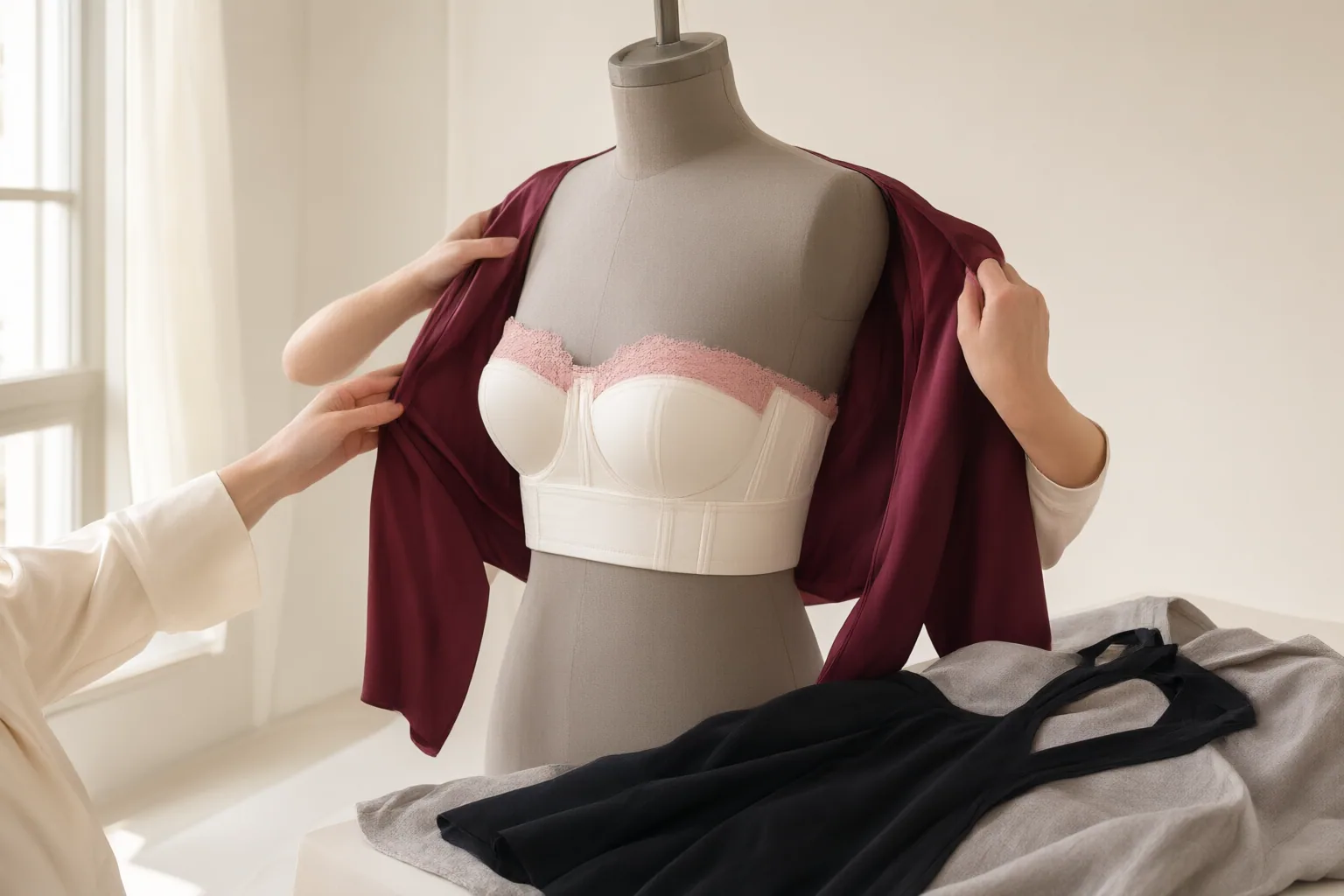
For off-the-shoulder clothing, a conventional strapless configuration keeps the shoulders clear while avoiding visible regular straps. A halter neckline may work better with a convertible or multiway bra whose removable straps can be routed to follow the garment, preserving some strap support without crossing the exposed area.
The supplied sources do not specifically evaluate square necklines, so the practical guidance is limited: try the bra beneath the exact garment and check whether its cups, center, band, or edges appear along the neckline or arm openings. Necklines labeled similarly can still expose different areas.
Support needs also affect the choice. Bandeaus are described as minimally structured and more lightly supportive. Traditional structured strapless bras provide more shaping and support for fitted or formal clothing. The appropriate option is the one that stays concealed and stable during movement while providing the shaping and comfort the garment requires.
Conclusion
Evaluate a strapless bra with the clothing it must support rather than judging it while standing still. Fasten it securely, put on the intended garment, and confirm that the neckline and arm openings conceal every part of the bra. Then raise your arms, bend, sit, and walk.
During this movement check, the band should remain level instead of sliding or rolling. The cups should stay secure without gaping, shifting, or compressing, and the bra should not dig into the sides or restrict breathing. If it moves, first reassess both band and cup fit instead of relying on silicone grip alone. If a halter cut exposes the strapless bra or needs additional support, consider whether a compatible convertible arrangement follows the garment more effectively.
Before keeping any option, repeat the complete movement test in the intended outfit and confirm stable cups, a level band, comfortable breathing, and full concealment.
Disclosures and limitations
- This article was created with AI assistance and is based exclusively on the supplied fitting guides and reported testing source material. It does not contain product recommendations, affiliate links, firsthand testing, or personal-use claims.
Related reading
Sources
- Strapless Bras Explained & Best Styles | SPANX – Spanx — Spanx
- How to Make a Strapless Bra Stay Up All Day: Expert Tips for Perfect Fit, Support & Confidence | Tarbo — tarbo.com
- The Features That Make A Strapless Bra Truly Supportive – Fashion Squill — Fashion Squill
- Amazon.com : Strapless Bras — amazon.com
- Strapless Bras: How to Choose One That Stays Up — Mathilde Lacombe
- 60 Women Tested 100 Bras. These Strapless Styles Came Out on Top — Good Housekeeping
- Strapless Bras That Actually Stay Up — BraScout