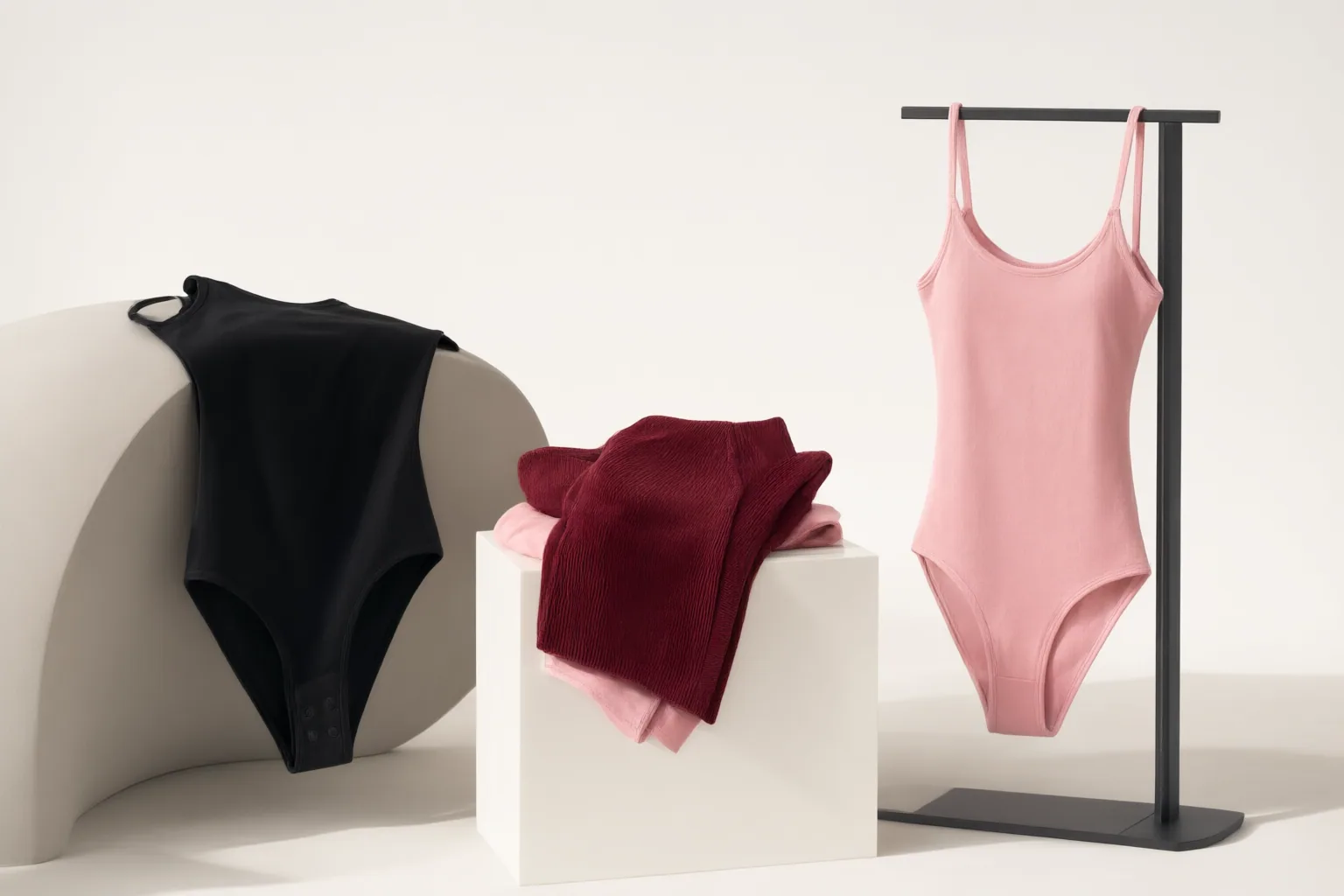
Choose a bodysuit by checking torso length, pressure points, closure access, rear coverage, seams, and fabric—not just how it looks while you are standing. Try it with the bra and bottoms you intend to wear, then sit, squat, and move before deciding.
Start With Torso Length and Overall Fit
Begin by determining whether your torso is relatively short, average, or long. Guidance from Yummie recommends enough garment length to prevent riding up, but not so much that fabric gathers or bunches. Because the supplied sources do not provide standardized torso measurements, compare your measurements with the size information for the specific garment rather than assuming that the same labeled size will fit identically across designs.
Once fastened, check the bust, waist, seat, and crotch for concentrated pressure or restriction. A close fit should not be confused with uncomfortable pulling. Also look for excess fabric through the torso, which can undermine the smooth effect a bodysuit is meant to provide.
Try the bodysuit with the bra you expect to wear. Adding a bra can change how the straps, neckline, chest, and underarm areas sit. Adjustable straps or closures may offer useful customization, but their presence does not guarantee the right proportions for every wearer.
Check Snap Placement, Closures, and Sitting Comfort
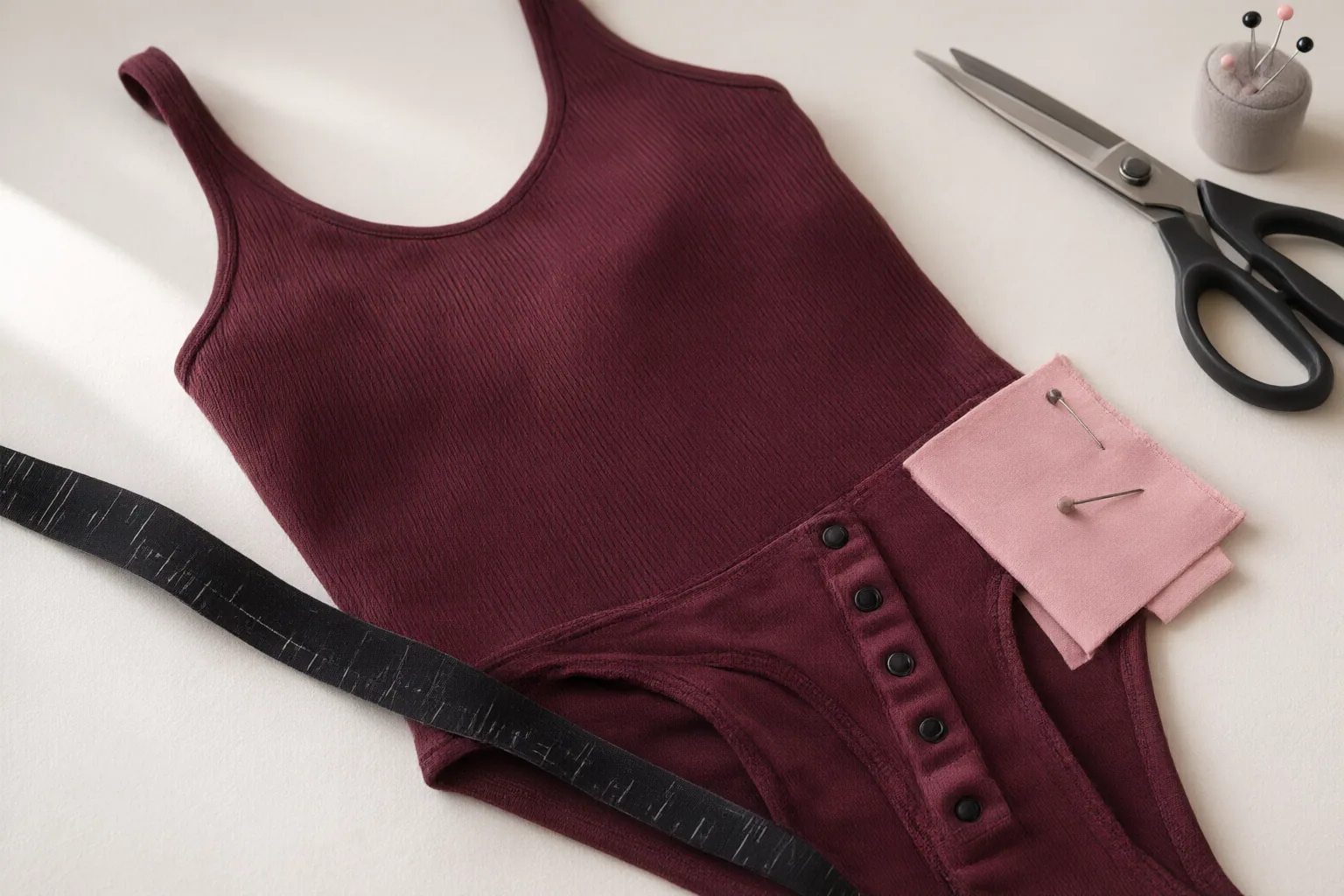
Bodysuits usually fasten at the crotch with snaps, although hooks, buttons, zippers, and hook-and-eye systems also appear. Closure type affects how the garment is put on and removed, so test whether you can reach, align, fasten, and release it comfortably. Examine the closure area for pressure rather than judging it only by appearance.
Some designs use two rows of gusset snaps to provide adjustable length. Adjustable straps or closures can also help refine fit, but no single placement works universally. Fasten each available setting and notice whether it reduces pulling without creating loose fabric.
Next, reproduce ordinary movement. Sit for long enough to notice crotch pressure or torso tension, stand again, and complete several squats, as Yummie recommends. Walk and bend while watching for shifting, digging, or riding up. The anchored closure can help maintain a tucked appearance during movement and sitting, but the bodysuit still needs enough length and stretch for your body.
Balance Smooth Lines, Coverage, and Fabric
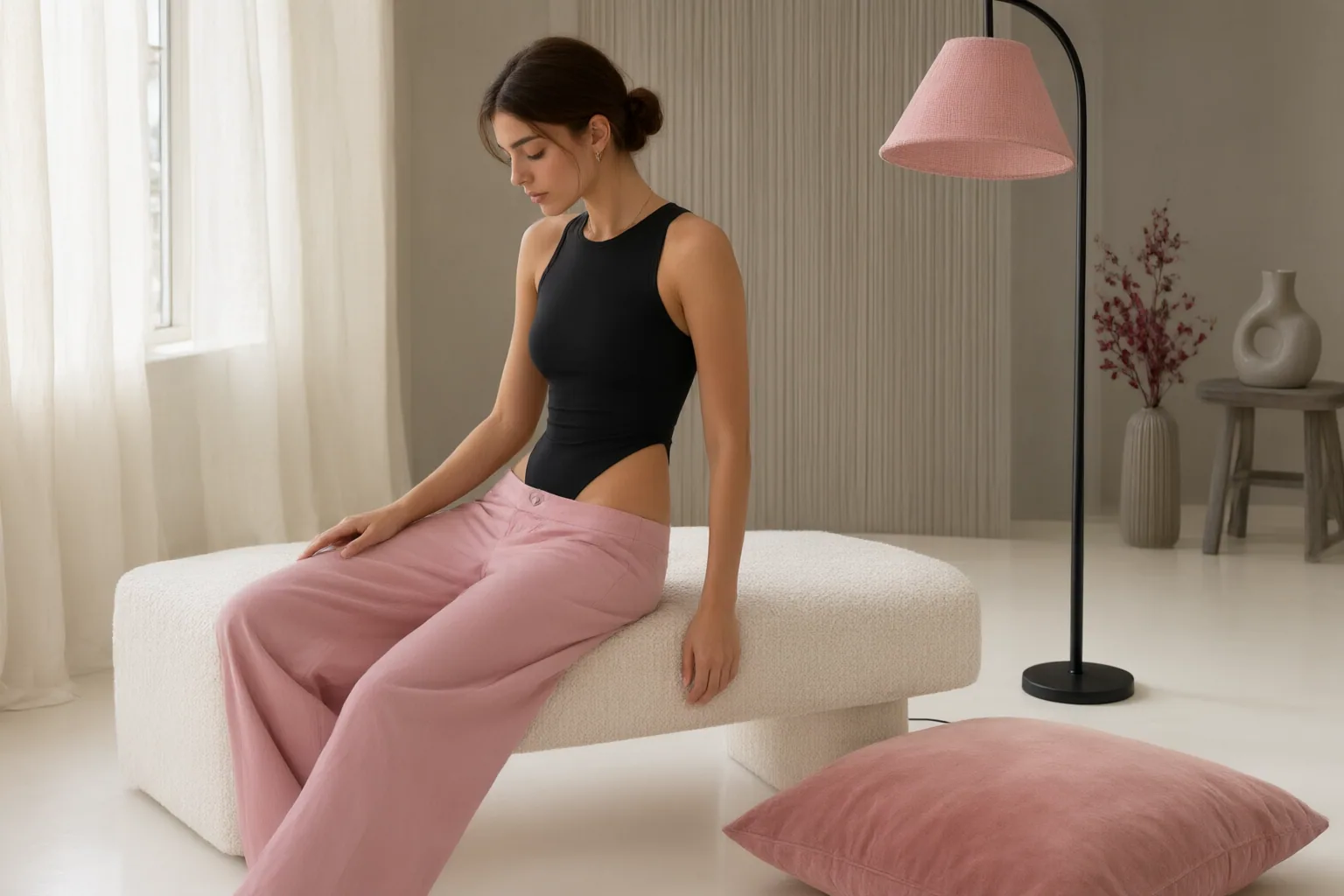
Rear cut involves a practical trade-off. A full-back bodysuit provides more coverage but may create a visible or indented line beneath close-fitting bottoms. A thong back removes the rear fabric edge that can produce that line, although the supplied guidance identifies extended-wear comfort as a possible compromise. Try both cuts when possible rather than treating either as universally better.
Construction matters as well. Bulky seams, excessive gathering, and the closure area may show beneath fitted clothing. Fashion Week Online advises checking seam placement and notes that flatlock seams or seamless construction can produce a smoother appearance. Evaluate this while wearing the intended bottoms, since a seam that is unobtrusive alone may become visible under a fitted layer.
Match fabric to the job. ANOESES describes cotton as breathable for everyday wear, elastane blends as stretchy and close-fitting, and silk or satin as smooth materials that may need special care. Fashion Week Online also identifies cotton, spandex, and jersey as options when breathability, stretch, and flexibility are priorities.
Conclusion
Before buying, confirm the garment-specific size information and assess torso length, bra compatibility, pressure through the body, closure access, seam visibility, rear coverage, stretch, and care needs. Then repeat the evaluation with the intended outfit instead of relying on a standing mirror check.
Wear the planned bra and bottoms, fasten the closure, and sit, squat, walk, and bend. Choose the bodysuit that stays secure without obvious bunching, riding up, or uncomfortable pressure during those movements.
Disclosures and limitations
- This article was prepared with AI assistance from the supplied fashion-guide sources. Those sources include retailer- or shop-published guidance and do not represent independent product testing; no specific product, price, stock, rating, or affiliate recommendation is included.
Related reading
Sources
- How to Choose the Right Bodysuit for Your Body Type | Fashion Week Online® — Fashion Week Online®
- A Comprehensive Guide to Picking Perfect Bodysuit — ANOESES
- Bodysuit Guide: Types, Fabrics, Fit Tips, and How to Choose the Right One — buddhastoneshop
- How to Choose the Right Bodysuit | Yummie — Yummie