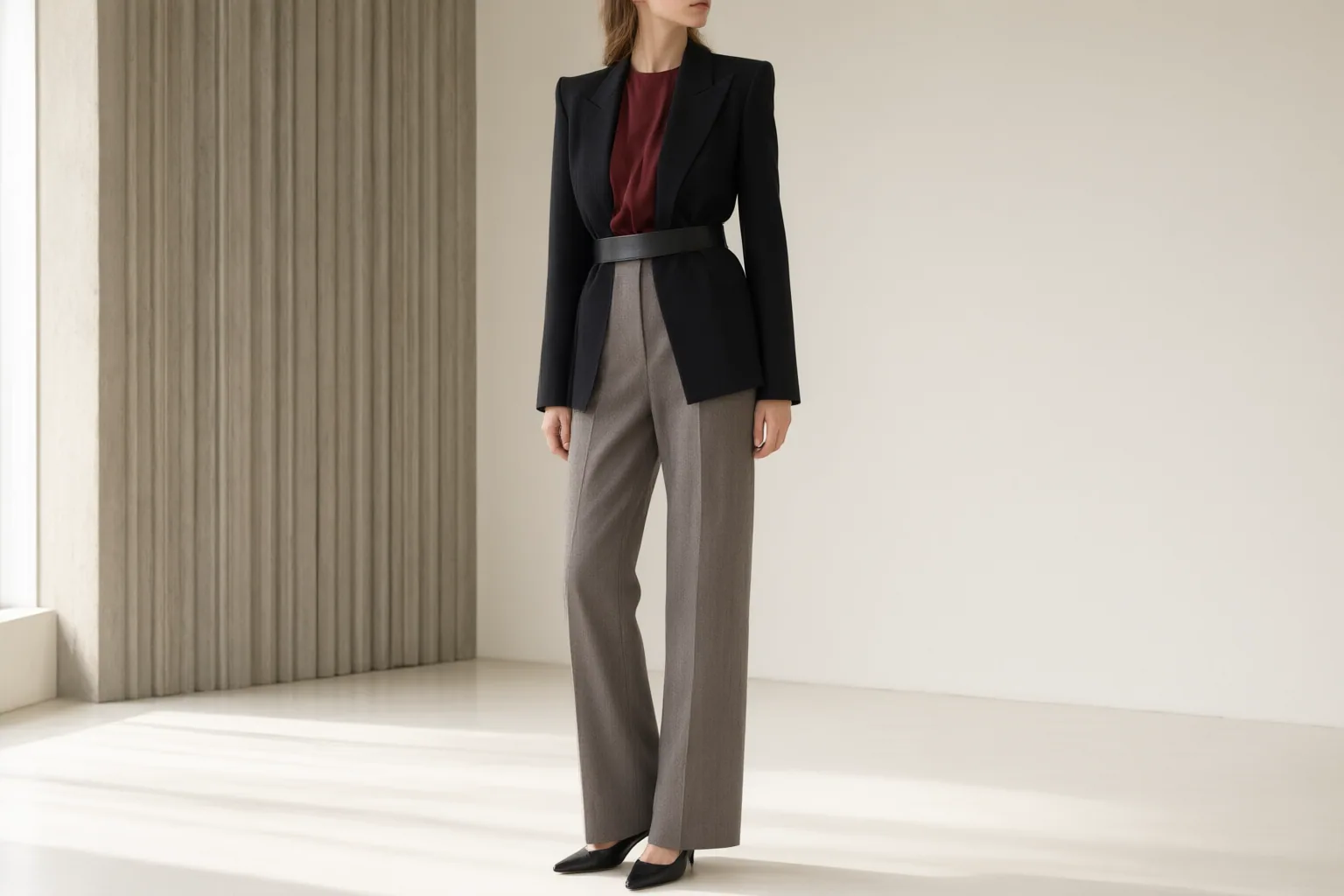
Adapt sculptural tailoring by choosing one controlled architectural detail, balancing it with streamlined separates, defining the waist, and preserving a clean vertical line. These are editorial proportion strategies—not guaranteed petite-fit results or universal workplace rules.
Start With One Sculptural Element
Sculptural fashion uses form, structure, and negative space to give clothing a three-dimensional presence. Architectural shoulders, origami-like folds, dramatic pleating, geometric shapes, and unexpected angles can all create that effect, sometimes allowing fabric to stand away from the body.
For an office adaptation, treat one of those devices as the focal point rather than combining several. A blazer with a restrained asymmetric line, defined shoulder, or controlled fold can carry the idea while the rest of the outfit remains visually quiet. SÉLONE Studio’s observed assortment—which included asymmetric and sculpted blazers and overlay trousers—shows how such details can appear in tailored separates, but it does not establish widespread popularity or a current trend.
Balance Volume and Restore the Waist
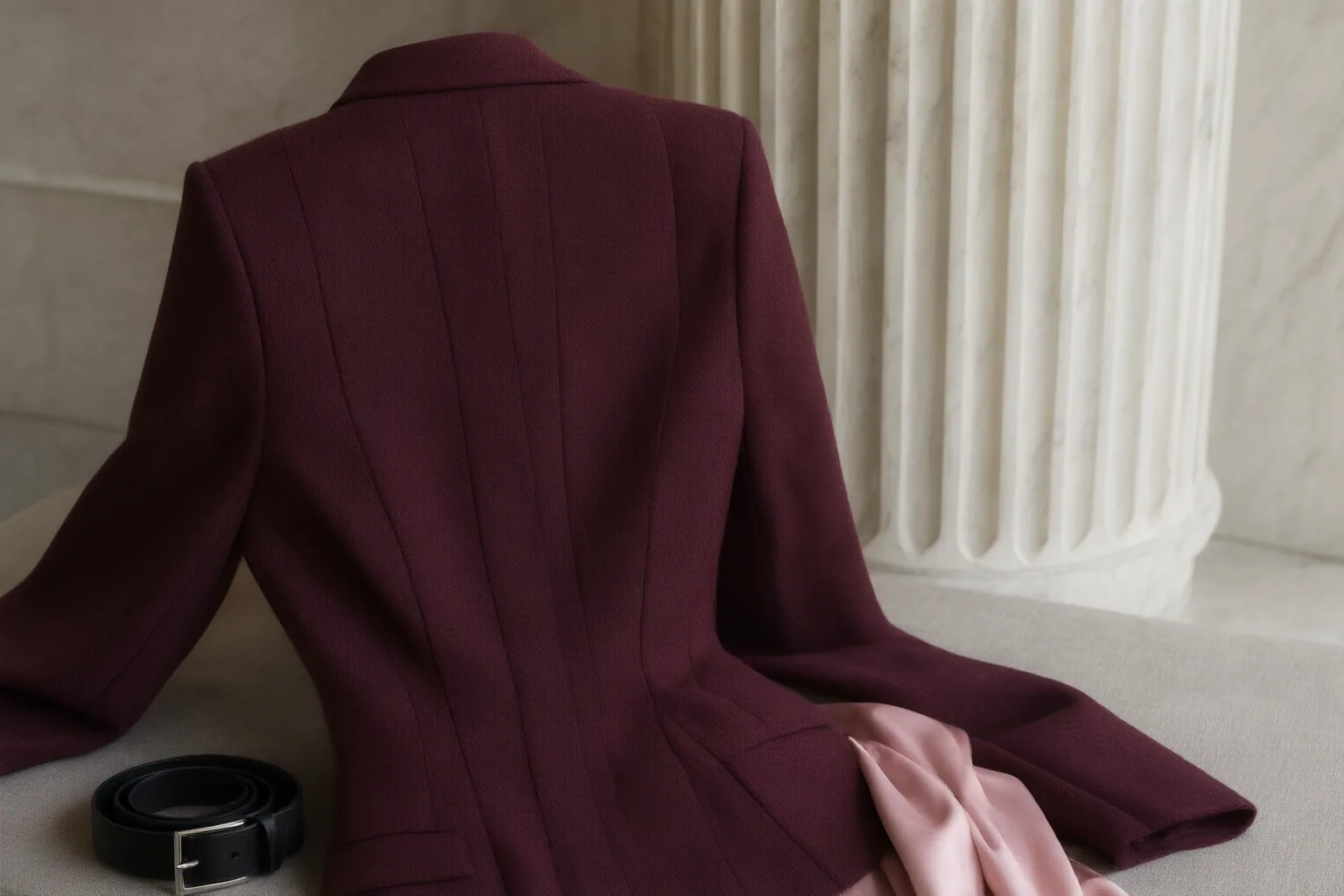
Zendaya-inspired proportion guidance emphasizes clear silhouettes: a defined waist, long leg line, and dramatic shoulders balanced by a narrower hem. If a sculptural blazer adds width or volume above the waist, pair it with cigarette trousers, a pencil skirt, tapered jeans, or another streamlined lower half. This keeps the outfit from becoming equally expansive in every direction.
Then re-establish the waist. Tucking the inner layer can create a visible break between torso and leg, while a cropped or fitted jacket can provide definition through its cut. On a petite frame, these choices are best treated as adjustable visual tools rather than fixed rules. Judge the complete silhouette in relation to your own proportions, and reduce either the upper-body volume or the lower-half width if the shape feels visually crowded.
Build a Longer, Cleaner Office Line
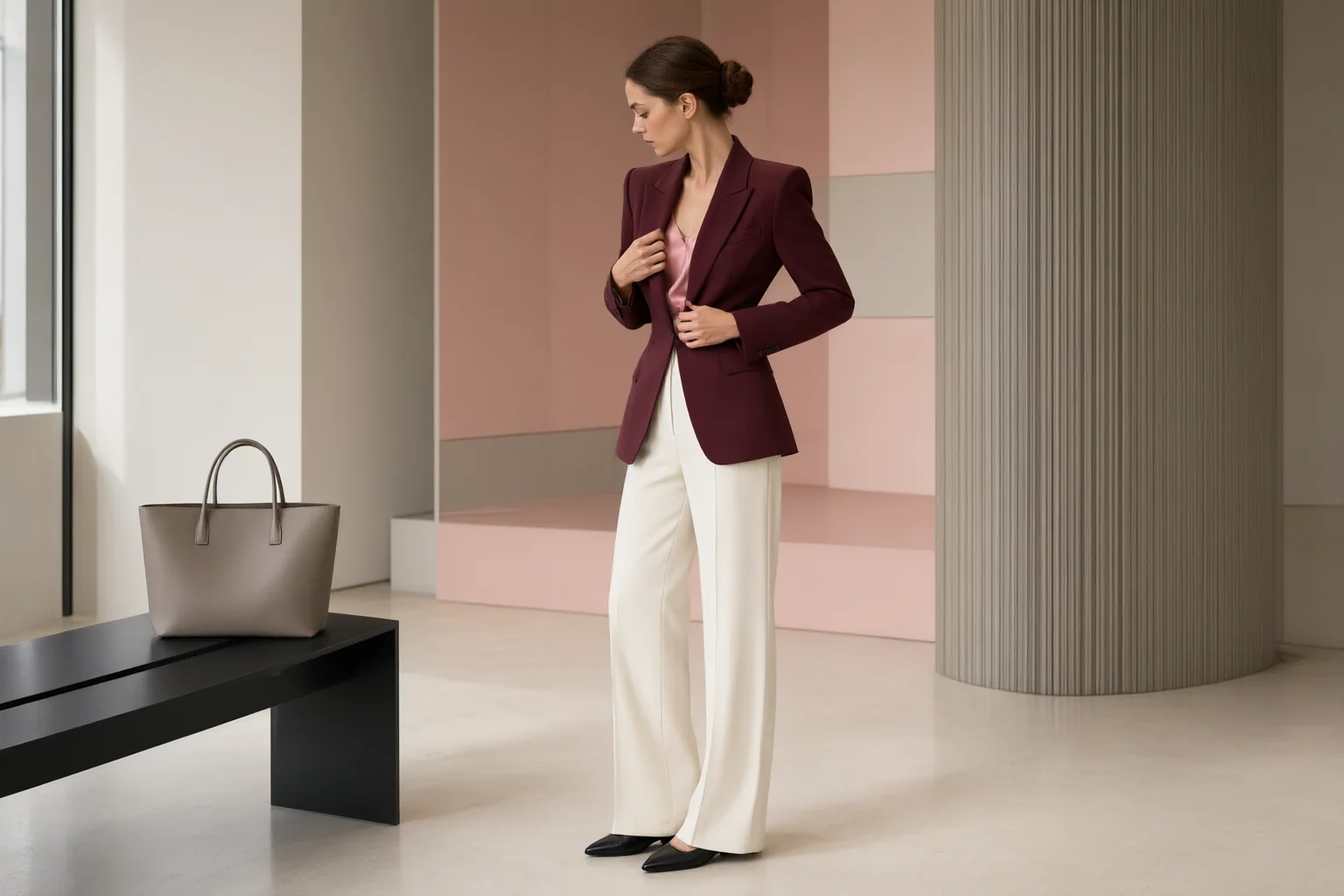
A practical outfit formula starts with high-waisted trousers or a high-waisted skirt, adds a fitted or cropped upper layer, and finishes with an uninterrupted shoe line. Pressed trouser creases and front seams can strengthen the vertical direction, while pointed-toe shoes can extend that visual path.
For example, place a sculptural blazer over a tucked, fitted top and high-waisted cigarette trousers with a sharp crease. Keep competing folds, angles, and extra volume out of the remaining pieces so the jacket stays legible as the focal element. The objective is visual continuity, not a promise that any feature will make every petite wearer appear taller. Workplace standards also vary, so assess the intensity of the shoulder, fold, or asymmetry against the expectations of your own office.
Conclusion
The most workable approach is proportion-first: choose one architectural feature, keep the other lines clean, define the waist, and balance upper volume with a narrower lower half. Small alterations can make the concept more precise; the supplied guidance specifically identifies shortening sleeves, adding waist darts, adjusting hems, and sharpening trouser creases as useful interventions.
Before wearing the outfit to work, check it against your workplace expectations. Then make one concrete adjustment: refine the sleeve length, clarify the waist, sharpen the crease, or simplify the sculptural detail.
Disclosures and limitations
- This article was prepared with AI assistance using only the supplied research package. Material claims are attributed through the listed source IDs, and the petite and office applications are editorial guidance rather than verified universal rules.
- The named retail assortment is included only as an observed example of sculptural tailored separates, not as a product recommendation. No affiliate relationship, price, availability, or performance claim is represented.
Related reading
Sources
- How to recreate Zendaya’s red-carpet proportions using high-street pieces and simple tailoring — styledirections.co.uk
- SÉLONE Studio | Sculptural tailoring and refined womenswear — Sélone Studio
- Sculptural Fashion: Where Art Meets Wearable Design – Fashion Post Magazine — Fashion Post Magazine