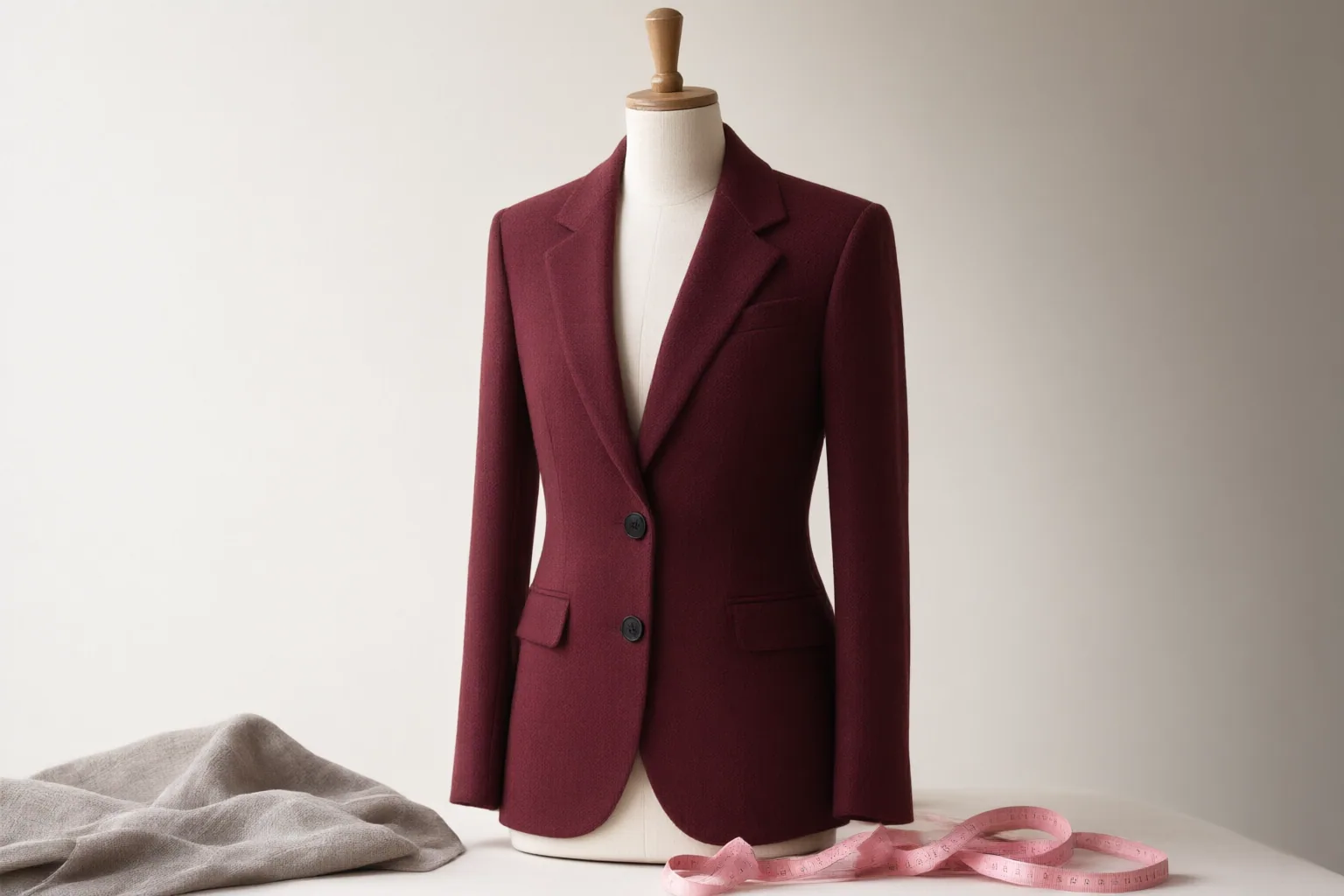
When buying a blazer, prioritize accurate shoulder alignment, a front that closes without strain, and comfortable movement. Treat sleeve length and some side-seam adjustments as potentially manageable, but investigate construction details and tailoring costs before committing.
Start With the Shoulders
Begin where alterations are least forgiving. The cited fit guides advise aligning the blazer’s shoulder seam with your natural shoulder point. If the seam ends noticeably inside or beyond that point, do not assume a tailor can readily rebuild the area: both sources characterize incorrect shoulder alignment as difficult or impractical to correct.
Stand naturally and inspect each shoulder from the front and side. The goal is not merely a close-looking fit but a clean relationship between your shoulder and the garment’s structure. Treat obvious misalignment as a reason to try another size or cut rather than accepting it as a future alteration. This first check helps separate a foundational fit problem from comparatively manageable work such as adjusting sleeve length.
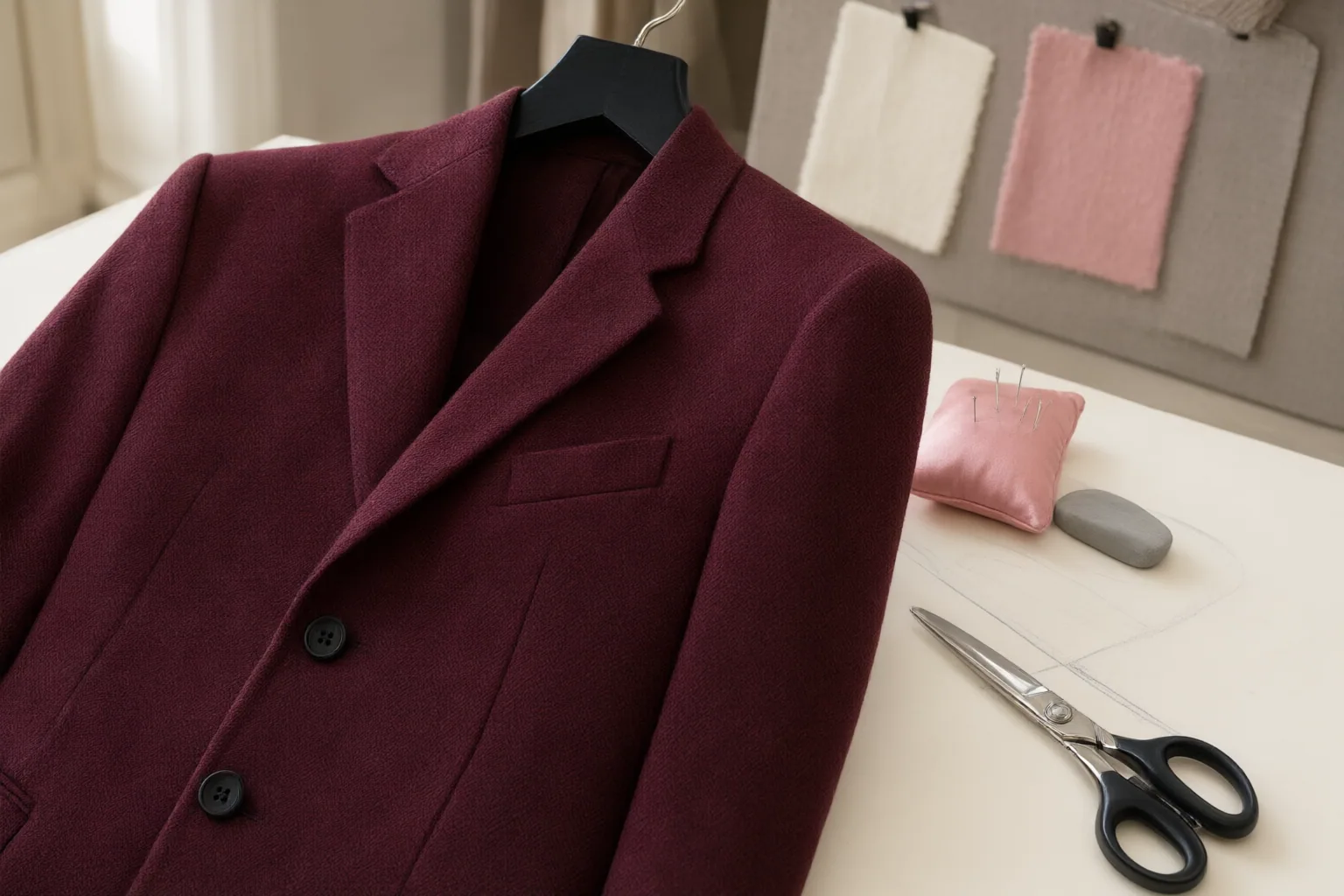
Check the Button Stance and Front Closure
Button the blazer as intended and examine the front without forcing yourself into an unusually rigid posture. It should close without pulling. Diagonal tension lines running from the button area toward the armpits can indicate that the chest is too tight.
One cited guide advises that the button should sit at or slightly above the natural waist, while also warning that an unsuitable position may pull the jacket or distort its proportions. Treat that location as attributed fit guidance, not a universal measurement: bodies and blazer cuts vary. The practical test is whether the button placement works with your proportions and whether the closed front remains smooth rather than strained. If closure creates obvious tension, compare another size or silhouette before relying on alterations.

Test Sleeve and Back Mobility
A static mirror check is not enough. Walk, sit, reach forward, bend your arms, and cross them while wearing the blazer. These movements can expose restrictions that are not obvious when you stand still.
Watch for pulling across the back, tightness at the shoulders, bunching, or the blazer riding up. The cited guides identify these reactions as signs of a fit problem. Some resistance may come from the jacket’s cut, but the available sources do not provide a universal mobility benchmark, so judge the garment through the ordinary movements you expect to make while wearing it.
Repeat the test with the front both open and buttoned. If reaching or sitting produces pronounced strain, do not let an acceptable front view outweigh poor mobility. Compare sizes or cuts while keeping correct shoulder alignment as the primary constraint.
Conclusion
Make the purchase decision in order of alteration risk. First, reject poor shoulder alignment because both guides treat it as a structural issue that is difficult or impractical to fix. Next, confirm that the buttoned front does not pull and that the blazer remains comfortable through sitting, reaching, bending, and crossing your arms.
If the foundation works, consider the remaining changes. Both guides describe sleeve length as comparatively straightforward to alter, but functional sleeve buttonholes may complicate shortening because they may need to be opened and reset. Chest or side seams can sometimes be taken in; letting them out depends on whether the garment contains enough seam allowance.
Do not assume an alteration is possible simply because it sounds minor. Inspect the sleeve construction and internal seam allowance, then obtain a tailor’s assessment or quote before buying a blazer that needs substantial work. Use this checklist in motion, not just at the mirror.
Disclosures and limitations
- This article was prepared with AI assistance from the two publisher-authored fit guides identified in the research package; those sources are guidance rather than independent testing or a formal tailoring standard.
- No product, price, inventory, rating, or affiliate recommendation is included.
Related reading
Sources
- Blazer Fit Checklist: The 7 Places a Blazer Either Fits or It Doesn't — Bits & Bangles
- The Blazer Fit Guide: Shoulders, Length, and Sleeve — howtofashionedition.com