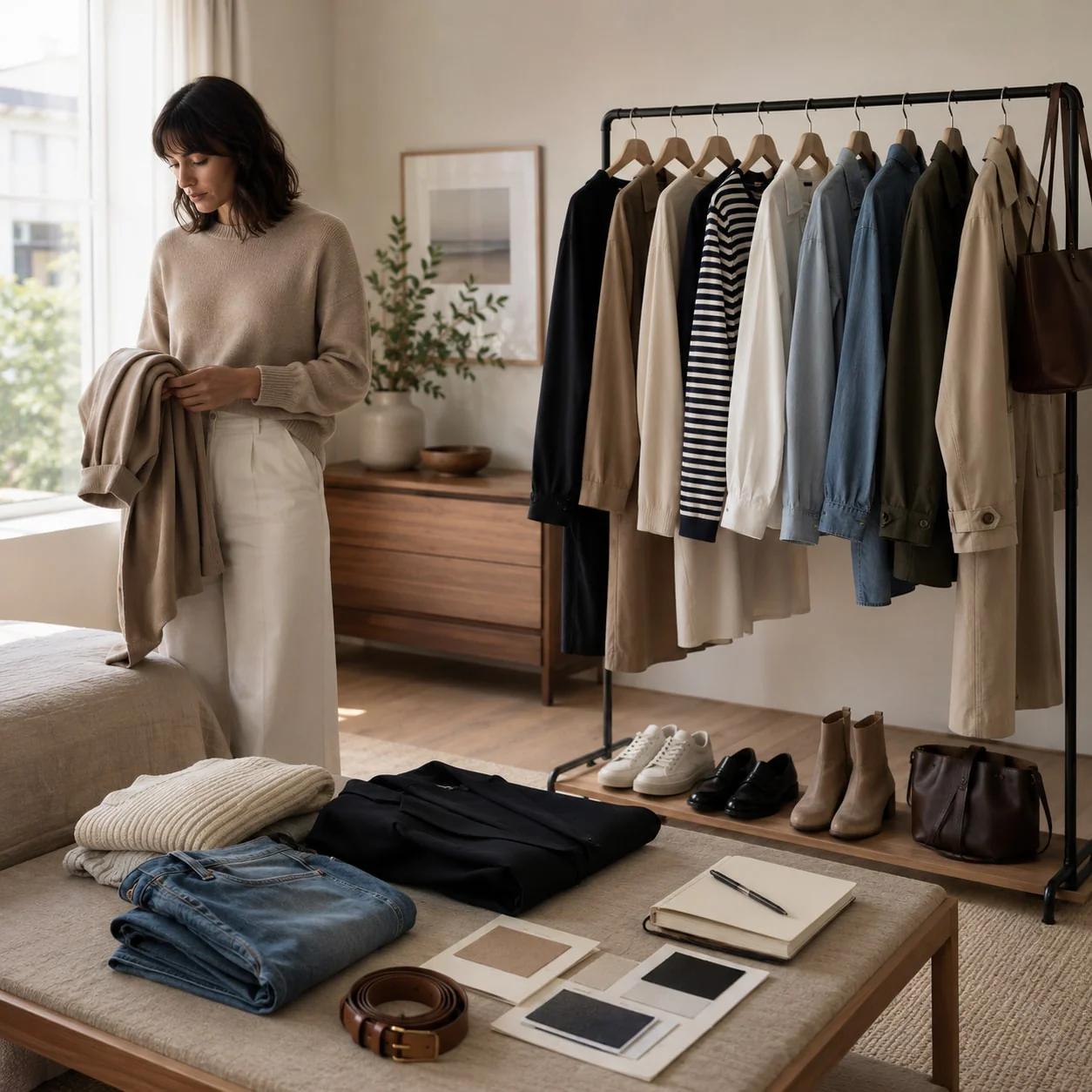
A seasonal capsule wardrobe works best for readers who want fewer decisions, better outfit consistency, and a closet that reflects how they actually dress. Instead of chasing every new arrival, you build a tight rotation of pieces that layer well, repeat easily, and still leave room for personality.
Start with your real week
Before choosing items, map out the situations your wardrobe needs to cover. Think in terms of actual use: office days, casual weekends, dinners out, travel, and weather swings. A strong capsule is not built around an idealized lifestyle; it is built around what you reach for repeatedly. If most of your week is smart casual, that category should take more space than occasionwear.
Choose a grounded seasonal palette
Every season benefits from a limited color story. Neutrals create the base, while one or two accent shades keep the wardrobe from feeling flat. For spring and summer, lighter tones and breathable textures often make mixing easier. For autumn and winter, deeper shades and richer surfaces help the wardrobe feel intentional without requiring more pieces. The goal is not strict uniformity, but reliable coordination across tops, bottoms, outerwear, and shoes.
Build around versatile core pieces
The core of a seasonal capsule usually comes from categories, not exact item counts. Start with everyday tops, two or three dependable bottoms, one dress or one-piece option if it suits your routine, a practical outer layer, and shoes that cover both daily wear and a more polished look. From there, add a small number of mood-setting items such as a textured knit, a statement bag, or distinctive jewelry. If a piece only works with one outfit, it should earn that space.
Use outfit formulas, not isolated items
A capsule becomes useful when you can style it quickly. Simple formulas make that happen: relaxed shirt plus tailored trousers plus loafers, fitted knit plus straight-leg denim plus ankle boots, or slip skirt plus soft sweater plus structured coat. Repeating silhouettes is not a weakness; it is what makes a wardrobe feel coherent. Variation can come from fabric contrast, accessories, and proportion rather than constant novelty.
Shop with a quality filter
When adding to a seasonal capsule, pause before buying anything that seems exciting but difficult to style. Check fabric feel, lining, transparency, fastening quality, and how the shape works with pieces you already own. Natural fibers, sturdy blends, and thoughtful construction often matter more than trend language on a product page. If you cannot imagine at least three believable outfits with an item, it may belong on a wish list rather than in your cart.
Plan for care and longevity
A wardrobe is only streamlined if it is easy to maintain. Prioritize pieces that can handle your real laundry habits, storage space, and climate. Sweaters that pill quickly, trousers that require constant steaming, or delicate tops that only work with special bras can add friction even if they look good in theory. Seasonal planning should reduce maintenance stress as much as it reduces visual clutter.
Keep the capsule flexible
The most successful capsule wardrobe is edited, not frozen. At the start of each season, review what felt effortless, what stayed unworn, and what gap kept appearing. You do not need a dramatic reset; small adjustments usually create the biggest improvement. A good seasonal capsule wardrobe gives you clarity, repeatable outfits, and a better standard for every future purchase.