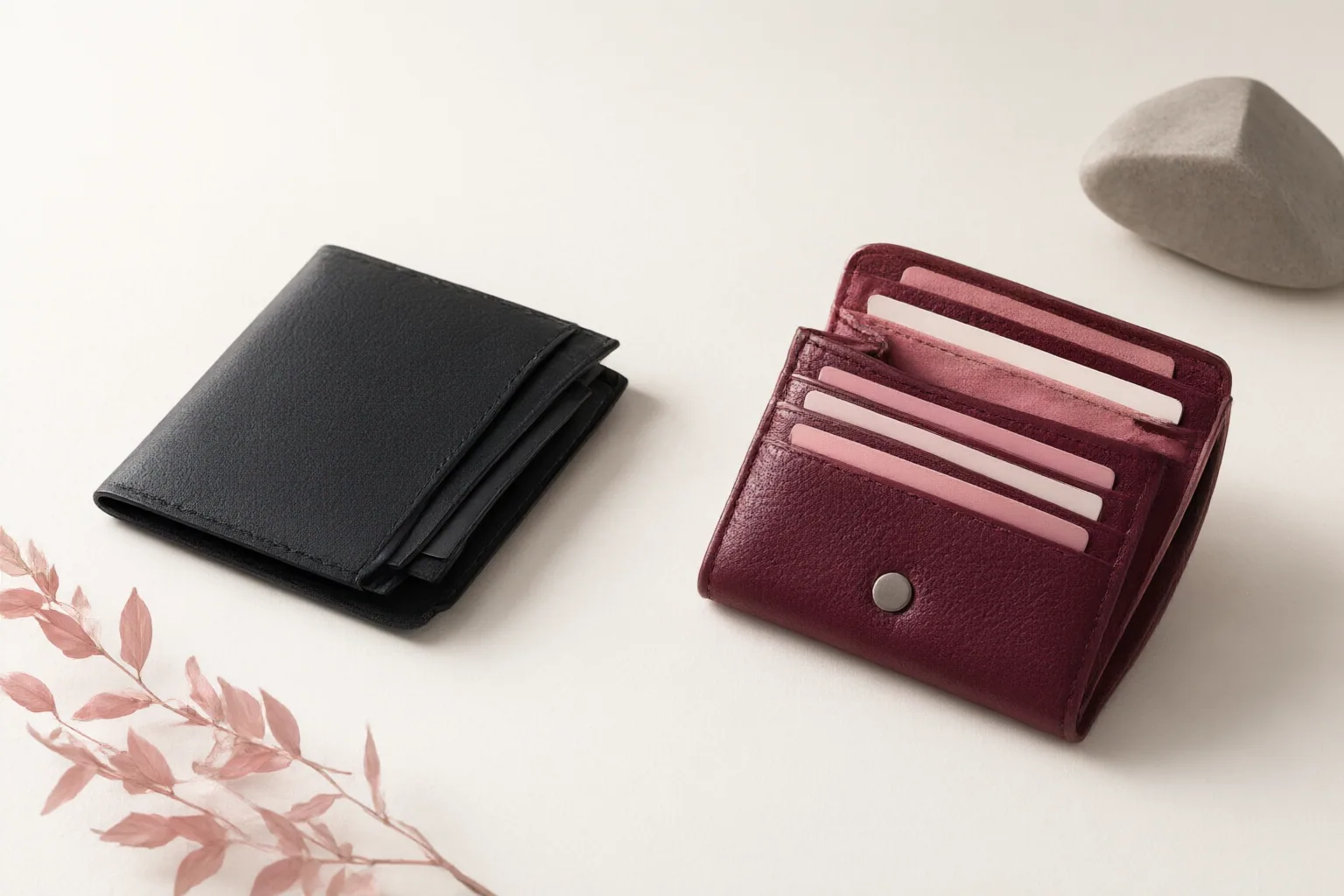
Choose a cardholder if you mainly carry essential cards and prioritize minimal bulk and quick access. Choose a compact wallet if you need organized space for cash, coins, receipts, identification, or additional cards. In either case, compare the actual compartments and closure rather than relying on labels such as “slim” or “minimalist.”
The Short Answer: Match the Format to What You Carry
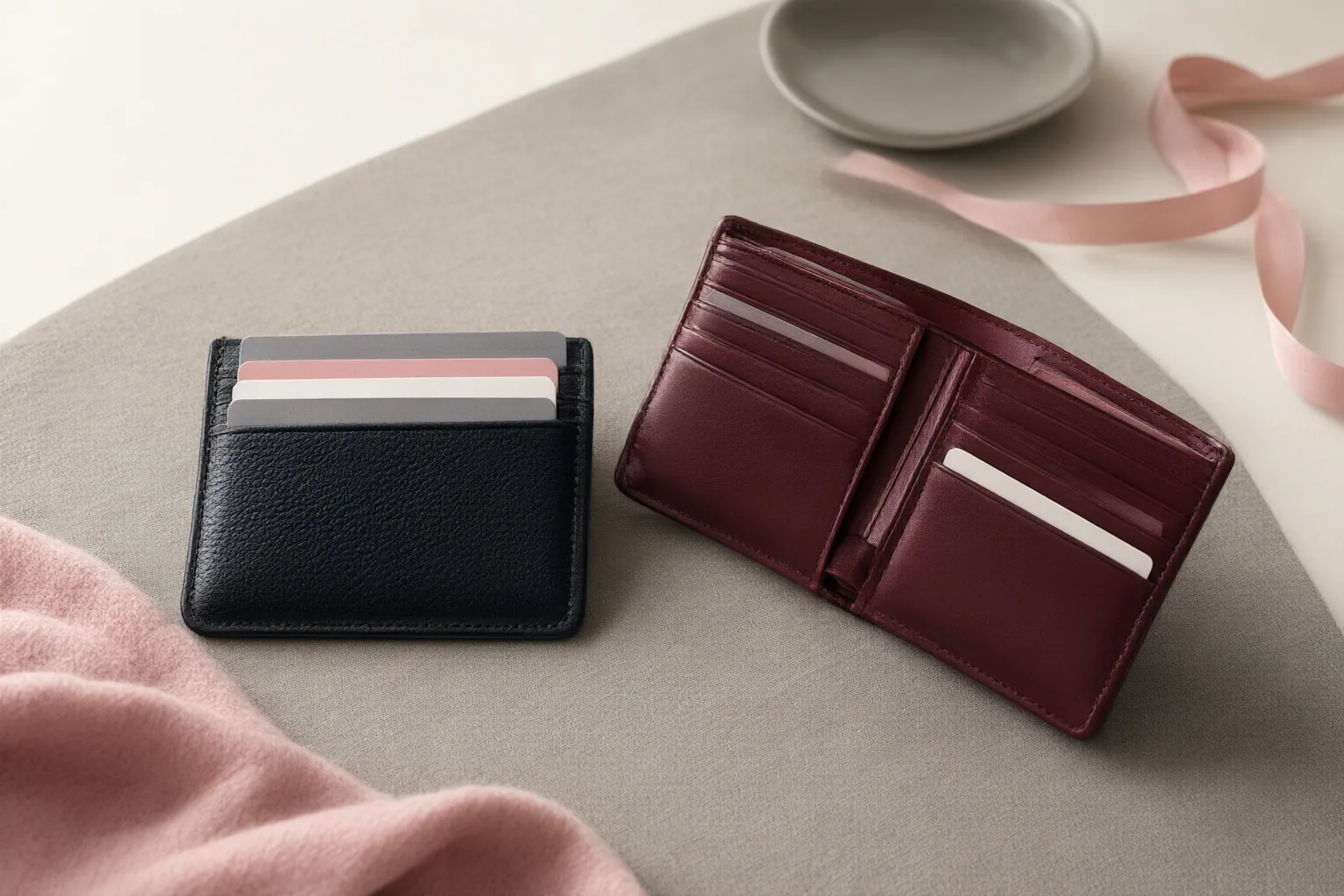
Cardholders are designed primarily around essential cards, while wallets generally accommodate a wider mix of cards, banknotes, coins, receipts, and other small items. That makes a slim cardholder a practical option when a low-profile shape matters, including with tailored clothing or on days when you carry very little. A compact wallet is usually more suitable when organization matters more than achieving the smallest possible footprint.
The category name is only a starting point. Marketplace listings use overlapping terms such as cardholder, compact wallet, minimalist wallet, and slim wallet for designs with substantially different features. Base the decision on what the item holds and how it opens, not its marketing label.
Compare Capacity, Pocket Fit, and Access
Begin with an inventory of what you normally carry: essential payment cards, additional cards, a physical ID, banknotes, coins, receipts, and any photographs or small papers. A cardholder can keep a limited set of frequently used cards readily accessible and may fit into a pocket with less bulk. Its card-oriented sections, however, can be restrictive if cash, coins, or receipts are regular necessities.
A compact wallet offers more organizational possibilities, but added capacity can mean a thicker profile, particularly when it is filled. Consider the clothing you wear most often and whether the loaded wallet needs to sit unobtrusively in a pocket. Pocket fit and retrieval speed were not independently tested in the supplied sources, so assess them as personal requirements rather than guaranteed product performance.
Place frequently used items in the easiest-to-reach compartments. If you routinely manage several cards or different item types, an organized wallet format may be more practical than concentrating everything in a small cardholder.
Check the Design and Security Features, Not Just the Label
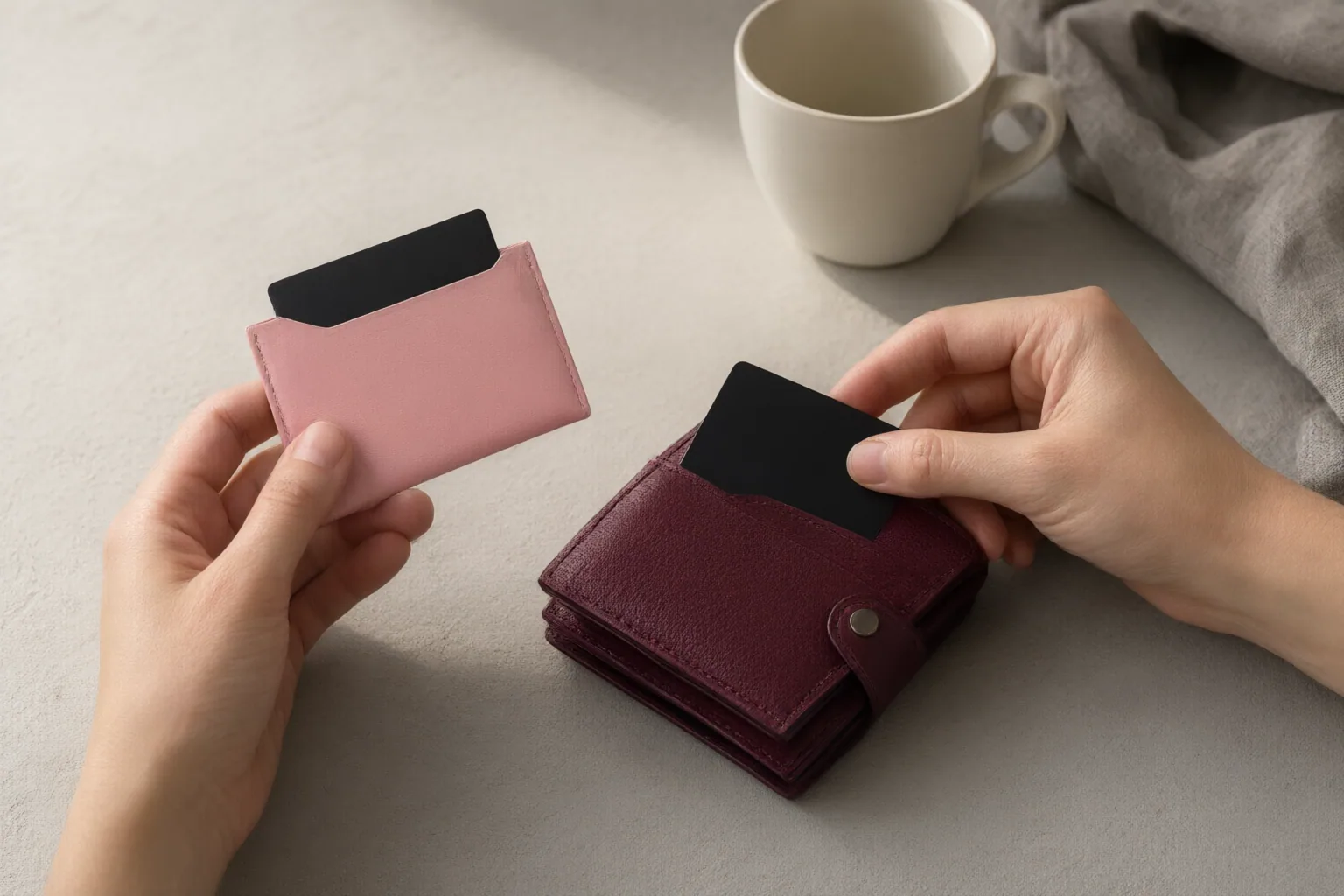
Products described as slim or compact include simple card sleeves, bifolds, money-clip designs, cash straps, ID windows, magnetic closures, coin storage, and pop-up mechanisms. These variations can blur the distinction between a cardholder and a small wallet.
Before buying, check:
- The stated number and type of compartments
- Whether there is a dedicated place for cash, coins, receipts, or identification
- How frequently used cards are accessed
- Whether the closure matches your preference
- Whether the loaded dimensions suit the pocket or bag you intend to use
- Whether the material aligns with your longevity priorities
RFID-blocking language appears frequently in the supplied marketplace results. Those excerpts do not include independent testing that verifies the effectiveness of any listed product, so the label should not be treated as proof of protection. Evaluate any such claim by the evidence supplied for the individual design rather than assuming that every RFID-blocking wallet performs as advertised.
Conclusion
Favor a cardholder when your everyday carry is limited to a few frequently used cards and reducing bulk is the priority. Favor a compact wallet when you need separate places for additional cards, cash, coins, receipts, or identification.
Before purchasing, list everything you carry on a normal day, mark the items you reach for most often, and compare that inventory with the actual compartments and closure of each design.
Disclosures and limitations
- This article was prepared with AI assistance using the supplied commercial comparison guides and marketplace search results; no independent product testing was provided.
- No specific products, prices, ratings, or availability are recommended here. Any affiliate relationship associated with retailer links should be clearly disclosed where those links appear.
Related reading
Sources
- Amazon.com : Compact Wallet — amazon.com
- Card Holder vs Wallet: How To Choose in 2026 — Von Baer
- Card Holder Vs Wallet (Differences, Capacity & Best Uses) – ImprintNow.Com — imprintnow.com
- Amazon.com : compact mens wallet — amazon.com
- Amazon.com : slim compact wallet — amazon.com