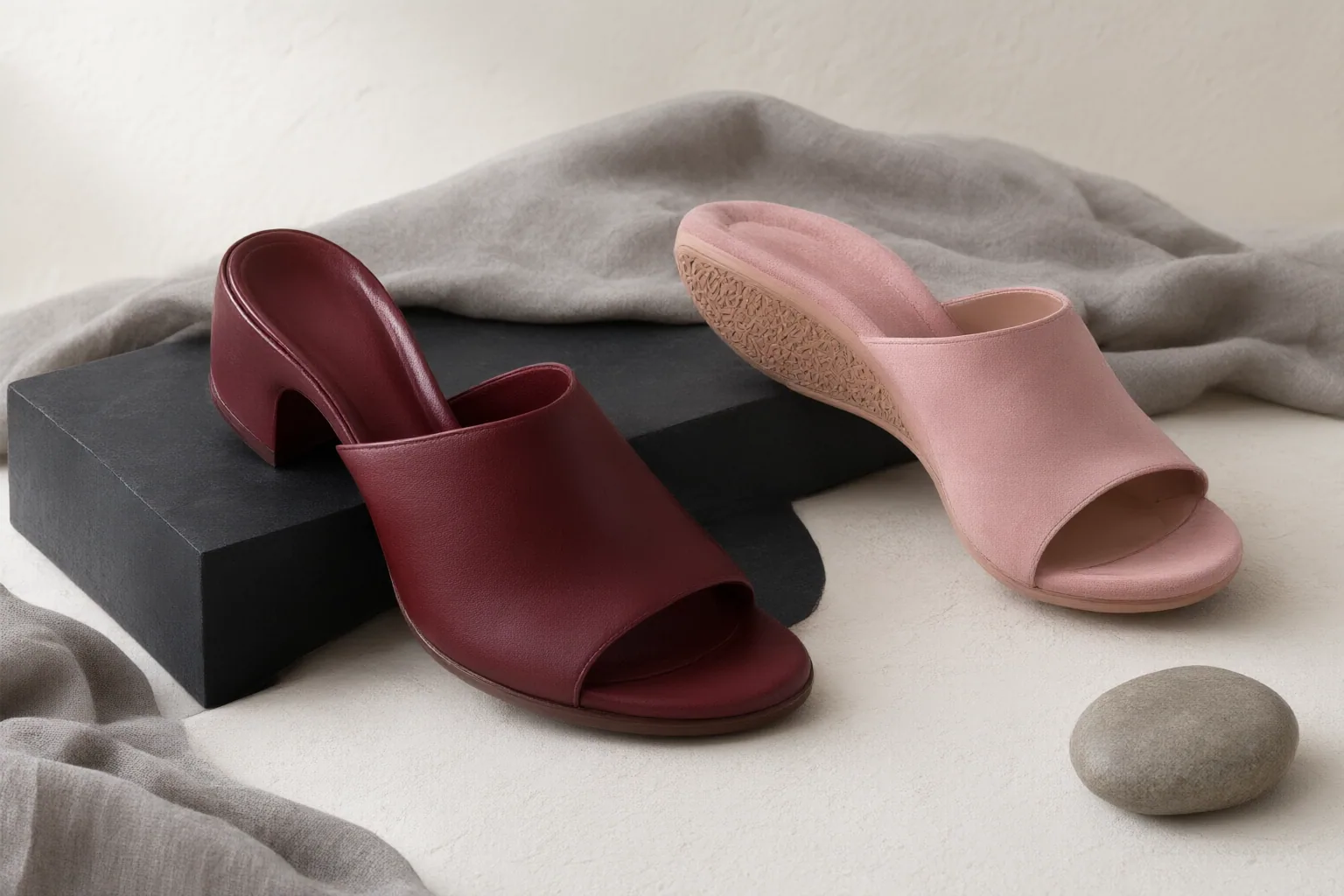
Choose mules that hold your foot snugly without pinching, leave adequate room around the toes, and provide tread suited to your usual walking surfaces. Because every mule is backless, secure contact through the upper, arch area, and footbed matters when you walk.
Why Mule Construction Changes the Fit
Mules are backless shoes available in flat, heeled, platform, loafer-inspired, and sneaker-inspired forms. The defining open-back construction means there is no rear counter or strap to retain the foot. As a result, the upper, arch area, footbed, and heel-cup shape must work together to limit unwanted movement. A suitable pair should feel secure while standing and walking, but style alone cannot determine whether it will fit a particular foot. Assess the individual shoe rather than assuming that every flat or heeled mule will behave alike.
Check Heel Placement, Arch Hold, and Toe Room
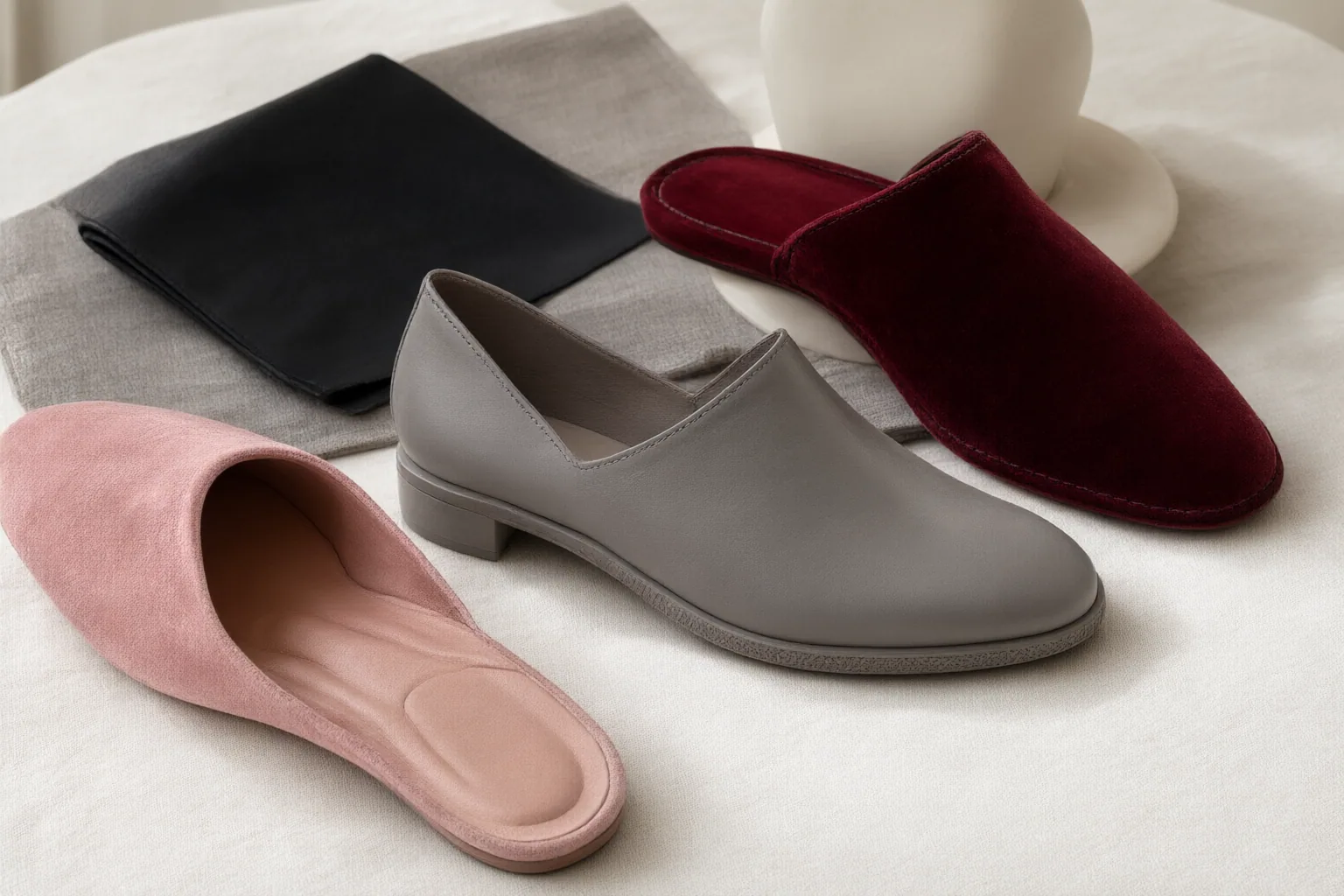
Start by placing the heel naturally on the footbed and checking whether the upper holds the foot snugly without creating pressure. Walk on a safe indoor surface and notice whether the foot repeatedly slides forward or the shoe flaps. Either response can indicate that the shoe’s shape is not retaining the foot securely.
Next, assess contact through the arch area and the shape around the heel. The footbed should support stable placement without forcing the foot into an uncomfortable position. At the front, confirm that the toes have enough width and space rather than being compressed. This is especially relevant for wide forefeet or bunions, since a narrow or pointed toe box may add pressure. Adjustable closures can help refine the hold, but they do not compensate for a fundamentally unsuitable toe-box or footbed shape.
Match the Footbed, Upper, and Outsole to Daily Use
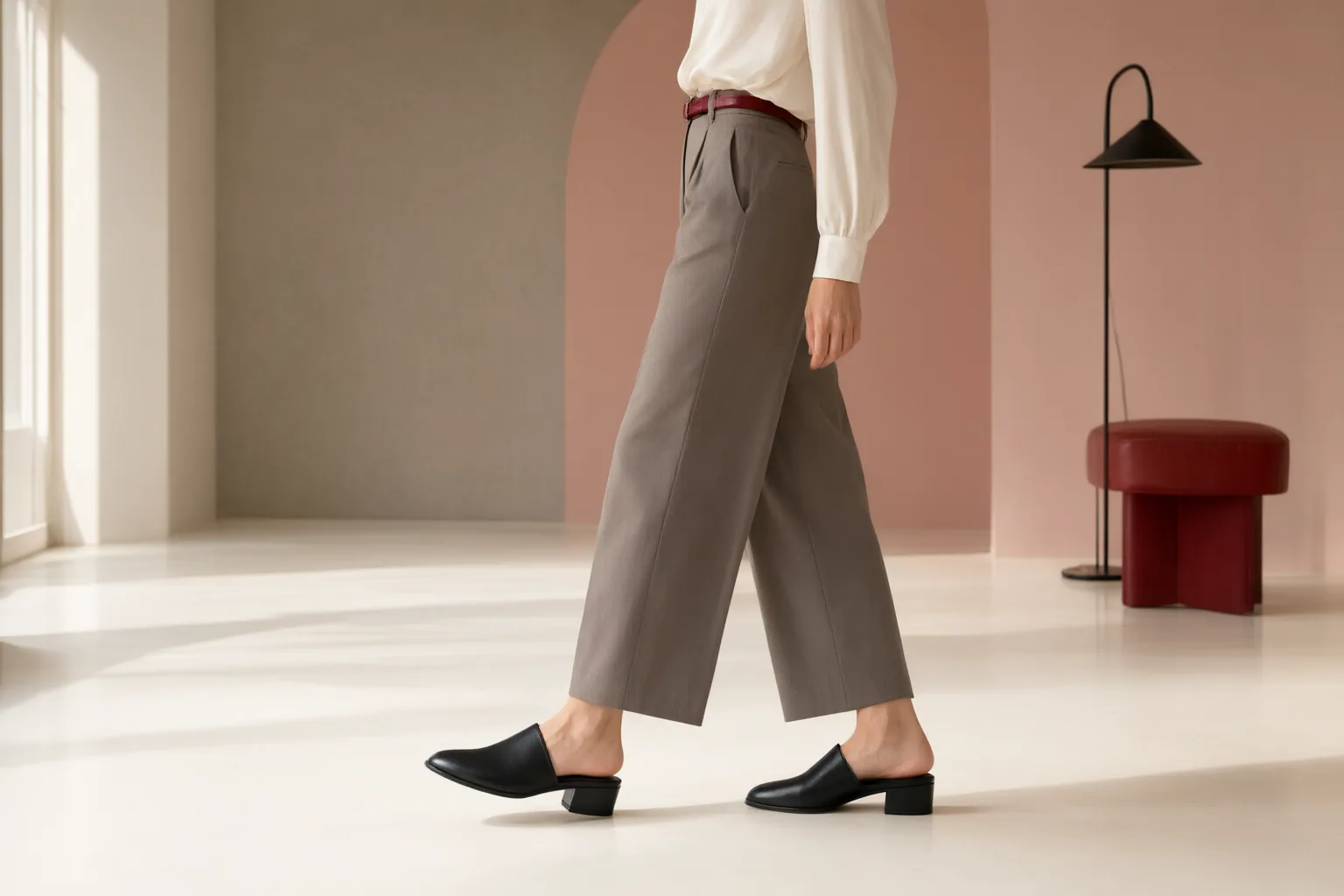
Compare cushioning, arch support, flexibility, adjustability, and toe coverage with the activities for which you expect to wear the shoes. If you use custom insoles, determine whether the original footbed is removable and whether the shoe can accommodate the replacement without compromising fit.
Upper material also involves a tradeoff. Soft, breathable materials may suit warm conditions, but they can require more cleaning or provide less structure than a firmer upper. Check whether the material holds your foot securely rather than choosing on airflow alone.
Finally, inspect the outsole. A smooth or minimally treaded sole may be poorly matched to slick indoor flooring or wet pavement. Look for textured tread appropriate to your normal environment, while also considering whether the sole flexes suitably for the intended activity. These are source-based shopping considerations, not laboratory-tested performance standards or guarantees of slip resistance.
Conclusion
Before buying, confirm four things: the upper and footbed hold your foot without sliding, the toe box does not pinch, the support works for you or accommodates your insole, and the outsole suits your everyday surfaces. This checklist synthesizes retailer and footwear-blog guidance rather than laboratory or clinical testing. Walk-test the pair safely indoors, and reject any mule that slides, pinches, flaps, or feels unstable.
Disclosures and limitations
- This article was prepared with AI assistance from the supplied retailer and footwear-blog sources. It contains no specific product recommendations, prices, ratings, or affiliate product claims.
Related reading
Sources
- Everything You Need To Know About Mules and How To Wear Them – CHARLES & KEITH — charleskeith.com
- Best Comfortable Mules for Walking: All-Day Foot Comfort – The Dapper Millennial — dappermillennial.com
- 7 Best Mules Women | Mules That Stay On, No Clenching Needed — Well Whisk
- Comfortable Women's Mules: How to Choose the Best Pair for All-Day Wear — BareRoots Footwear
- Top 12 Best Mules For Women Of 2026 – The Good Mother Project — The Good Mother Project
- Are Mule Sandals Comfortable? A Detailed Comfort Guide — Myshoesreview.com
- 7 Best Mules For Women | Mules That Stay On, Not Slide Off — Well Whisk