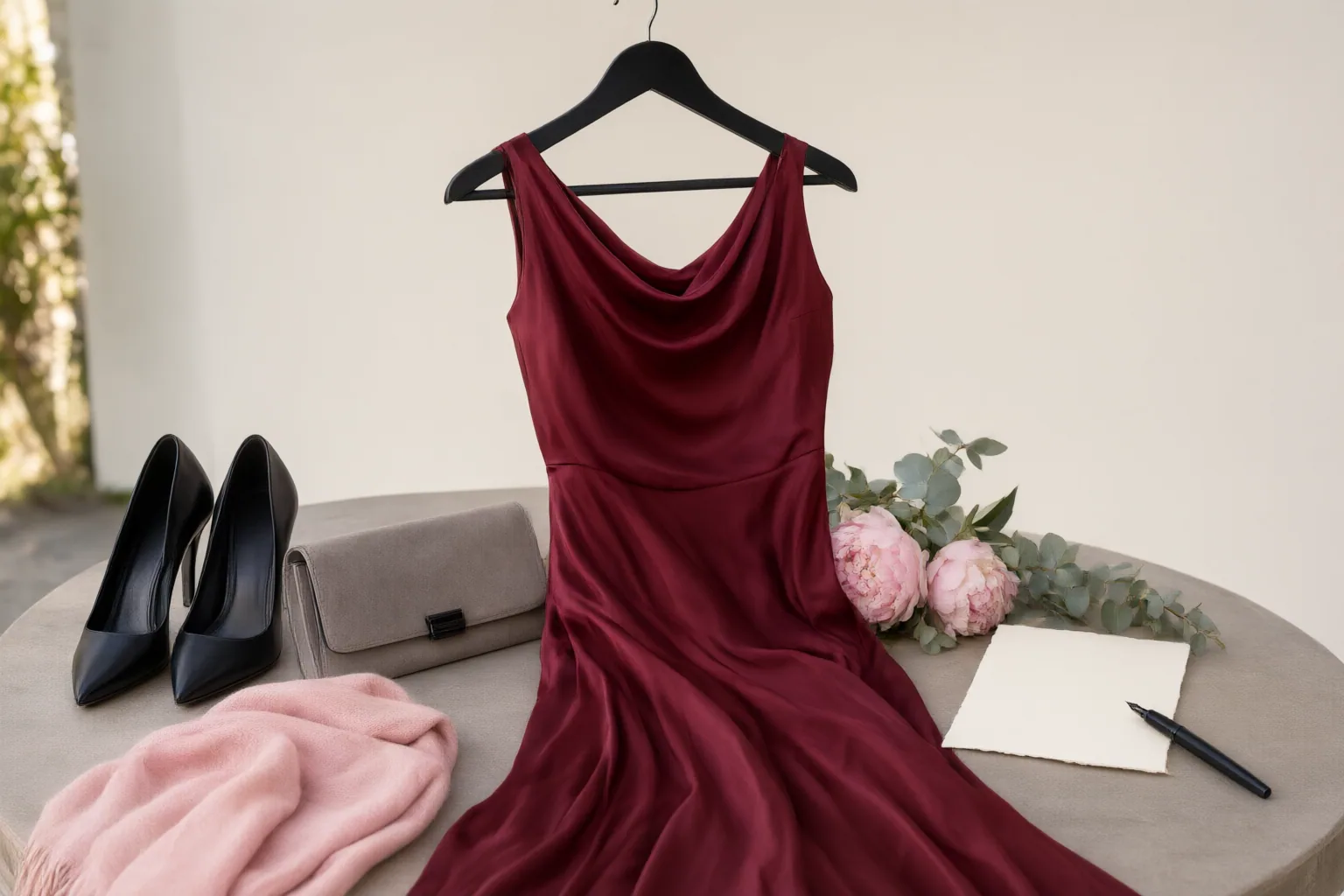
Choose a wedding guest dress by translating the invitation into a formality level, then checking the venue, forecast, color, comfort, and realistic rewear potential before you buy.
Start With the Dress Code and Invitation Details
Begin with the invitation’s stated category: black tie, formal, cocktail, semi-formal, or casual. The supplied guides generally favor a floor-length gown for black tie, while cocktail and semi-formal events can allow a midi or shorter dress, dressy separates, or a tailored jumpsuit. A midi dress can be adaptable for many daytime, garden, cocktail, and semi-formal weddings, but the invitation and setting still take priority.
If the couple uses a customized phrase such as “Romantic Garden Attire” or “Elevated Casual,” check the wedding website for an explanation. Then compare the phrase with a standard formality category and consider the venue and start time. If the expected level of formality remains unclear, ask the couple or the designated planning contact rather than relying on the label alone.
Adjust the Dress for the Venue, Terrain, and Weather
Use the setting and expected weather to refine your choice. For warm conditions, prioritize lighter, breathable options; for colder events, consider richer or heavier fabrics, greater coverage, and an appropriate layer. This check matters even when a dress technically matches the dress code, because unsuitable fabric weight or coverage can make it impractical for the conditions.
Look beyond the building or venue name and consider the surfaces you may cross. Lawns, gravel, cobblestones, and sand can make stilettos or highly formal shoes difficult to manage. Depending on the outfit and dress code, block heels, wedges, flats, loafers, or another terrain-suitable option may be more practical. Treat footwear and layers as part of the outfit decision, not as last-minute additions.
Check Color, Comfort, and Rewear Potential Before Buying
Avoid white and closely related bridal shades—including ivory, cream, and champagne—unless the couple explicitly requests or approves them. If a pale neutral could read as bridal, choosing a clearly distinct color reduces uncertainty.
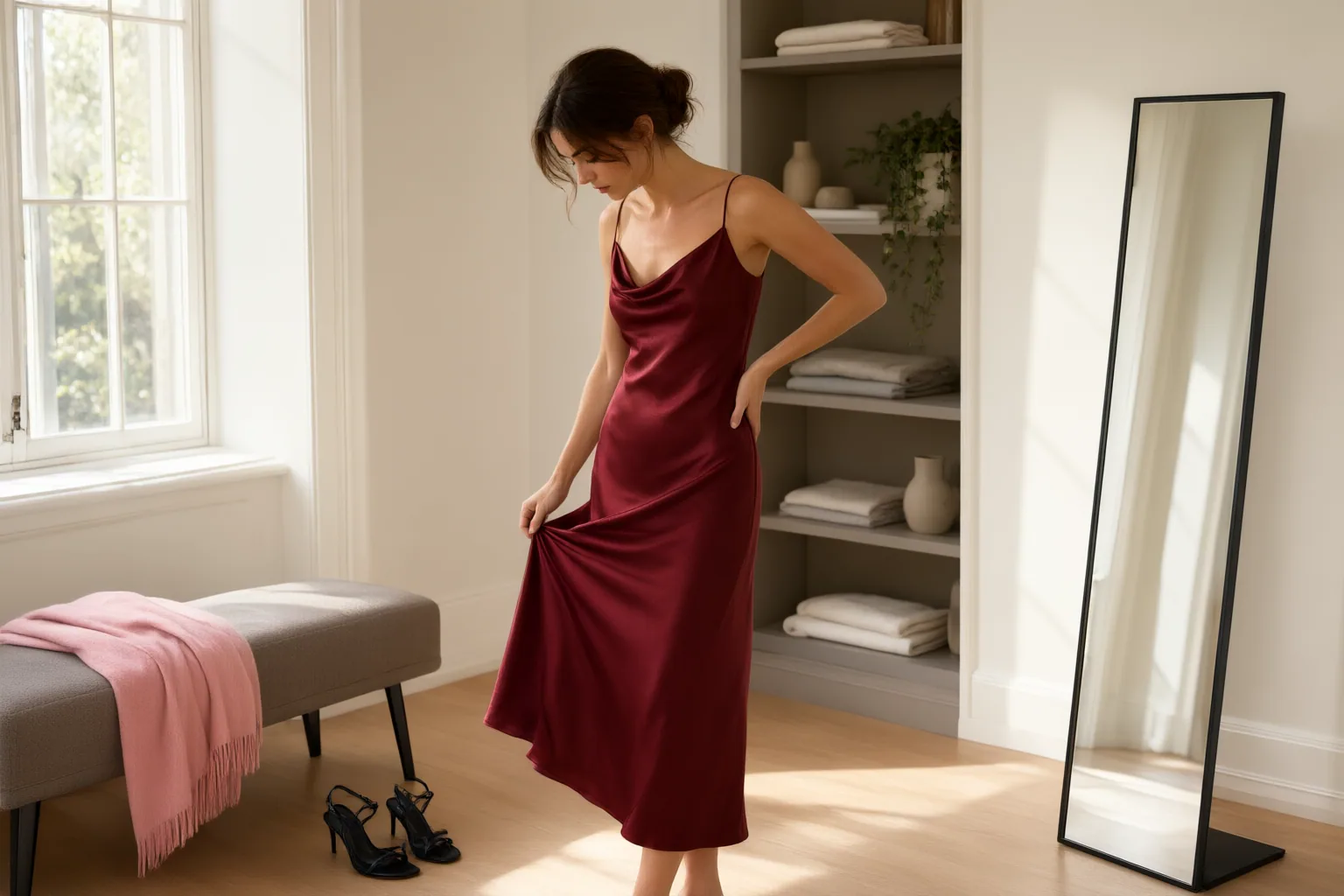
Before buying, confirm that the dress’s coverage, fabric, and construction suit the forecast and allow practical movement throughout the event. Then identify where the garment could fit in your existing wardrobe. Versatile silhouettes and adaptable midi lengths may work across multiple daytime, garden, cocktail, or semi-formal occasions when the invitation permits them. Changing shoes, jewelry, or other accessories can also give the same outfit a different emphasis.
For a highly formal event with limited rewear potential, renting formal attire is another option presented in the supplied guidance. No product records, current prices, ratings, or inventory were provided, so evaluate categories and suitability rather than treating any particular item as a verified recommendation.
Conclusion
Make the decision in sequence: confirm the required formality, account for the venue and forecast, avoid potentially bridal colors unless approved, and check whether the complete outfit will be comfortable and practical. Finally, name at least one realistic future occasion for the dress—or consider renting if rewear is unlikely. Before comparing options, write down your required dress code, terrain, weather needs, color boundaries, comfort criteria, and rewear plan.
Disclosures and limitations
- This article was created with AI assistance from the supplied research package and approved content plan; cited source IDs identify the evidence used for each section.
- No specific products or affiliate offers are recommended here. If affiliate links are added later, their commercial relationship should be clearly disclosed.
Related reading
Sources
- Wedding Guest Dress Code by Venue — Sartorly
- Wedding Guest Dresses – Nordstrom — nordstrom.com
- Wedding guest dress guide: what to wear and what to avoid — Karin Lundin Studio
- Wedding Dress Code Guide for Guests 2026: All Codes Decoded — The Rose & Vow
- Wedding Guest Dresses 2027: Ideas for Every Season & Dress Code — Wedding Forward
- Wedding Guest Dresses | Women's Outfits, Shoes & Accessories — Petal & Pup USA
- Wedding Guest Dress Code Guide: What to Wear for Every Type of Wedding – Dream Wedding Plans — Dream Wedding Plans