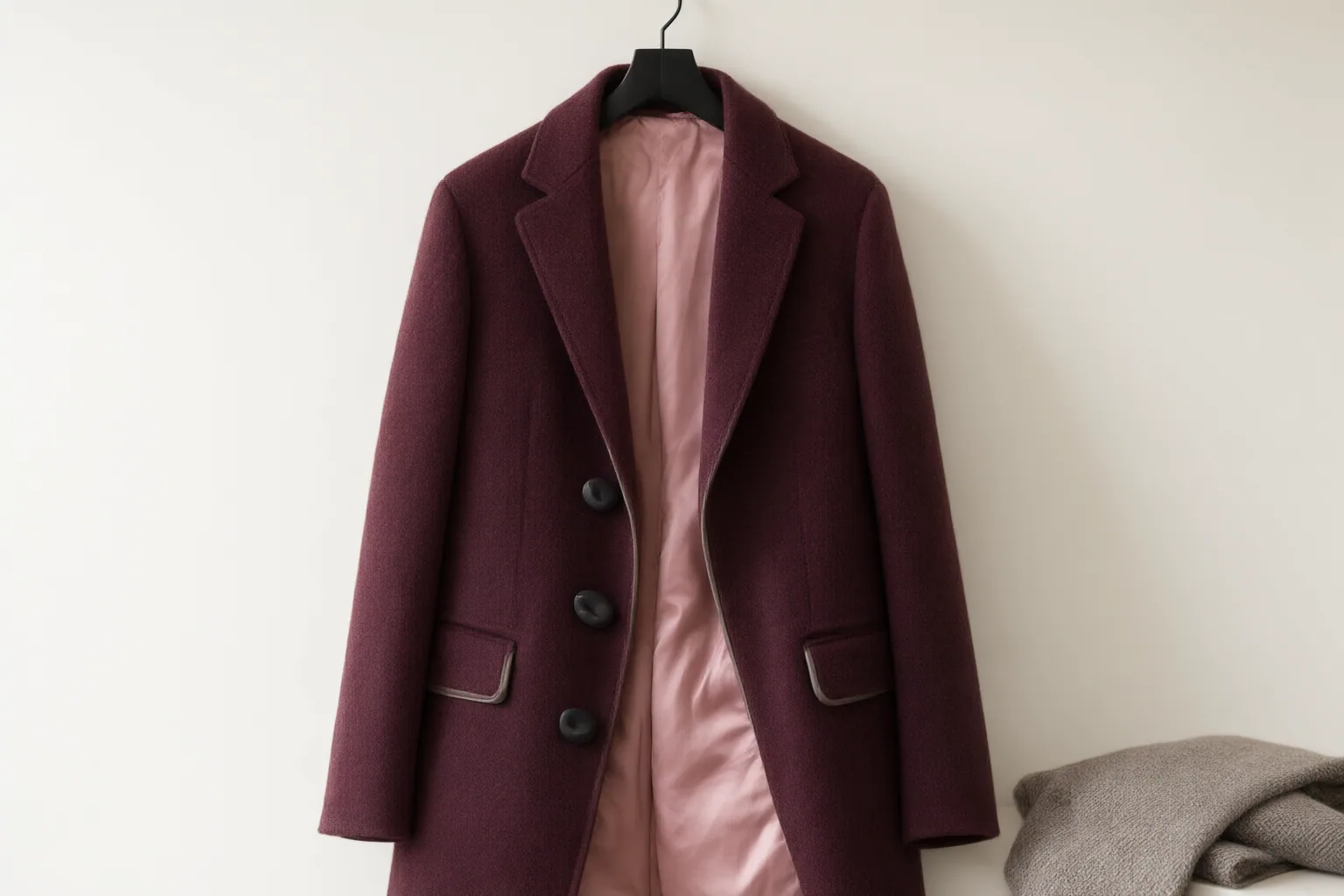
A useful coat assessment goes beyond fiber content. Before buying, examine the fabric and construction, lining, room for real-life layers, fastening operation, and care label as one connected checklist.
Start With Fabric, Weight, Length, and Construction
Do not treat a high wool percentage as a complete measure of warmth. Consider fiber content alongside fabric weight, coat length, lining, added interlining, and details such as a back vent. These elements can change coverage, wind protection, and the way a coat performs in use.
Wirecutter’s review covered 26 women’s wool coats, with input from 20 colleagues representing different body types and preferences. Its 11 selections across eight brands varied in weight, length, silhouette, and single- or double-breasted construction—useful evidence that no single specification defines the right coat.
For example, the reviewed Aritzia Slouch Coat combined 78% wool and 10% cashmere with a double-breasted, calf-length design. Those facts describe its materials and construction, but they do not independently establish its warmth in a particular temperature. Compare the complete structure with your intended weather and use.
Check the Lining and Try Your Real Layers
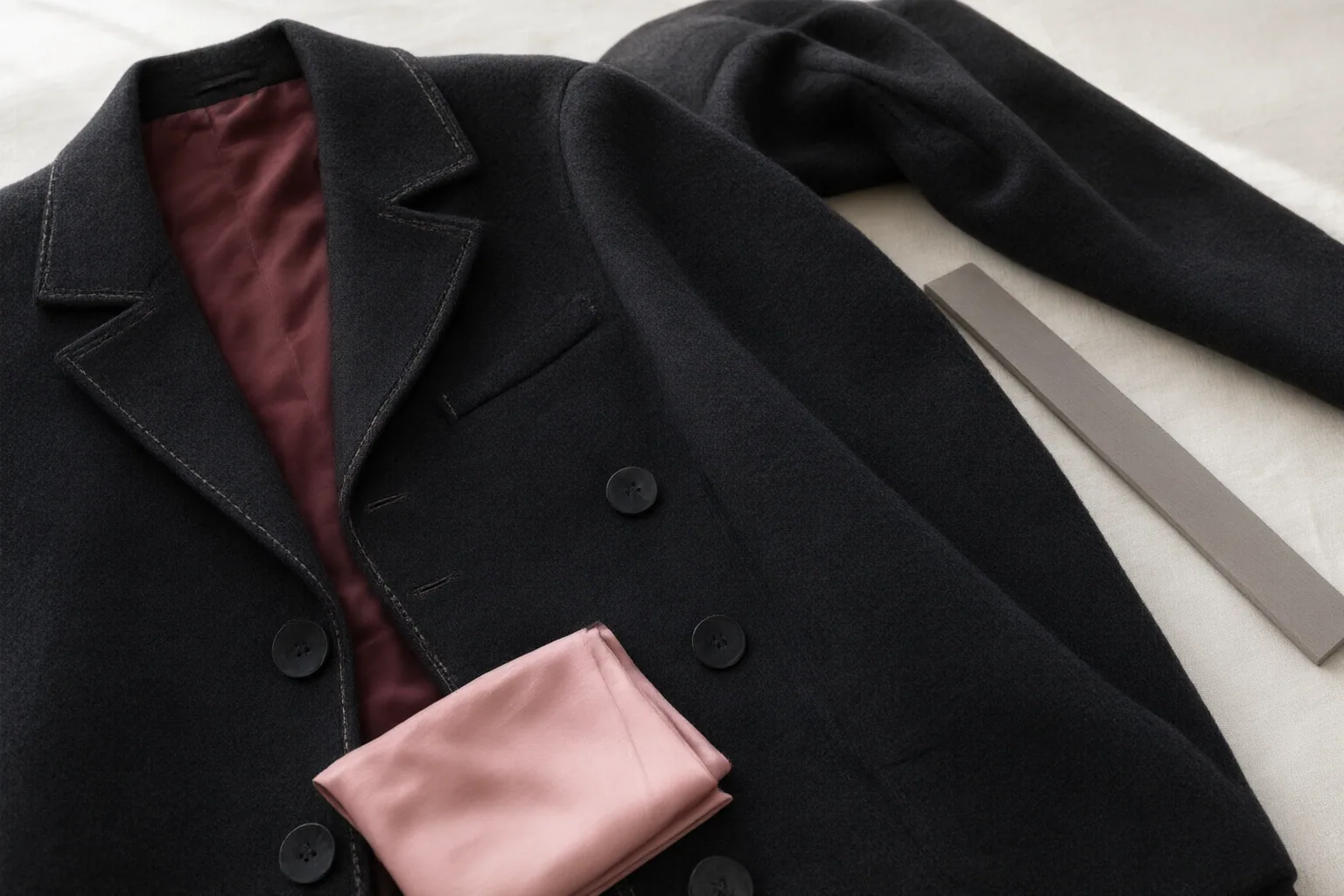
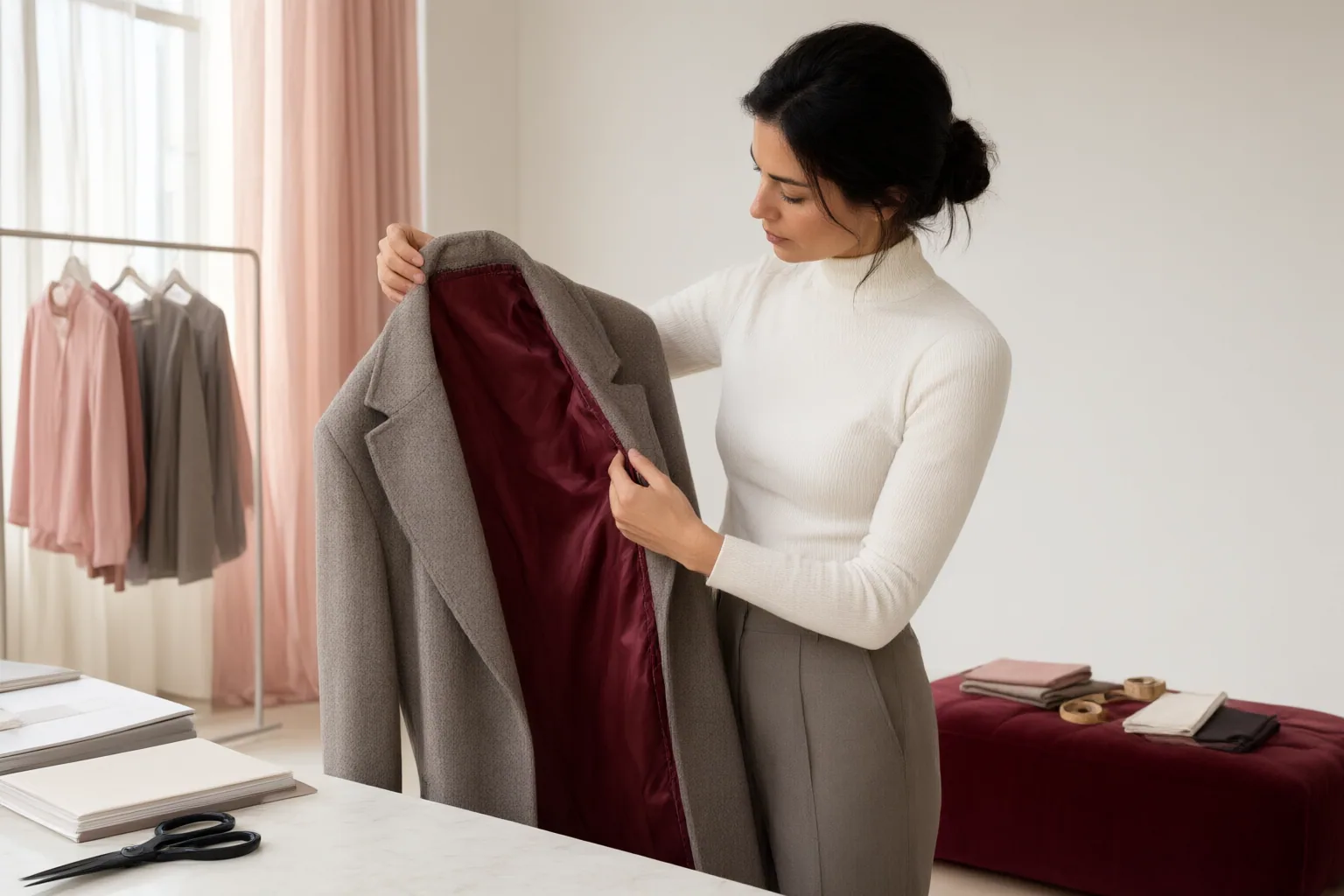
Next, look inside. Wirecutter reported that three reviewed Aritzia coats were fully lined and included an additional layer intended to block wind and improve warmth. The designs also allowed room for walking, sitting, and general movement. When trying on a coat, wear the sweater or other mid-layer you normally expect to use, then sit, reach forward, raise your arms, and walk.
Check the fit of the specific model rather than relying only on the size label. Within the same brand, the reviewed Slouch Coat ran large and prompted a suggestion to size down, while the Cocoon Coat was the smallest-fitting of the three and prompted consideration of sizing up. Availability of short or long versions also differed by model.
The second source describes an unlined dog raincoat designed either for mild wet weather or as a shell over an insulating layer. This is only a cross-category illustration of why lining and layering purpose must be considered together; it does not provide sizing, warmth, or purchase guidance for adult coats.
Test Every Fastening and Read the Care Label
Fasten the coat completely before deciding. Operate every button or closure with the coat both empty and layered, and notice whether the front stays comfortably covered. In Wirecutter’s assessment, the Cocoon Coat’s concealed buttons were somewhat difficult to operate, while double-breasted construction offered more coverage across the chest. Closure style is therefore a practical issue, not merely a visual choice.
Read the care label before paying and decide whether its restrictions suit your routine. The dog raincoat source specifies gentle machine washing and prohibits bleach, tumble drying, ironing, dry cleaning, and fabric softener. Those instructions apply only to that canine garment and must not be transferred to adult wool coats. They nevertheless demonstrate how specific care restrictions can affect convenience. For an adult coat, rely on the label attached to the exact garment under consideration rather than assuming that its fiber category determines its care requirements.
Conclusion
Use the checklist in a fixed order: assess fabric and overall construction; inspect the lining and any additional layer; test movement over your usual mid-layer; operate every fastening; and read the garment’s own care label. Compare the complete design rather than choosing from one attractive specification or a size label alone.
Before buying, bring your usual mid-layer and verify the composition label, lining, movement room, closures, and care instructions. If any element conflicts with your normal weather, movement, or maintenance habits, continue comparing other coats.
Disclosures and limitations
- This article was drafted with AI assistance using the two sources identified in the research package. Product details and assessments are attributed to those sources; no personal testing or use is claimed.
- This guide contains no affiliate product recommendations or price and inventory claims. The dog-raincoat source is used only as limited cross-category context and not as evidence for adult-coat specifications.
Related reading
Sources
- Our Favorite Women’s Wool Coats — Wirecutter: Reviews for the Real World
- Mudventure Coat ECO raincoat for dogs – Hurtta.com — Hurtta.com