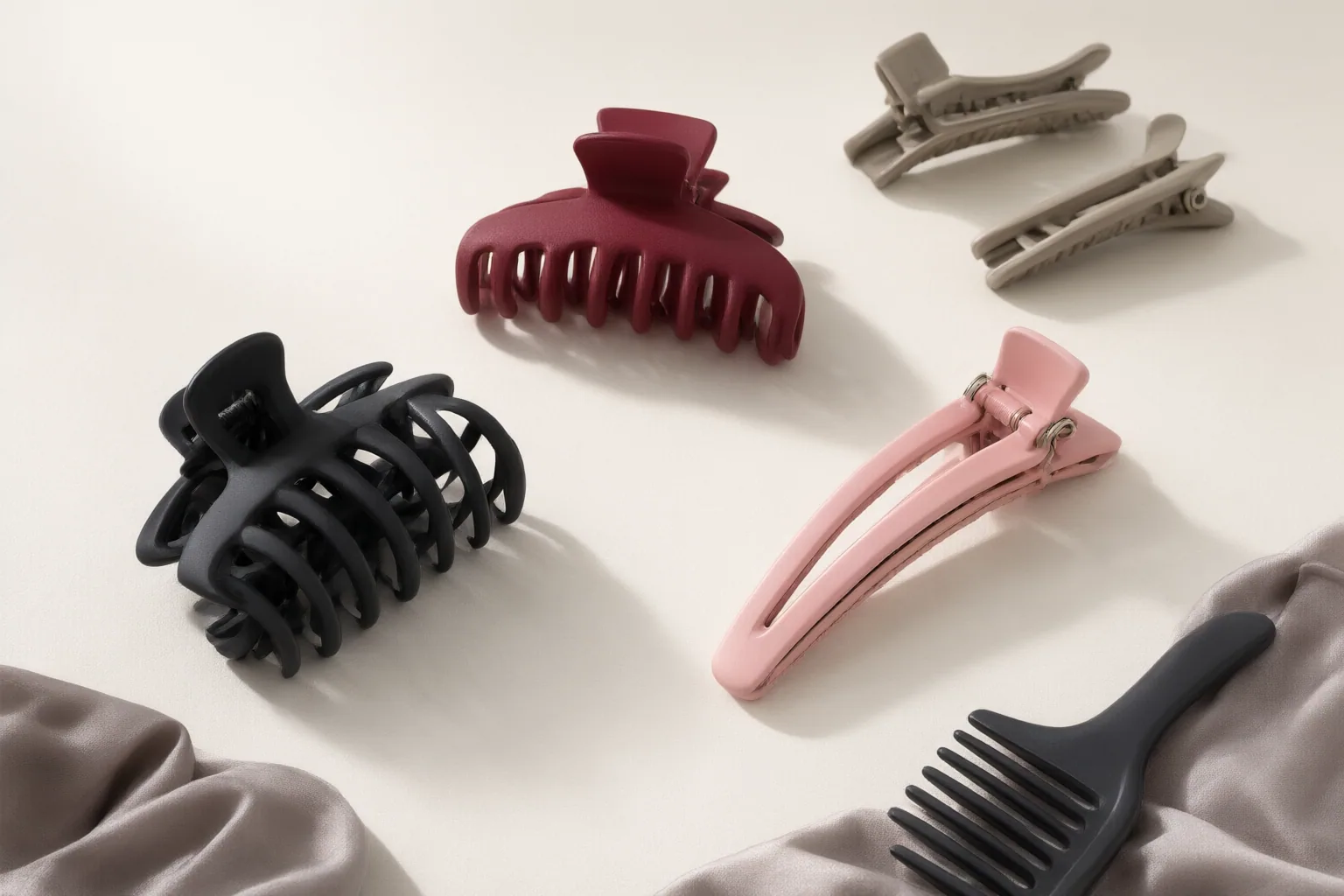
Choose a hair clip by matching its format and capacity to the style and amount of hair you want to secure. Check the contact surfaces, closure pressure, and removal method instead of relying only on broad seller claims.
Match the Clip Format to the Styling Job
Start with the task. Retail assortments include claw clips, flat claw clips, duckbill or alligator clips, snap barrettes, banana clips, and creaseless styling clips. These formats are not interchangeable simply because their listings mention similar hair types.
A claw clip uses a spring and interlocking teeth to secure a larger section of hair. A flatter duckbill clip applies lighter pressure and is commonly positioned for sectioning or temporarily holding a style. Snap, banana, and creaseless clips provide additional options, but the supplied marketplace material does not independently establish which holds best. Decide whether you need to gather most of your hair, secure a smaller section, or keep strands separated during styling before comparing individual designs.
Choose Size, Capacity, and Grip for Your Hair
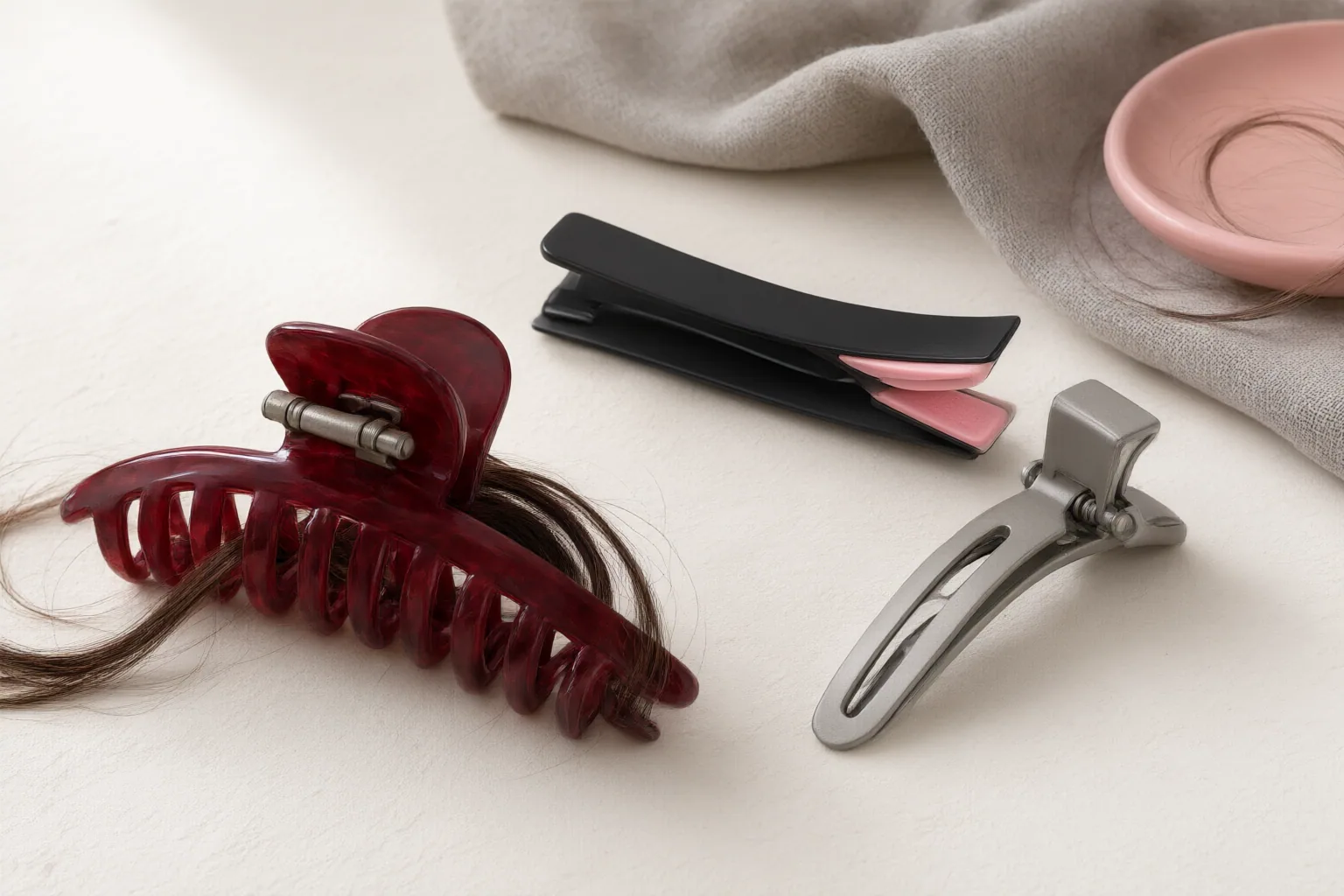
Match clip size to hair density and to the amount of hair used in your usual style—not merely to overall hair length. Thick, heavy, or curly hair may require more internal capacity and enough grip to contain a larger section. Fine or slippery hair may benefit from lighter tension and a shape intended to limit sliding. These are selection principles, not guarantees that one clip will suit everyone within a broad hair-type label.
Place the intended section inside the clip and check whether it closes comfortably. Do not force the mechanism shut around more hair than it can accommodate. A clip that is too small may concentrate pressure or be difficult to close, while an unsuitable grip can allow movement. Marketplace listings advertise features such as wide teeth, double hinges, silicone bands, and no-slip construction, but those descriptions come from sellers and are not independent performance findings.
Check Comfort and Reduce Snagging During Use
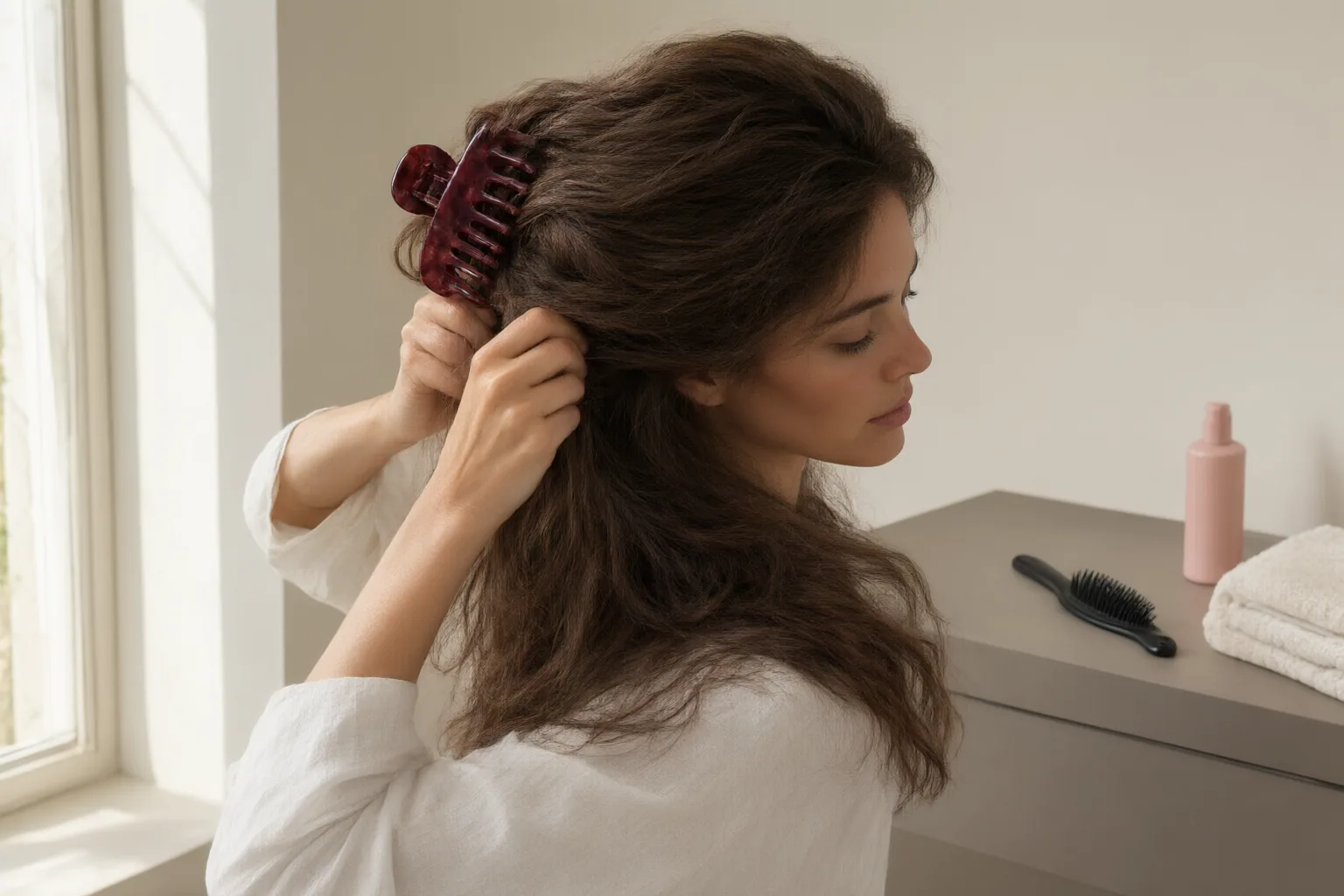
Inspect every surface that could touch your hair or scalp. Run a finger carefully along the edges and teeth to find rough areas, and look for exposed hardware that could catch strands. The commercial guides identify root discomfort, snagging, pressure marks, creasing, slipping, and broken strands during removal as practical concerns.
Comfort is part of fit. If the clip creates concentrated pressure, feels painful at the roots, or must be forced closed, try a different size, position, or format. If it slips, reassess both the amount of hair inside it and the type of grip rather than assuming that stronger tension is always preferable.
Removal technique also matters. Release the clip’s tension first, open it fully, and then lift it away instead of dragging it through the hair. Terms such as “pain-free,” “creaseless,” “no-slip,” or “breakage-resistant” should be treated as seller marketing unless separately verified; inspect the construction and judge whether the design suits your intended use.
Conclusion
Before buying, define the styling job, match the clip’s capacity to your hair density, and confirm that it closes without force. Check the teeth, edges, and hardware for potential snag points, and plan to release tension before removal. Test the design with the amount of hair you normally secure instead of depending solely on claims that it works for many hair types.
Disclosures and limitations
- This article was prepared with AI assistance from the supplied Amazon marketplace excerpts and commercial Avelisse guides; seller performance claims were not independently verified.
- No specific products are recommended here. If commerce or affiliate links are added later, they should be clearly labeled and should not determine the editorial guidance.