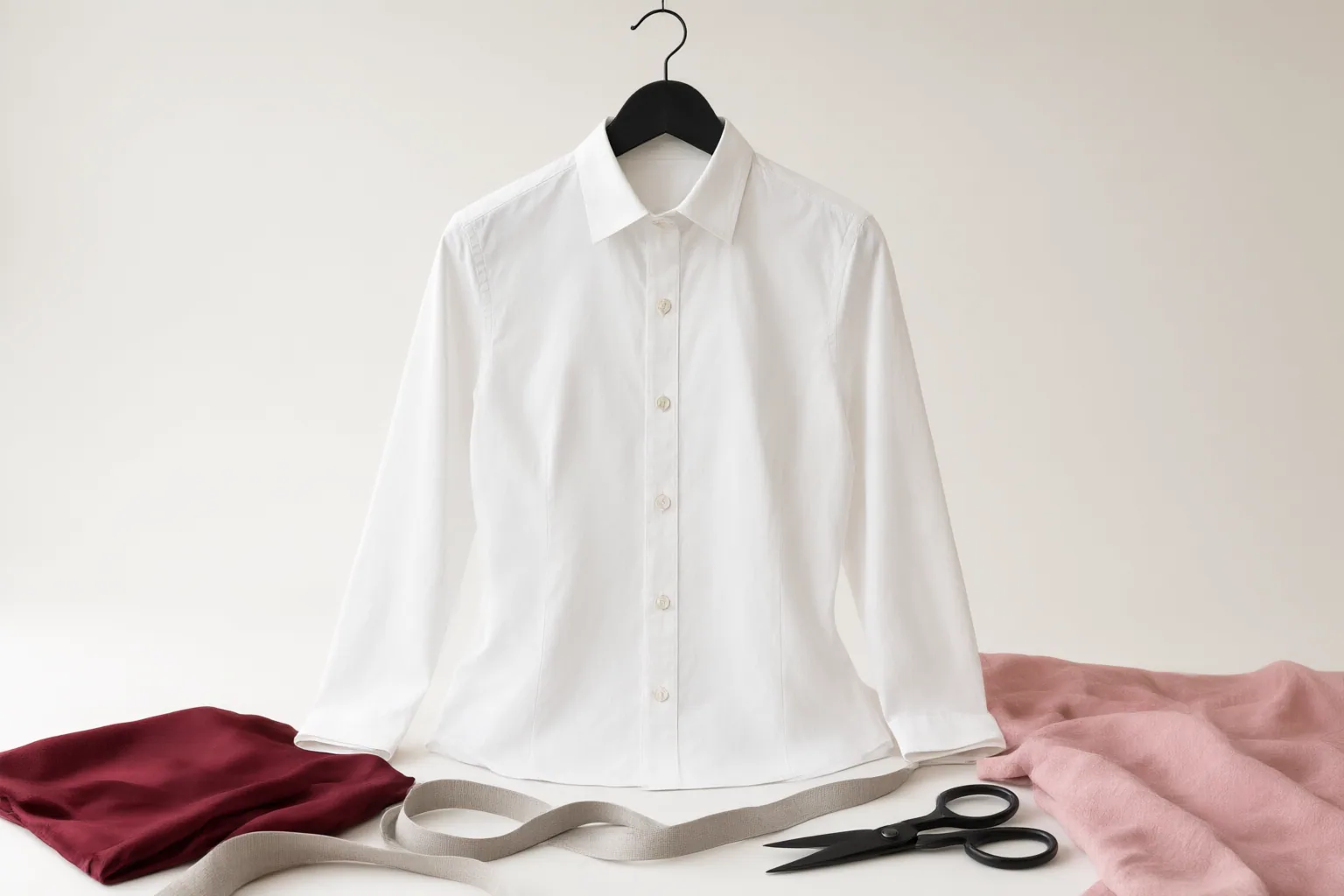
Choose a button-down by coordinating body measurements with the garment’s cut, then checking the shoulder seams, button placket, hips, arm movement, and hem. A size label alone cannot guarantee balanced proportions, so judge the entire shirt rather than solving one tight area in isolation.
Measure Before You Choose a Size
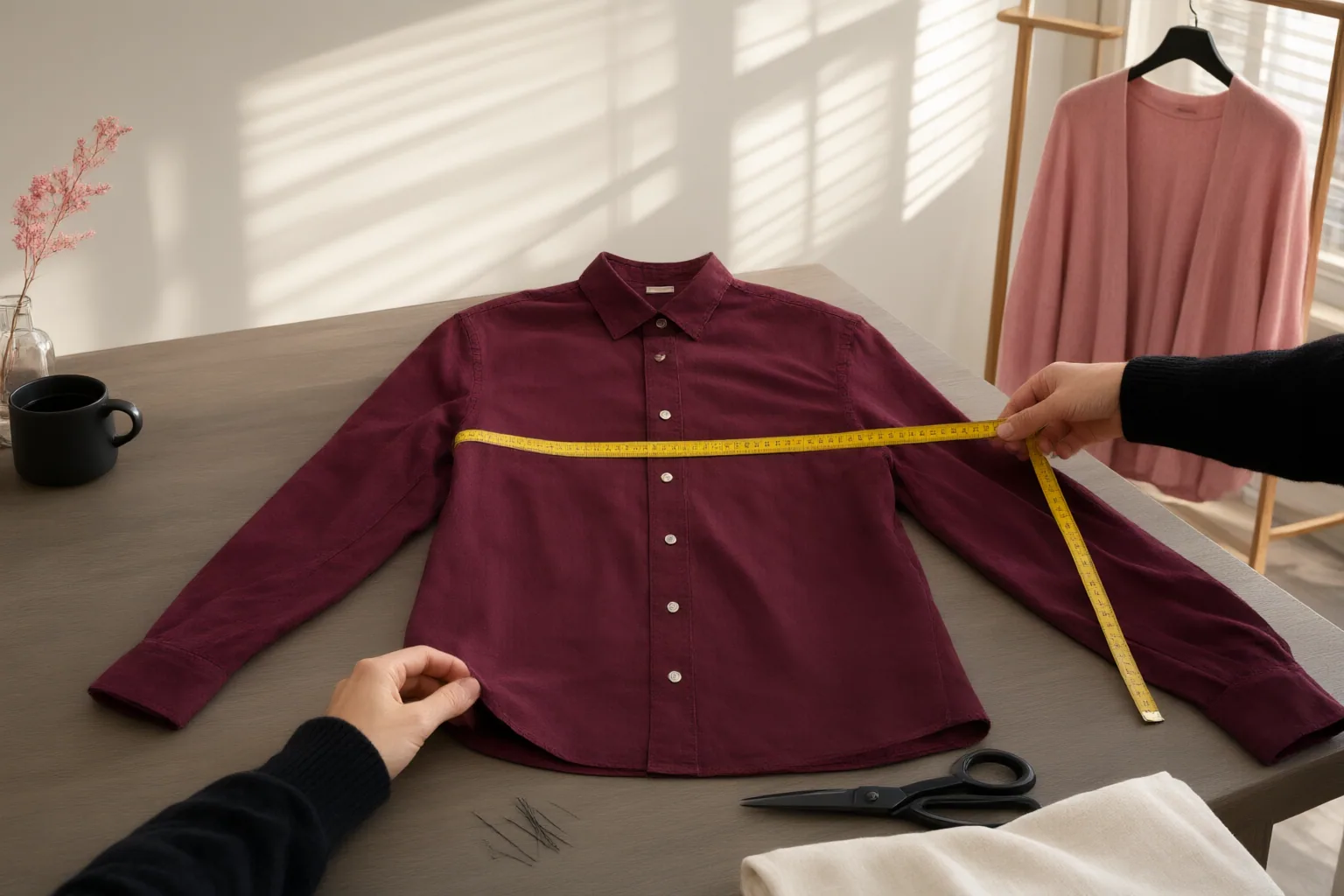
Start by recording your bust, waist, shoulder width, upper-arm circumference, torso length, and sleeve length. Use these figures when reviewing any garment measurements the seller provides, but also read the cut description carefully. Sizing varies between brands, and the same labeled size can produce different results through the shoulders, torso, or sleeves.
Terms such as slim, boxy, boyfriend-cut, or curved-seam describe important differences that a size number cannot capture. If a listing does not explain the silhouette clearly, treat the size label as incomplete information. The aim is to identify a promising combination of dimensions and shaping before evaluating the shirt on the body—not to assume that one measurement guarantees an overall fit.
Check the Shoulders, Bust, and Movement
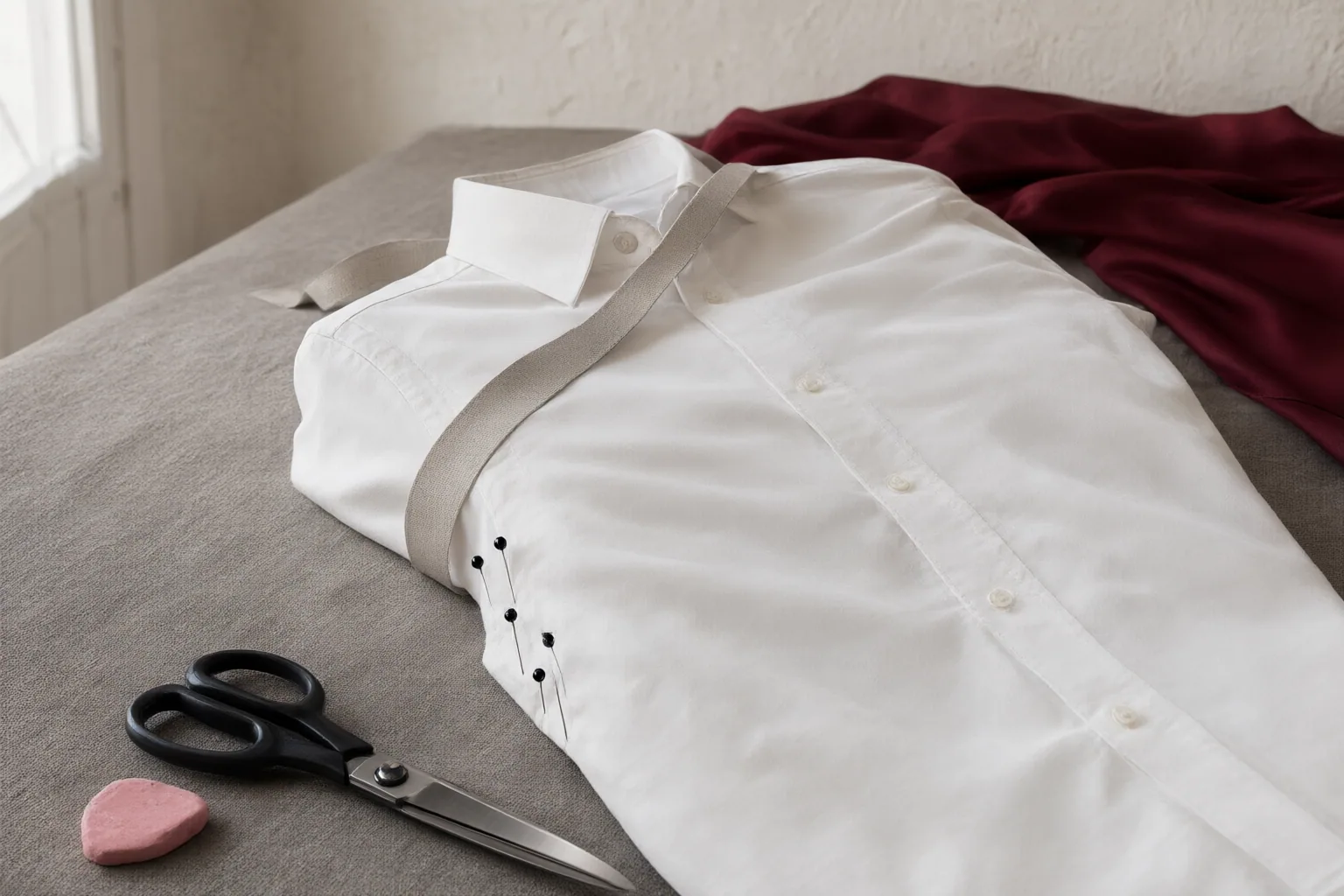
Begin the try-on at the shoulders. On a conventional shirt, the shoulder seam should meet the end of your shoulder. A seam falling beyond that point suggests excess width. Next, raise and move your arms: pulling across the upper back indicates that the shirt lacks room, even if it looks acceptable while you stand still.
Button the shirt and inspect the placket at the chest or bust. Buttons pulling apart or exposing a gap signal excessive tension. Do not automatically assume that sizing up is the best answer; extra chest room may leave the shoulders or torso overly loose. For wearers combining a fuller bust with a defined waist, limited shaping can contribute to gaping. A cut incorporating darts or princess seams may follow those proportions more effectively than a straighter shirt.
Assess these points together. A shirt that passes the shoulder check but pulls at the placket—or accommodates the bust while dropping past the shoulders—has not achieved coordinated fit.
Evaluate the Hips, Cut, Fabric Label, and Hem
Continue the check through the lower torso and hips. Look for clinging, pulling, or a hem that shifts when you sit or move. For pear-shaped proportions specifically, guidance in the supplied research cautions against slim shirts that cling at the hips and longline styles ending at the body’s widest point. This is an anatomy-specific consideration, not a universal rule for every wearer.
Match the hem to how you plan to dress. Dress shirts commonly have longer, more deeply curved hems intended to remain tucked, while casual button-ups tend to use shorter hems suited to untucked wear. An otherwise acceptable shirt may therefore be the wrong choice for its intended styling.
Marketplace listings observed in the research used labels including slim, regular, relaxed, oversized, stretch poplin, Oxford, and linen. These terms mix silhouette and material information; none proves how a particular garment will fit. Examine the individual cut, dimensions, shaping, and hem instead of relying on the broad “button-down” category or one descriptive label.
Conclusion
There is no single sizing formula that guarantees a simultaneous fit at the shoulders, bust or chest, torso, and hips. Treat selection as a sequence of connected checks: establish your measurements, assess the garment’s stated cut, place the shoulder seams correctly, inspect the closed placket, move your arms, and evaluate the hips and hem for the planned tucked or untucked look.
Before keeping a shirt, record your key measurements, compare them with any available garment measurements, and repeat the shoulder, bust, hip, movement, and hem checks.
Disclosures and limitations
- This article was prepared with AI assistance using only the supplied research package, which cited Tellar, The Modest Man, and an Amazon search-page capture observed on September 15, 2026. The marketplace terminology does not establish product quality, availability, pricing, or fit performance.
- No structured products, prices, ratings, reviews, or affiliate recommendations were provided or included. Readers should verify current garment details with the seller before purchasing.
Related reading
Sources
- Flattering Shirts That Fit: A Data-Driven Guide for Every Body Type — tellar.co.uk
- Amazon.com : button down shirt — amazon.com
- How a Button Up Shirt Should Fit | Button Down Fit Guide % % — The Modest Man
- Button Downs | Men's Button Down Shirts — byltbasics.com