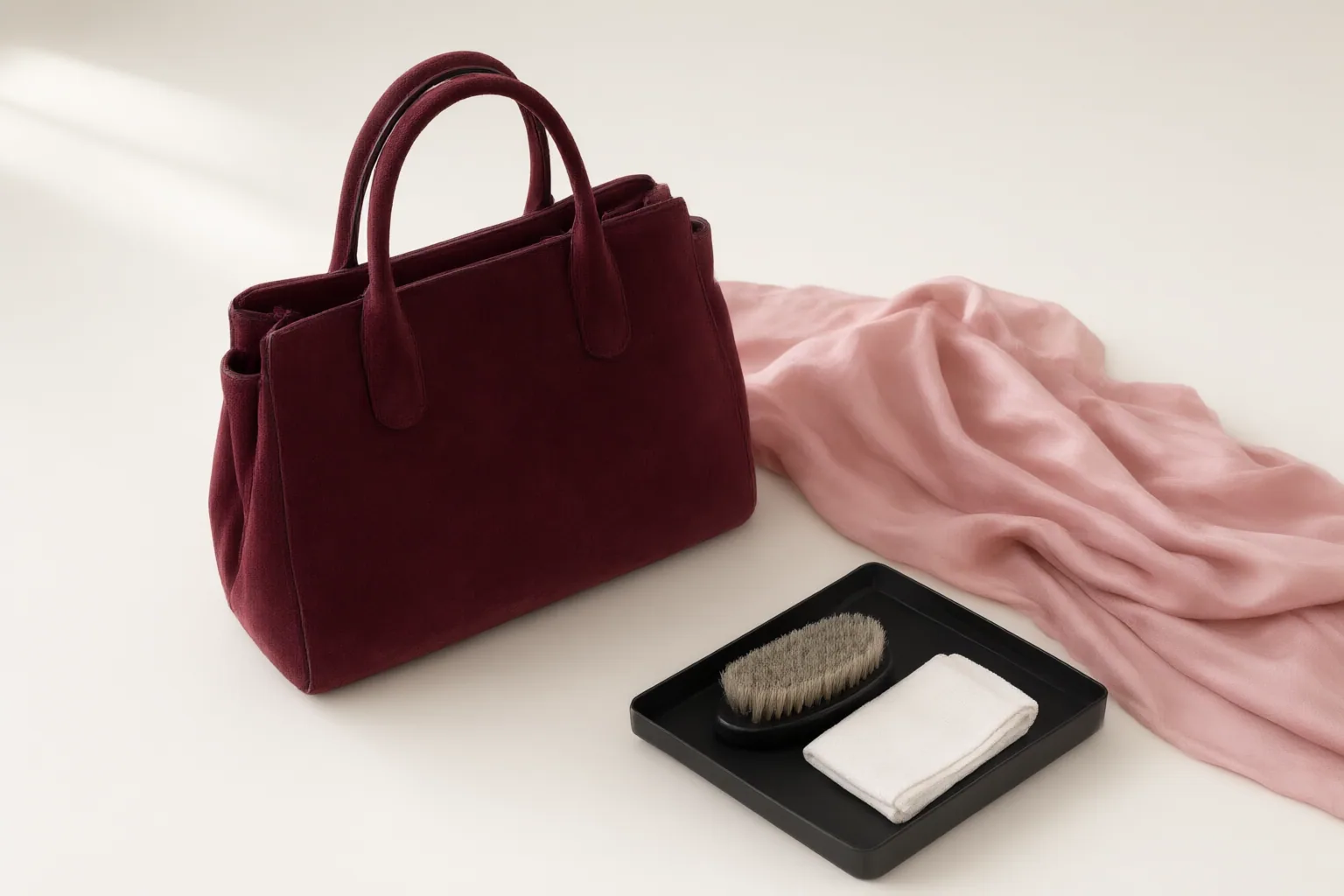
Choose a suede bag by evaluating how it feels when loaded, how well its structure supports your usual contents, whether its color suits the fabrics you wear, and how often it will encounter moisture. Suede’s napped surface also requires specialized cleaning and dry storage, so its upkeep should fit your routine.
Check Weight, Structure, and Carrying Comfort Together
A heavier bag is not necessarily a better-quality bag. Start with its empty weight, then consider the items you normally carry and whether the structure distributes that load without sagging or pulling at the straps. If possible, assess comfort with representative contents inside rather than judging the empty bag alone. Check whether the strap length is adjustable and whether its width or padding seems appropriate for the intended load.
Inspect the stitching, seams, lining, hardware, closure, and consistency of the suede surface. These details provide a broader view of craftsmanship than weight alone. Look at how the base and sides hold their shape and where the straps join the body. The cited guidance warns that heavy loads may stretch or deform suede bags and can strain straps, particularly in softer styles. A bag intended for daily commuting therefore needs to be considered differently from one used for a few light essentials.
Assess Color-Transfer Risk Against Your Wardrobe
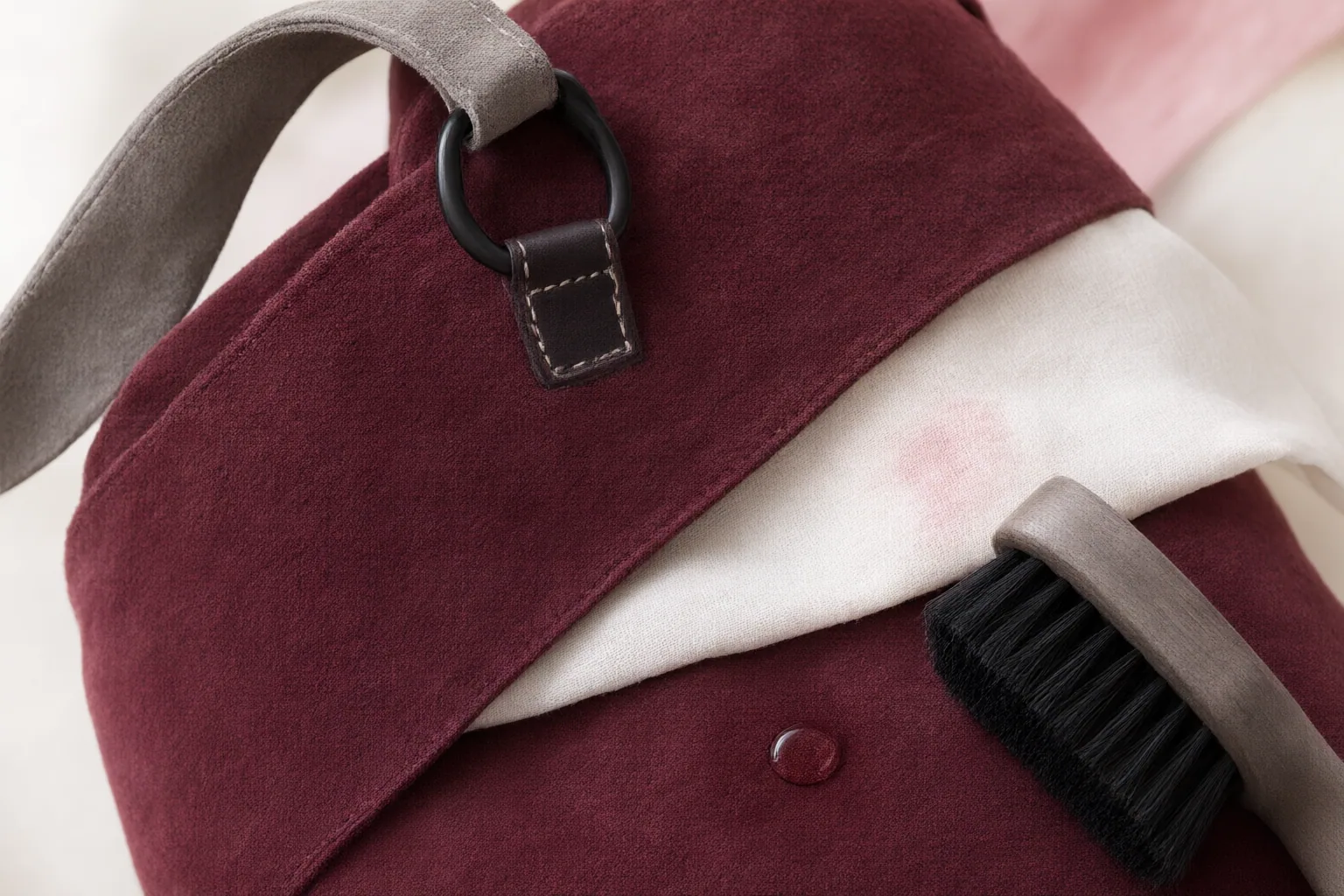
Color migration is a practical consideration, especially when dark suede will repeatedly rub against light clothing or a pale lining. The cited source identifies friction, moisture, heat, body oils, and inadequate dye fixation as factors that can contribute to transfer from suede or nubuck. Dark shades are described as carrying greater risk, although transfer is not presented as inevitable in every bag.
Before purchasing, think about where the bag will sit while carried and which fabrics it will contact most often. A dark shoulder or crossbody bag may have prolonged contact with a light coat, shirt, or dress. Humidity, sweat, and oils can add to the conditions associated with migration. Visual inspection alone may not reveal behavior that develops after repeated rubbing, so wardrobe compatibility should be part of the decision rather than an afterthought.
Match Weather Exposure and Upkeep to Your Routine
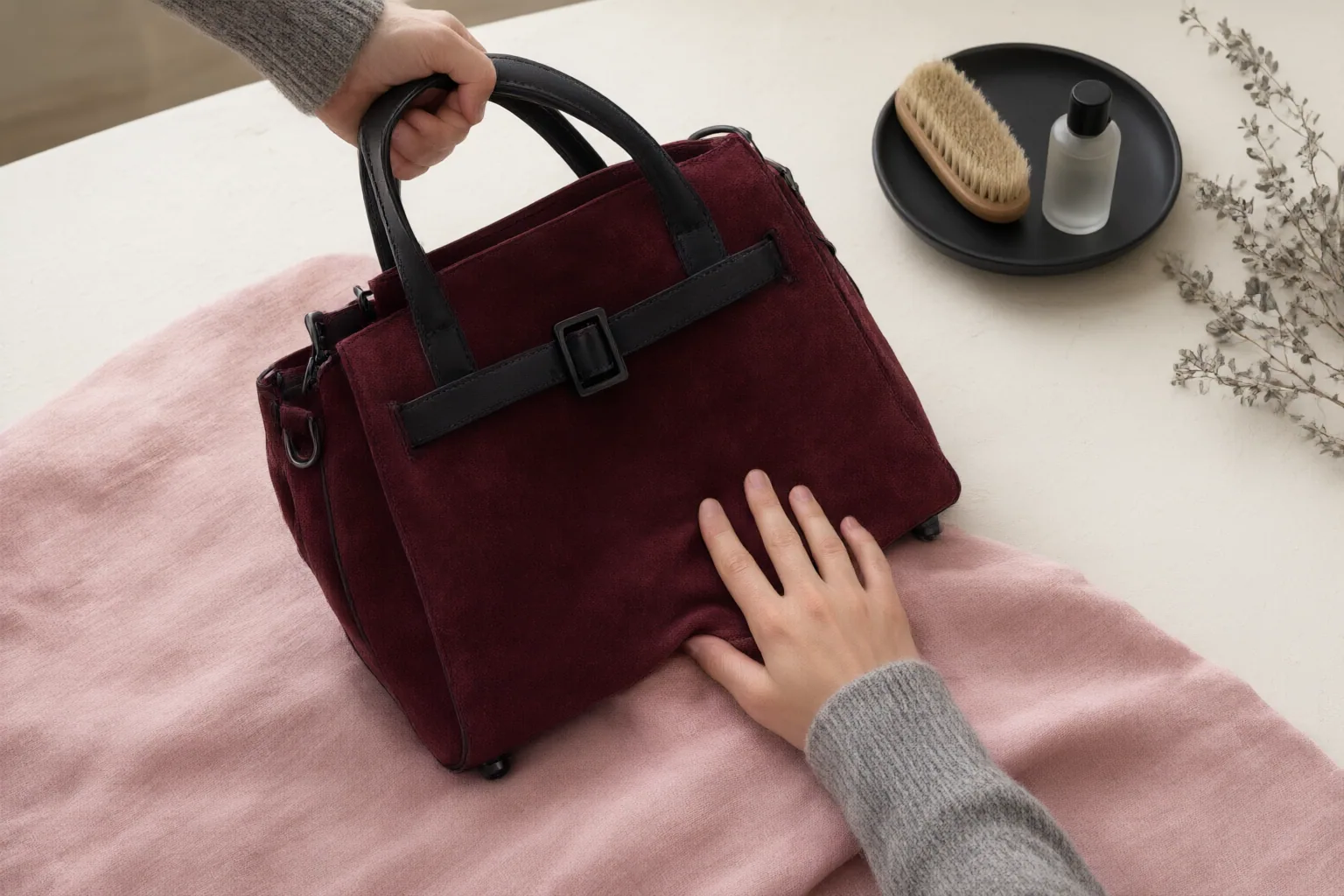
Suede has a raised, napped surface, generally made from the inner or split layer of an animal hide. The sources advise caution around water because moisture may stain, darken, or otherwise alter that surface. Frequent rain, damp storage, and routine water-based cleaning can therefore make ownership more demanding. Consider how often you walk outdoors, whether you can shelter the bag during wet weather, and whether you have a reliably dry storage space.
The cited care guidance recommends using a suede brush to remove dirt rather than treating water as an everyday cleaning method. Stains require careful handling, and any moisture-protection approach should be suitable for suede. For storage, keep the bag dry in a dust bag or pillowcase and away from direct sunlight. Avoid overloading it during use or storage, since excess weight may stretch or deform the bag. These requirements do not make suede unsuitable, but they do mean that its appearance depends partly on consistent, material-appropriate care.
Conclusion
Use a six-part check before committing: evaluate comfort with your usual load; inspect the seams, stitching, lining, hardware, closure, straps, and surface; consider potential contact with light fabrics; estimate likely exposure to rain or humidity; confirm that dry, shaded storage is available; and decide whether brushing and careful stain treatment fit your habits. Bring or approximate your normal contents when inspecting the bag, then choose it only if both the loaded feel and maintenance routine suit your everyday use.
Disclosures and limitations
- This article was prepared with AI assistance using only the supplied research package and was not based on personal purchase, testing, use, or interviews.
- The underlying materials include commercial buying guidance and manufacturer or retailer information, not independent laboratory findings. No individual products, prices, inventory claims, ratings, or affiliate offers are recommended.
Related reading
Sources
- How to Choose the Best Suede Bags: A Complete Buying Guide — smartbuy.alibaba.com
- Suede and Nubuck Leather Bags: Color Transfer Risks and Prevention — One-Stop Development & Custom Leather Goods Manufacturer
- The Ultimate Guide to Suede Bags: Style, Care & Buying Tips — Isabel Bernard