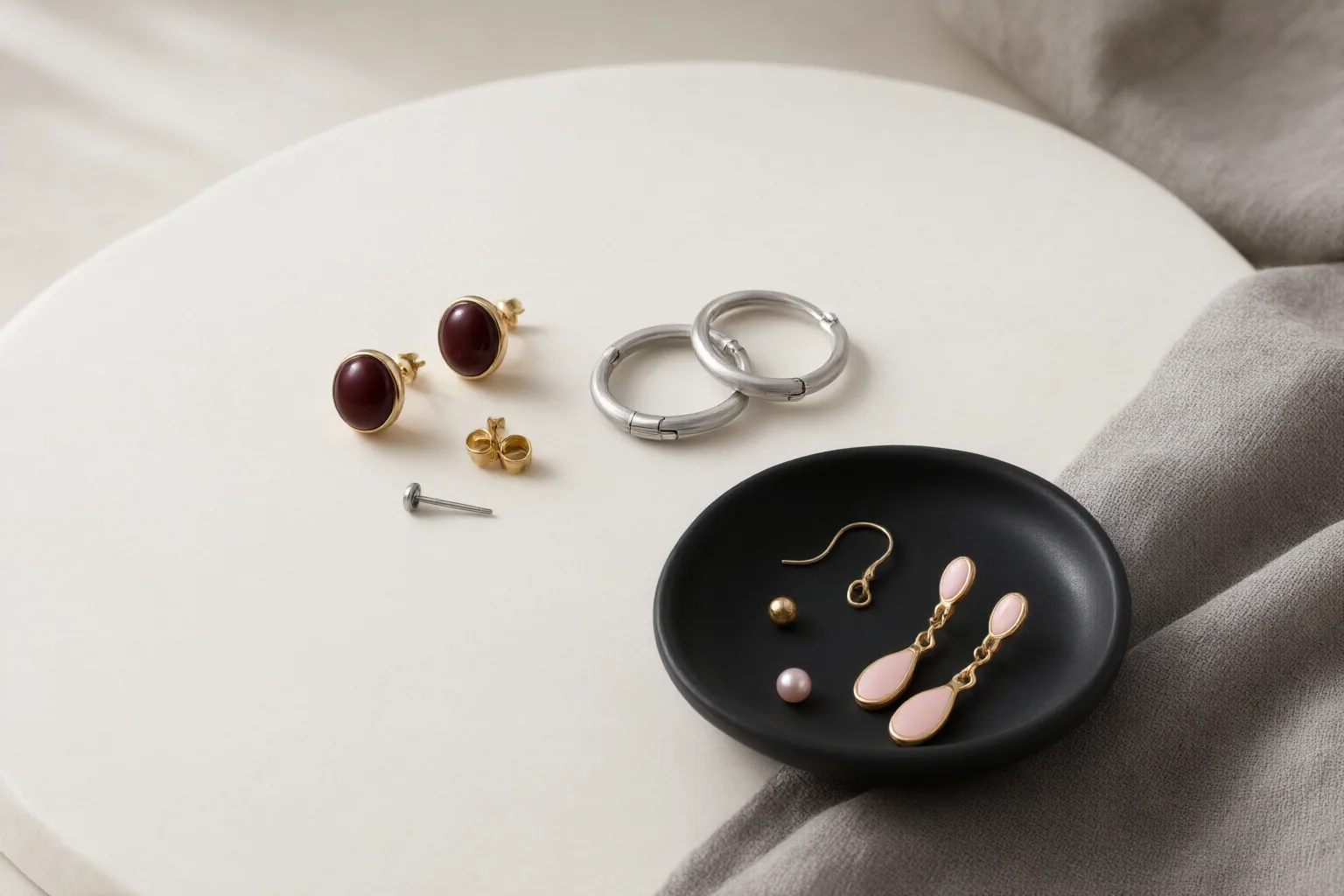
For sensitive ears, look beyond “hypoallergenic.” Check the post, backing, base metal, coating, weight, surface finish, and closure, then begin with a short wear period before considering longer use.
Check Every Material That Touches the Piercing
A “hypoallergenic” label is not an allergy-proof guarantee. Read the full construction details, paying particular attention to the post and backing because these components remain in contact with the piercing. A decorative front may use one material while the post, back, or underlying base uses another.
Look for a specifically identified material and, when provided, its grade. Descriptions such as “alloy,” “gold tone,” or “silver tone” do not reveal enough about the metal touching the ear. The same caution applies to plated or coated earrings: check both the finish and the base metal underneath, since wear can expose that base over time. The supplied guides repeatedly identify nickel exposure as a concern, but they also note that rough surfaces, tight backs, moisture, residue, and deteriorating coatings may contribute to discomfort. Compare listings component by component instead of treating terms such as “hypoallergenic,” “surgical steel,” or “titanium” as complete specifications.
Compare Weight, Shape, and Closure Comfort
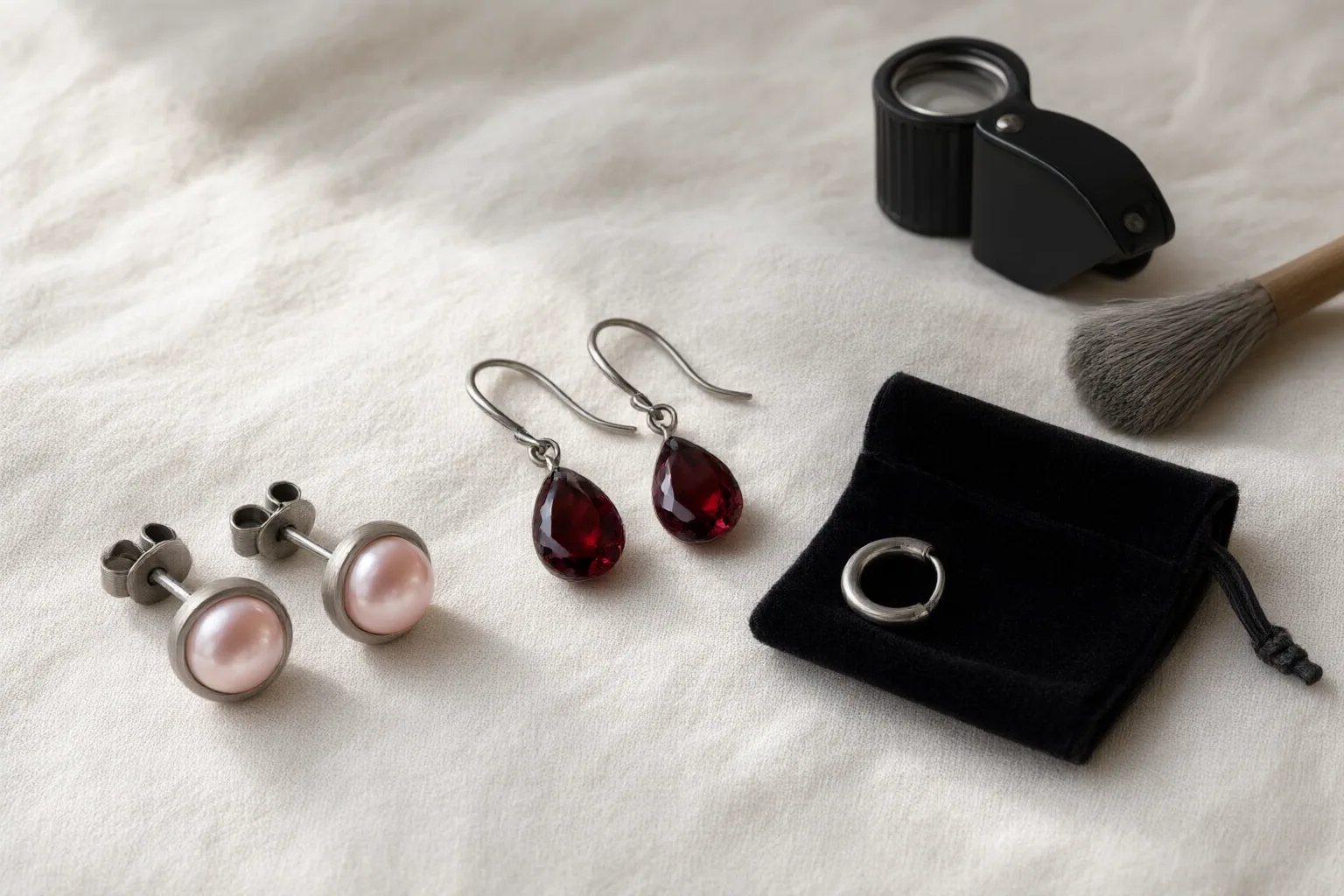
Material is only one part of comfort. The cited guides present lightweight studs, small hoops, and delicate drops as sensible lower-pull starting points, while heavier designs may place more mechanical stress on a piercing during extended wear. Check whether the listing provides enough information to judge size and weight rather than relying on photos alone.
Examine the shape of the post, edges, and closure. Surfaces should appear smooth, and the back should fit securely without pinching. One guide favors flat-back construction because it eliminates the protruding post end and may be easier to clean. Whatever the closure style, consider whether it could press into the ear or trap residue. No material claim can guarantee all-day comfort: individual sensitivity, earring weight, fit, friction, moisture, and product buildup all vary. If a seller does not identify the post, backing, and closure clearly, ask for those details before purchasing.
Use a Cautious First-Wear and Care Routine
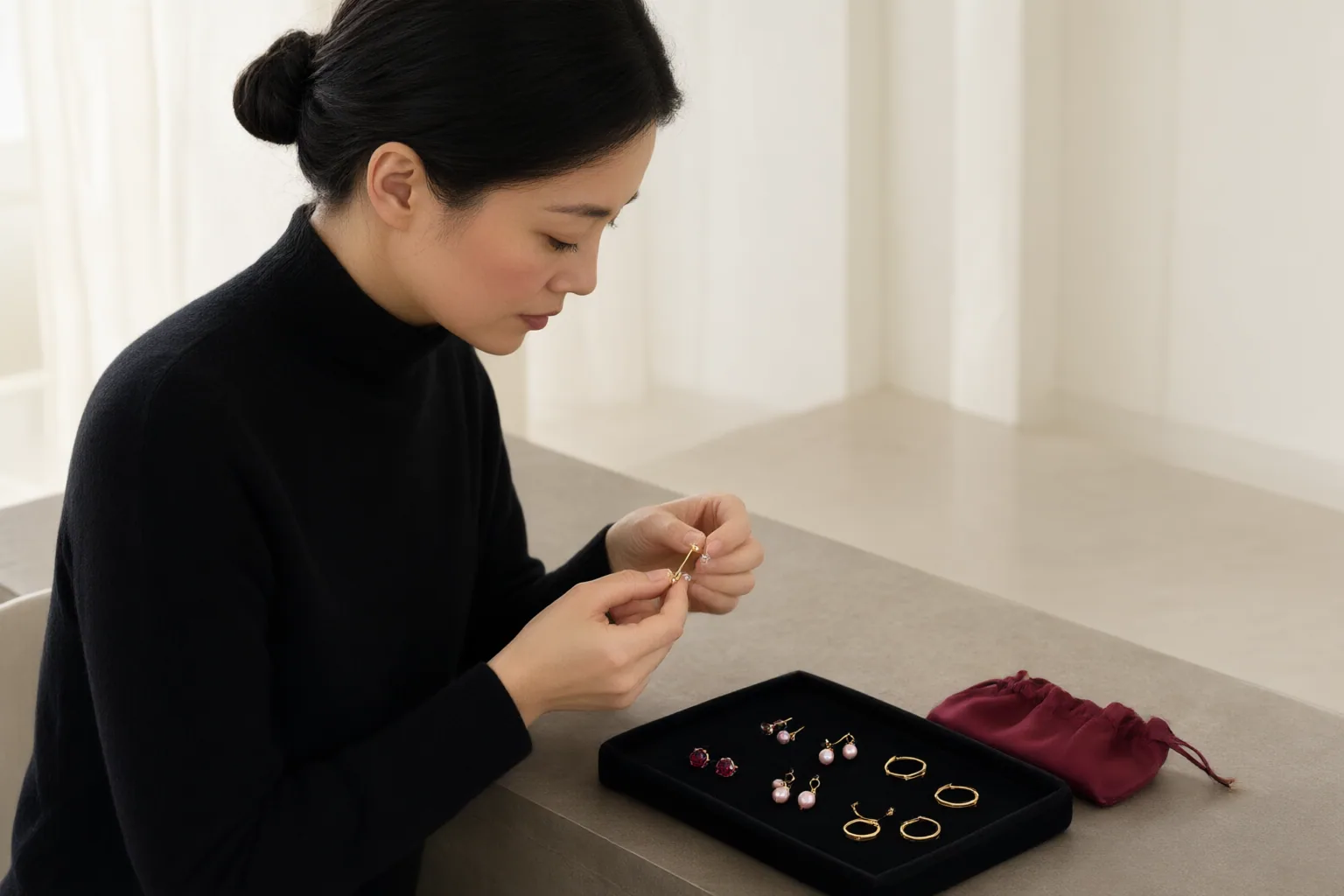
For a cautious first wear, one cited guide recommends trying new earrings for a short period rather than immediately wearing them all day. Remove them if itching, heat, swelling, or discomfort develops. Keep both the earrings and piercing area clean, and limit buildup from sweat, perfume, sunscreen, or hair products around the piercing.
Routine cleaning cannot compensate for an unsuitable material, rough post, tight closure, or worn coating, so reassess the construction if irritation appears. The guide advises stopping wear for redness, itching, burning, swelling, tenderness, discharge, odor, broken skin, or irritation that does not settle. It also recommends consulting a qualified medical professional when symptoms are painful, spreading, recurring, or associated with discharge. This is cautious shopping and wear guidance, not a diagnosis or a substitute for medical care.
Conclusion
Before checkout, verify seven points: the post material, backing material, base metal, plating or coating, weight, surface finish, and closure design. Favor complete construction details over broad marketing language, and remember that a comfortable material label does not eliminate possible problems from pulling, friction, moisture, buildup, a pinching back, or coating wear.
Use the same checklist when comparing visually similar pairs, because their piercing-contact components may differ. If a listing uses only vague terms such as “alloy” or does not identify what sits against the ear, request the missing information from the seller. Before buying, confirm every component that touches the piercing and choose a lightweight, smooth design with a closure that does not pinch.
Disclosures and limitations
- This article was prepared with AI assistance from the supplied retailer, jewelry-guide, and marketplace research. Those sources are not independent clinical or regulatory evidence, so material and health-related statements are presented cautiously.
- No specific products, prices, ratings, or stock claims are included. If commerce or affiliate links are added during publication, they should be clearly disclosed and should not replace independent component checks.
Related reading
Sources
- Best Earrings for Sensitive Ears: Materials, Styles, and Care Tips — Lia Atelier
- How to Choose Real Earrings for Sensitive Ears: A Guide — jewelstyleradar.com
- Amazon.com : earring for sensitive ears — amazon.com
- Best Earrings For Sensitive Ears | Simply Whispers — Simply Whispers
- Best Hypoallergenic Earrings for Sensitive Ears 2026 — Caeli Jewelry
- Best Earrings for Sensitive Ears: Safe Materials That Actually Work – Sensitiveearrings — Sensitiveearrings
- Amazon.com : sensitive ears earrings — amazon.com