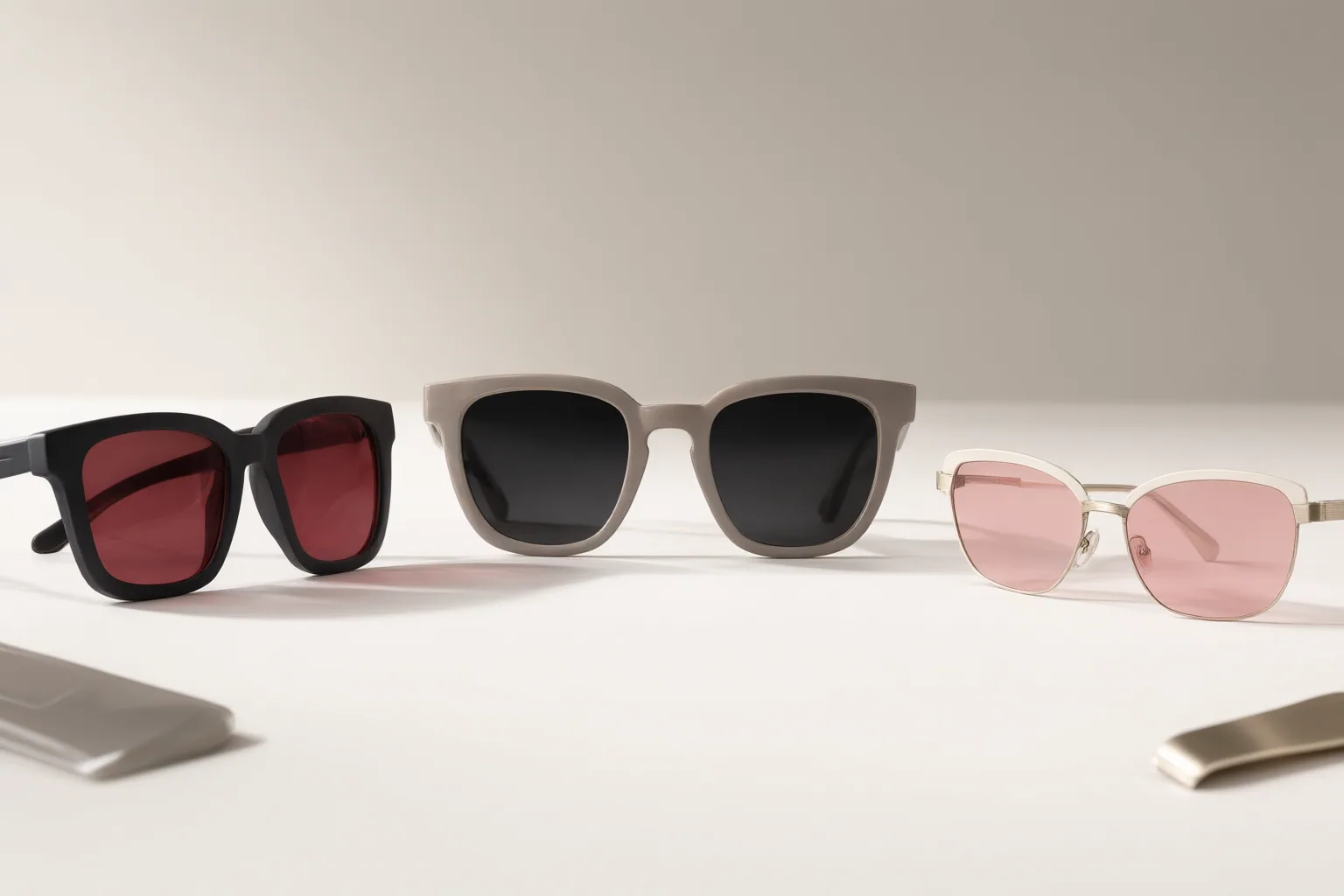
Choose everyday sunglasses by checking an explicit UV-protection label first, then evaluating coverage, material tradeoffs, fit, fogging, prescription compatibility, and whether polarization matches the conditions in which you will wear them.
Start With the UV Label and Coverage
Do not judge UV protection by how dark the lenses look. Tint depth and UV-blocking capability are different, so look for wording that states 99% or 100% UV blocking, or UV absorption up to 400 nanometers, often shown as UV400. If that information is absent or unclear, appearance alone cannot establish the claimed protection.
Coverage belongs in the same initial check. Consider whether the frame and lenses provide enough coverage for your intended routine, rather than choosing only by silhouette or lens color. In the United States, dated FDA guidance describes nonprescription sunglasses, including clip-ons, as regulated Class I medical devices subject to applicable general controls and impact-resistant lens requirements. That regulatory context does not replace checking current requirements or the label on the pair being considered.
Compare Frame and Lens Material Tradeoffs
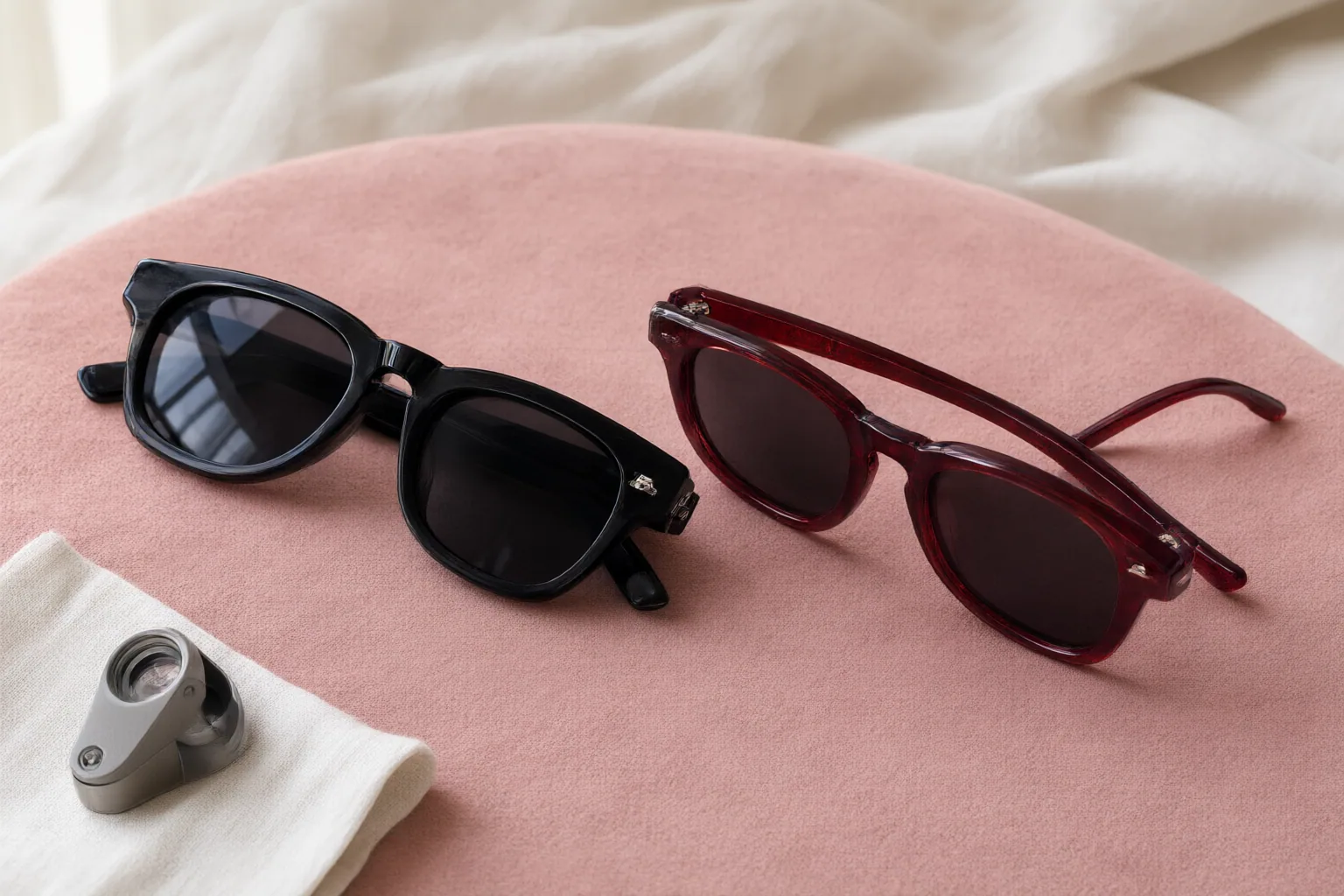
Evaluate frame materials according to the demands of your routine. Relevant dimensions include weight, strength, flexibility, corrosion resistance, and impact resistance. A lightweight option may be appealing for long wear, while strength, flexibility, or corrosion resistance may matter more in active or demanding settings. The supplied evidence does not identify one frame material as universally best.
Lens choice involves a similar balance. Glass lenses are comparatively scratch-resistant and optically clear, but they are heavier and less impact-resistant than plastic lenses. Plastic lenses are generally lighter and less expensive. Decide which tradeoffs matter most instead of treating a single characteristic as decisive: weight and cost may favor plastic, while scratch resistance and optical clarity may make glass worth considering for another shopper.
Test Fit and Decide Whether Polarization Suits the Setting
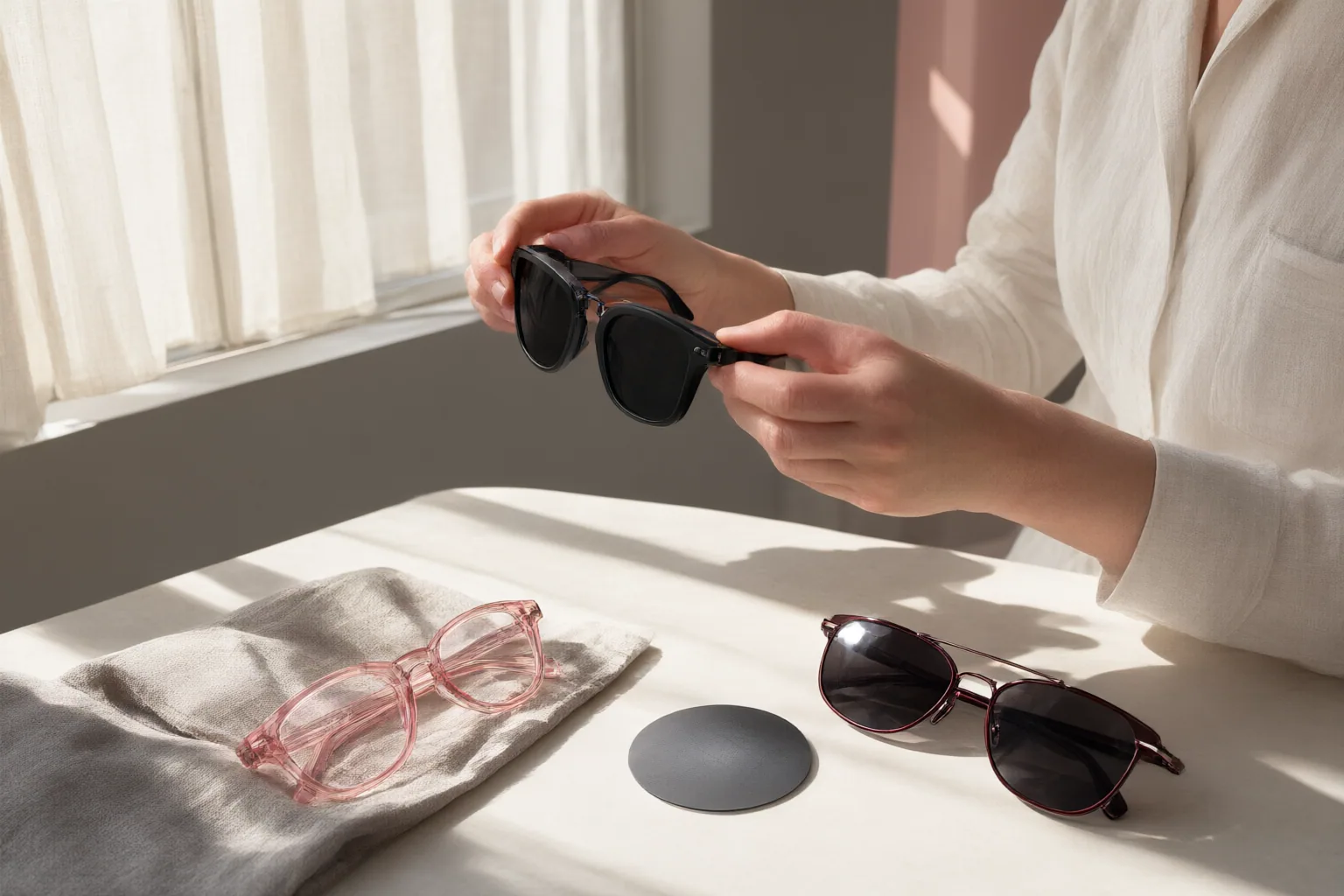
Fit should be tested under movement, not assessed only in a mirror. Check for secure contact at the nose and temples, then move your head to see whether the frame slips or bounces. Notice pressure points, comfort, coverage gaps, and whether the lenses fog in conditions resembling your normal use. If you wear prescription lenses, confirm compatibility before purchasing.
These checks become especially important for active wear. Runner’s World used comfort, secure fit, fog resistance, prescription options, coverage, and performance across bright, snowy, beach, and shaded forest conditions as evaluation factors for running sunglasses. Although that evidence comes from a running context, the checklist can help identify practical issues for everyday movement.
Polarization is a setting-dependent choice rather than an automatic upgrade. It can improve glare protection in bright conditions, while non-polarized lenses may be preferable for trail use when depth perception is prioritized. Base the decision on where and how you expect to wear the sunglasses most often.
Conclusion
Use a fixed purchase sequence: confirm a label stating 99% or 100% UV blocking or UV400; assess coverage; compare material tradeoffs for your routine; test stability, comfort, fogging, and prescription compatibility; then choose polarization according to typical conditions. Style can guide the final selection after these practical checks. Before buying, wear the sunglasses long enough to check pressure points, move your head to test slipping, and examine visibility in conditions similar to those where you plan to use them.
Disclosures and limitations
- This article was prepared with AI assistance using the supplied FDA, All About Vision, and Runner’s World research sources. No specific products, prices, availability, affiliate offers, or firsthand testing claims are included.
Related reading
Sources
- Fits Over Sunglasses & ClipOn Sunglasses — Foster Grant
- Blue Tinted Sunglasses | eBay — eBay
- Robot or human? — walmart.com
- Guidance Document For Nonprescription Sunglasses – Guidance for Indust — U.S. Food and Drug Administration
- Smith Optics Backcast (CP Glass) — Jan Šiman – Fly Shop – Goflyfish.cz
- What Makes For High-Quality Sunglasses? — All About Vision
- Safety Sunglasses for Men – Wiley x & DVX — SafetyEyeGlasses.com
- We Tested Running Sunglasses in Sun, Snow, and Shade—These 14 Protected Our Eyes Best — Runner's World