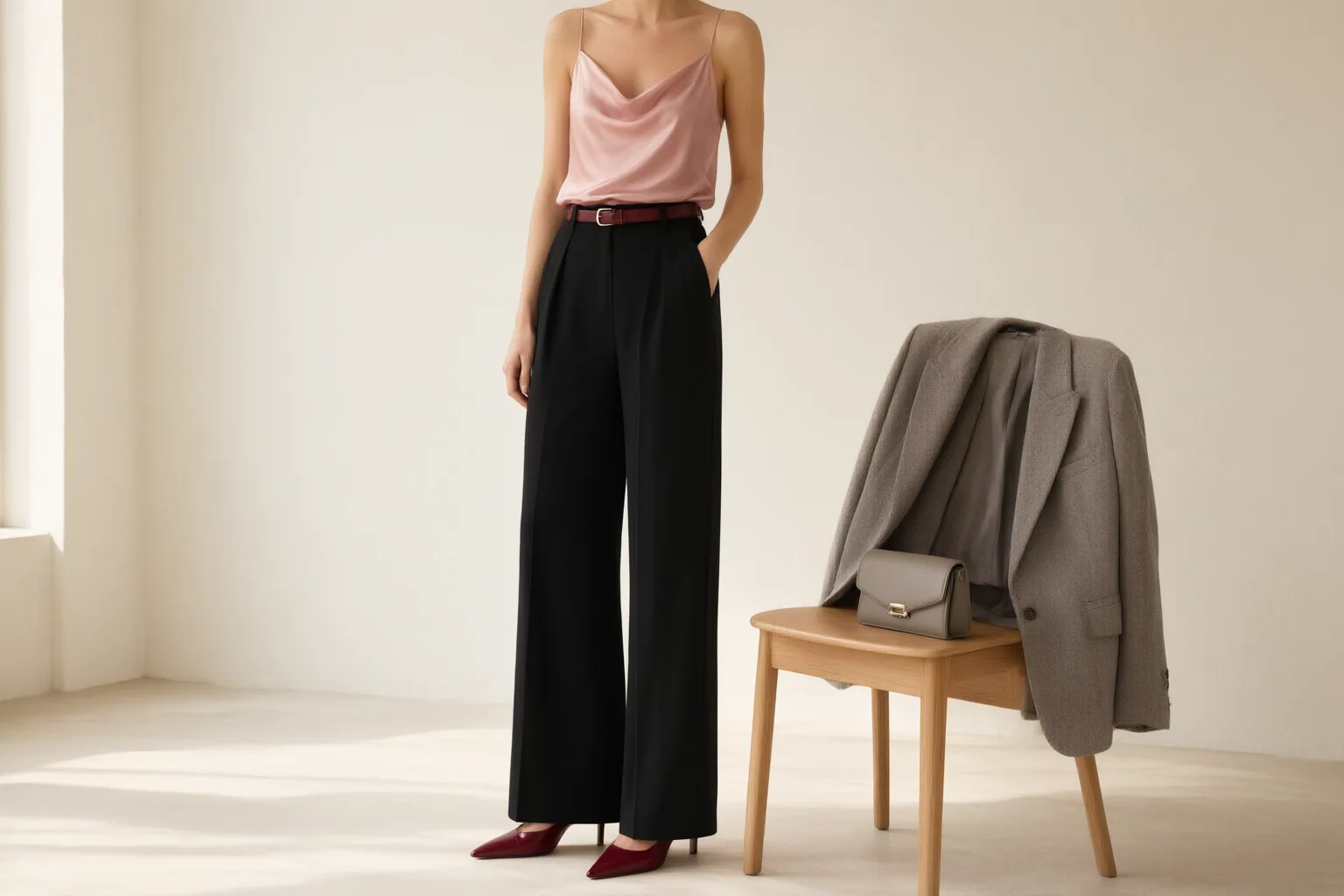
Build an office-to-dinner outfit around a polished, adaptable base, then plan one change: remove a work layer, switch shoes, or replace a restrained accessory. Choosing the transition before leaving home avoids carrying a complete second outfit.
Start with an Adaptable Base
The most practical formula begins with neutral, well-fitting pieces that can suit both parts of the day. The sources repeatedly identify a tailored blouse, white shirt, midi dress, skirt, or sleek trousers as useful foundations. A neutral blazer or cardigan can add structure for work without requiring the entire outfit to remain equally formal at dinner.
Choose the base before deciding on the evening update. It should already look polished in the workplace and still make sense after one element changes. A midi dress under a blazer, a tailored blouse with trousers, or a shirt-and-skirt combination follows the adaptable framework described across the sources. The aim is not to create two separate looks, but to give one reliable outfit enough flexibility for two dress contexts.
Option 1: Remove One Office Layer
A removable blazer or cardigan is the simplest transition when there is little time between work and dinner. During office hours, the layer supplies structure. At dinner, taking it off can reveal a dress, statement top, or camisole and make the same base feel less formal or more expressive.
Plan this version from the inside out. Before leaving home, consider the workplace expectations and the dinner setting, then confirm that the underlying piece is appropriate for both. If it is not suitable on its own in either context, removing the layer will not solve the transition. This approach works best when the layer is doing most of the daytime styling work and can be carried comfortably after it comes off.

Option 2: Swap Shoes or Accessories
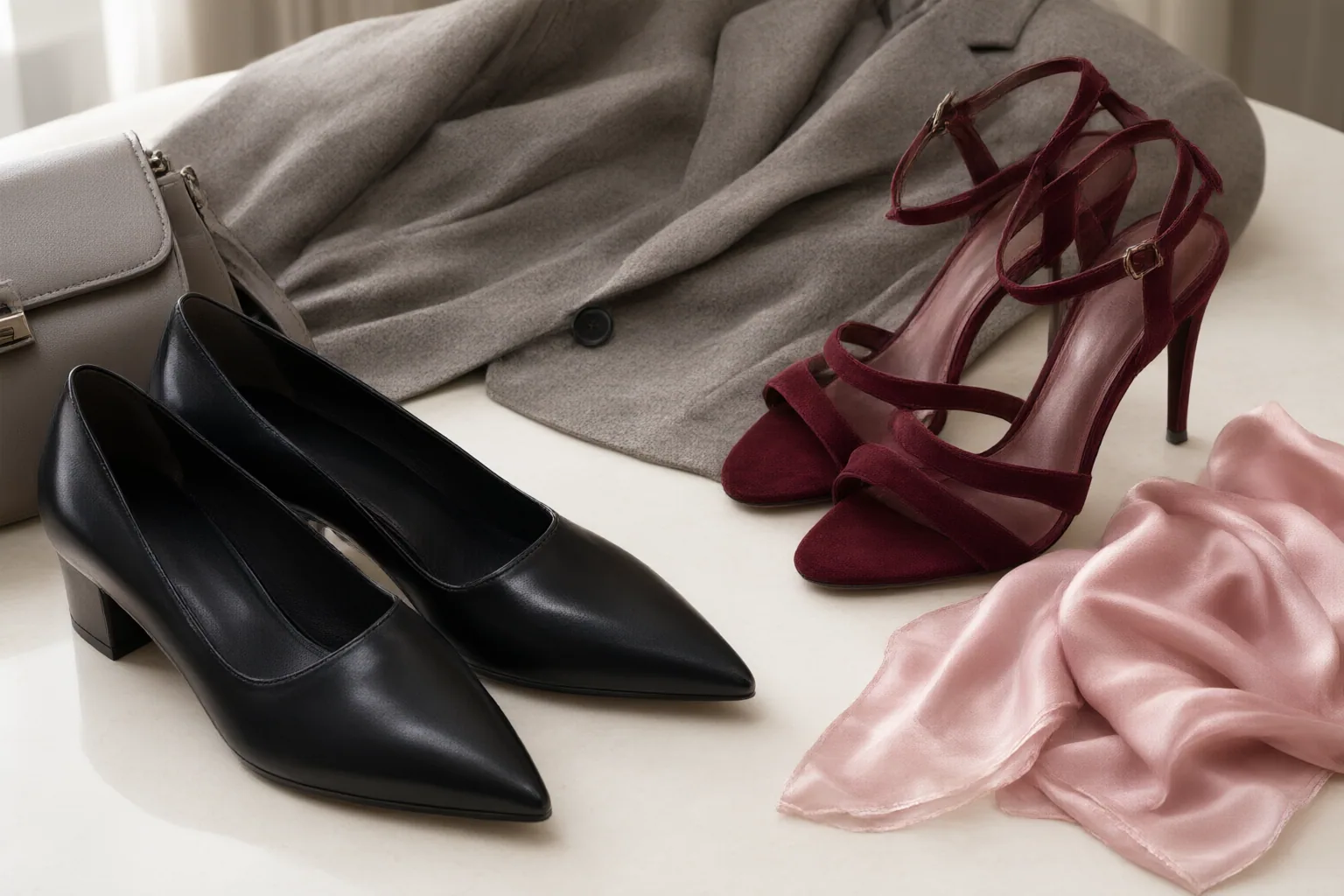
When carrying space permits, changing footwear can produce a clear shift while leaving the clothing untouched. The sources suggest moving from office options such as pumps, loafers, boots, or low heels to dressier evening shoes. This is the more practical choice when the schedule allows a quick change and carrying an extra pair is manageable.
For a smaller package, use accessories instead. Two sources recommend replacing restrained daytime jewelry with a more prominent evening piece. A bag change is another suggested route: the office outfit remains intact while the finishing accent changes.
Choose between these options according to what you can comfortably carry. Shoes may create a more noticeable transition but require more room; jewelry is compact and quick to replace. Whichever route you select, limit the plan to one deliberate swap so the outfit remains easy to manage during a short work-to-dinner gap.
Conclusion
Use a four-step check before your next office-to-dinner day:
- Select a neutral, well-fitting base such as a blouse with tailored trousers, a skirt, or a midi dress.
- Confirm that the foundation can meet both workplace and dinner expectations.
- Choose exactly one transition: remove a blazer or cardigan, change footwear, or replace restrained jewelry or a work bag.
- Pack only the item required for that change.
A planned single adjustment addresses the inconvenience of carrying a complete evening wardrobe while preserving a polished daytime outfit. Prepare your next base outfit and its one evening swap before leaving home.
Disclosures and limitations
- This article was prepared with AI assistance from the supplied research package and synthesizes the three cited editorial sources. It does not claim firsthand product testing or personal use. No specific products or affiliate links are included.
Related reading
Sources
- From Desk to Dinner: Chic Office Outfits to Impress – OurKidsMom — OurKidsMom
- What to Wear from Desk to Dinner — My Golden Beauty — My Golden Beauty
- From Office to Night Out: Effortless Style Transitions — DECABANA