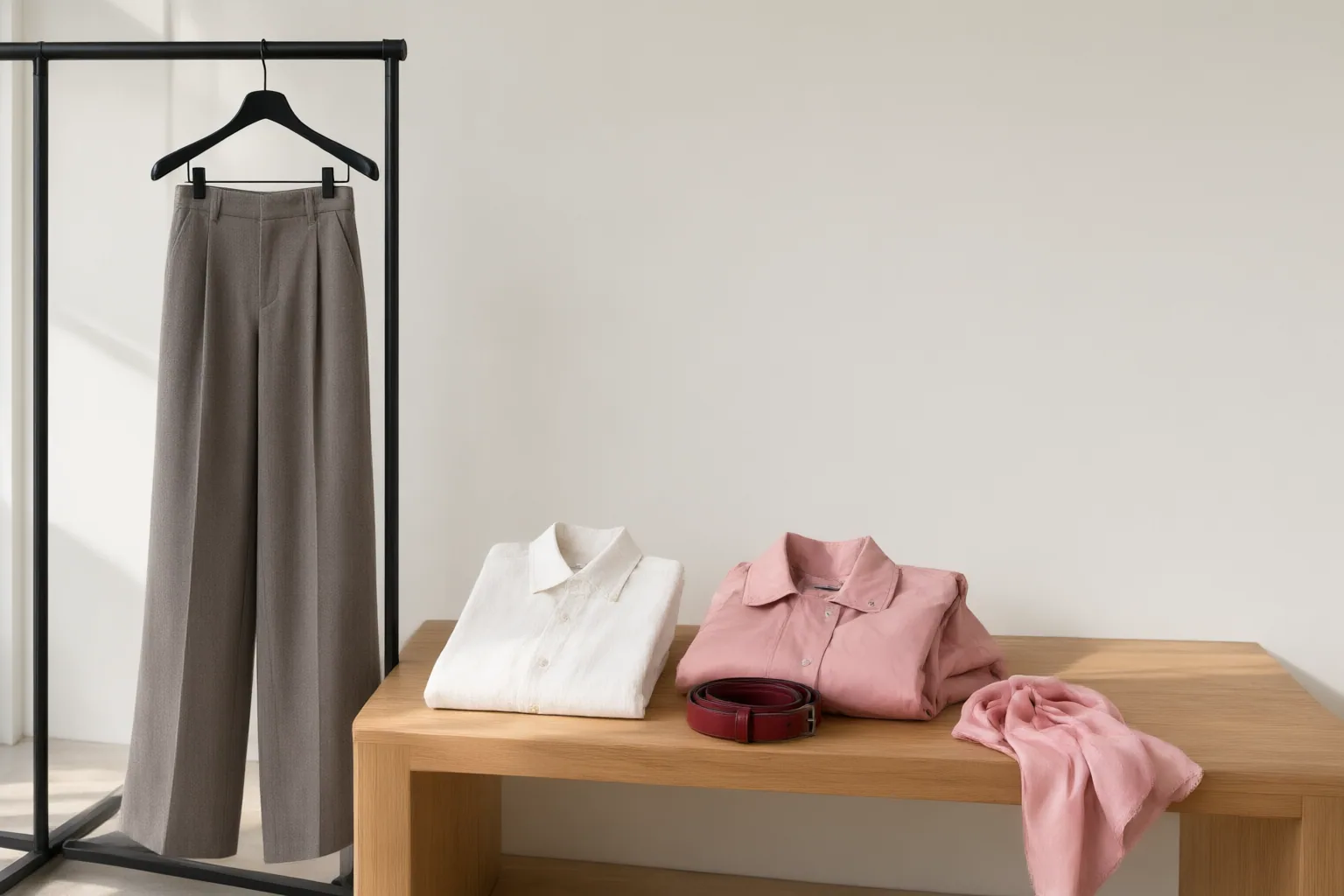
For a humid commute, begin with a light, breathable foundation, add a presentable separate, and carry only the weather protection conditions require. A lightweight, removable rain layer can help balance precipitation coverage with airflow, while one planned adjustment makes the outfit easier to refresh upon arrival. These formulas are editorial guidance based on general comfort principles, not tested outfit-performance results.
Start With a Light Base and a Polished Separate
Build the outfit around two jobs: managing the outdoor journey and looking composed after arrival. Clime advises light, breathable clothing because high humidity can increase sweating and discomfort. It does not test particular garments or complete outfits, so the following formula is editorial guidance rather than a proven result.
Start with a light base, then add one presentable separate that establishes the indoor look. Depending on your dress requirements, that could mean pairing a breathable top with a simple coordinating bottom or using a light layer that can be removed during the commute and restored indoors. Keep the combination uncomplicated so a damp or uncomfortable layer can be taken off without dismantling the whole outfit.
The useful principle is restraint: fewer unnecessarily heavy layers give heat and moisture less opportunity to build up. Select the exact pieces according to your workplace, personal comfort, and the forecast rather than assuming one formula will suit every commuter.
Add Rain Protection Without Trapping More Heat
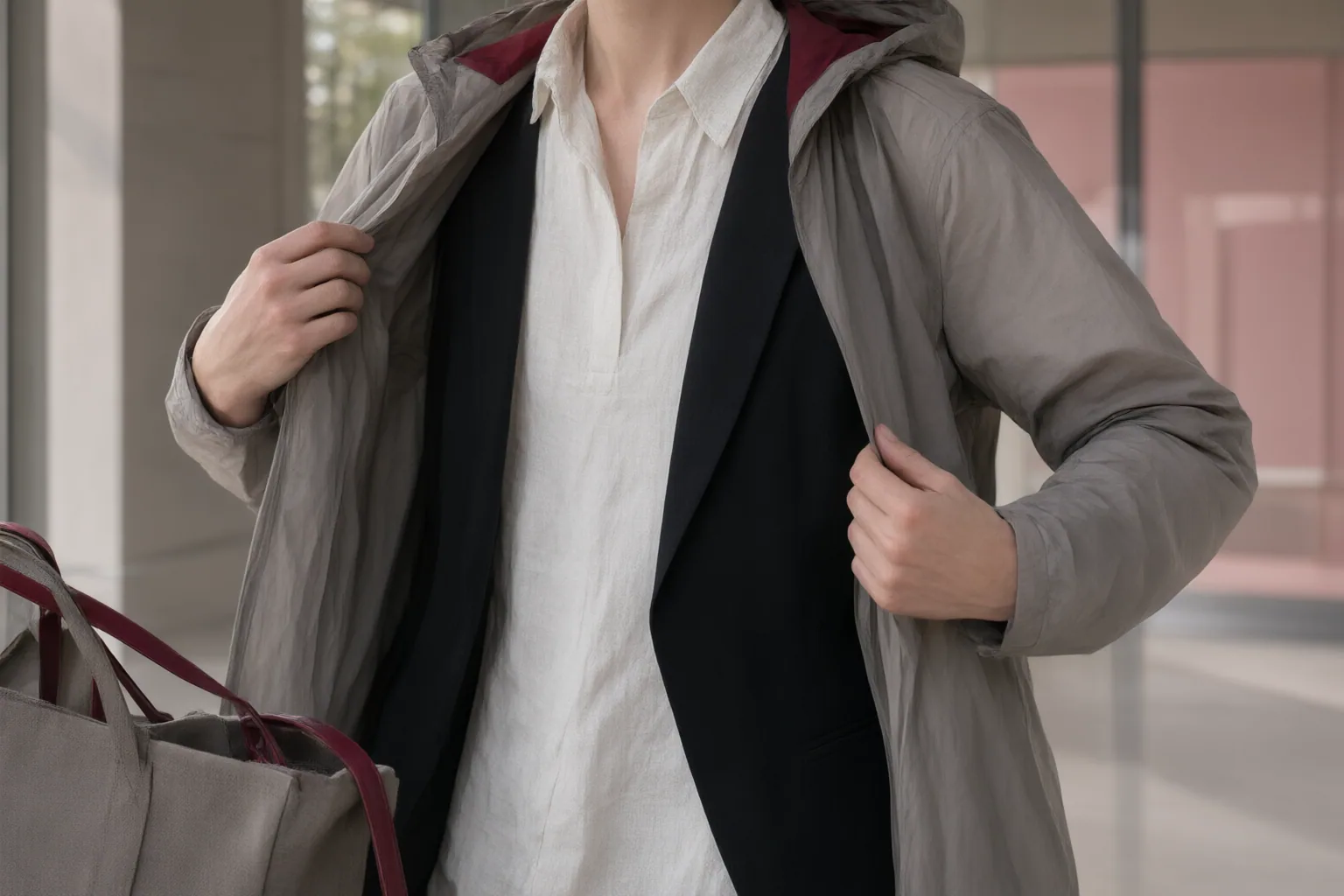
Warm rain creates a practical tradeoff. A rain layer may block precipitation, but the cited rain-commute guide warns that heavy, rubberized outerwear can trap heat and moisture, causing condensation inside. Its recommendation is to seek lightweight protection that also allows airflow.
An editorial formula for wet conditions is therefore a light base, a polished separate, and a removable lightweight rain layer. Wear the protective layer only when conditions call for it, then remove it after reaching shelter so retained moisture does not remain part of the indoor outfit.
When comparing rainwear, examine how ventilation can be adjusted. The commercial guide cites mesh lining and cuffs that open as examples of airflow-oriented details. These examples are not independently verified performance findings, so treat them as inspection prompts rather than guarantees: check whether a layer appears easy to ventilate, remove, and manage alongside the rest of your outfit. Avoid assuming that greater weight automatically means a better choice for warm, humid rain.

Plan the Outdoor-to-Indoor Transition
A successful formula includes an arrival plan. Choose a breathable foundation that can stand on its own indoors, place the most weather-exposed layer on top, and make that outer layer easy to remove. The sources support breathability, ventilation, and weather planning; they do not establish that any particular combination will look polished, so appearance remains an editorial judgment shaped by the setting.
Before leaving, check current conditions and decide whether rain protection is necessary. Clime also suggests traveling during cooler parts of the day when possible and staying hydrated. Those steps may be more useful than compensating with additional clothing that makes the commute hotter.
Personal needs matter as well. Clime notes that high humidity may make breathing more difficult, particularly for people with asthma. Anyone with breathing sensitivities should account for the weather, timing, and their own health needs when planning the trip. The clothing strategy is not medical guidance; it is a way to reduce avoidable outfit complexity while preserving an easy transition indoors.
Conclusion
Use a short pre-commute checklist: review the forecast, choose a light and breathable foundation, add a presentable separate, and avoid an unnecessarily heavy rain layer. If wet weather is expected, look for lightweight protection with adjustable airflow, recognizing that cited ventilation details come from a commercial source rather than independent testing. Consider a cooler departure time when practical, stay hydrated, and adapt the plan to personal health needs.
Before your next humid commute, lay out the light base and ventilated weather layer, then decide exactly which outer piece you will remove upon arrival.
Disclosures and limitations
- This article was prepared with AI assistance using the supplied publisher-authored sources. General factual claims are attributed through source IDs; the complete outfit formulas are editorial guidance and were not independently tested.
- The rainwear source is commercial. No specific product is recommended, and its feature claims should not be interpreted as an affiliate endorsement or independently verified finding.
Related reading
Sources
- Warm & Humid Rainy Commute Tips: Stay Cool and Dry — Waterproof Hooded Trench Coat
- Common Humidity for Health Questions for Commuters | Clime Blog — climeradar.com