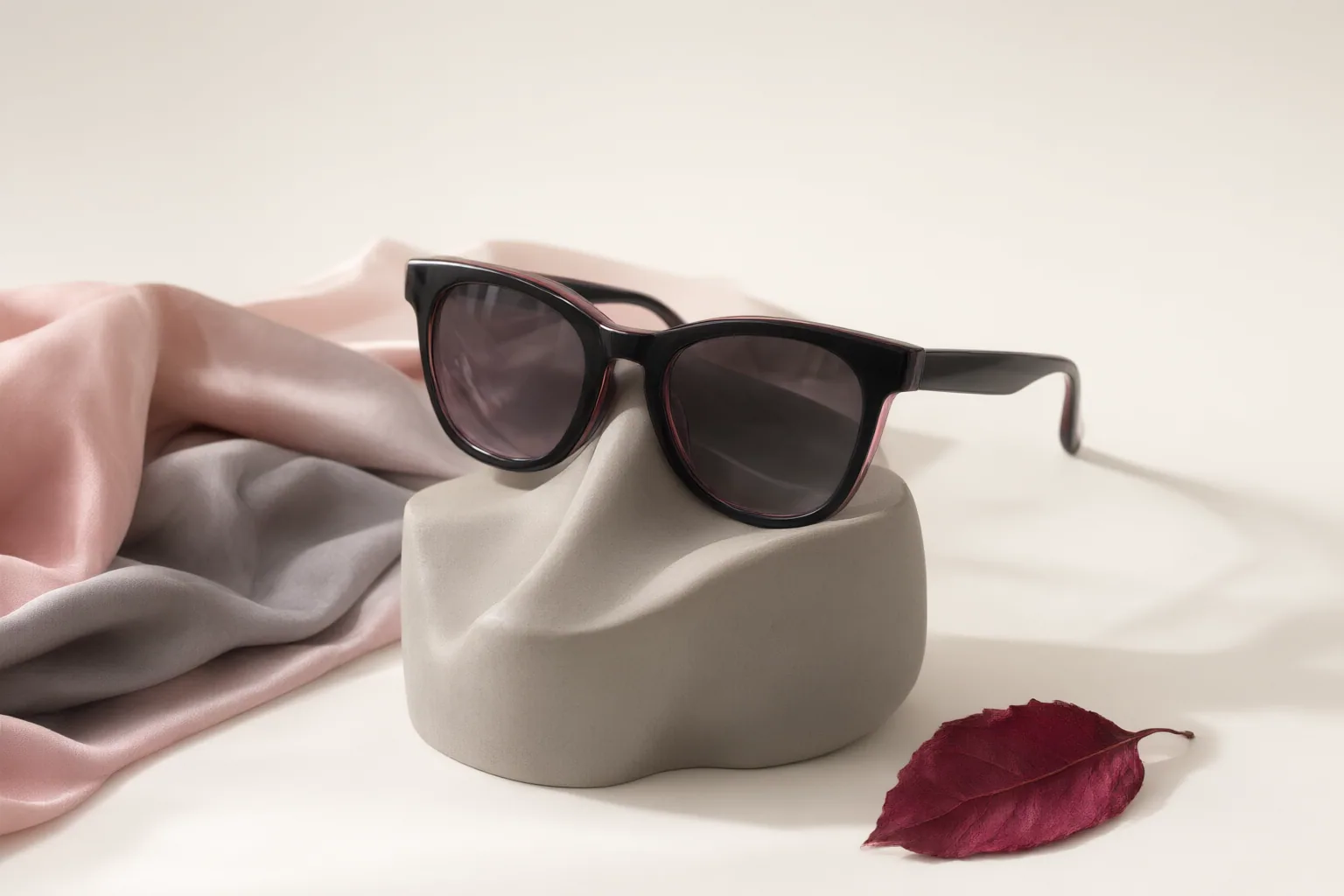
Sunglasses should feel supported at the bridge, comfortable at the temples, clear of the cheeks and eyelashes, and stable when you move. A size label can narrow the search, but it cannot replace these four practical fit checks.
Start With the Bridge and Temples
The bridge should distribute support without pinching, leaving deep pressure marks, or repeatedly slipping down your nose. If the bridge is too wide or poorly matched to your nose, the frame may sit lower and need frequent readjustment.
Next, examine the temples. They should travel toward your ears without painful pressure or pronounced outward flare. Pressure along the sides of your head can signal a frame that is too narrow. Conversely, very little contact combined with shifting may mean it is too wide or loose. Keep the frame on for several minutes, because side pressure may become clearer with time.
Check Clearance at the Cheeks and Lashes
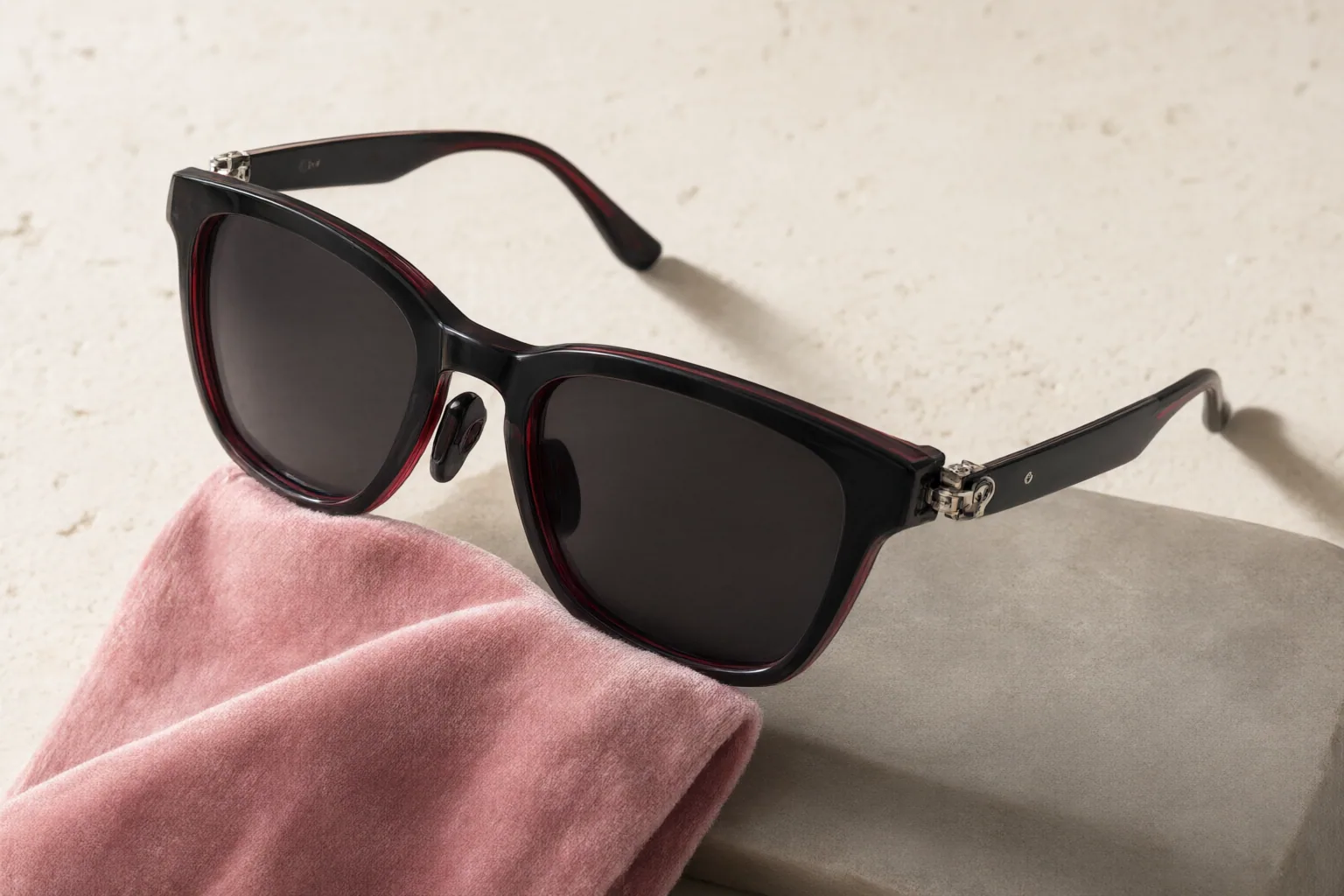
The lower rim should not rest heavily on your cheeks or rise substantially when you smile. Contact can make the sunglasses lift, shift, rub, or leave marks. Lens height, bridge position, frame shape, and cheekbone structure all influence this clearance, so the issue is not necessarily the apparent size alone.
Your eyelashes also should not brush the lenses continuously, which can cause repeated smudging. Lens-to-face distance depends on the bridge design, nose support, and overall construction. On suitable frames, adjustable nose pads may allow an optician to create more clearance. A bridge that is too wide can also position the frame lower, increasing cheek contact while changing how close the lenses sit to your lashes.

Test Movement and Read the Measurements
A still mirror check is only the beginning. Look down, turn your head from side to side, and smile. Watch for repeated sliding, major shifting, or new contact with your cheeks or eyelashes. These motions can reveal instability and clearance problems that are easy to miss while standing still.
The common three-number marking on a frame generally lists lens width, bridge width, and temple length, in millimeters and in that order. Record the numbers from sunglasses that already feel comfortable and use them as a comparison point when shopping.
Treat those figures as inputs, not a guarantee. Two frames with similar measurements may sit differently because bridge shape, curvature, hinges, materials, and other construction details also affect fit. Photographs, generic size labels, and lens width alone therefore cannot reliably predict comfort. When shopping online, consider the full set of listed dimensions alongside the design, then apply the same movement checks if you can try the frame.
Conclusion
A comfortable fit combines balanced bridge support, temples that hold without squeezing, adequate cheek and eyelash clearance, and stability during movement. An oversized appearance is not automatically a poor fit: a large frame can work when it remains secure and avoids repeated facial contact. Before keeping a pair, repeat all four checks and compare its measurements with a comfortable frame you already own.
Disclosures and limitations
- This article was prepared with AI assistance and is based only on the cited practical fit guides supplied in the research package.
- No products or prices are recommended, and no affiliate links are included. The cited sources are predominantly retailer or commercial editorial guides, not clinical or standards-based authorities.
Related reading
Sources
- How Should Sunglasses Fit: A Guide — Revant Optics
- Sunglasses Size Guide: Find Your Perfect Fit – Hewore — Hewore
- Why Sunglasses Touch Your Cheeks or Eyelashes and How Frame Design Solves It — Wink & Nod Eyewear
- Sunglasses Size Chart: Complete Guide to Sunglasses Fit – Size Helper — Size Helper
- How Should Sunglasses Fit? Bridge, Width, and Cheek Clearance — lila-voss.com
- How Should Sunglasses Fit? A Better Fit Guide | DESSON — DESSON
- How Should Sunglasses Fit? Size & Comfort Guide | DBM — Demons Behind Me | Inspirational Clothing & Apparel
- Sunglasses Fit Guide | Find the Right Pair — WMP Eyewear
- How Should Sunglasses Fit? The Complete Guide to Finding the Right Fit — SpecTrims