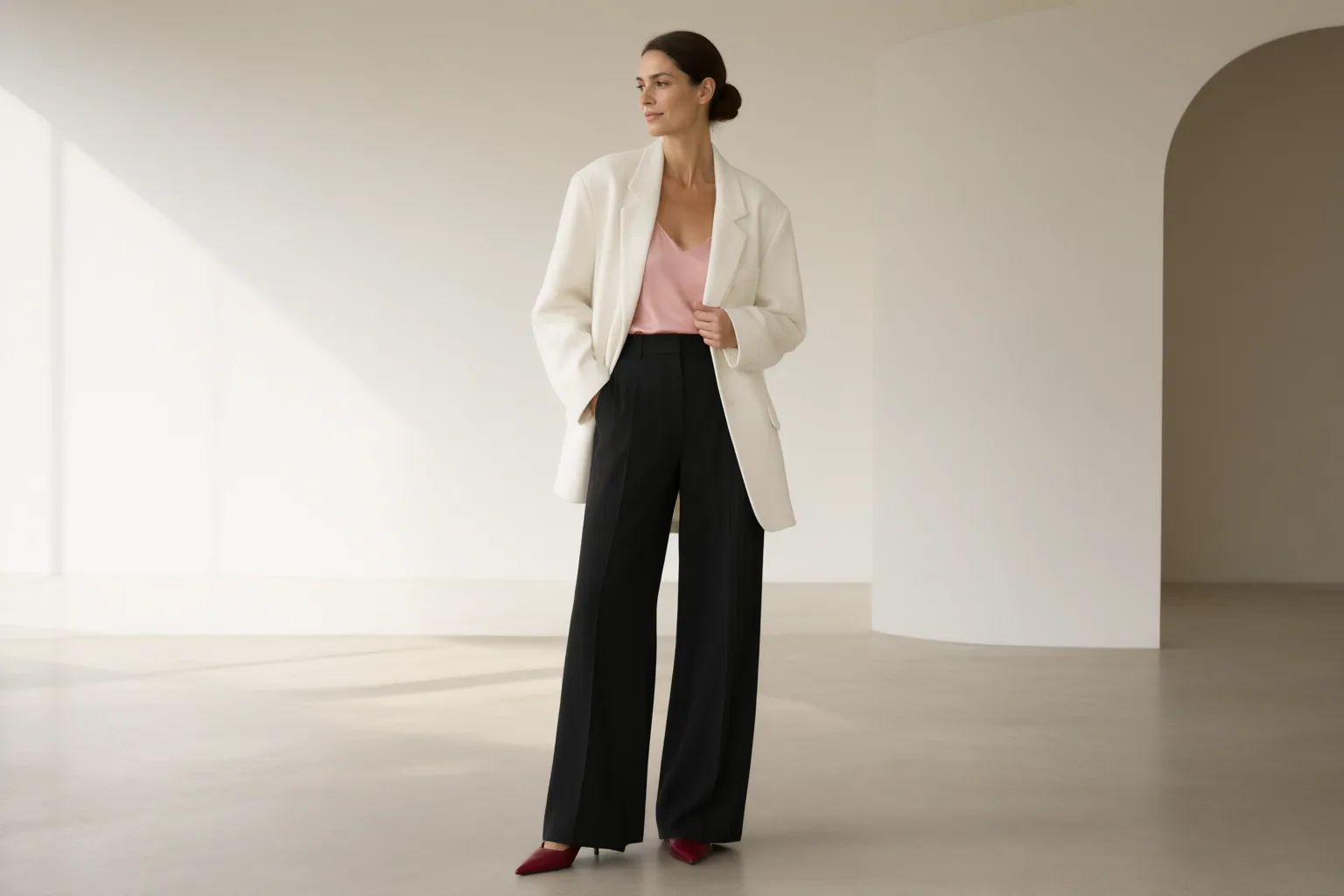
Make oversized suiting look intentional by concentrating volume in selected areas, adjusting the shoulder line and jacket length to your frame, and evaluating the complete silhouette with the shoes and dress code you actually need.
Start With Intentional Proportions
Purpose-designed oversized tailoring exaggerates selected areas—often the shoulders or trouser legs—rather than hanging loosely everywhere. Start by deciding where you want the volume. If the blazer is roomy, straight-leg trousers can provide contrast; if the trousers are fuller, try a more tailored or cropped jacket and enough trouser length for a slight break over the shoes.
Fabric also affects whether the shape reads clearly. Heavier, structured materials such as wool or cotton can hold an oversized silhouette more effectively. Keep prints restrained when you want the cut itself to be the focal point. These are variables to test, not fixed rules: the useful distinction is between deliberate volume and the uncontrolled looseness created by simply buying a conventional suit several sizes larger.
Adjust the Silhouette for Height and Shoulder Width
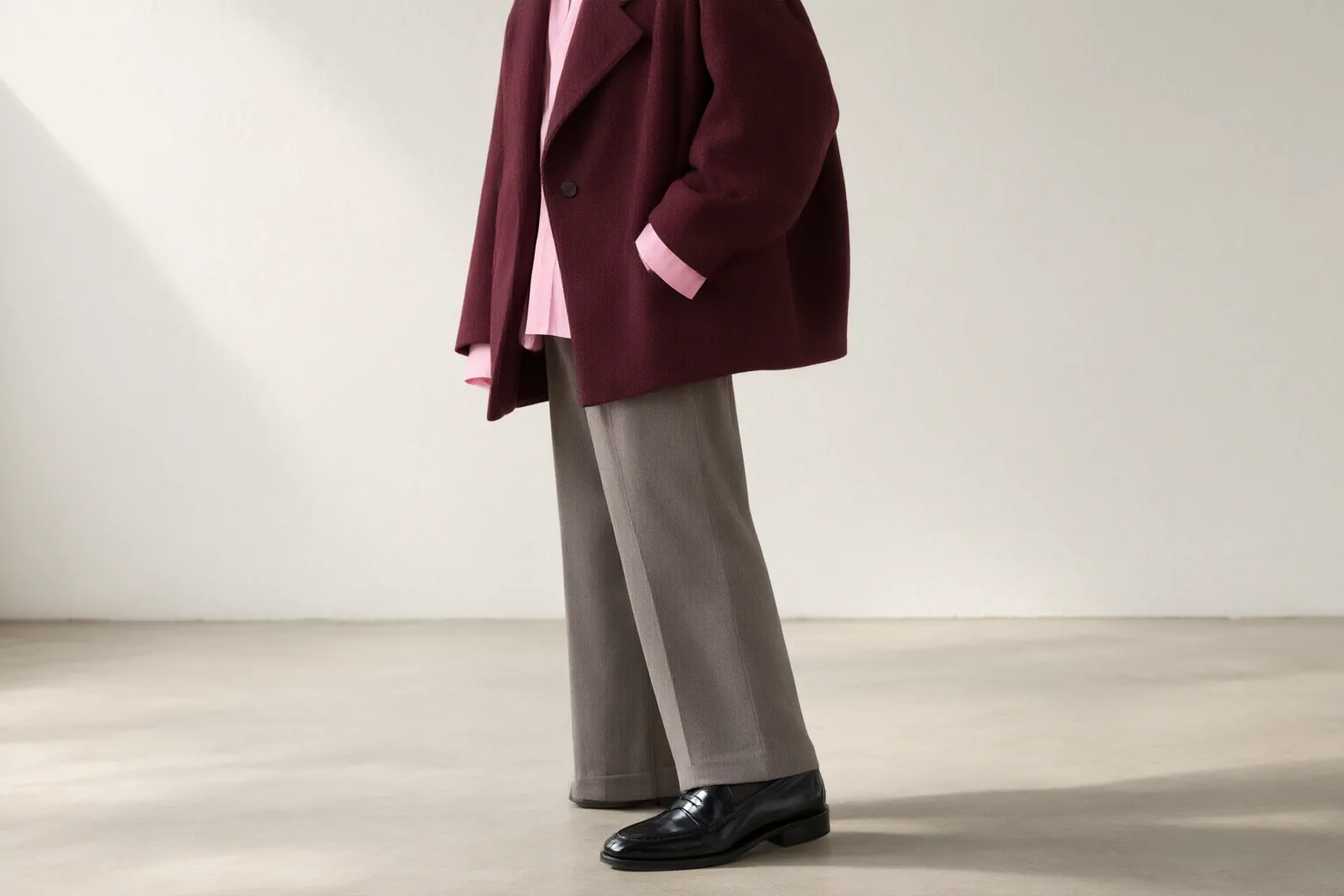
For petite or average-height frames, begin with a jacket ending around crotch level. Some shoulder definition and a subtle waist curve can preserve the oversized effect without letting the garment dominate the body. Higher-rise trousers and tonal dressing are additional options for extending the visual leg line, while very long jackets and strong color breaks can make the frame appear shorter.
Proportions may need a different adjustment when the legs are comparatively long and the torso is short: mid-rise trousers and a longer upper layer can help restore balance. Shoulder width matters independently of height. Broader shoulders may benefit from a natural shoulder line without added structure, whereas narrower shoulders can test subtle padding or shoulder details for more width. Assess these suggestions on the individual frame, since the sources offer general styling guidance rather than personalized fitting rules. Check sleeve length, jacket length, and shoulder placement together instead of treating any single measurement as decisive.
Match the Styling and Shoes to Your Workplace
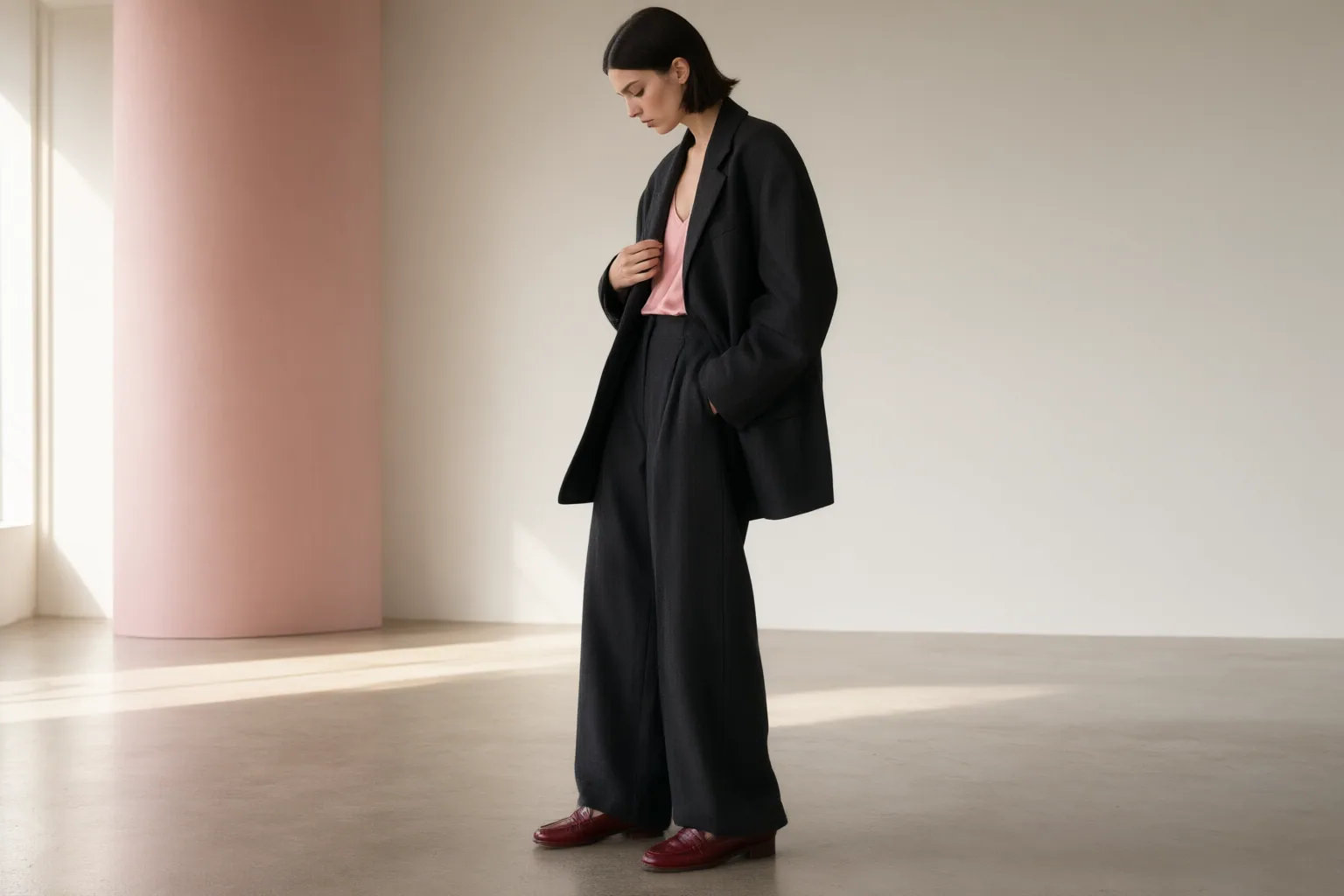
Build the outfit around the level of formality your workplace requires. A white shirt, fine-gauge cardigan, and chunky-soled Derbies or boots offer a smarter interpretation. Simple knitwear can move the suit toward smart casual, while a T-shirt or tank top with trainers creates a more relaxed combination. Sources also present oversized suits as options for offices, lunches, and evenings out, but the appropriate choice still depends on the setting.
Shoes change both formality and proportion. Sleek, tonal footwear can continue the leg line and may be especially useful when visual length is the priority. Chunkier trainers deliberately ground the volume and make an oversized jacket feel less like conventional office uniform. Neither effect is universally preferable. Choose according to the workplace and the silhouette you want, then judge the trousers with those exact shoes: a fuller leg may need sufficient length for a slight break, while a cleaner line calls for closer control of the hem.
Conclusion
In the fitting room, choose one deliberate area of volume first. Then check whether the shoulder structure suits your width, whether the jacket length balances your height, and whether the trousers complement rather than compete with the upper half. Finally, put on the footwear required by your workplace and examine the complete line. Before buying or tailoring, try the full outfit with your intended work shoes, then decide whether the shoulder line, jacket length, trouser break, or overall balance needs adjustment.
Disclosures and limitations
- This article was prepared with AI assistance and is based only on the editorial sources identified in its source list; the guidance is general and should be tested on the individual wearer.
- No products, prices, availability claims, or affiliate links are included. If commercial links are added later, any affiliate relationship should be disclosed clearly.
Related reading
Sources
- How to Wear the Oversized Suit Trend (and Make It Flattering for Every Body) — Watson Ellis — Watson Ellis
- Still Trending: The Oversized Suit — Crossroads
- How To Dress For Your Height | Men’s Style Guide Backed By Science of Proportions — Real Men Real Style
- Oversized Tailoring: How To Channel Big Suit Energy | FashionBeans — FashionBeans
- 30 Oversized Blazer Outfit Ideas For Work To Look Sharp — Sew Mama Sew
- Oversized Is The Only Way To Suit Up This Autumn – These Are The 9 Best Ones To Shop Now — ELLE UK
- How to Look Taller in a Suit for All Body Types — Perfecttailors