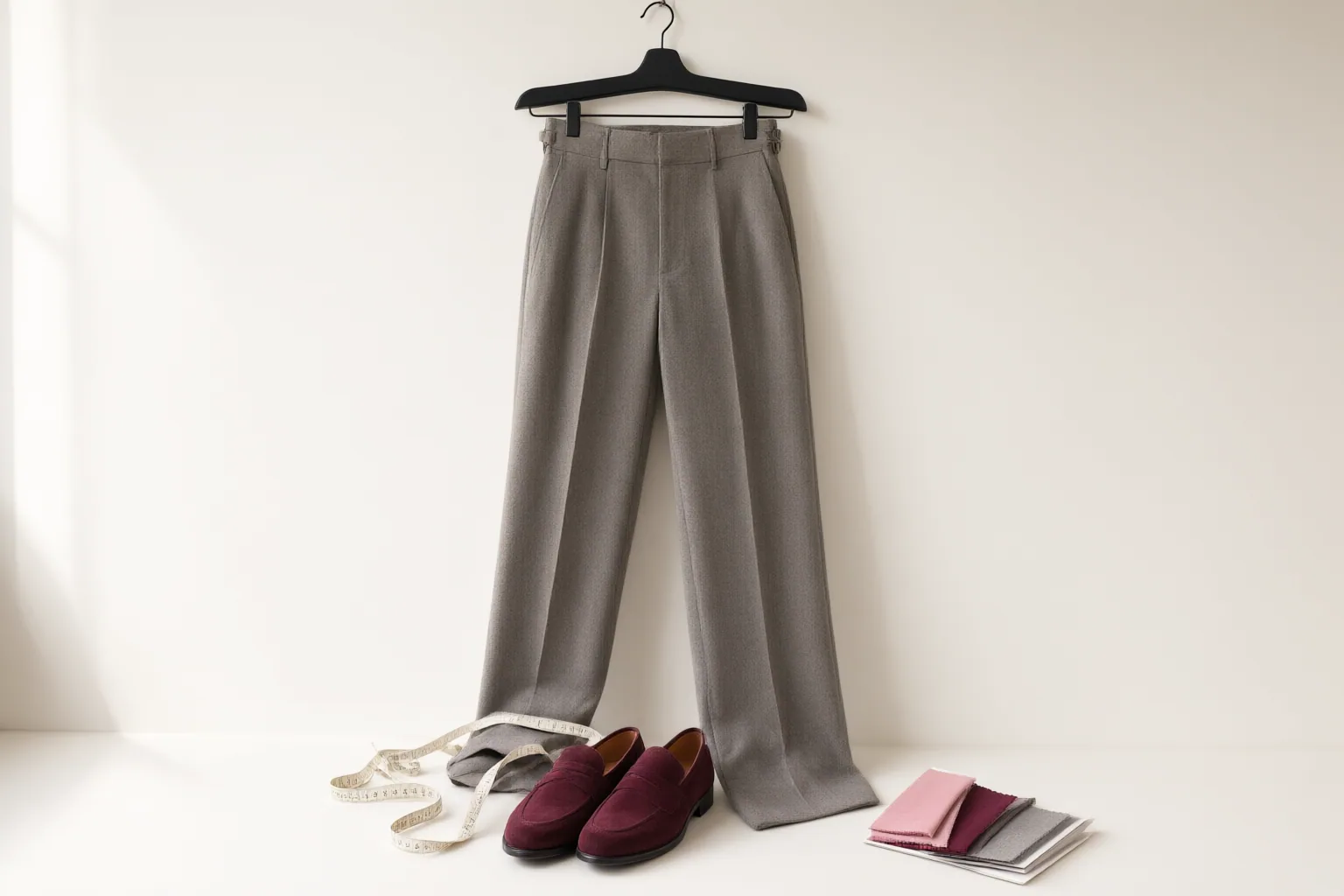
A reliable trouser check starts with rise and room through the seat and thighs, then moves to inseam, hem position, fabric label, brand-specific sizing, and possible alterations. Treat fit names and size-chart numbers as references—not universal standards—and assess the trousers with the shoes you expect to wear.
Start With Rise, Seat, and Leg Shape
Do not judge fit from a label such as “slim,” “straight,” “tapered,” or “relaxed” alone. Check three connected elements: where the waistband sits, how much room exists through the seat and thighs, and how the leg changes toward the hem.
SUITSUPPLY’s own fit guide illustrates why these dimensions matter. It describes slim tapered, slim straight, and regular straight fits as sitting at or slightly below the waist and depicts them as mid-rise. Its relaxed tapered and relaxed straight fits provide more room at the seat and thighs, sit at or above the waist, and are shown as high-rise.
These descriptions belong to one brand’s system rather than an industry-wide standard. During a fitting, use the stated fit name only as a starting point. Confirm that the waistband rests where intended and that the seat and thighs provide the amount of room you want before assessing the lower-leg shape.
Measure Inseam and Set the Hem for Your Shoes
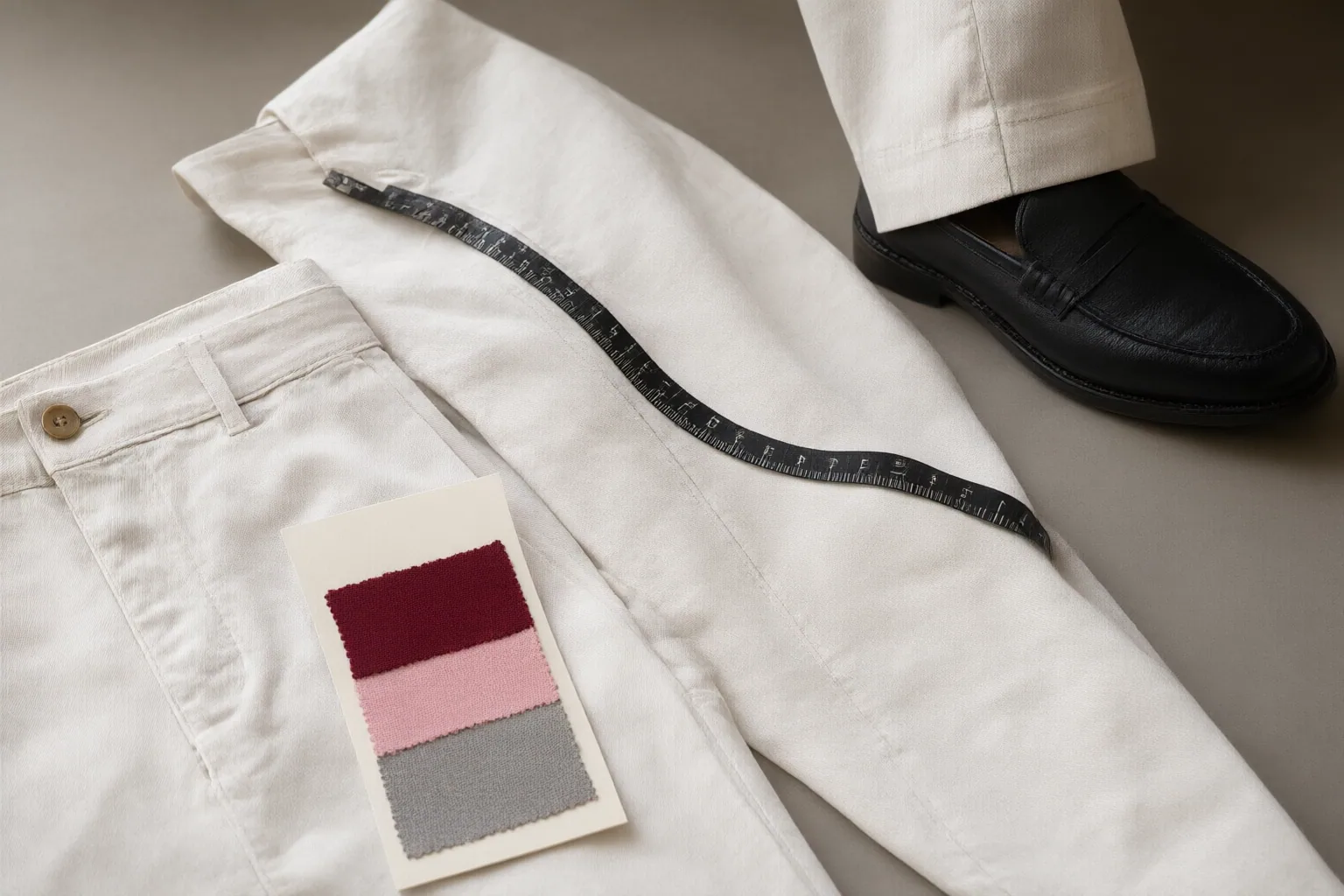
Inseam is the distance along the inside of the trousers from the crotch to the hem. One practical method is to measure a well-fitting pair of the same general type: lay it flat, fold it lengthwise, smooth out wrinkles, and measure from the crotch to the hem. A body-based alternative used by BOGNER measures from the crotch down the inside of the leg to the sole of the foot while barefoot.
Height alone cannot determine inseam because body proportions differ. The intended cropped or full-length design, personal preference, and planned footwear can also change the desired hem position. When appropriate for the trouser shape, check the length while wearing the shoes you expect to pair with it rather than relying on one barefoot measurement for every outfit.
One measurement guide suggests adding 0.5–1 inch when trousers will be worn with heels. It also suggests allowing 0.5 inch for fabrics prone to shrinkage, citing cotton, viscose, and wool as examples. Treat both allowances as that guide’s recommendations, not universal rules. Before buying or altering, verify the fabric information and decide on the intended shoes and hem position.
Check Fabric Labels, Size Charts, and Alteration Limits
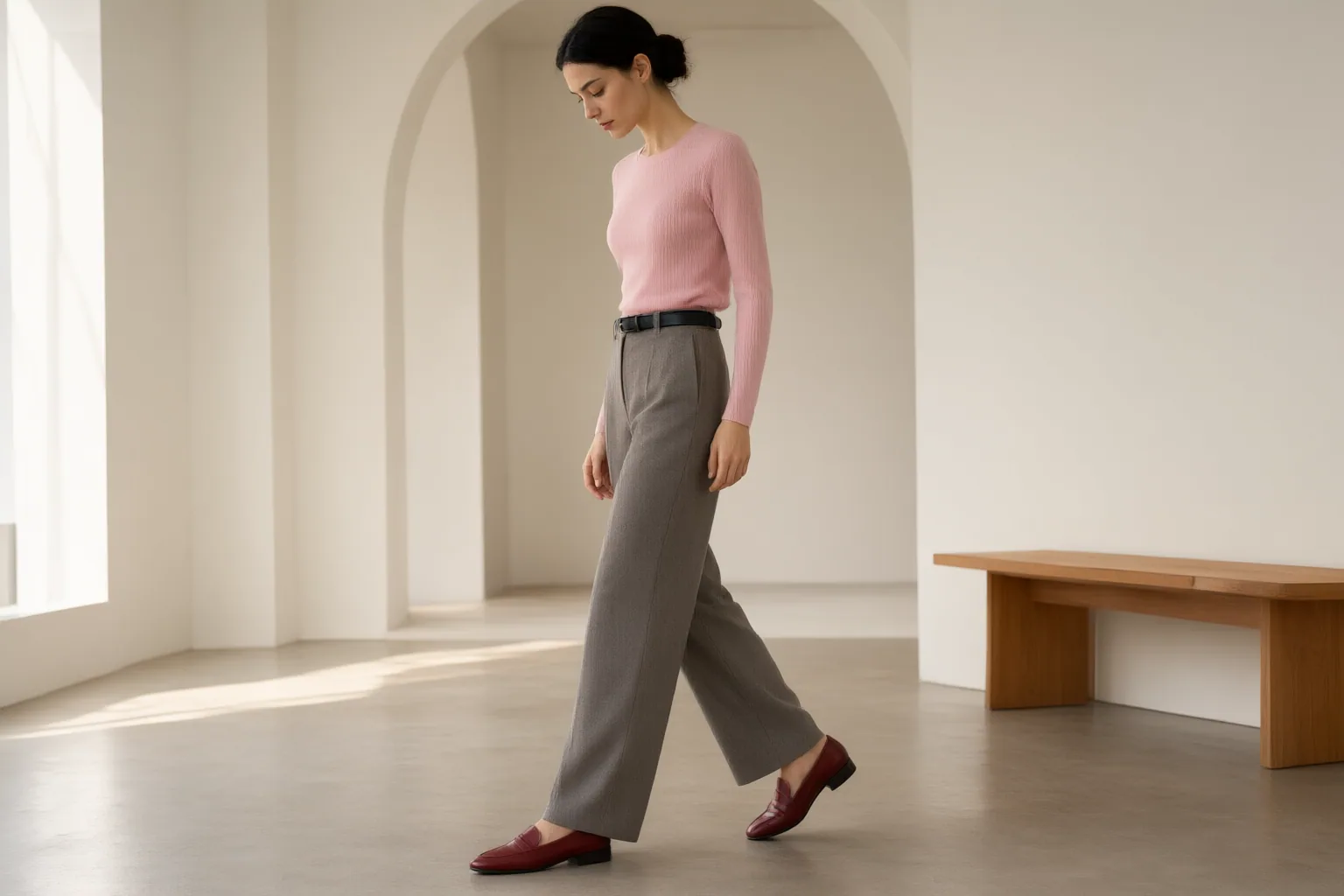
Similar silhouettes can appear in very different materials. An M&S wide-leg retail page includes product descriptions involving cotton, linen blends, stretch knit, satin, lyocell, wool blends, silk, and cashmere. It also presents multiple fit categories, including wide-leg, straight, regular, tapered, barrel, slim, relaxed, and flared. This shows that retail “fit” can combine several classification dimensions.
Use the garment label to identify the actual material rather than inferring it from the silhouette. The available sources do not establish a systematic comparison of these materials’ drape, breathability, durability, or care costs, so those qualities should be checked separately rather than assumed.
Size charts are likewise brand-specific. BOGNER lists 78 cm for its standard women’s trouser inseam and 83 cm for its long sizing; its women’s jeans table associates 32- and 34-inch lengths with 81 and 86 cm inseams. These figures describe that brand’s charts only. Compare your measurements with the relevant chart. If alterations may be needed, ask what can be changed and the expected turnaround: SUITSUPPLY states 30 minutes to three days for its store service, but that is not a general industry timetable.
Conclusion
Use a fixed order when trying on everyday trousers: confirm the intended rise, check room at the seat and thighs, and inspect the leg shape. Next, measure the inseam and review the hem with the shoes you plan to wear. Then read the fabric label, consult that brand’s size chart, and ask about alteration options and timing.
The available evidence does not support one complete rule for every fabric, shoe, or silhouette. For your next fitting, measure a well-fitting pair, record the intended footwear, and bring a checklist covering rise, seat and thigh room, hem position, and alteration limits.
Disclosures and limitations
- This article was prepared with AI assistance using the supplied SUITSUPPLY, inseam-measurement, M&S, and BOGNER materials; brand claims and measurements remain source-specific.
- No products, prices, inventory, ratings, personal wear tests, or affiliate recommendations are presented. Any commerce links added later should be identified clearly.
Related reading
Sources
- Trousers Fit Guide | SUITSUPPLY — suitsupply.com
- Easy Guide: How to Measure Inseam at Home — blitzresults.com
- Women’s Wide-Leg Trousers at M&S — Marks & Spencer
- Size Guide – Find Your Fit | BOGNER — bogner.com