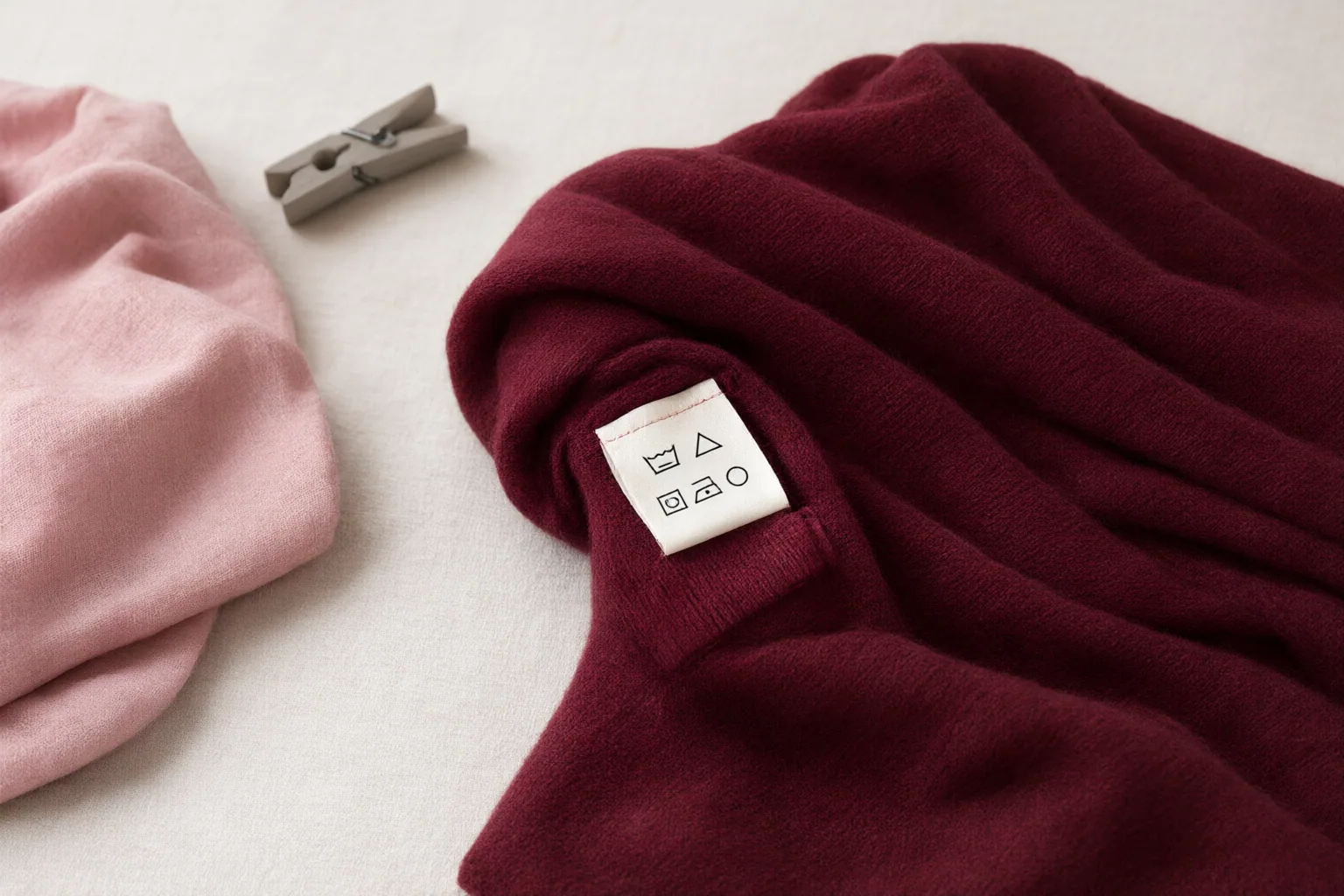
Treat the care label as a complete set of garment-specific limits. Check washing, drying, bleaching, ironing, and professional-cleaning instructions before choosing settings or treatments.
Decode the Washing Symbols First
Start with the wash-tub symbol to determine whether a garment can be washed and, if so, under which conditions. Temperature markings indicate the maximum permitted water temperature rather than a target you must reach. Lines associated with the tub distinguish regular washing from permanent-press or gentle cycles, while a hand symbol calls for hand washing. A prohibition mark means the indicated washing method is not allowed.
These distinctions matter because an unsuitable temperature or cycle may damage clothing. Do not let a customary setting override the garment’s instructions: the label can specify limits tailored to that item, including its maximum washing temperature. When garments require incompatible temperatures or cycles, separate them rather than applying one routine to the entire load.
Read the Rest of the Label Before Starting
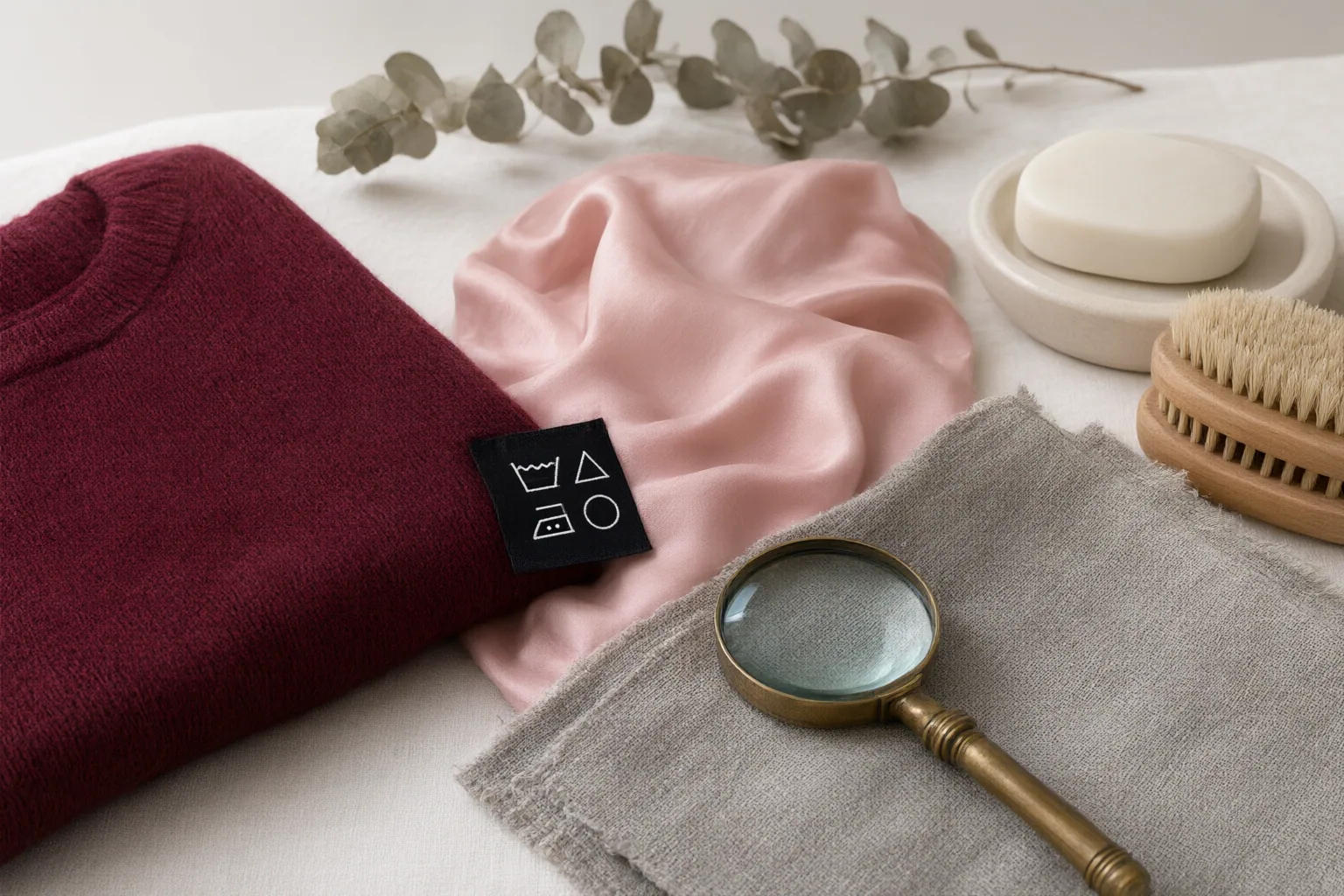
The washing symbol is only the first decision. Drying, bleaching, ironing, and professional-cleaning symbols communicate separate restrictions, so a washable garment is not automatically suitable for every dryer setting, bleach treatment, or iron temperature.
Read the full label before starting the load, then translate each category into a decision: confirm the permitted wash conditions, identify the allowed drying method, check whether bleach is safe, observe any ironing heat limit, and note whether professional cleaning is required or restricted. This complete-label check helps avoid unsuitable heat or treatments associated with shrinkage, fading, scorching, or other fabric damage. When one instruction is more restrictive than your usual routine, follow the garment-specific limit.

Reduce Common Laundry Damage With Garment-Specific Checks
Before washing, inspect both the label and the garment’s construction. If air drying is permitted, it can be a gentler option: the Persil guide says it can help maintain fabric integrity, particularly for synthetics, wool, and delicate garments. The CANIS workwear guide also warns that tumble-dryer heat and mechanical motion can harm fibers, especially elastic fibers, and recommends air drying as an alternative.
That workwear advice should not be generalized to every garment. Check the individual label before changing the drying method, particularly when an item contains elastic fibers or heat-sensitive reflective elements.
Preparation matters too. CANIS recommends closing zippers before machine washing. Doing so can reduce the risk of bent or broken teeth and help prevent the zipper from scratching or tangling other items. A practical pre-load routine is therefore to sort by compatible instructions, secure zippers where appropriate, and select the gentlest washing and drying methods the labels permit.
Conclusion
A repeatable label-first routine is more reliable than treating every garment alike. Check whether and how the item may be washed, then review its drying, bleaching, ironing, and professional-cleaning restrictions. Consider garment components such as elastic fibers and zippers before selecting a cycle or drying method.
The supporting sources are brand-published care guides, not an independent textile standard, so the garment’s own label remains the priority. Before your next load, read each complete label, sort items by compatible instructions, close zippers where appropriate, and choose the gentlest permitted washing and drying methods.
Disclosures and limitations
- This article was prepared with AI assistance using the two brand-published care guides identified in the research package. Their guidance was synthesized without claims of personal testing, and garment-specific labels should take priority.
Related reading
Sources
- Clothing Label with Size and Care Instructions — Pinterest
- Women's nurse uniforms scrubs – Uniformshop — uniformshop.eu
- I know how wearable tech can become cool again: by ditching surveillance capitalism features and returning to its DIY-gadgetry roots — TechRadar
- Care symbols — persillaundry.com
- How to extend the lifespan of workwear — canis.cz
- Peachy Peach — Peachy Peach
- Customised Clothing — customisedclothing.com