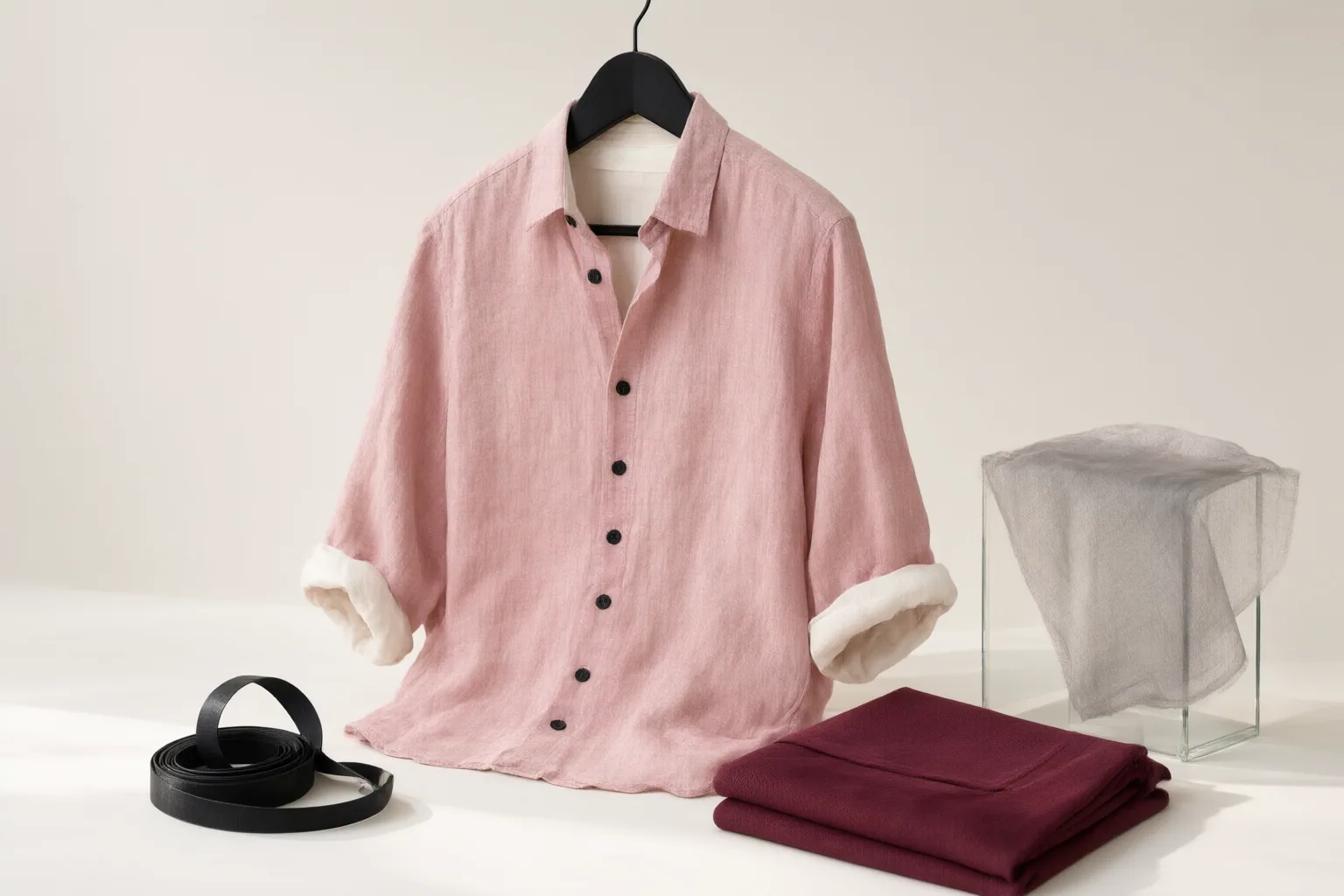
Choose a summer shirt by balancing fabric weight, coverage, fit, length, and care requirements—not by relying on the fiber name or labeled silhouette alone. Check the actual garment in bright light, compare its measurements with a trusted shirt, and make sure it supports your intended outfits.
Start With Fabric, Weight, and Opacity
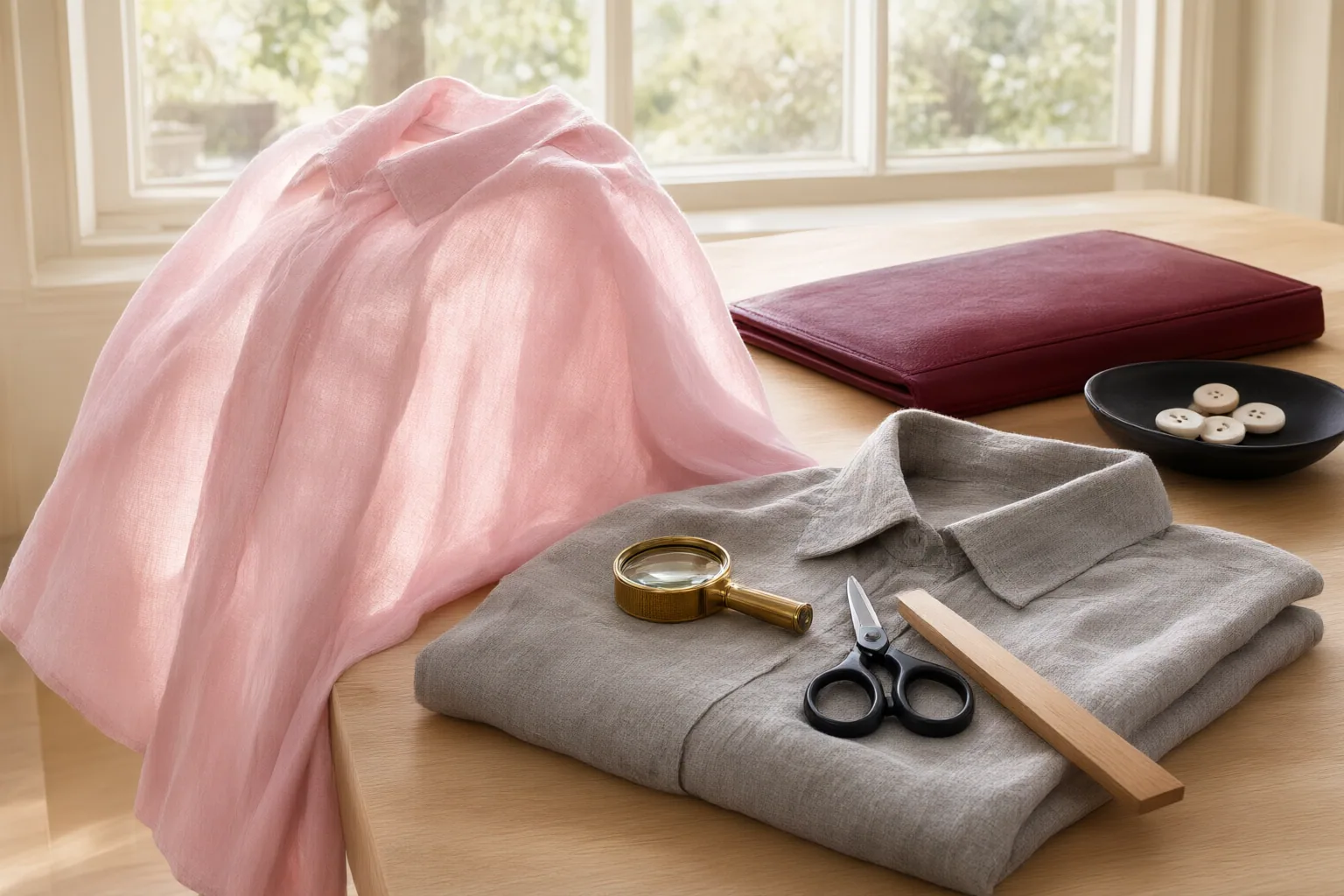
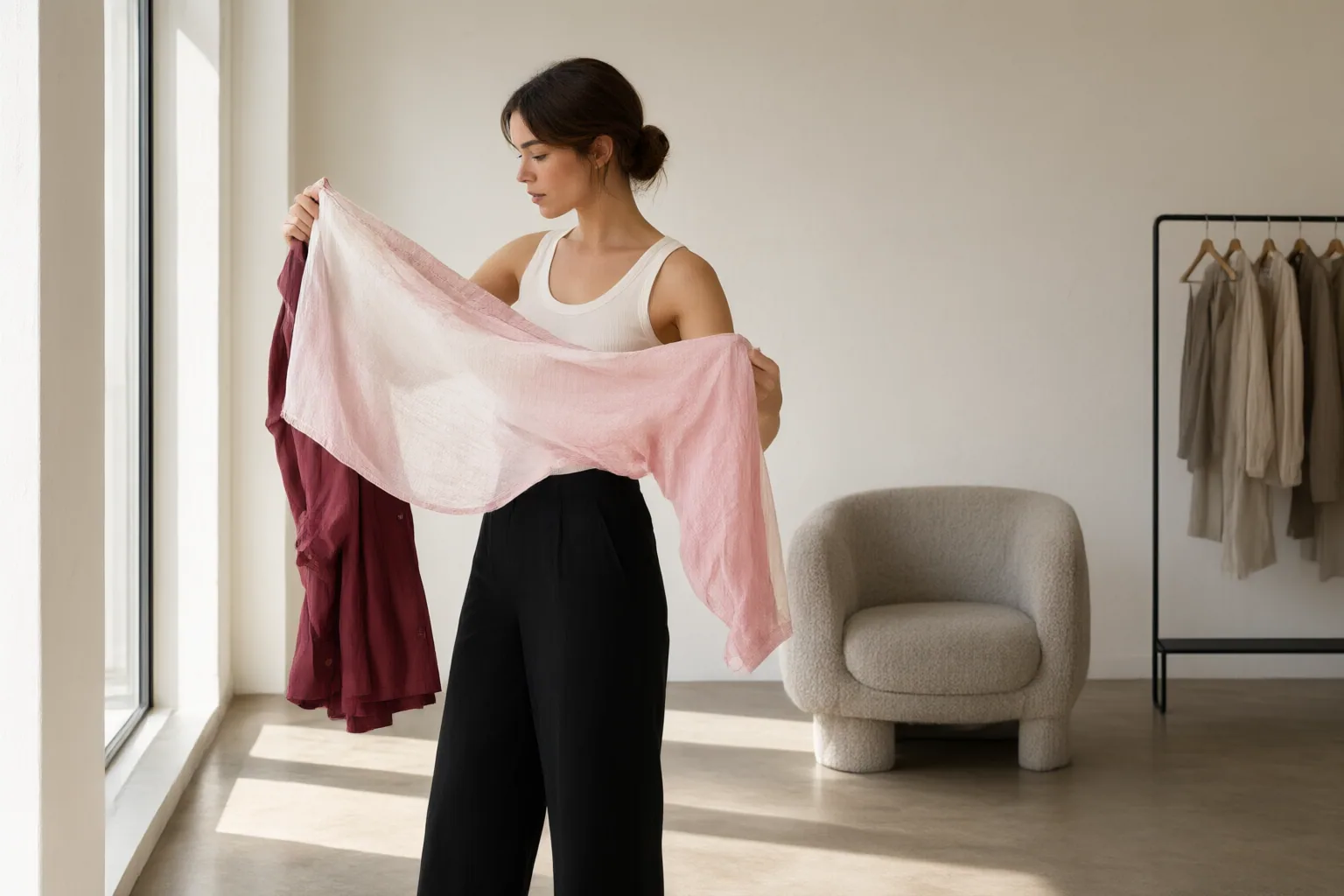
Lightweight cotton can work in warm weather, but low weight may reduce coverage. In Wirecutter’s testing of certain lightweight Supima cotton T-shirts, high-contrast underwear remained visible through some white fabric. That finding applies to the tested T-shirts, not to every summer button-up, but it provides a useful inspection method: hold the candidate fabric against strong light and place it over a contrasting layer before buying.
Fiber content is only one part of the decision. One documented M&S summer shirt combines 55% linen and 45% cotton, while a tested Buck Mason shirt uses lightweight 100% cotton. Examine the weave and weight alongside the composition. Decide how much transparency you accept, whether you are comfortable adding an undershirt, and whether the garment must also function as a light layer under a sweater or jacket.
Check Fit, Length, and Room to Move
Treat slim, regular, relaxed, oversized, and cropped shapes as different tools rather than a quality ranking. Check where the shoulder seams sit, how much room remains across the chest, whether you can move your arms comfortably, and where the hem falls. A closer silhouette can sit neatly beneath tailoring; C&A’s guidance pairs slim shapes with blazers or high-waisted bottoms and balances oversized tops with a more fitted lower half.
Length determines whether tucking is practical. Compare the garment’s measurements with a shirt that already works both tucked and untucked, rather than trusting the fit label alone. Evidence also shows why some margin matters: a tested J.Crew cotton poplin shirt became tighter through the arms and chest after 1.35% shrinkage, while customer feedback on the M&S shirt raised concerns about a short body. These observations are garment-specific, but they justify checking chest ease, sleeve movement, and hem security before committing.
Read the Care Label Before Committing
Use the exact care label as a purchase filter. The documented M&S cotton-linen shirt permits a 40°C gentle wash, medium-temperature tumble drying, high-temperature ironing, and professional dry-cleaning; those directions belong to that product and are not universal cotton-linen rules. By contrast, Wirecutter recommended gentle washing and air-drying for the lightweight cotton tops it discussed.
Allow for possible post-wash changes without assuming that every shirt will shrink identically. Wirecutter measured 1.16% shrinkage for the Buck Mason Mainstay after cold washing and low-temperature drying, and 1.35% for the tested J.Crew Jules sample. Before buying, ask whether your routine accommodates air-drying or ironing and whether the initial fit leaves enough margin. Customer comments about wrinkling on the M&S product were mixed, so treat them as subjective signals rather than controlled evidence.
Conclusion
Use a fixed sequence: inspect fabric weight and opacity, compare measurements and length, read the garment-specific care label, and then test the intended outfit combinations. A button-up with sufficient length can be tucked into trousers for work. For a more casual direction, Wirecutter’s examples include rolled cuffs, a vest, and jeans. A slim shirt can work beneath a blazer, while an oversized top can be balanced with a closer-fitting bottom.
Before purchasing, measure a shirt you already trust and compare its chest, sleeve, and body length with the candidate. Then view the fabric over a contrasting layer in bright light, confirm that both tucked and untucked lengths work, and accept the stated washing, drying, and ironing requirements.
Disclosures and limitations
- This article was prepared with AI assistance from the supplied M&S, C&A, and Wirecutter research. Product-specific findings are identified as examples and are not generalized to every summer shirt.
- No affiliate relationship was provided in the research package. Any commercial or affiliate links added during publication should be clearly labeled.
Related reading
Sources
- Regular Fit Cotton Linen Blend Shirt by M&S — Marks & Spencer
- We’ve Tested Nearly 100 Women’s White T-Shirts. These 11 Are The Best. — Wirecutter: Reviews for the Real World
- White T-shirts for women – C&A — C&A Online Shop
- Summer Suit Men – AP Hjelm Design — AP Hjelm Design
- Our Favorite Women’s Button-Up Shirts — Wirecutter: Reviews for the Real World