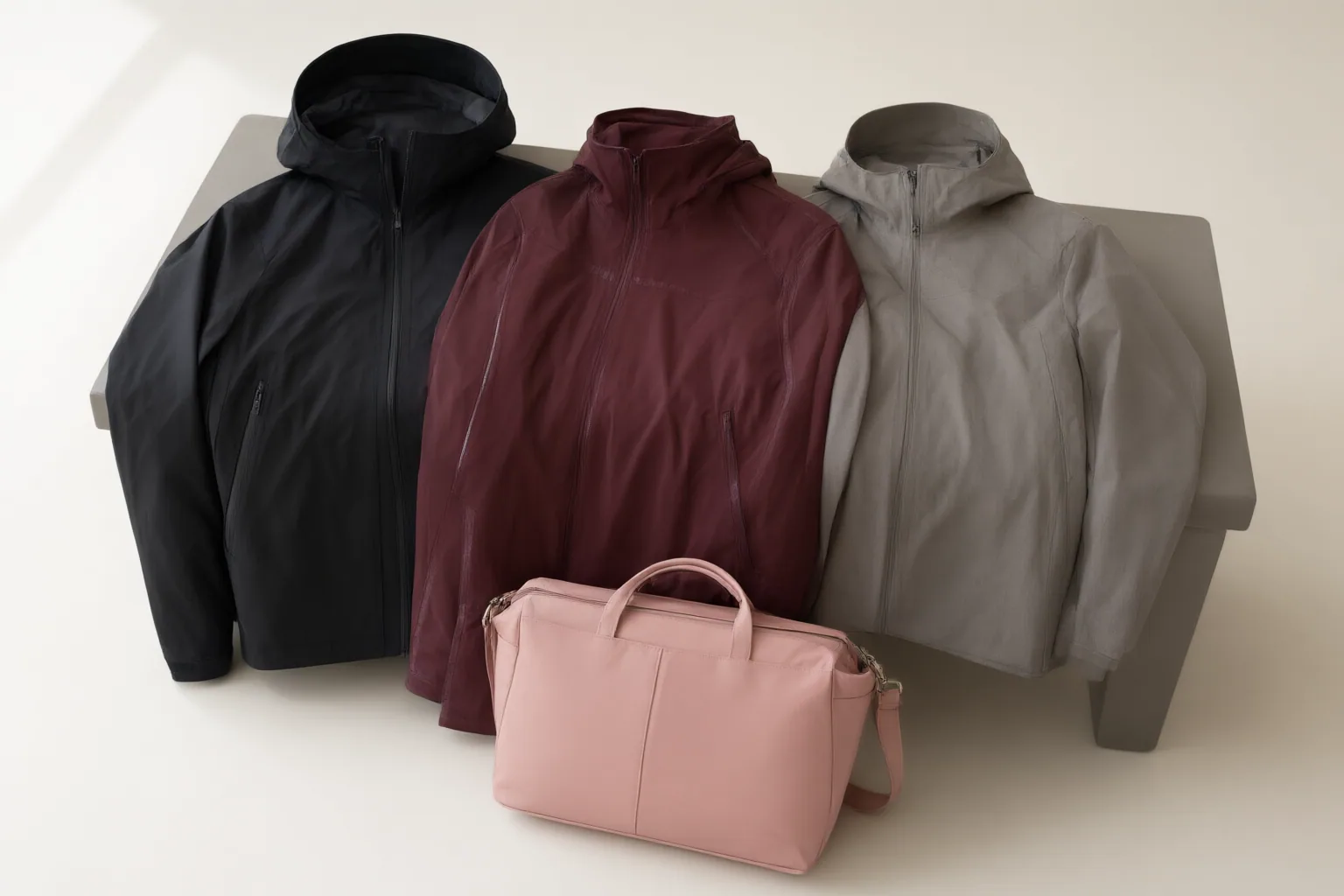
Compare city rain jackets around your actual commute: prioritize a hood that moves without blocking peripheral vision, seam construction suited to your rain exposure, usable ventilation, comfortable layering, and practical interaction with your everyday bag.
Start With Your City Rain Routine
Begin with conditions rather than appearance or brand positioning. Consider how long you usually remain outside, whether rain is brief or sustained, how much you walk, and whether the jacket must pack away. Frequent transitions from wet streets to warm trains, offices, or shops make ventilation particularly relevant.
A lightweight, style-led jacket may suit short trips and easy packing, while a more protective shell may better match prolonged exposure. Also account for the layers and bag you routinely carry. These factors provide a more useful comparison than treating every urban rain jacket as interchangeable.
Check Hood Visibility and Seam Sealing
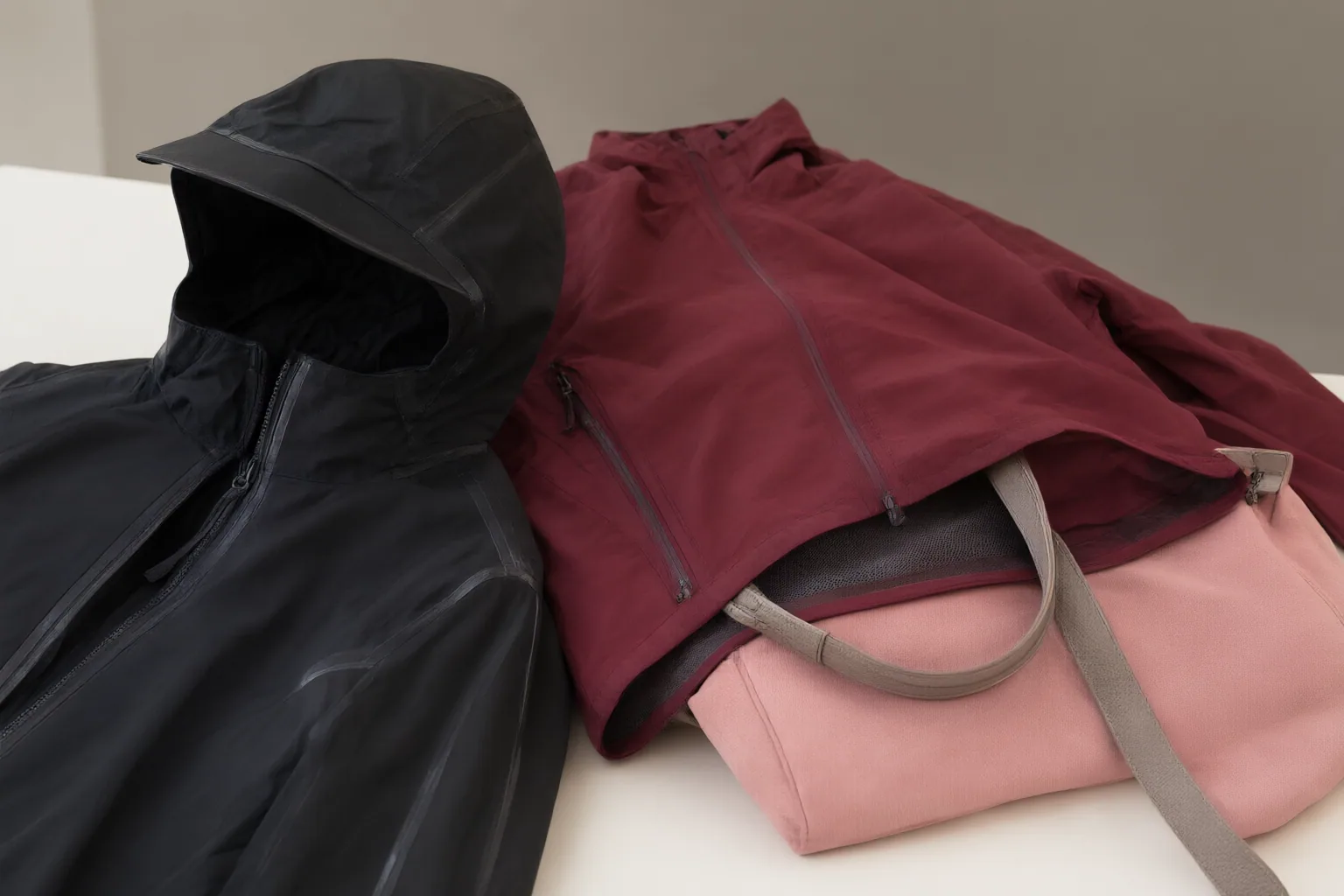
Put the hood up and reproduce ordinary street movement. Turn your head in both directions, look up and down, bend, and walk. Check whether the hood stays secure and follows your head without narrowing peripheral vision. This matters when watching traffic or navigating crowded sidewalks and transit platforms. Assess its adjustment points and whether a structured brim helps keep the opening stable.
Next, identify the seam construction instead of relying only on a general “waterproof” description. A fully seam-sealed jacket covers every seam; a critically seam-sealed design covers only selected exposed areas. According to Prime Hiking, the latter may be less suitable for sustained or wind-driven rain. If the listing or label is unclear, ask which seams are sealed rather than assuming that all stitching receives the same protection.
Evaluate Ventilation, Layering, and Bag Interaction
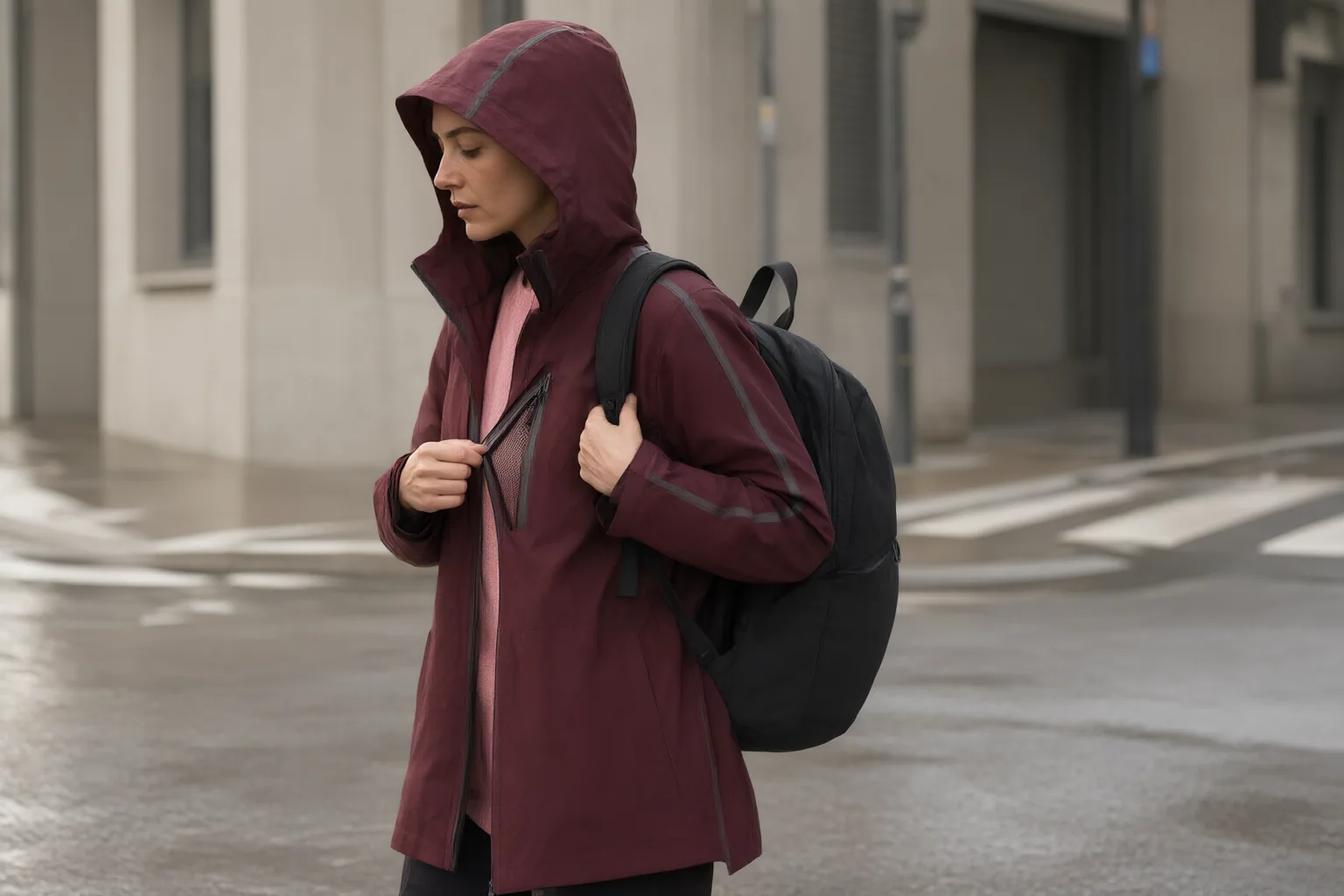
For outdoor-to-indoor comfort, look for controllable ventilation such as underarm zippers. Waterproof-breathable jackets generally combine a water-repellent face fabric with a membrane. If the durable water-repellent treatment degrades, the outer fabric can become saturated and breathability can decline even while the membrane continues to block liquid water. Ventilation features therefore remain useful when walking or entering heated spaces.
Try the jacket over the clothing you normally wear. Reach forward and overhead, rotate your torso, and check whether the sleeves bind or the hem rises enough to expose your waist. Adequate room through the chest, shoulders, and arms should support movement without making the fit impractical.
Carry your usual shoulder or messenger bag during the fitting. Confirm that its strap does not prevent access to zippered pockets, note where it rubs the fabric, and inspect how the jacket hem relates to the bag. The supplied guidance treats pocket access and repeated strap abrasion as meaningful criteria, but it provides no standardized measurement for “bag coverage.” Judge this interaction against your own bag rather than accepting an unsupported coverage claim.
Conclusion
Use a short fitting-room sequence: wear your normal layers, raise and rotate your arms, then put up the hood and turn your head in every direction. Identify whether all or only selected seams are sealed. Add your everyday bag, test each pocket, check strap contact and hem exposure, and locate any underarm vents.
Before buying, repeat these checks while wearing your usual layers and carrying your actual bag; confirm head movement, arm reach, pocket access, hem coverage, and ventilation against the demands of your commute.
Disclosures and limitations
- This article was prepared with AI assistance solely from the supplied editorial sources. Source claims were synthesized rather than independently tested; no products were personally used or recommended, and prices and availability were not used as comparison criteria.
Related reading
Sources
- Rain Jacket Buying Guide for Hikers: Waterproofing, Breathability, and What to Spend — Prime Hiking — Prime Hiking
- City Rain Jackets | J.Crew — J.Crew
- Rain Jacket Checklist: Hoods, Seams, Zippers & More — outerwear.top
- 6 Best Weatherproof Jackets For City Rain That Won'T Weigh You Down — TravelEstApp
- 12 Best Rain Jackets (October 2026) Tested Reviews — Mama Linux
- Best Versatile Rain Jackets for Urban Commutes and Mountain Hikes 2026 — HikingManual