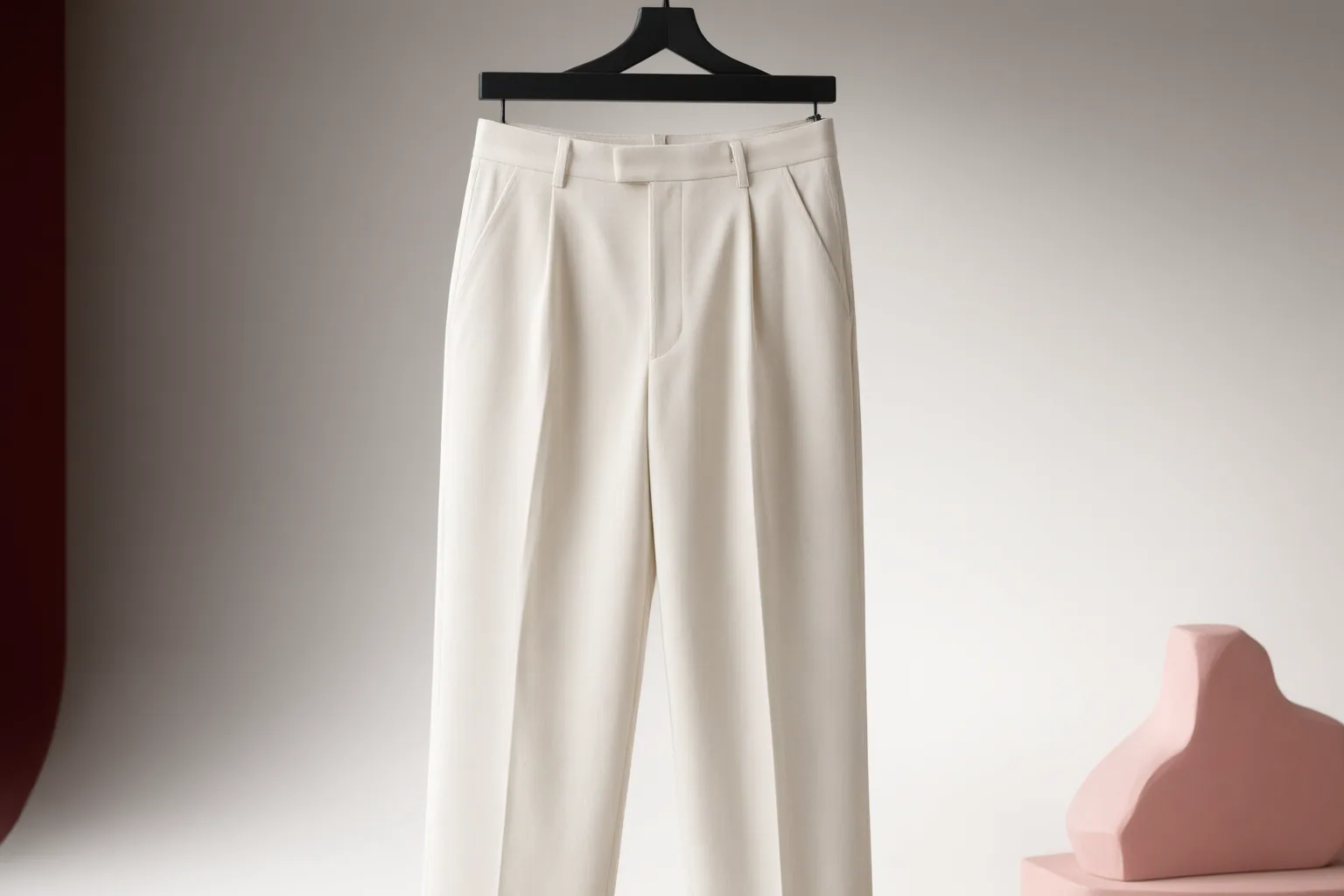
Assess pleated trousers as a complete system: check whether the pleats relax at rest, the pockets lie flat, the waistband stays secure, and the hips, seat, and thighs remain comfortable while standing, sitting, and walking.
What Pleats Can—and Cannot—Tell You About Fit
A pleat is a fold secured at the waistband that can open below, adding functional fullness through the upper trouser. Some opening during sitting or movement is therefore different from a pleat that stays pulled apart while you stand at rest.
Pleats alone cannot confirm a good fit. Evaluate them alongside the rise, waistband position, hip and seat shape, and thigh width. Pleated and flat-front trousers may also differ in their overall upper-trouser construction, so do not assume that decorative appearance is the only distinction. A pleated cut may offer more room yet still look excessively full if its proportions do not suit the wearer.
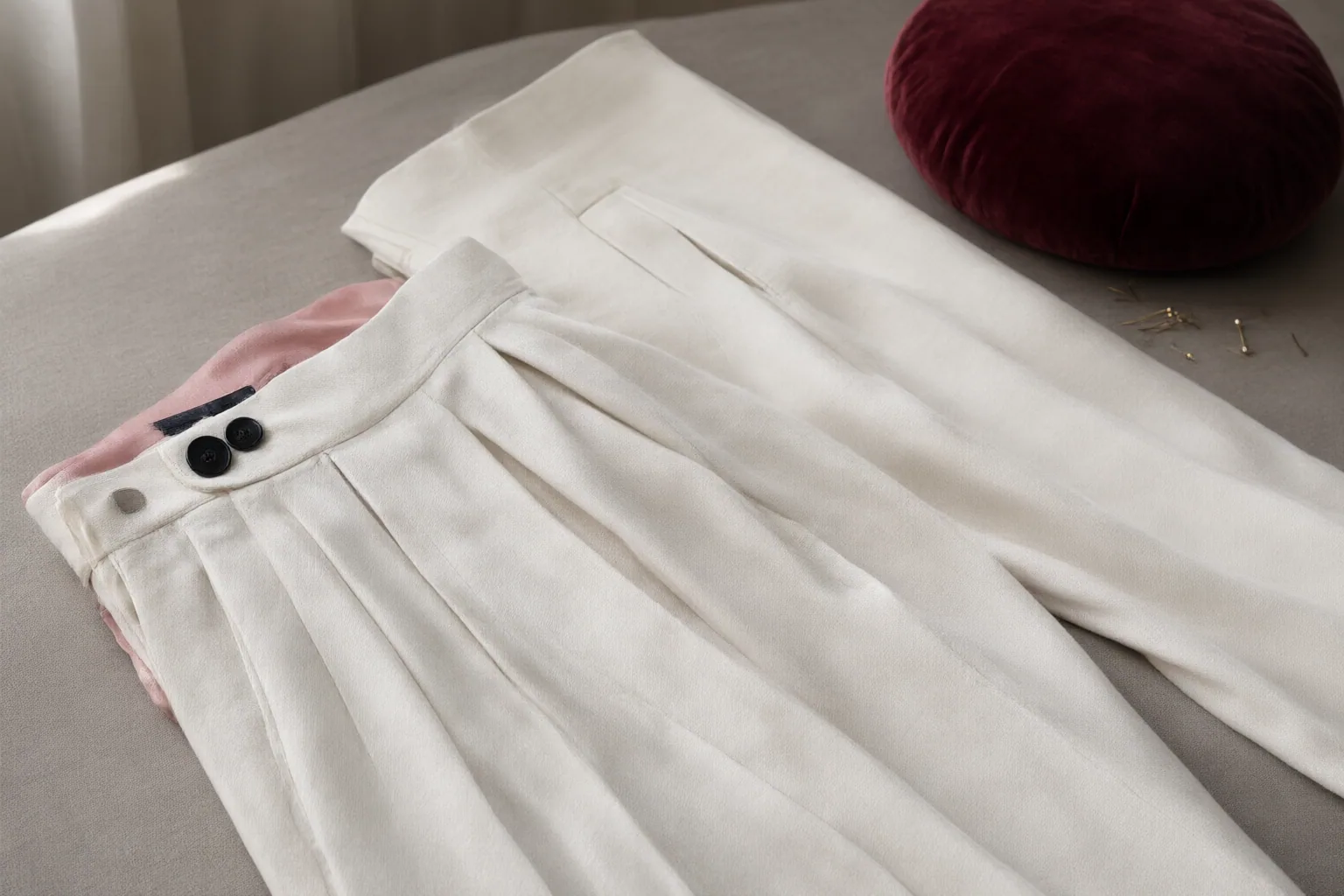
Check Front Pulling, Pocket Flare, and the Overall Cut
Begin the fit check while standing naturally rather than holding a posed posture. Look for pleats that remain under tension and side pockets that bow outward. Noticeable pocket flare can indicate tightness through the hip area even when the center front looks smooth.
Next, assess the waistband, seat, thighs, and length together. Simply choosing a larger size to reduce pulling may produce a loose waistband, a baggy seat, or excess length without correcting a mismatch in the cut. Compare another cut as well as another size when the waist and lower body seem to need different amounts of room. The useful question is not merely whether the trousers close, but whether their overall shape accommodates the body without persistent strain or uncontrolled fullness.
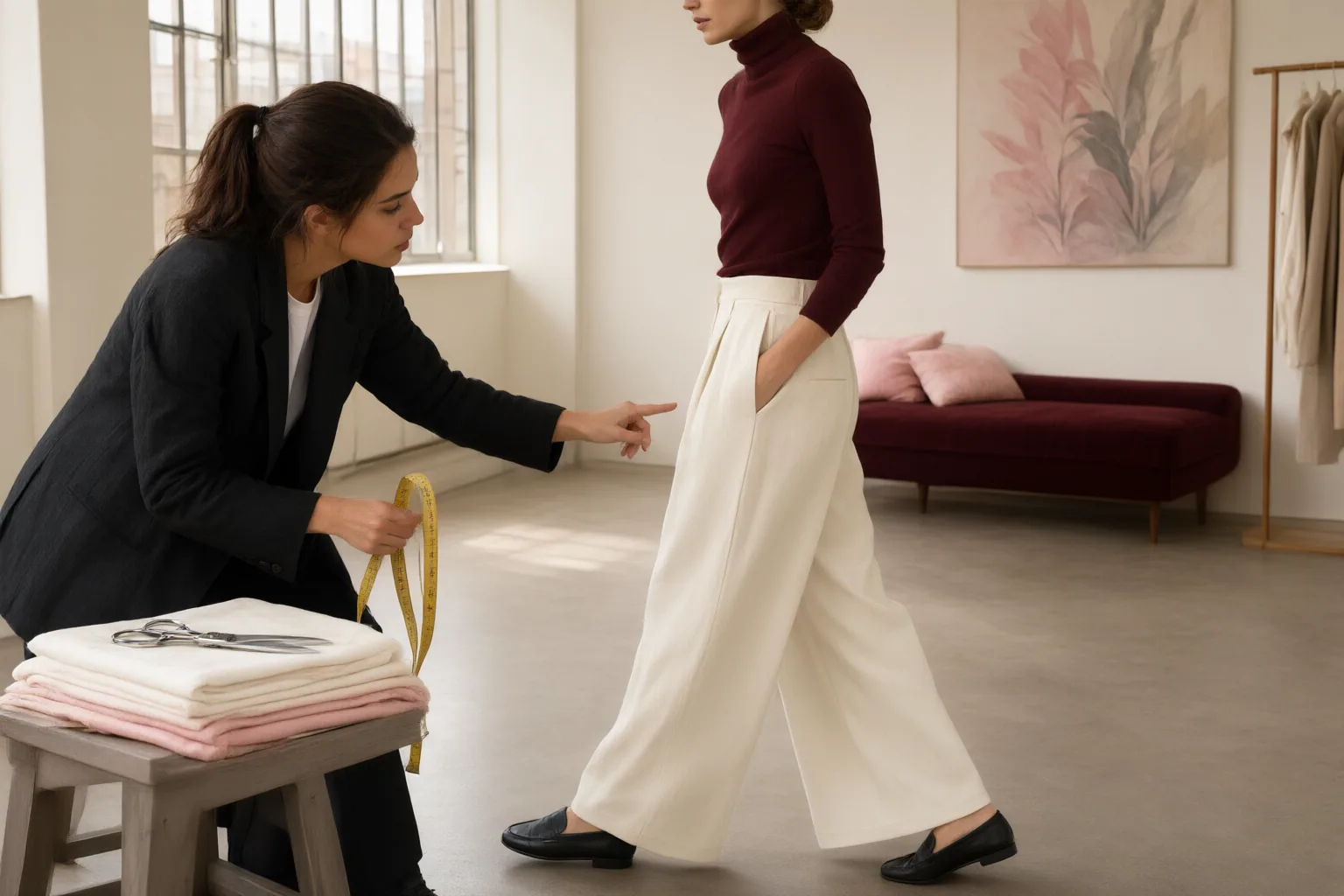
Compare Rise and Fabric Drape in Motion
Rise changes the space available for a pleat to fall. Caprice Bespoke states that pleats work best with a higher rise because a low rise gives the fold less room to hang and can make it project outward. Treat that as a source-attributed construction view, then compare how different rises actually sit on your body.
Fabric is another comparison point. The same source notes that cloths vary in how cleanly pleats hang and recover after wear. Gap’s observed category page illustrates the available range, listing low- and high-rise pleated trousers in linen, twill, denim, and wool-blend options. This range does not establish that one material or rise is universally better; it shows why “pleated” is not a complete description of drape.
After the standing check, sit and walk. Reassess whether the waistband remains secure, the seat and thighs have room, and the pockets and pleats return to a relaxed position after movement.
Conclusion
A convincing fit combines relaxed pleats and settled pockets at rest with adequate space through the hips, seat, and thighs. The waistband should remain secure, while the rise and cloth should allow controlled drape as you move. Do not use a smooth center front or the presence of pleats as the sole test. Before choosing a size or cut, repeat the assessment while standing, sitting, and walking, then select the option that keeps the waist stable, the pockets settled, and the pleats relaxed at rest.
Disclosures and limitations
- This article was prepared with AI assistance from the supplied research package. Construction and fit claims draw on commercial publishing sources and a retailer category page; they were not independently wear-tested.
- No individual products, prices, ratings, inventory claims, or affiliate recommendations are included.
Related reading
Sources
- Pleated vs Flat-Front Pants for Men: How to Choose — VEROSHAPE
- Pleat: The Trouser Feature That Provides Ease Without Excess — Caprice Bespoke
- Pleated Trousers | Gap — gap.com