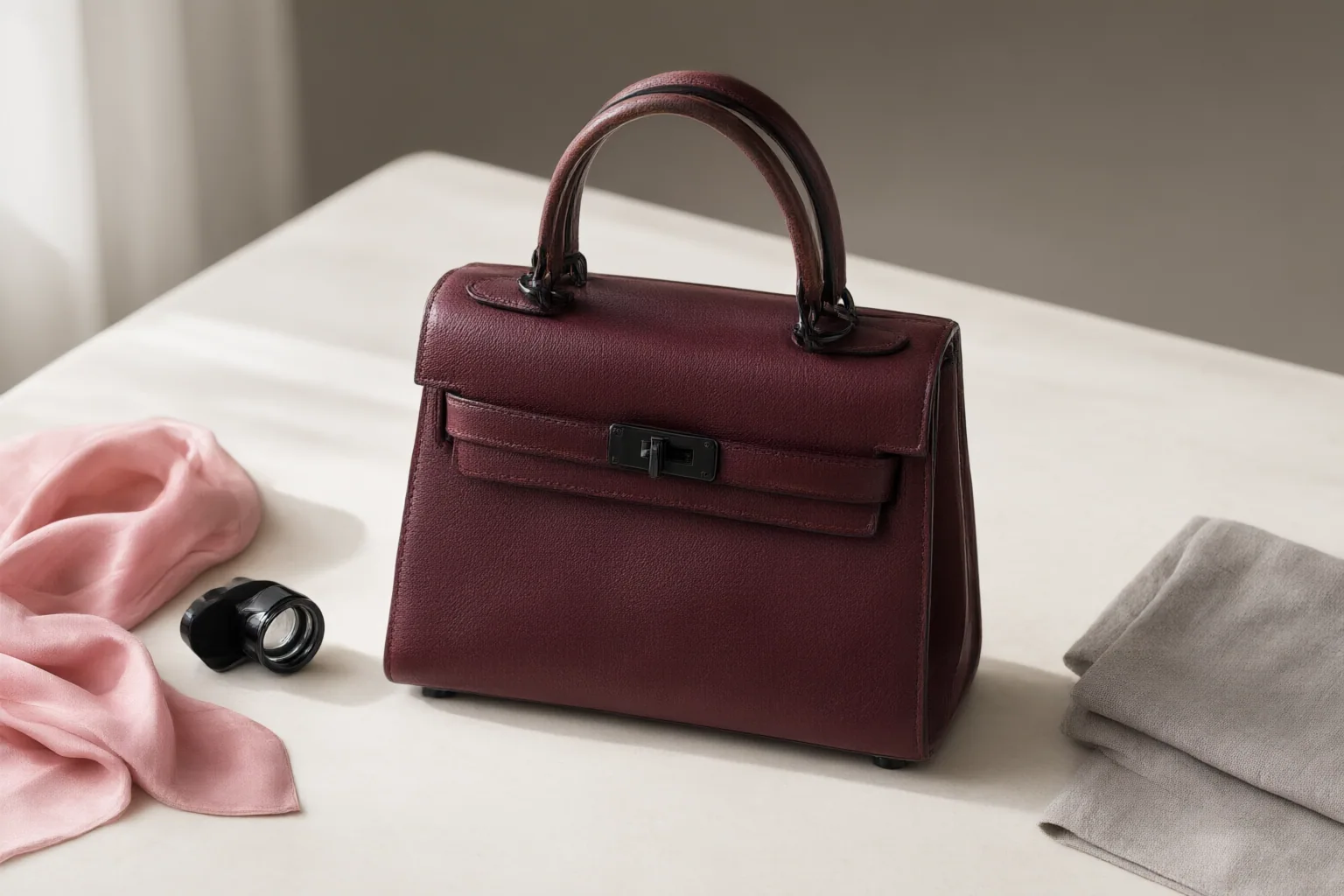
Evaluate a secondhand designer bag by matching the seller’s grade to detailed photographs and written disclosures, checking everyday functionality, and adding likely cleaning or repair needs to the asking price. A condition label alone is not enough because grading standards vary among resale sellers.
Look Beyond the Seller’s Condition Grade
Condition labels such as “good” or “excellent” are not standardized, so begin by reading the seller’s definition rather than comparing labels across platforms. Then check whether the photographs and condition notes support that grade.
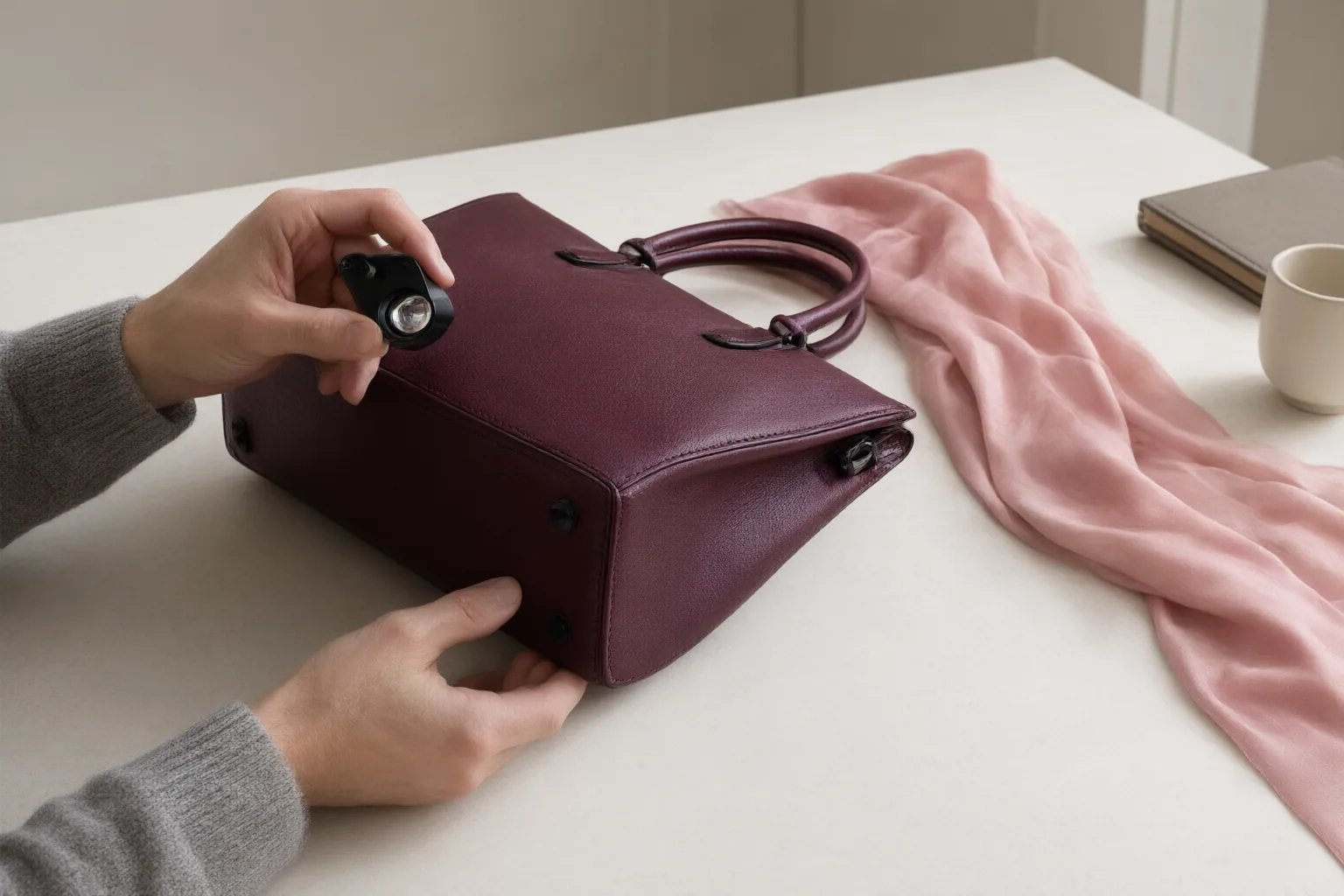
Look closely at every corner, edge, section of piping, and the base for rubbing, color loss, fraying, exposed piping, or worn-through material. Review handles, attachment points, and hardware from multiple angles. Inside, check for stains, tears, sticky lining, damaged pockets, and any disclosure of odors. Mold or storage-related smells may be difficult to remedy.
Finally, assess the silhouette. Compare the bag’s current structure with its intended shape, noting any unexpected slouching or warping. If the listing relies on stock, limited, or overexposed images, request clear photographs of these areas before judging the stated condition.
Check Whether the Bag Will Work in Daily Use
A bag can look presentable yet be inconvenient or fragile in use. Ask the seller to confirm that every zipper, clasp, and snap operates properly. Check that pockets are intact and usable, and inspect straps, handles, and their attachment points for weakening or damage.
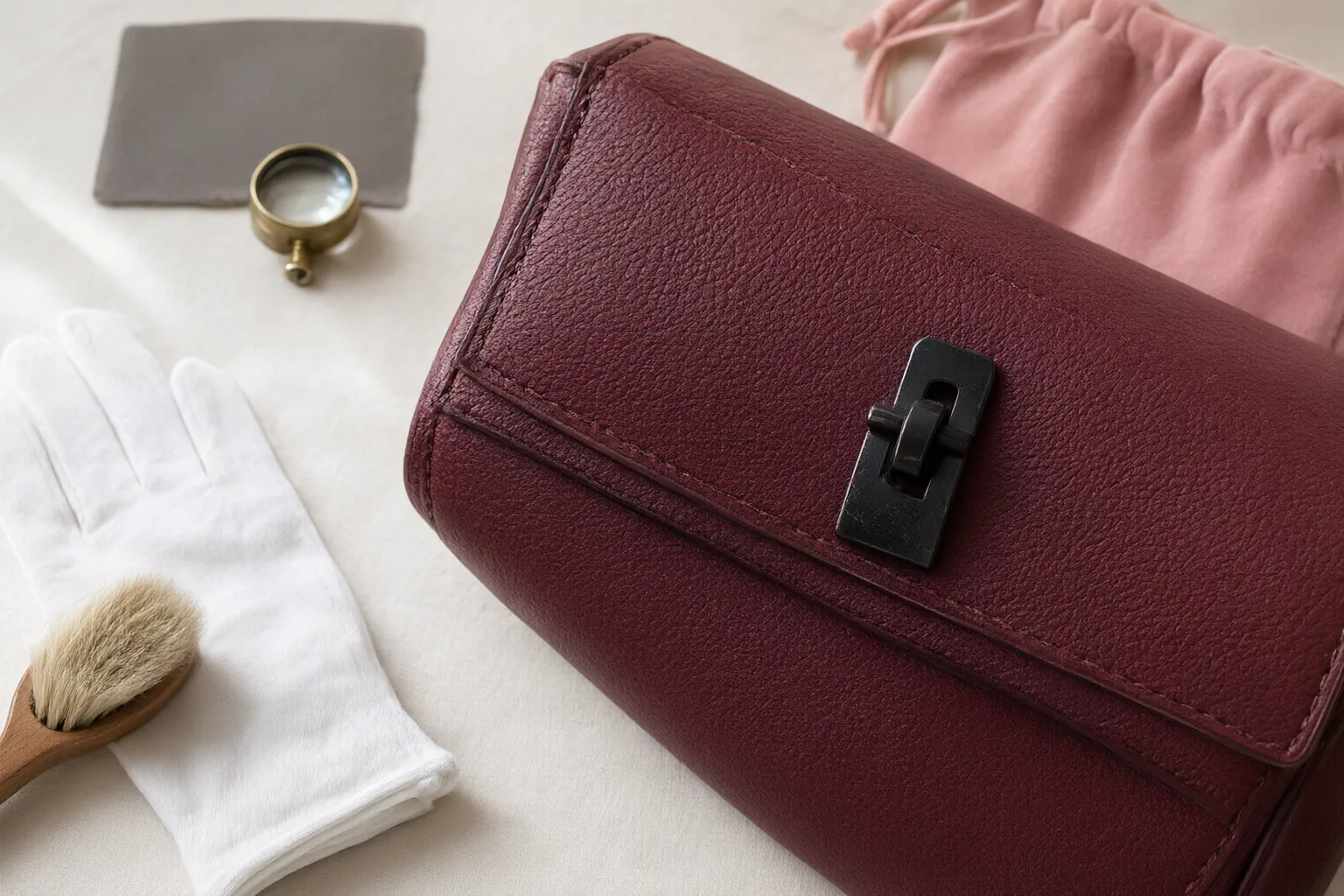
Request close, well-lit images of the hardware, interior, handles, base, corners, edges, and identifying stamps or codes. These views help distinguish cosmetic wear from problems that affect function. Consider whether the bag still holds or slouches as the design intends; a misshapen body, catching closure, damaged pocket, or weakened strap can materially change how it performs. Do not treat accessories or an authenticity card as substitutes for condition evidence or a clearly explained authentication process.
Estimate Maintenance and the Real Cost of Ownership
Different materials create different maintenance risks. Coated canvas may deteriorate along edges; untreated leather develops patina and can retain stains; lambskin readily shows scuffs; patent material may develop color transfer or crazing; and absorbent linings can hold odors.
Ask in writing whether the bag has been repaired, redyed, repainted, or fitted with replacement hardware. Also request a direct disclosure about odor and other restoration. Prior third-party work may affect later brand servicing or resale grading, depending on the brand or platform. Persistent odors, sticky linings, structural distortion, and worn-through corners may be difficult or uneconomical to reverse.
Calculate the real cost as the asking price plus plausible cleaning or repair needs. Compare it only with similar bags, accounting for condition, rarity, age, style, and demand. Included items—such as a dust bag, box, cards, receipt, lock, key, or detachable strap—may contribute to resale value, but future value can decline and is never guaranteed.
Conclusion
Before committing, confirm five things: detailed photographs support the condition notes; closures, pockets, straps, handles, and structure remain functional; odor and restoration history are disclosed in writing; authentication and return terms are clear; and included accessories are identified. Then add likely maintenance to the purchase price and compare the total with genuinely similar bags. If any essential evidence is missing, request it before purchasing rather than relying on the seller’s grade alone.
Disclosures and limitations
- This article was prepared with AI assistance using only the supplied research sources. It does not represent first-hand purchase, inspection, authentication, or product use.
- No product-specific affiliate recommendation is made here. If affiliate links are added during publication, they should be clearly labeled and should not affect the evaluation criteria.
Related reading
Sources
- How to Check the Condition of a Secondhand Designer Bag — The Find List
- Designer Bag Condition Grades Decoded (and What They Cost You) · Fastemy — Fastemy
- Buying Pre-Loved Designer Bags: The Smart Buyer's Guide | Gaby's Bags — Gaby's Bags
- What to Check When Buying Second-Hand Bags — BOSS Publishing
- FASHIONPHILE | Used Designer Luxury Items | Buy & Sell — FASHIONPHILE