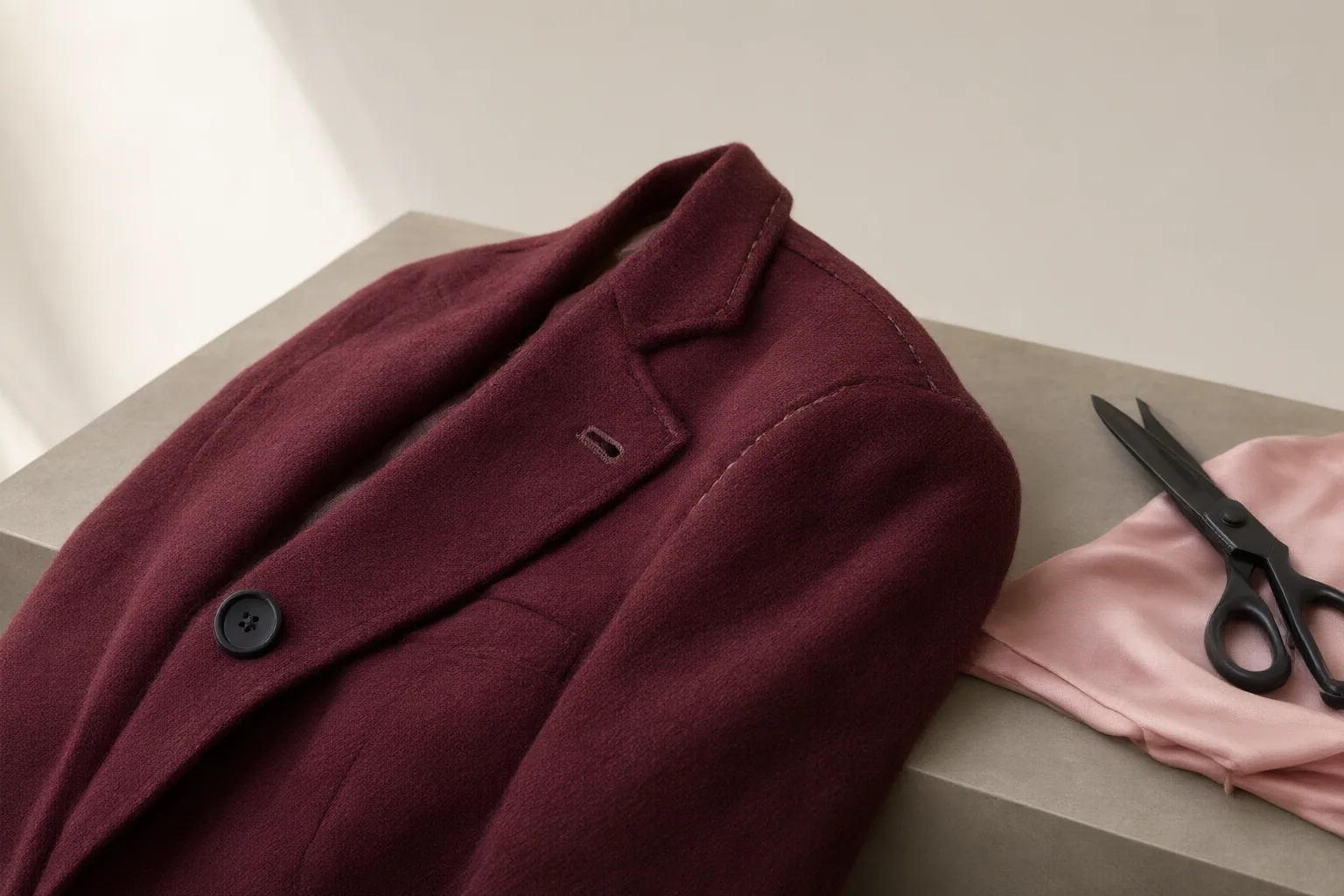
Before buying clothing, inspect its seams and visible construction, pay extra attention to high-stress areas, operate the fastenings, and read the care label. These checks cannot predict an exact lifespan, but they can reveal defects and maintenance demands that affect practicality.
Start With Seams and Visible Construction
Examine the garment in good light, moving section by section rather than judging only its overall appearance. Look for open seams, skipped stitches, puckering, loose threads, holes, dye streaks, and unexpected shade variation. These are observable warning signs listed in garment quality-control guidance.
Do not assess durability from fiber content alone. Seam strength can also be influenced by the thread, stitch type and density, seam type, needle choice, seam allowance, and fabric properties. A shopper cannot reproduce professional strength testing in a store, but can compare visible stitching for consistency and identify obvious defects. Check both the outside and any accessible interior seams, without pulling hard enough to damage the garment.
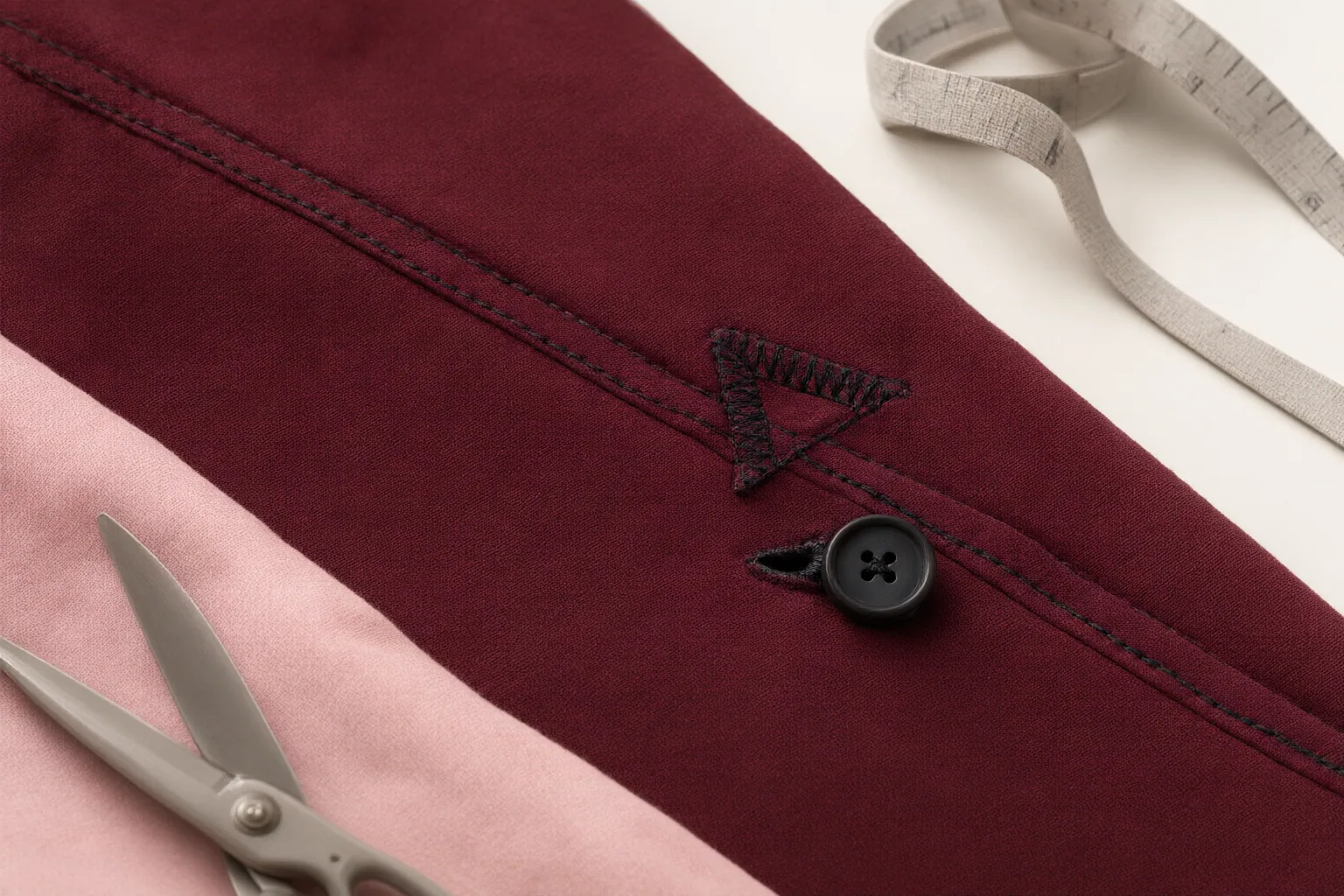
Inspect the Garment’s High-Stress Points
Give extra attention to the shoulders, crotch, and waistband, which are identified as high-stress areas requiring stronger seams. Follow each seam through these zones and look for openings, skipped stitches, puckering, loose threads, or other visible irregularities. Where the construction is accessible, compare the stitching at a stress point with stitching elsewhere on the garment.
This targeted review is more informative than checking only the front or most visible surface. However, neat-looking construction is not a guarantee of a specific service life: seam performance depends on several interacting materials and construction choices, some of which cannot be evaluated through an ordinary shopping inspection.
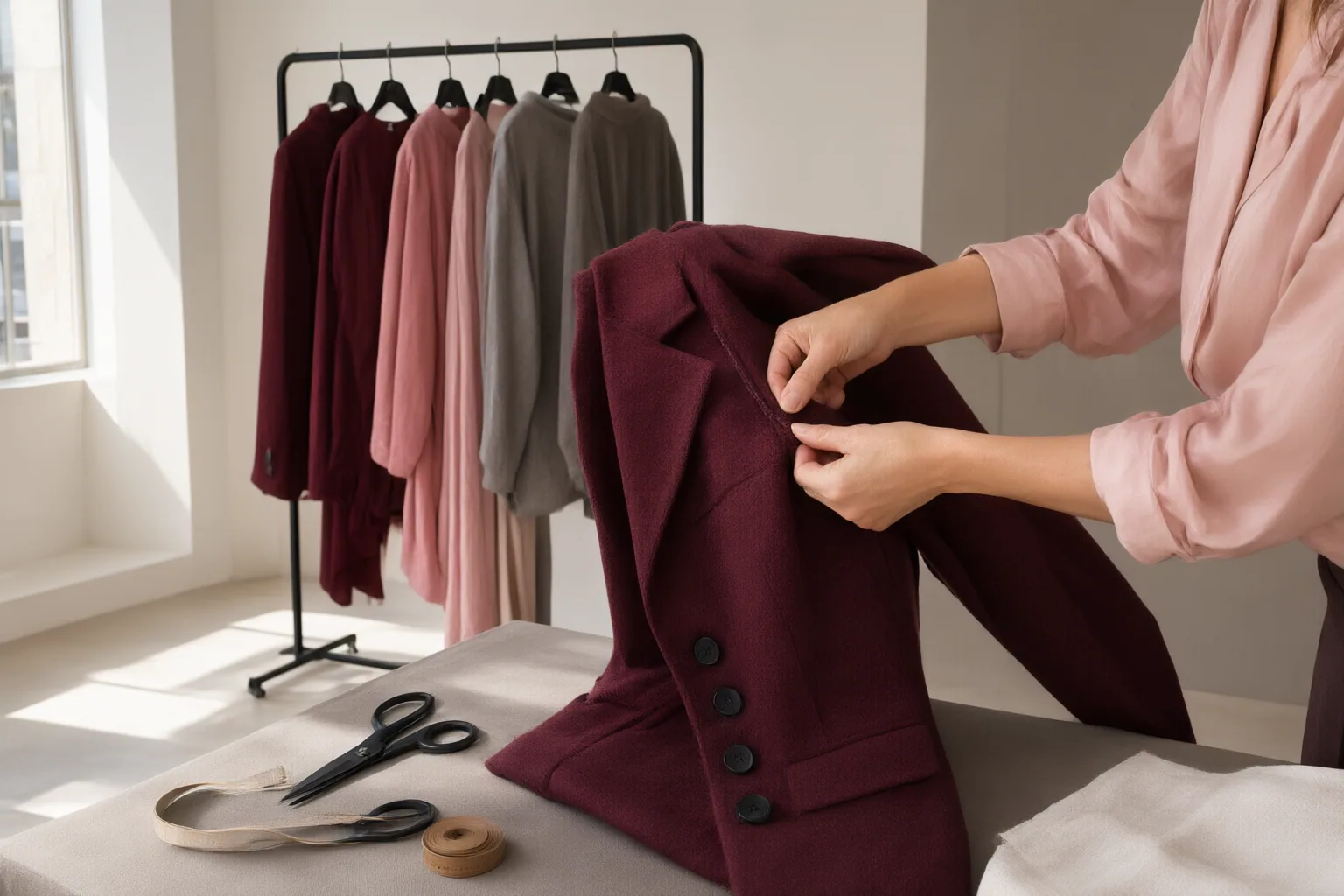
Test Fastenings and Review Care Requirements
Check buttons for looseness, misalignment, or twisting. Buttons should sit flat, buttonholes should be cleanly cut, and each button should open and close properly. Also scan around fastenings for loose threads or open seams, since a fastening is only as practical as the surrounding construction.
Next, read the garment-specific care label before deciding. It may specify washing temperature, ironing limits, and whether bleach can be used; disregarding these instructions can damage the material. Consider whether those requirements fit your normal routine. The supplied workwear guidance, for example, recommends air drying instead of tumble drying where heat and mechanical motion could harm fibers, particularly elastic fibers. It also advises closing zippers before washing to preserve their shape, reduce the risk of bent or broken teeth, and protect other laundry. Treat those points as context, not universal rules: the label on the individual garment governs its care.
Conclusion
Use a four-part final check: inspect visible construction, concentrate on the shoulders, crotch, and waistband, operate every fastening, and read the complete care label. Visible defects can justify reconsidering a purchase, while demanding care instructions may make an otherwise appealing garment impractical for your routine. Before purchasing, confirm that both the construction you can observe and the maintenance required suit how you intend to wear and care for the garment.
Disclosures and limitations
- This article was prepared with AI assistance using only the supplied construction, quality-control, and garment-care sources. It contains no product recommendations, prices, availability claims, affiliate links, or claimed hands-on testing.
Related reading
Sources
- Robot or human? — walmart.com
- Methods to Assess Durable Apparel Quality — linkedin.com
- How to extend the lifespan of workwear — canis.cz
- Quality Control Checklist When Importing Shirts from China – Hopeway Clothing — Hopeway Clothing