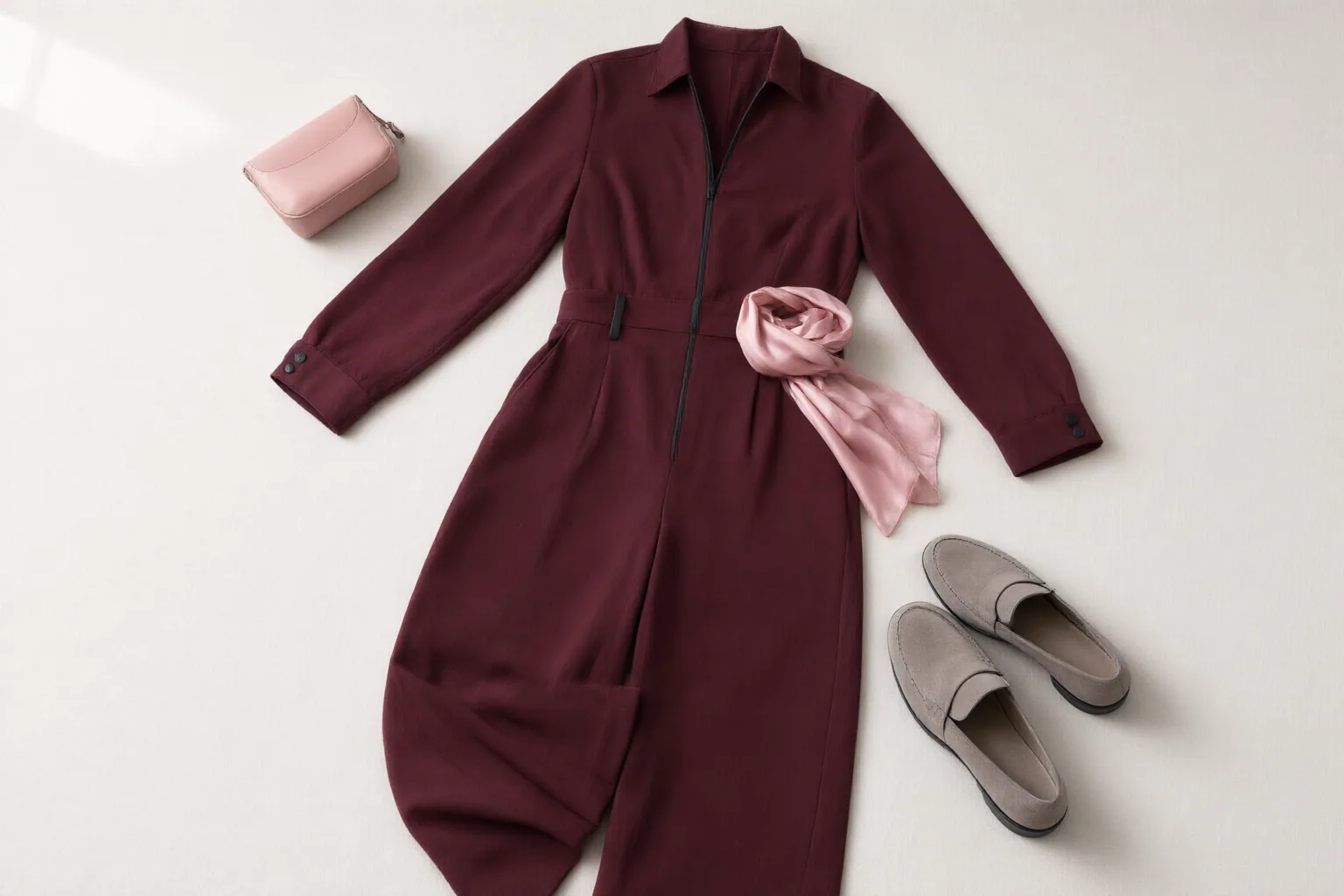
A jumpsuit must accommodate your upper and lower body as one connected garment. Before buying, assess its vertical length, waist and crotch placement, room through the seat and thighs, movement, closure access, fabric behavior, and realistic alteration needs. Restroom ease and seated comfort should be tested during try-on because the available sources do not verify either performance area.
Start With Torso Proportion and One-Piece Fit
Unlike separate tops and trousers, a jumpsuit connects the bodice and pants, so both sections must fit simultaneously. Begin with the garment’s combined vertical length: the shoulders, waist, crotch, and leg should align without pulling or excessive sagging. No numerical torso benchmark is supported by the available evidence, so judge the relationship on your own body.
Inspect the waist placement and overall silhouette, then check the crotch seam, seat, and thighs. The cited jumpsuit guidance favors sufficient lower-body room and identifies a lower crotch seam, stretch, an adjustable waist, and a relaxed leg as features that may reduce binding or support movement. Treat these as comparison points rather than guarantees of fit.
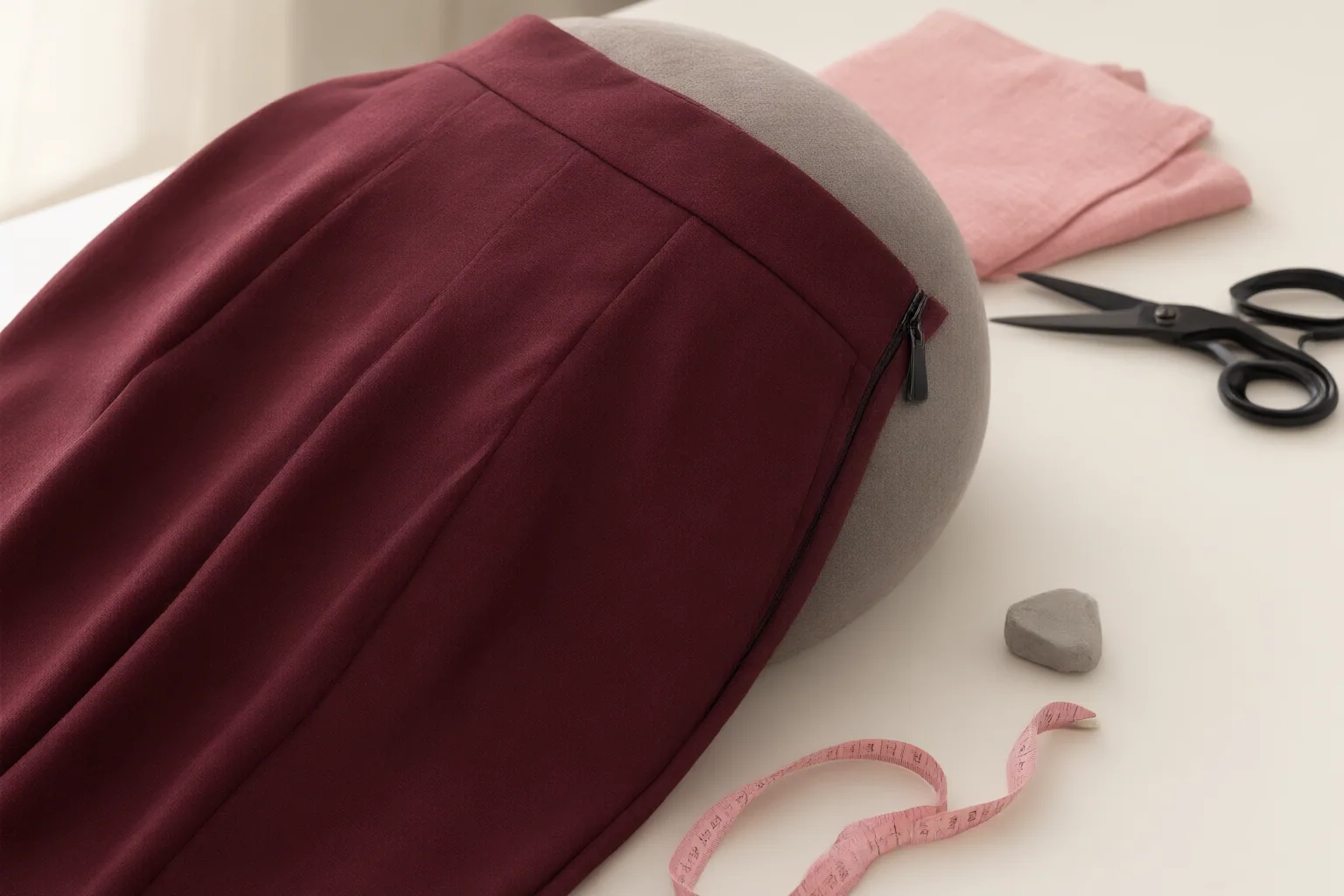
Test Movement, Seated Comfort, and Fabric Behavior
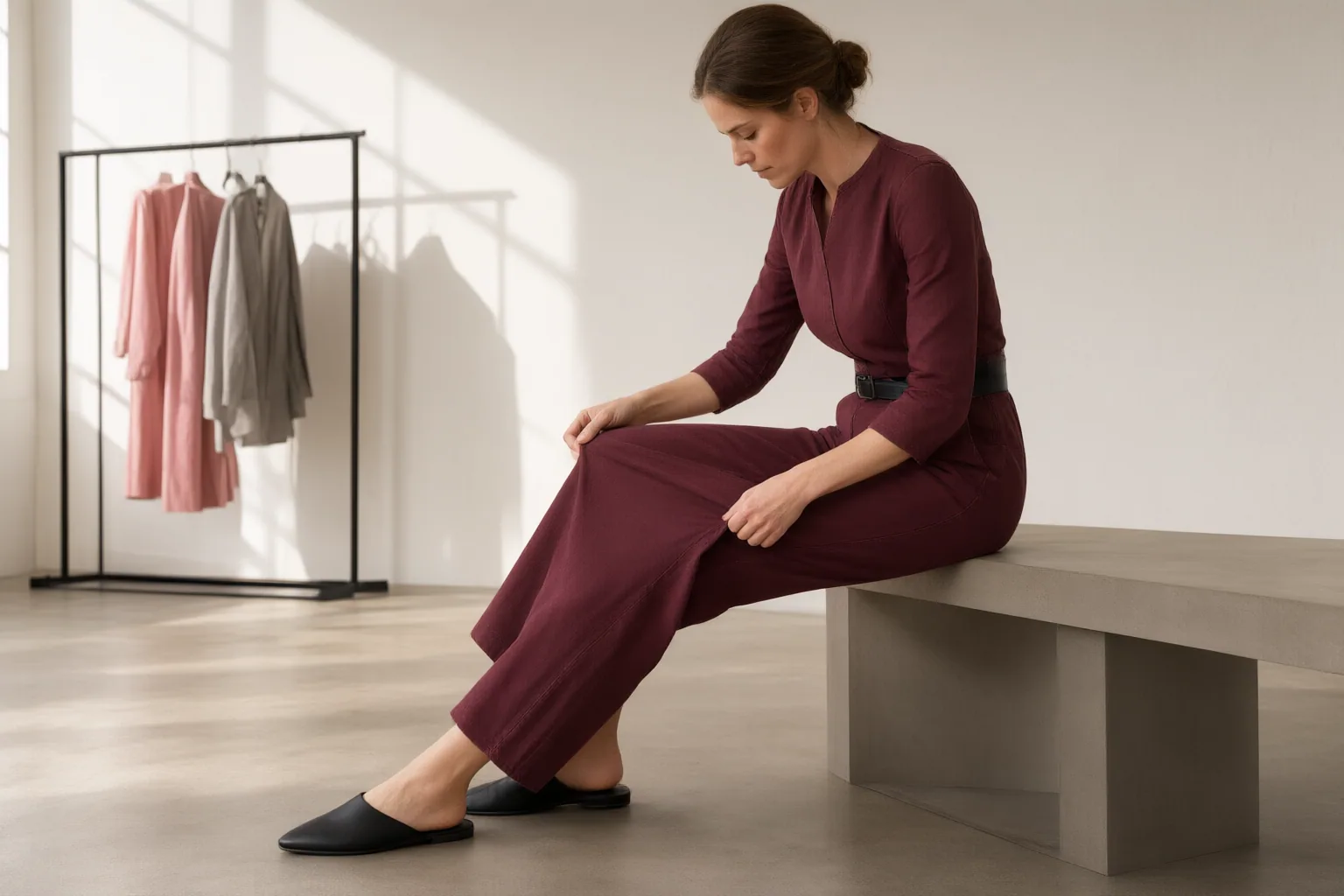
A standing mirror check is not enough to evaluate everyday wear. During try-on, walk, reach, bend, and sit in a position similar to how you would sit at work, in a car, or at dinner. Notice whether the garment pulls vertically at the shoulders or crotch, tightens across the seat or thighs, or restricts your range of motion. This is a shopper-performed inspection, not evidence that a particular jumpsuit has passed seated-wear testing.
Also observe the material. The supplied guidance connects fabric with comfort and drape, while stretch and adequate room may help with movement. Check whether the fabric falls cleanly when standing and whether it becomes restrictive, distorted, or uncomfortably tense when seated. Recheck the waist and crotch after moving because a garment can shift away from its initial position.
Check Restroom Access and Alteration Options
The sources do not document restroom-use tests, closure access, or required undressing steps. Evaluate those details yourself before purchase. Identify every closure, determine whether you can reach and operate it without assistance, and consider whether outer layers would complicate the process. Use the fitting room only as appropriate under store rules; otherwise, rehearse the closure sequence while remaining dressed.
Next, separate adjustable details from permanent tailoring. An adjustable waistband can refine placement, while rollable or alterable cuffs and longer leg options can accommodate different heights. The cited guidance also identifies sleeve, arm, and leg tailoring as possible fit refinements and advises budgeting for minor alterations even when an off-the-rack garment fits reasonably well.
Do not assume every change is practical. Before committing, identify the exact problem—such as waist placement, sleeve length, cuff treatment, or leg length—and ask a qualified tailor whether that specific construction can be altered and what it would cost. The available sources provide no feasibility or price benchmarks.
Conclusion
Make the decision in sequence: confirm that the connected bodice and pants suit your proportions, check the waist and crotch placement, verify seat and thigh room, observe the fabric, and assess closure access. Then distinguish easy adjustments from tailoring that needs professional confirmation. Before buying, sit, walk, bend, inspect the closure and waist, and identify any required alterations.
Disclosures and limitations
- This article was prepared with AI assistance from the two retailer-authored sources identified by the source IDs. Their guidance is not independent fit research, and no products, prices, inventory, reviews, personal testing, or affiliate recommendations are presented.