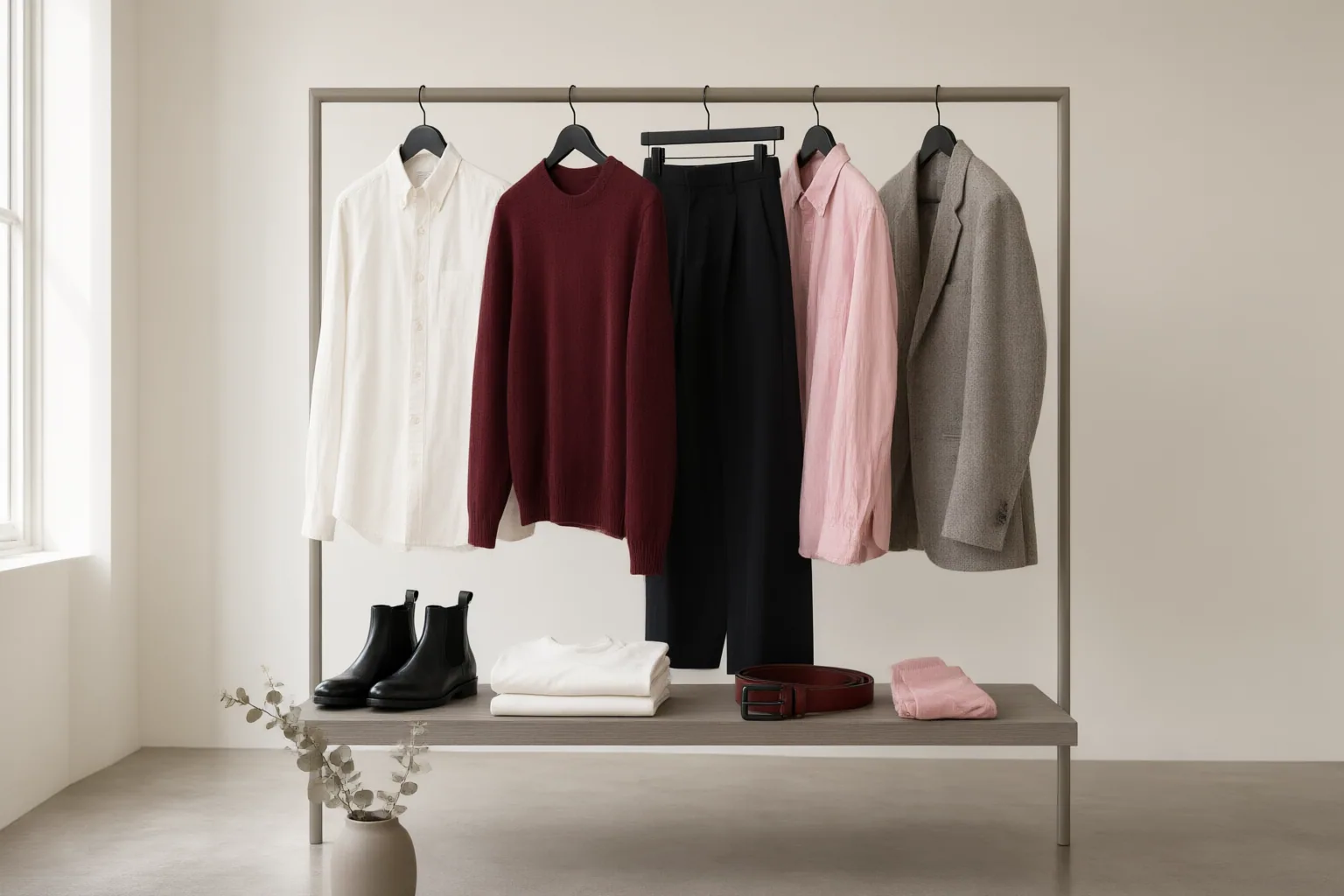
Build an everyday wardrobe around your actual schedule, then prioritize compatible pieces that fit well, coordinate easily, and can serve more than one setting.
Start With Your Real Week and Current Closet
Begin with an audit, not a shopping trip. Review each garment for fit, condition, and how frequently you wear it. Then map the settings that make up a normal week—such as office days, remote work, weekends, and occasional formal events. Your wardrobe should reflect those real requirements rather than an imagined lifestyle.
Separate dependable pieces from items that need repair, replacement, or rarely coordinate with anything else. The remaining gaps become your shopping list. This routine-based approach matters because a generic essentials checklist cannot prescribe the right quantities or categories for everyone.
The Everyday Essentials Checklist
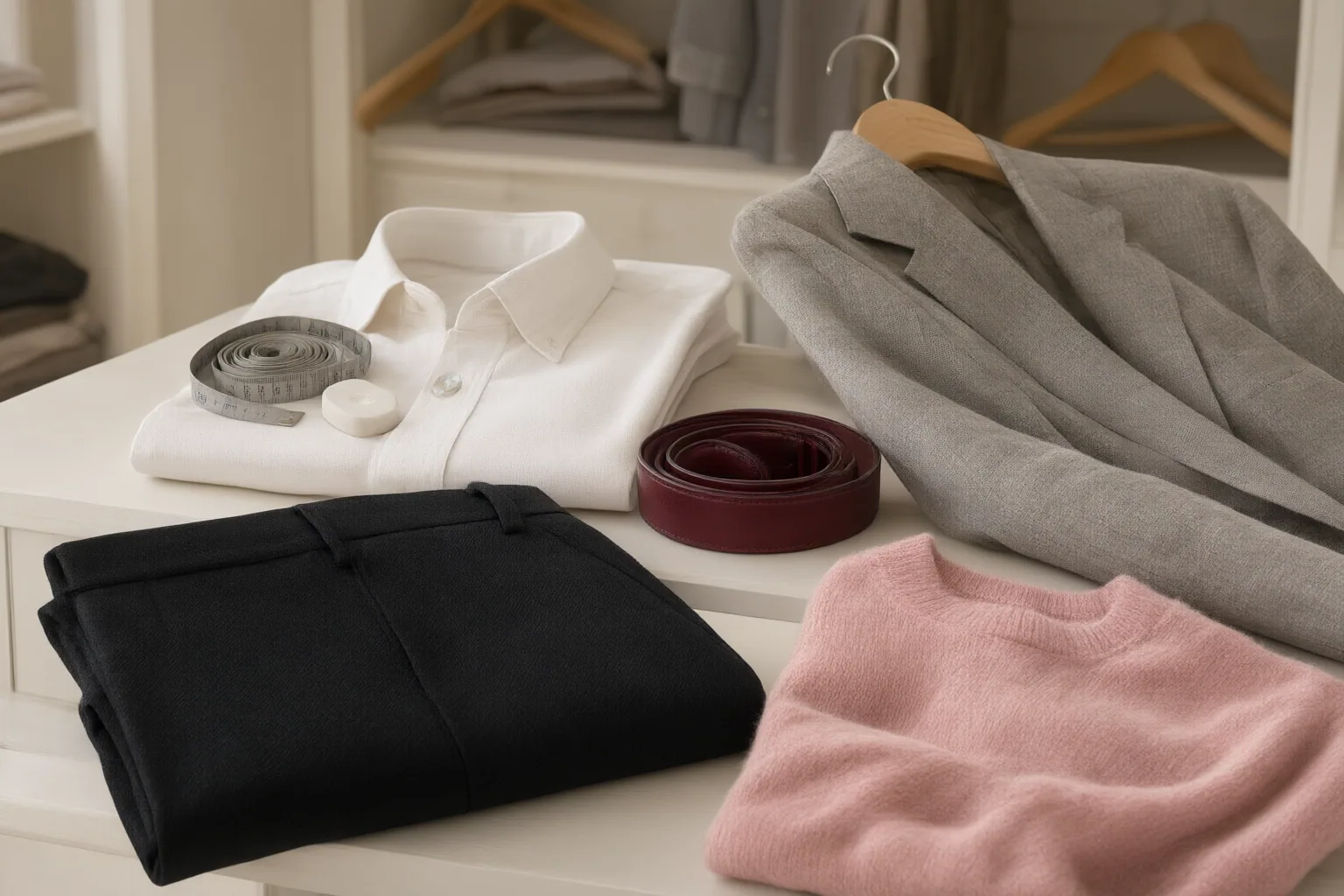
Use these categories as a framework, adjusting them to your schedule:
- Tops: a white crew-neck T-shirt, casual shirts, and dress shirts where your work or social calendar requires them.
- Knitwear and casual layers: a jumper and hoodie for adaptable layering.
- Outerwear: a light jacket, trench coat, or another coat suited to the settings you regularly encounter.
- Bottoms: jeans, chinos, and tailored trousers selected according to your dress requirements.
- Tailoring: a suit only when formal or professional occasions justify it.
- Footwear: trainers, boots, and loafers cover distinct levels of formality.
- Finishing categories: underwear, socks, and useful accessories complete the working wardrobe.
British GQ’s broader checklist spans 19 categories, while COS similarly groups everyday T-shirts, jumpers, and jeans with tailoring, coats, and jackets. These examples establish useful coverage, not a universal purchase quota. Someone working remotely may need fewer dress shirts or tailored pieces than someone in a formal office.
Choose Pieces That Coordinate and Repeat Well
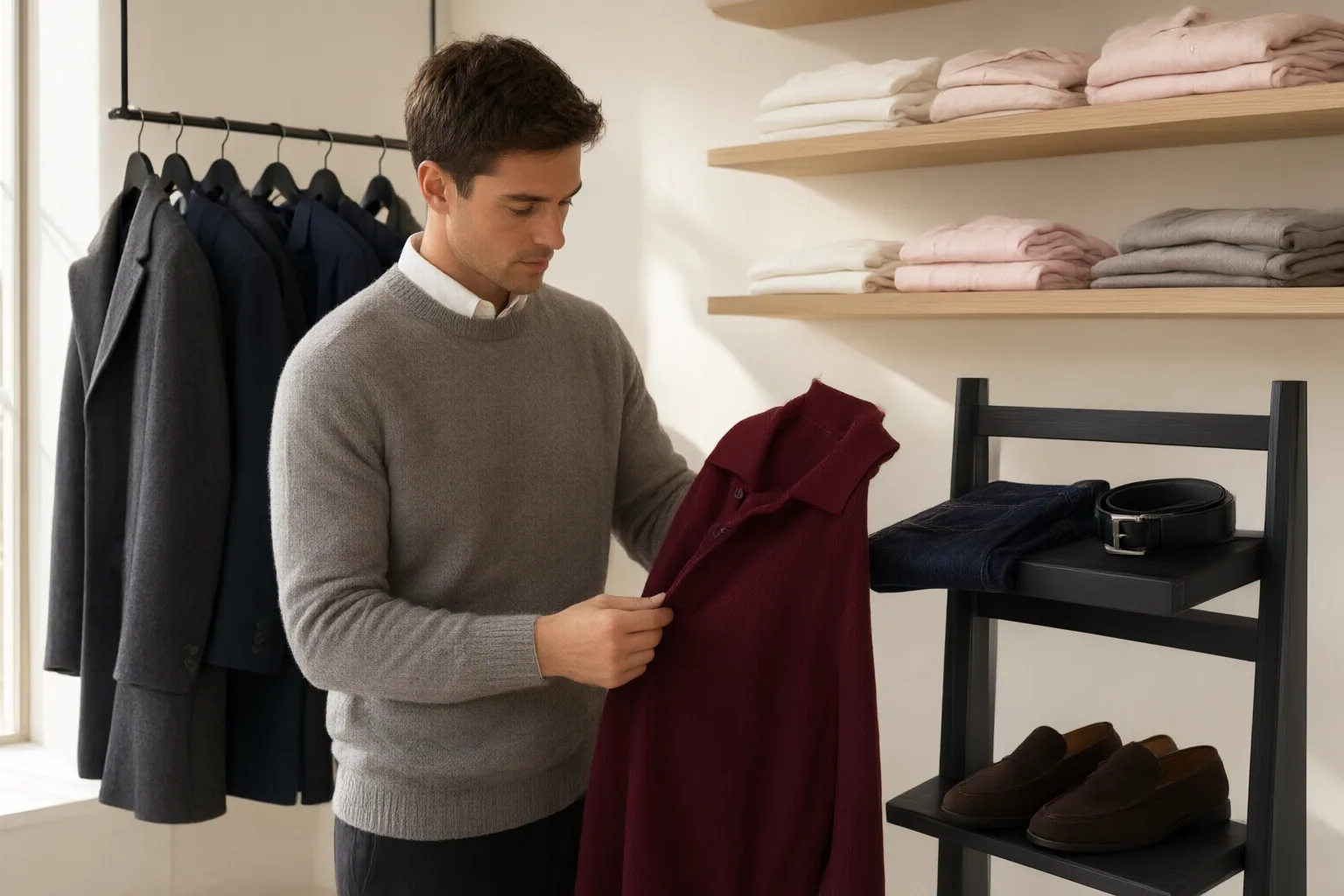
A compact wardrobe works best when most tops pair with most bottoms. Start with a limited palette: use base colors for trousers and outerwear, then add compatible neutrals or restrained accents. Black, navy, white, and other neutral shades are commonly presented as repeatable foundations. Before buying, compare the candidate with several pieces you already own; an item that creates only one outfit is less useful than one that closes several routine-based gaps.
Apply five checks:
- Compatibility: Does it work with multiple existing tops, bottoms, or layers?
- Setting: Can it serve more than one part of your week? Tailored trousers, for example, may cover both office and evening use.
- Fit: Are the proportions appropriate, especially through a shirt’s body, sleeves, and collar?
- Fabric: Does the material composition suit the garment’s intended role?
- Construction: Are relevant details appropriate for that category?
For a white T-shirt, GQ suggests considering a midweight fabric around 170–240 gsm and notes its editors’ preference for a crew neck over a V-neck. Treat that range as a sourced consideration, not a requirement for every shopper.
Conclusion
Build in sequence: audit your current clothes, map the demands of your real week, identify genuine gaps, and set a palette that helps new pieces coordinate with what remains. Then rank each gap by versatility and repeat-wear potential. Before your next purchase, complete the audit and choose the single missing item that will work with the greatest number of existing outfits and relevant settings.
Disclosures and limitations
- This article was created with AI assistance from the supplied British GQ, COS, Ted Baker, and Gentsways source material; retailer and editorial recommendations are not independent proof of quality or durability.
- No paid placements or affiliate product recommendations are included, and no prices, inventory claims, ratings, or personal product-testing claims are presented.
Related reading
Sources
- Clothing for Men | COS Thailand — th.cos.com
- Men's Wardrobe Essentials — Ted Baker
- Men's Capsule Wardrobe Essentials — Gentsways
- Men’s wardrobe essentials: 19 clothing basics every man should own in 2026 — British GQ