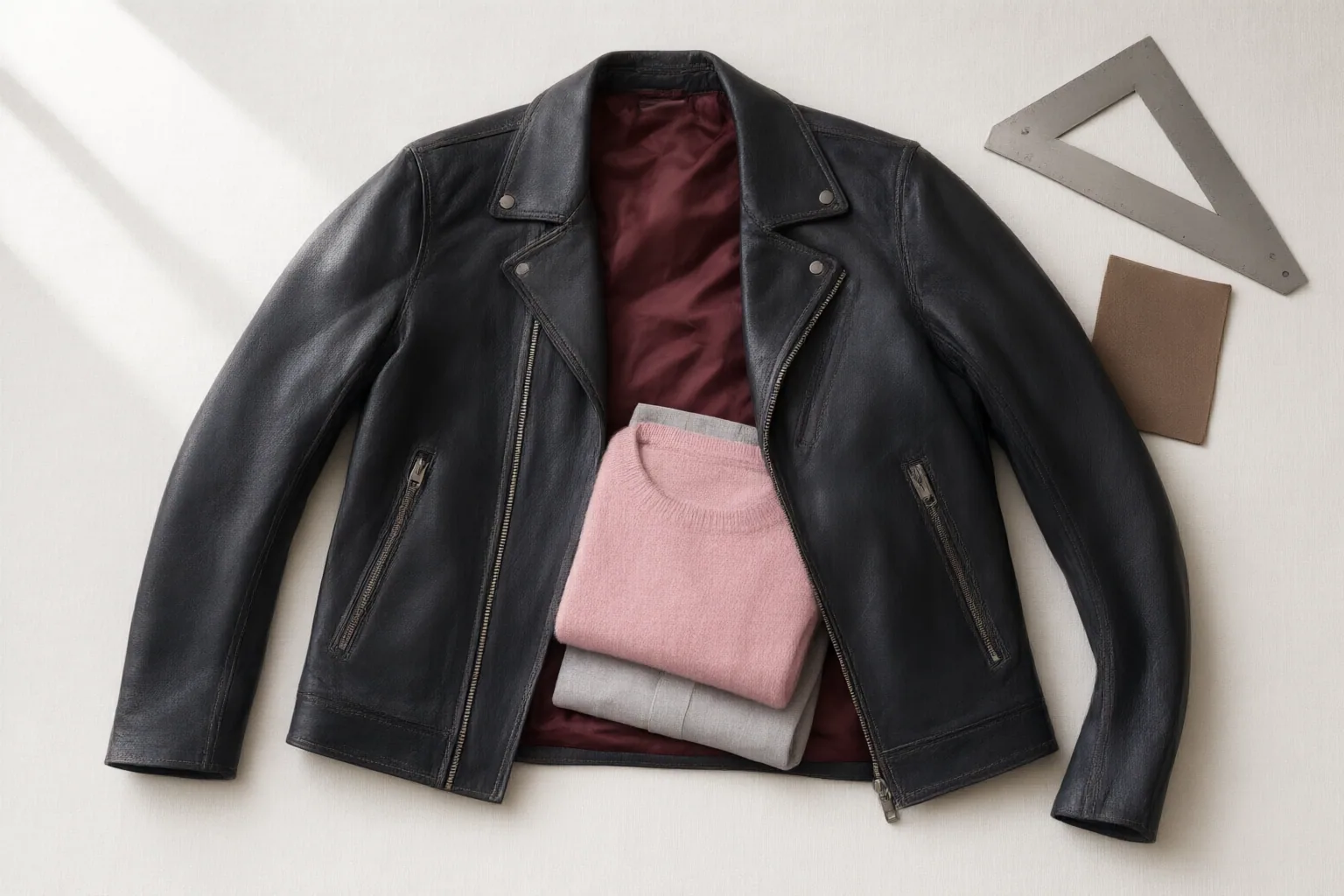
Before buying a leather jacket, test it while moving and wearing your intended layers, then inspect every closure, stress-point seam, and lining attachment. Fit, materials, construction, weather, and intended use should be considered together—not judged by one feature alone.
Start With Fit in Motion, Not Fit at Rest
A leather jacket can look well fitted while you stand still yet pull across the back or restrict your arms in motion. Begin by checking that the shoulder seams align with your natural shoulder line and that the sleeves finish near your wrists.
Next, raise your arms and reach forward as you would during an ordinary day. Watch for resistance at the shoulders, underarms, and upper back. The jacket should allow these movements without pronounced pulling. Perform the checks deliberately rather than assuming that leather will compensate for restrictive placement or cut.
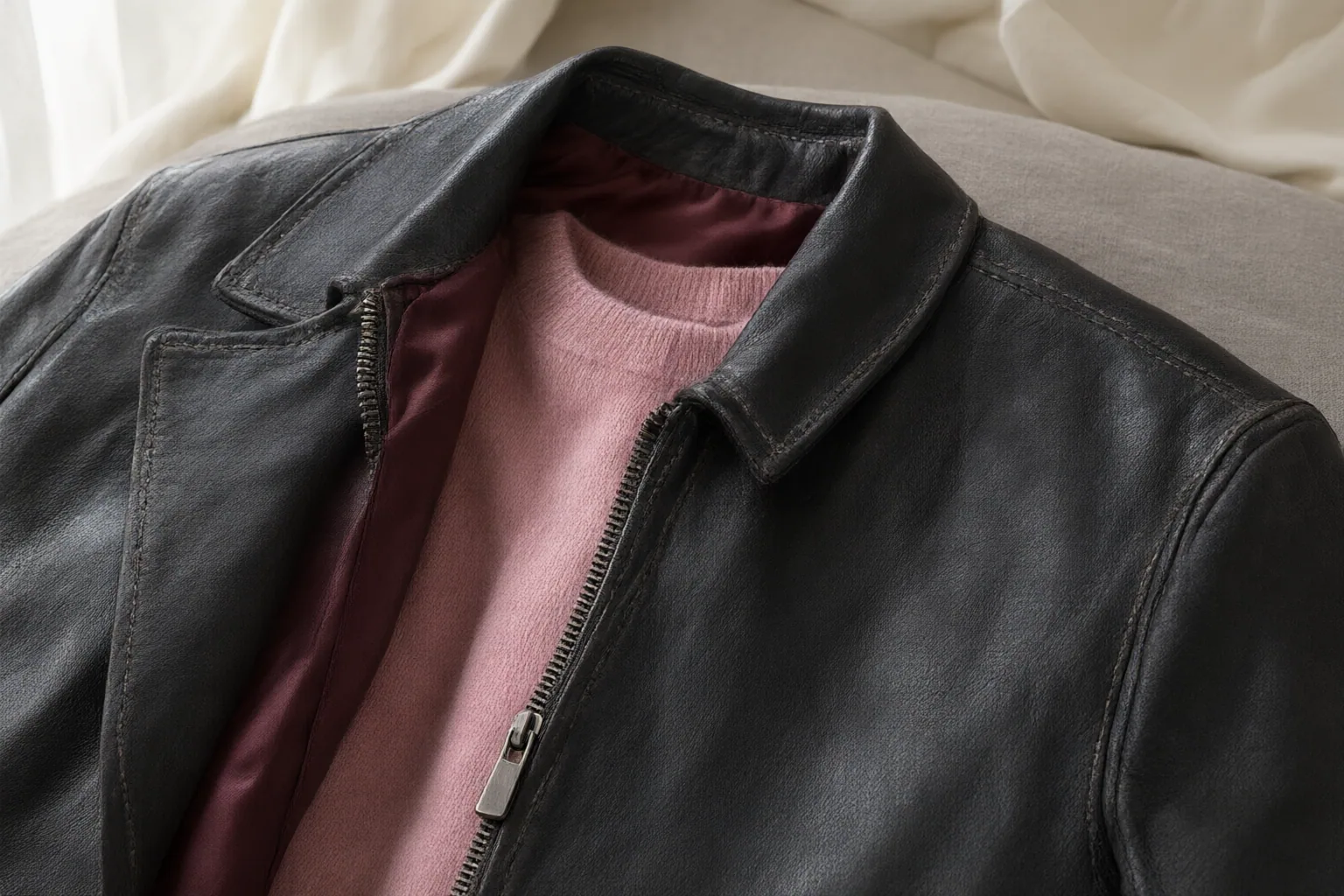
Test Layering Room With What You Will Actually Wear
Try the jacket over the sweater, hoodie, or other layer you expect to wear regularly. Check the room across your chest and back, then repeat the arm raise and forward reach. Include the shoulders and sleeves in this assessment: extra body room will not solve sleeves or armholes that become restrictive with a layer underneath.
Do not treat leather thickness or softness as a stand-alone quality grade. Consider those characteristics alongside the cut, jacket weight, lining, season, mobility requirements, and intended use. A jacket suited to light clothing in mild weather may not provide the space or comfort required for colder-weather layering.
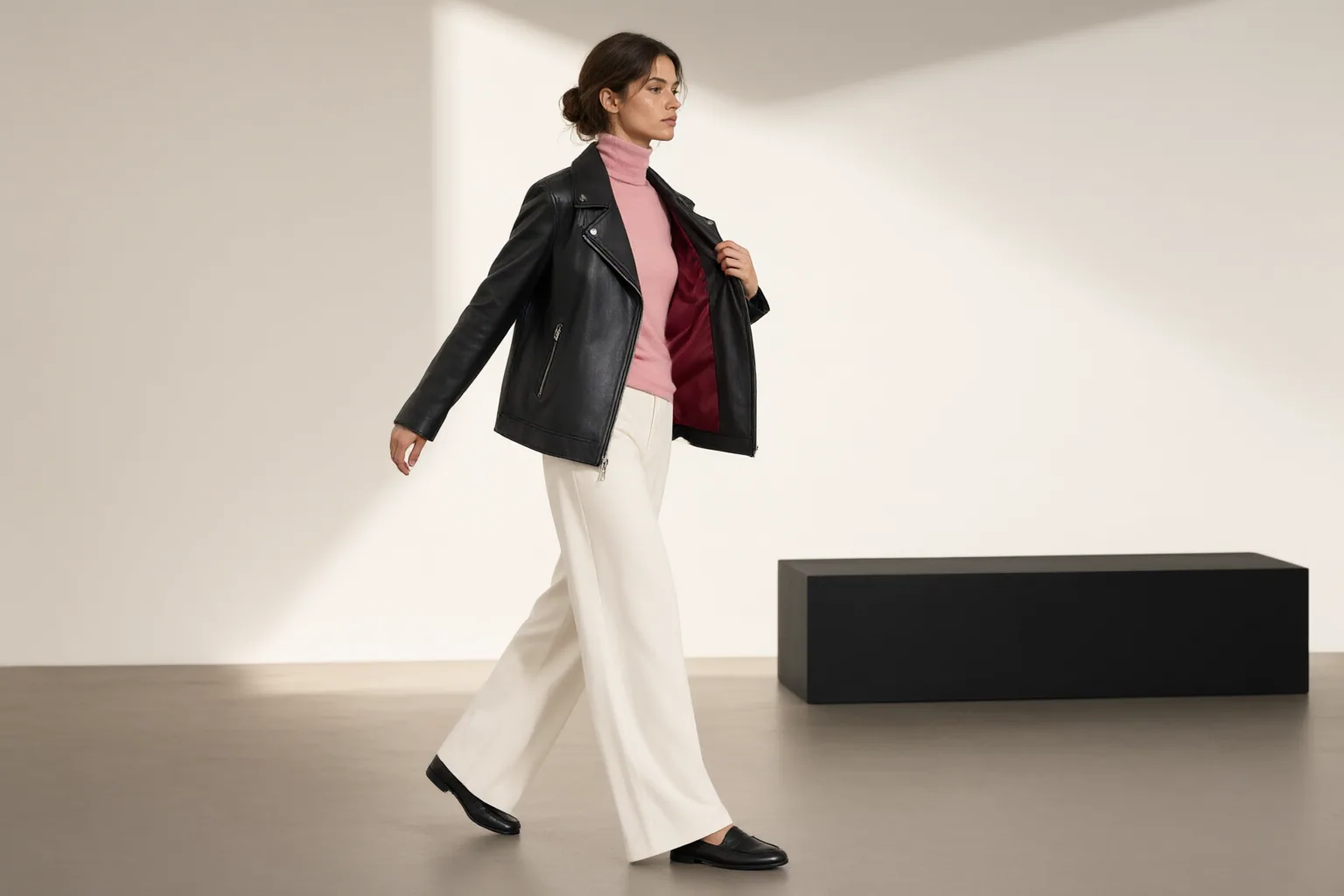
Inspect Hardware, Stitching, and Lining
Operate every zipper through its full useful range and check that it moves smoothly rather than snagging. Fasten and release the snaps, buttons, buckles, and pocket closures; each should feel secure and be firmly attached.
Then inspect the stitching closely. Give particular attention to the shoulders, underarms, sleeves, pockets, cuffs, zipper areas, and lining attachment points because these are stress or connection zones. Look for neat construction rather than loose or poorly secured details.
Assess the lining for both construction and purpose. It can affect how easily the jacket goes on, how freely it moves, and how comfortable or warm it feels. Check that it does not catch on clothing or create unnecessary tension through the sleeves or body. Lightweight linings are presented as options for milder conditions, while quilted or insulated versions are intended to add warmth in cooler weather. Match the choice to expected conditions and use.
These checks synthesize guidance from retailer and commercial-publisher sources; they are practical buying criteria, not independent laboratory findings.
Conclusion
Before deciding, put on your intended layer, raise and extend your arms, and note any restriction or back pulling. Operate every closure, inspect stitching at stress points, and confirm that the lining moves without catching or creating tension. Complete this entire sequence—not just a standing fit check—before buying the jacket.
Disclosures and limitations
- This article was prepared with AI assistance using the supplied retailer and commercial-publisher research sources. It contains no specific product, price, rating, inventory, or affiliate recommendation.
Related reading
Sources
- What to Look for When Buying a Leather Jacket? — deriza.com
- 10 Things to Look for When Buying a Leather Jacket — Marco Enzolani
- Leather Jacket Buying Guide: What to Look For — Obviousmag
- How to Choose the Perfect Leather Jacket | Zesoul — ZESOUL
- Leather Jacket | Genuine Leather Jackets for Men – LeatherCult — LeatherCult
- Leather Jacket Buying Guide: Everything You Should Know Before You Buy — Alder Hide