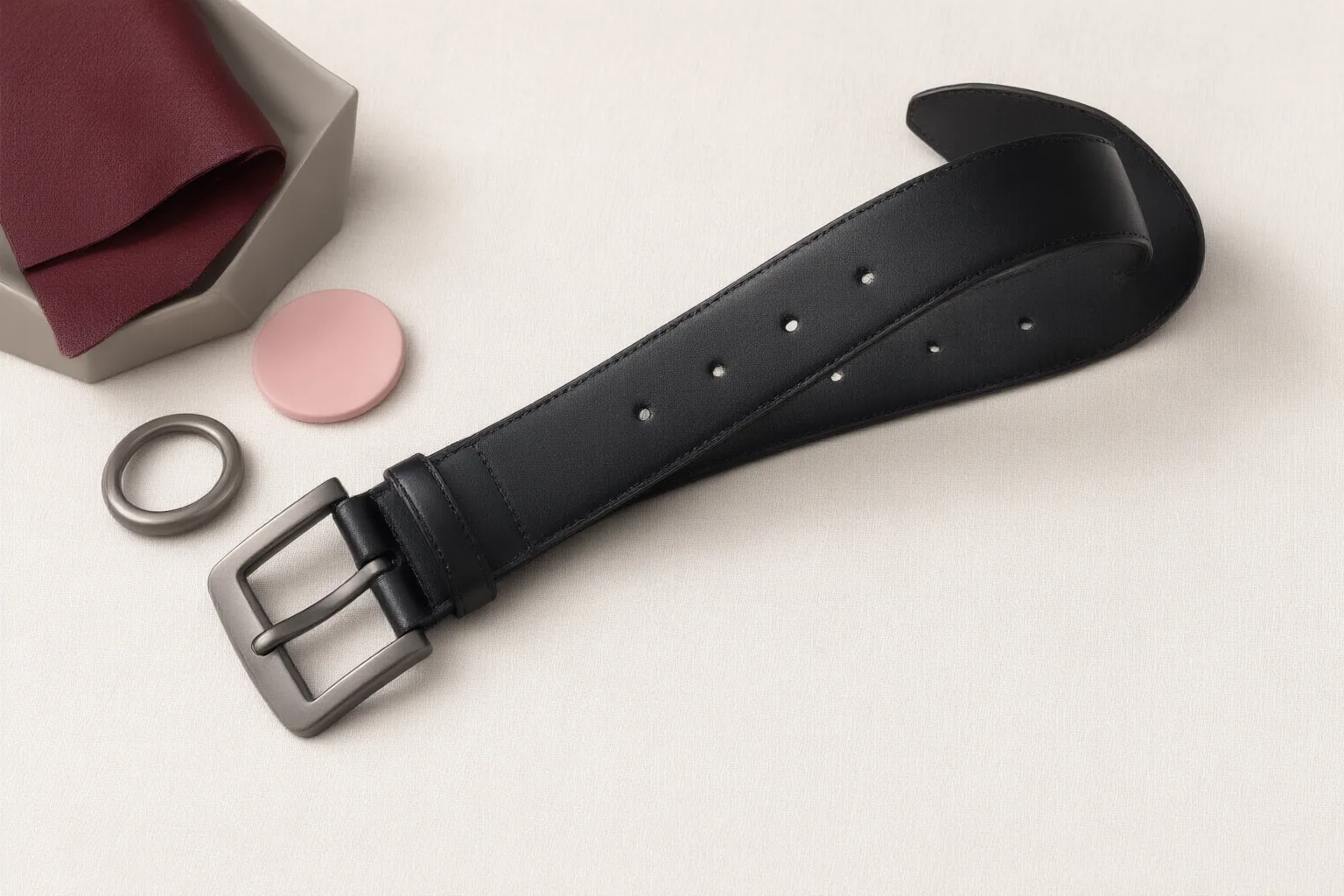
Compare a leather belt by measuring for its intended waist position, checking that your usual fastening point falls near the middle of the hole range, confirming the width fits your trouser loops, and evaluating buckle weight alongside the stated metal and construction—not as proof of quality.
Start With Where and How You Will Wear the Belt
Begin with the trousers and outfits you expect to wear. Belt size and trouser size are not interchangeable: trouser rise, waistband position, fabric thickness, and the intended wearing position can all change the length required. A belt worn with low-rise trousers may sit at a different point than one worn at the natural waist, while thicker denim, a tucked shirt, or seasonal layers can add bulk.
Decide on the intended placement before comparing size labels. Treat the trouser size only as a starting reference, not the final measurement. This reduces the risk of choosing a belt that technically closes but regularly fastens at one end of its adjustment range.
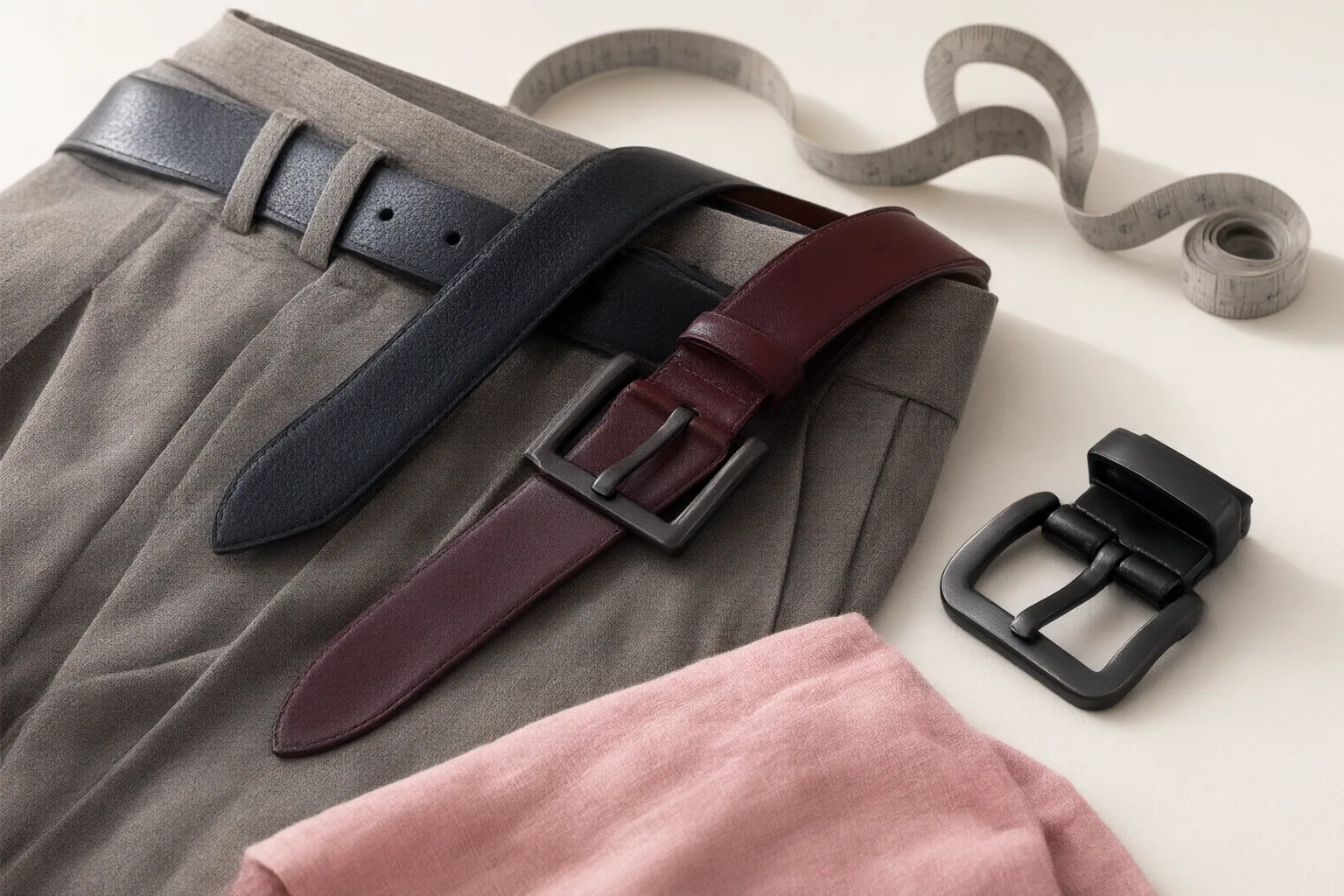
Measure Length and Check the Usable Hole Range
If you own a comfortable belt, Deloatch and Company recommends laying it flat and measuring from the point where the leather folds around the buckle to the hole you use most often. Do not use the belt’s complete end-to-end length, because that includes material beyond the functional fastening measurement.
Without a suitable reference belt, measure through the loops of the trousers you intend to wear. Then compare that measurement with the individual brand’s sizing convention, since labels may not correspond directly across sellers.
Also inspect the number and placement of the holes. The Deloatch guide notes that many classic leather belts have five holes and says the belt should normally fasten at or near the center hole. A centered usual setting leaves adjustment room in both directions for changes in outfit thickness or wearing position. If your measurement would place you near the first or last hole, another size may provide a more useful range.
Compare Buckle Weight, Metal, Construction, and Belt Width
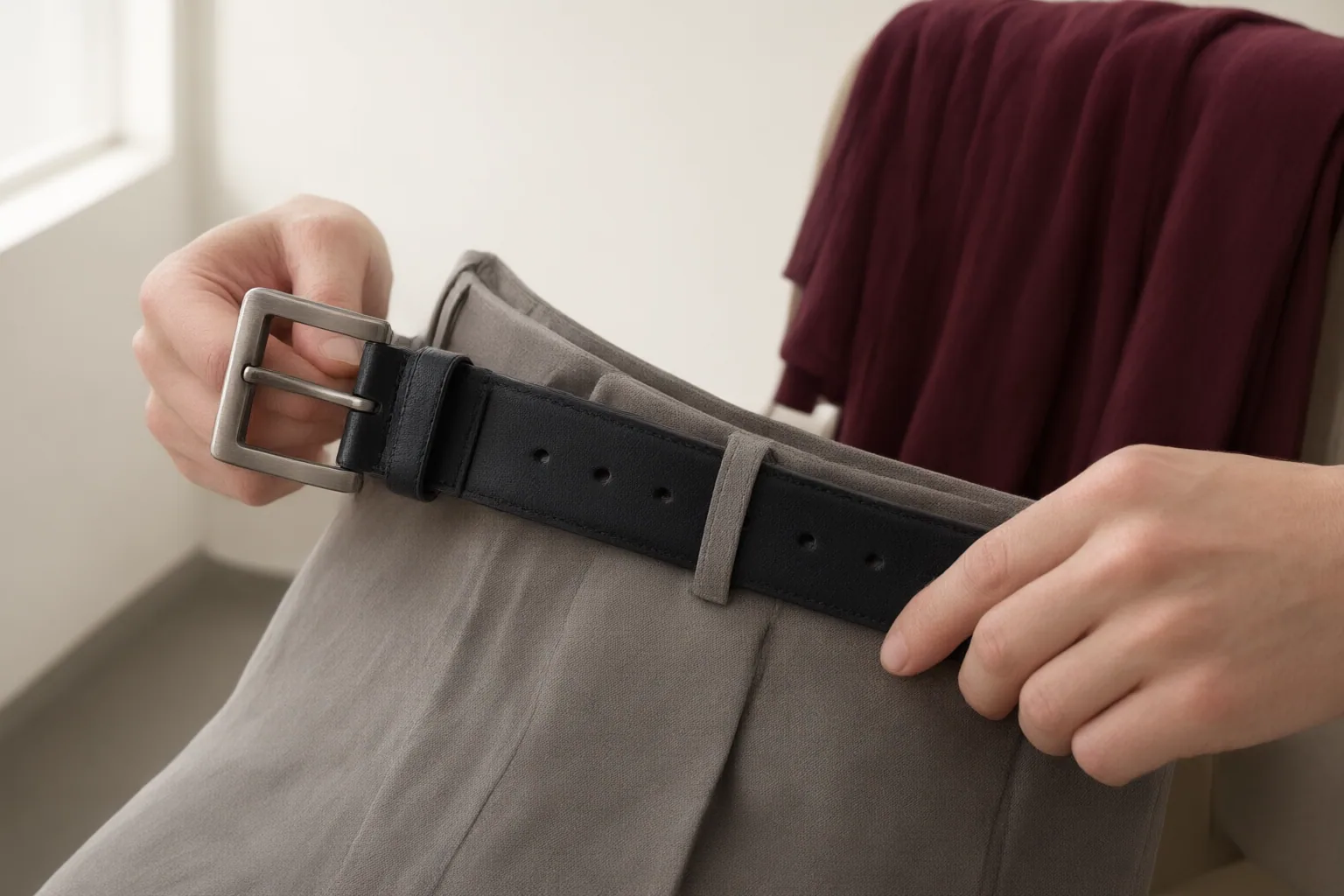
Buckle weight can help with comparison, but it cannot establish quality by itself. Seller-authored guidance from Beltley says heft depends on both material density and construction. It contrasts solid brass or stainless-steel hardware with thinner, hollow, or die-cast alternatives, while also warning that a heavy buckle may still be made with plated zinc.
Use weight as one specification rather than a verdict. Check whether the seller identifies the underlying metal, finish, and construction. Descriptions such as solid, hollow, plated, or die-cast provide context that weight alone cannot supply. Because this guidance comes from a commercial seller rather than independent testing, treat it as an attributed comparison framework, not a verified ranking of buckle materials.
Width requires a separate check. Trouser-loop dimensions impose a practical limit, so compare the belt’s stated width with the loops on the garments already in your wardrobe. A belt can have the correct length and hole position yet still be unsuitable if it will not pass comfortably through those loops.
Conclusion
Before buying, record five details: the intended waist or waistband position; the measurement from the buckle fold to your usual hole, or through the intended trouser loops; the adjustment room on either side of that fastening point; the belt width and available loop clearance; and the disclosed buckle metal, finish, and construction.
Do not substitute trouser size for these checks or treat buckle heft as a quality grade. Measure a comfortable belt or the intended loops now, note your usual fastening point, and verify each value against the individual seller’s specifications before ordering.
Disclosures and limitations
- This article was prepared with AI assistance from the supplied research package. Both cited sources are commercial belt sellers, and their claims are attributed rather than presented as independent test findings. No products, prices, ratings, inventory claims, or affiliate recommendations were supplied or included.
Related reading
Sources
- Self-buckling – Wikipedia — en.wikipedia.org
- Guide to Leather Belt Sizing for the Right Fit — Deloatch and Company
- Why Luxury Belt Buckles Are Heavier Than Fast-Fashion Ones — Beltley