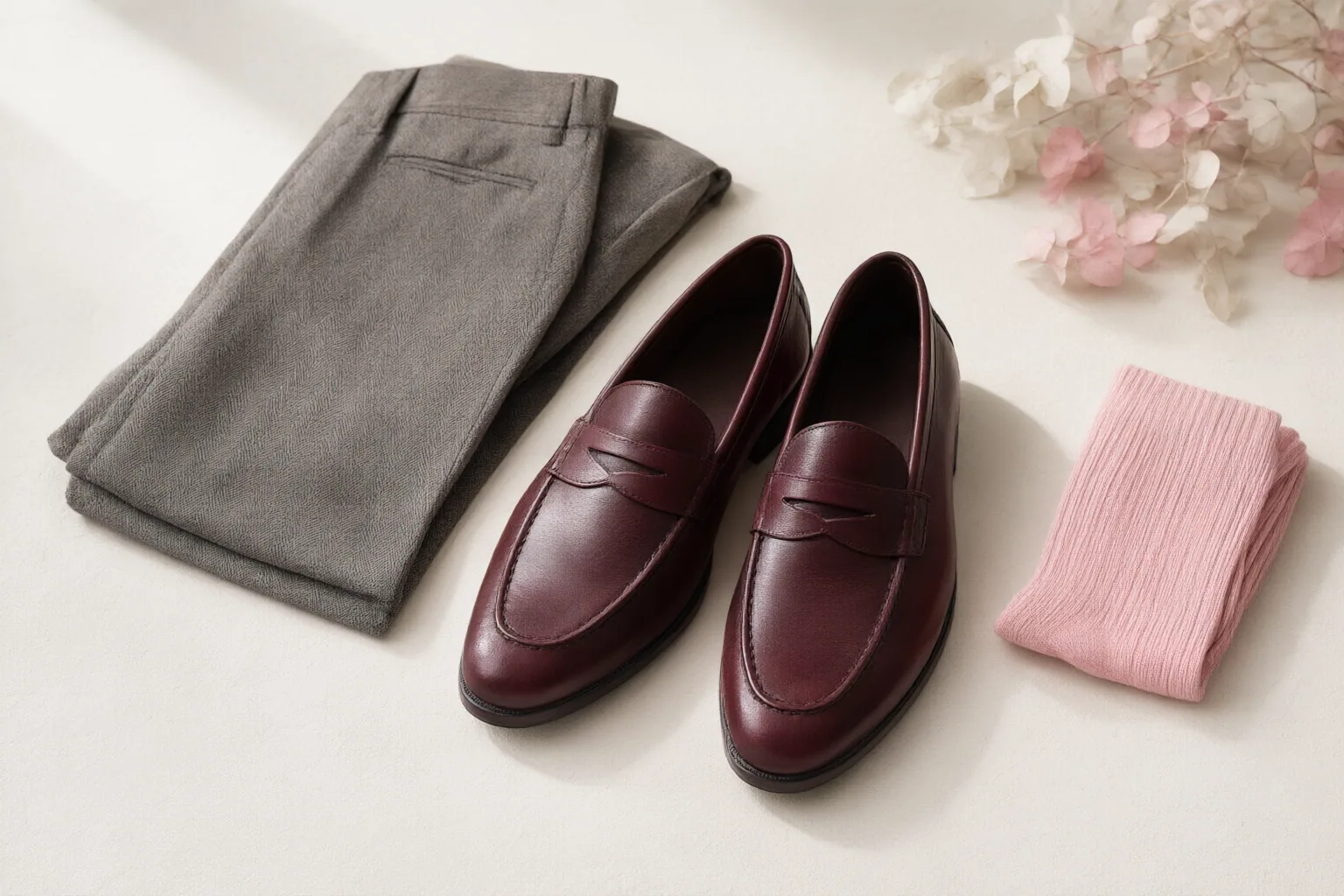
Choose penny loafers by checking heel and instep security alongside toe space, then walking to assess flex and movement. Finally, compare the material, sole, and silhouette with the trousers and socks you actually plan to wear.
Start With Heel Security and Toe Space
A well-fitting penny loafer should hold the heel and instep securely without painful pressure. Because there are no laces to fine-tune the fit, judge stability and space together. Obvious heel escape, forward sliding, or toes that curl to keep the shoe on suggest that the size or shape is unsuitable.
Do not automatically size down to eliminate movement. A smaller pair is not a better fit if it compresses the toes or forefoot. Some heel movement may occur while a new sole is still stiff, but persistent or pronounced escape should not be dismissed as normal break-in.
Pay attention to shape as well as labeled size. If one size slips while the next size down feels cramped, the problem may be the last, width, instep volume, or heel shape. In that situation, look for another model rather than accepting either instability or pain.
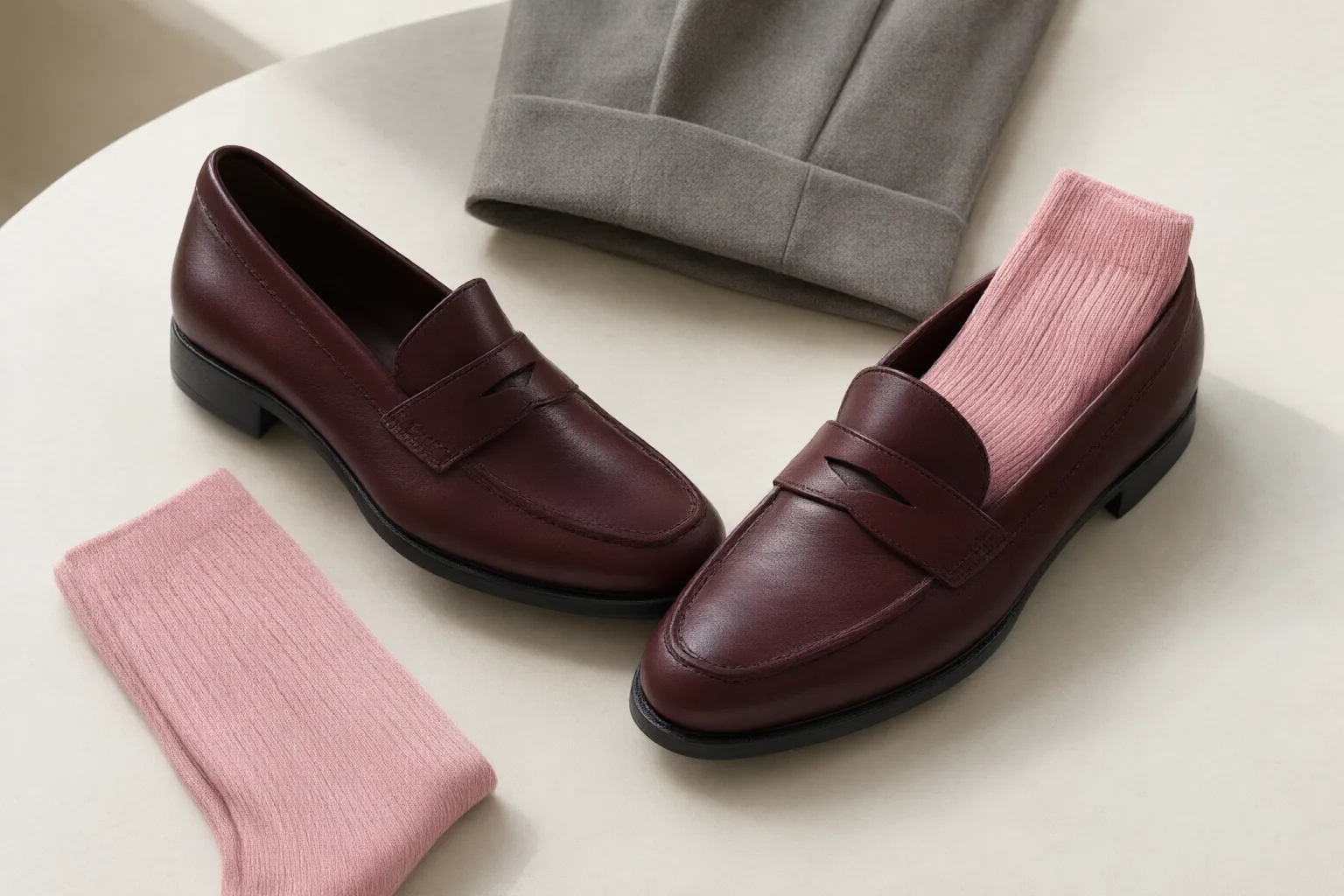
Check the Flex Point and Fit While Walking
Try both shoes with the socks or liners you intend to wear, since sock thickness can materially change the fit. Stand first, but do not make the decision there: walking can reveal rubbing, forward sliding, heel escape, and misplaced bending that is not obvious when stationary.
The ball of each foot should align with the shoe’s widest area. As you walk, the sole should bend near the ball of the foot rather than underneath the toes. Check whether the heel remains reasonably contained as the shoe flexes and whether the toes stay relaxed instead of gripping.
Repeat the walk test long enough to distinguish a temporarily stiff sole from continuing instability. Reject a pair that requires painful pressure to stay secure. Likewise, do not rely on the upper eventually changing enough to correct a fundamentally loose or poorly shaped fit.
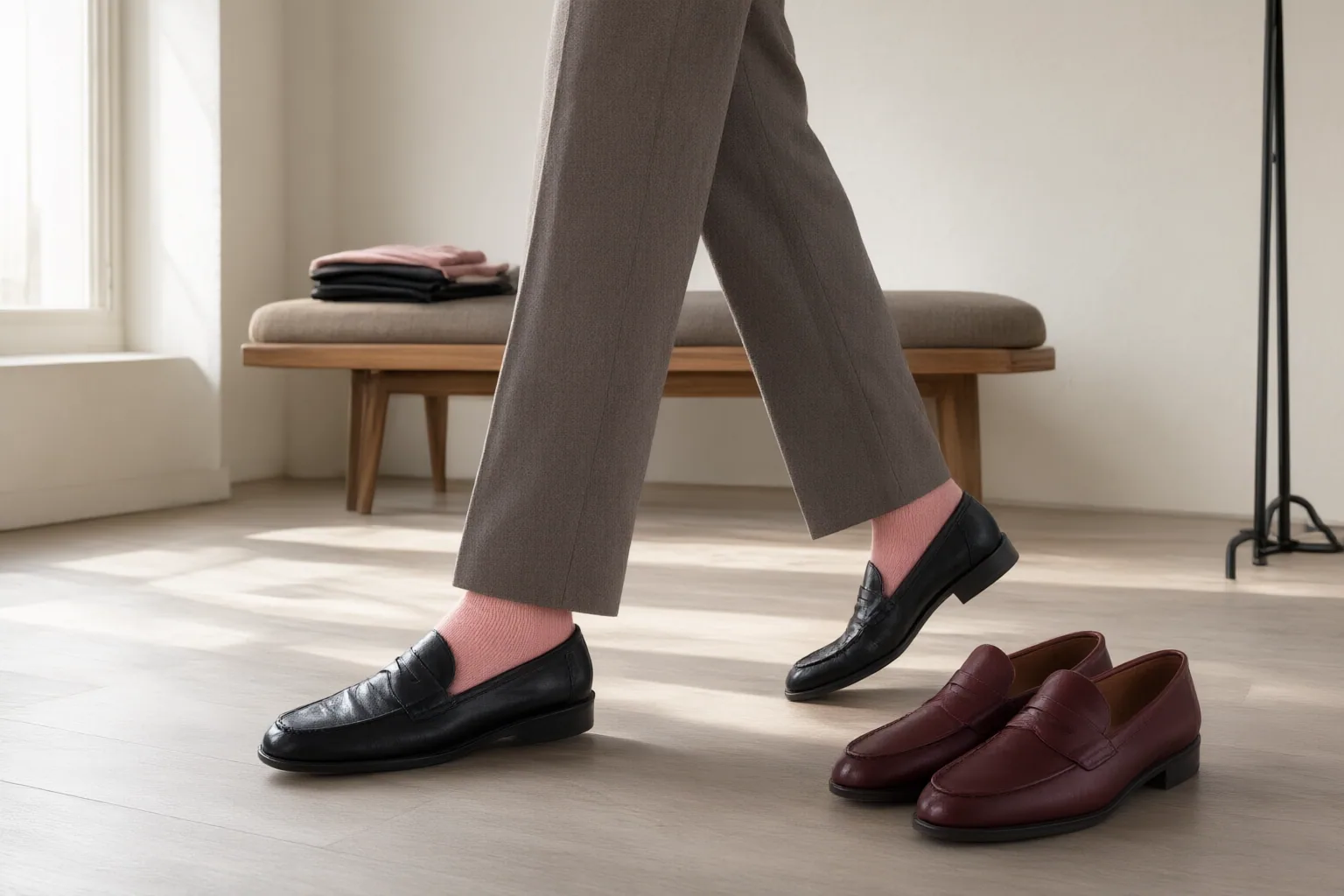
Match Materials and Silhouette to Your Trousers
For a dressier direction, consider dark smooth leather, a slimmer last, an angled toe, and restrained detailing. These characteristics generally sit more naturally with office trousers and relaxed tailoring. Chunkier soles and prominent beef-roll stitching create a more casual impression, while suede, waxier leather, and substantial silhouettes tend to pair more readily with chinos or denim.
Material also affects the initial fit assessment. Leather uppers can soften with wear. Suede may feel softer from the outset, but a suede pair that already fits loosely can become less secure. Neither material should begin with painful pressure or a sloppy fit.
Treat these pairings as practical guidance rather than rigid rules. Bring or wear specific trousers you already own and inspect the full outfit. Trouser cut, shoe proportions, sole thickness, upper finish, and overall formality all influence visual balance. A handsome loafer is less useful if it does not suit your usual clothes, walking conditions, or dress requirements.
Conclusion
Before buying, wear your intended socks and trousers, try both loafers, and walk while checking four points: secure heels and insteps, uncramped toes and forefeet, bending near the balls of the feet, and a silhouette that balances your usual trousers. Limited movement from a stiff new sole may ease as it flexes, but persistent heel escape is not a sound compromise. If adjacent sizes merely trade slipping for compression, try a different last, width, or model instead of sizing down again.
Disclosures and limitations
- This article was prepared with AI assistance using the browser-acquired research sources identified in each section; it does not claim personal product testing or wear experience.
- No specific products or affiliate links are recommended here. Any future commerce or affiliate links should be clearly labeled.
Related reading
Sources
- Penny Loafer Fit: Expert Guide On How Should They Fit — Myshoesreview.com
- Penny Loafer Guide: What They Are & The Best Brands For 2026 — Ape to Gentleman
- How Should Loafers Fit? The Fit Signs That Matter Most — Marcello Sarto
- Penny Loafers Buying Guide: Fit, Leather & Soles | Handsole — Handsole
- Amazon.com : penny loafers — amazon.com
- Men’s Loafers Guide: Choose and Wear a Useful Pair — The Modern Man Upgrade — The Modern Man Upgrade
- How Should New Penny Loafers Fit? A Comprehensive Guide — Myshoesreview.com