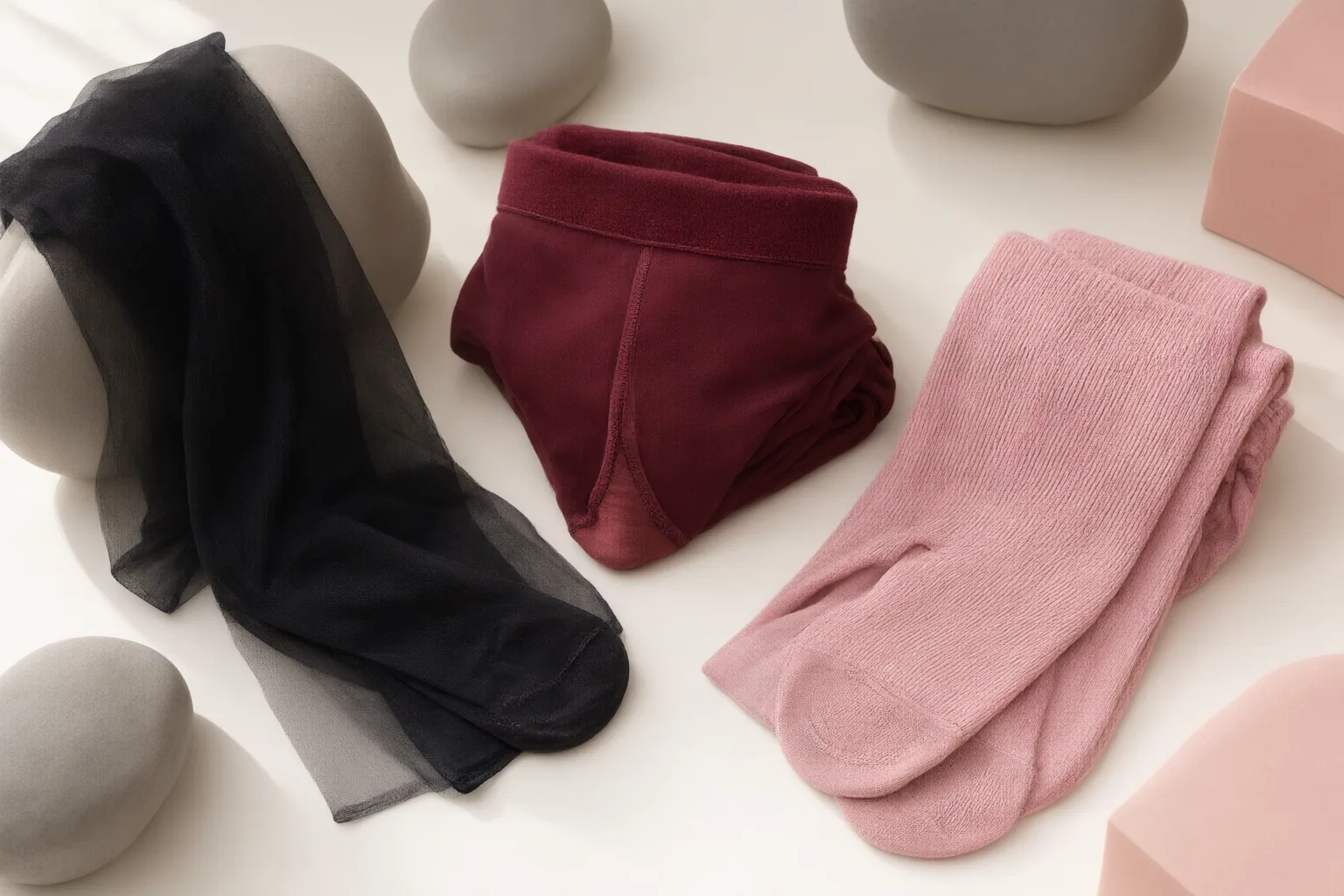
Compare tights in separate stages: use denier to estimate sheerness or opacity, then evaluate the waistband, gusset, toe seam, stretch recovery, reinforcement, knit, and fiber blend. A higher denier can indicate greater opacity, but it does not by itself guarantee better fit, comfort, or snag resistance.
Start With Denier and the Look You Want
Denier measures yarn linear density: it is the mass in grams of 9,000 meters of yarn. As a general guide, lower-denier yarns produce sheerer tights, while higher-denier yarns produce more opaque tights.
Retail results illustrate how many choices shoppers may encounter, including tights labeled 20D, 30D, 40D, 50 denier, 60D, 80D, and 90 denier. Begin by deciding how much leg visibility or coverage you want, then use denier as an initial filter rather than a complete quality score.
Two pairs with the same stated denier can still differ in appearance because knit construction, fiber blend, and finishing also matter. Retail terms such as “sheer,” “semi-opaque,” and “opaque” can help organize options, but compare those descriptions alongside the denier and construction details instead of assuming identical labels will produce identical results.
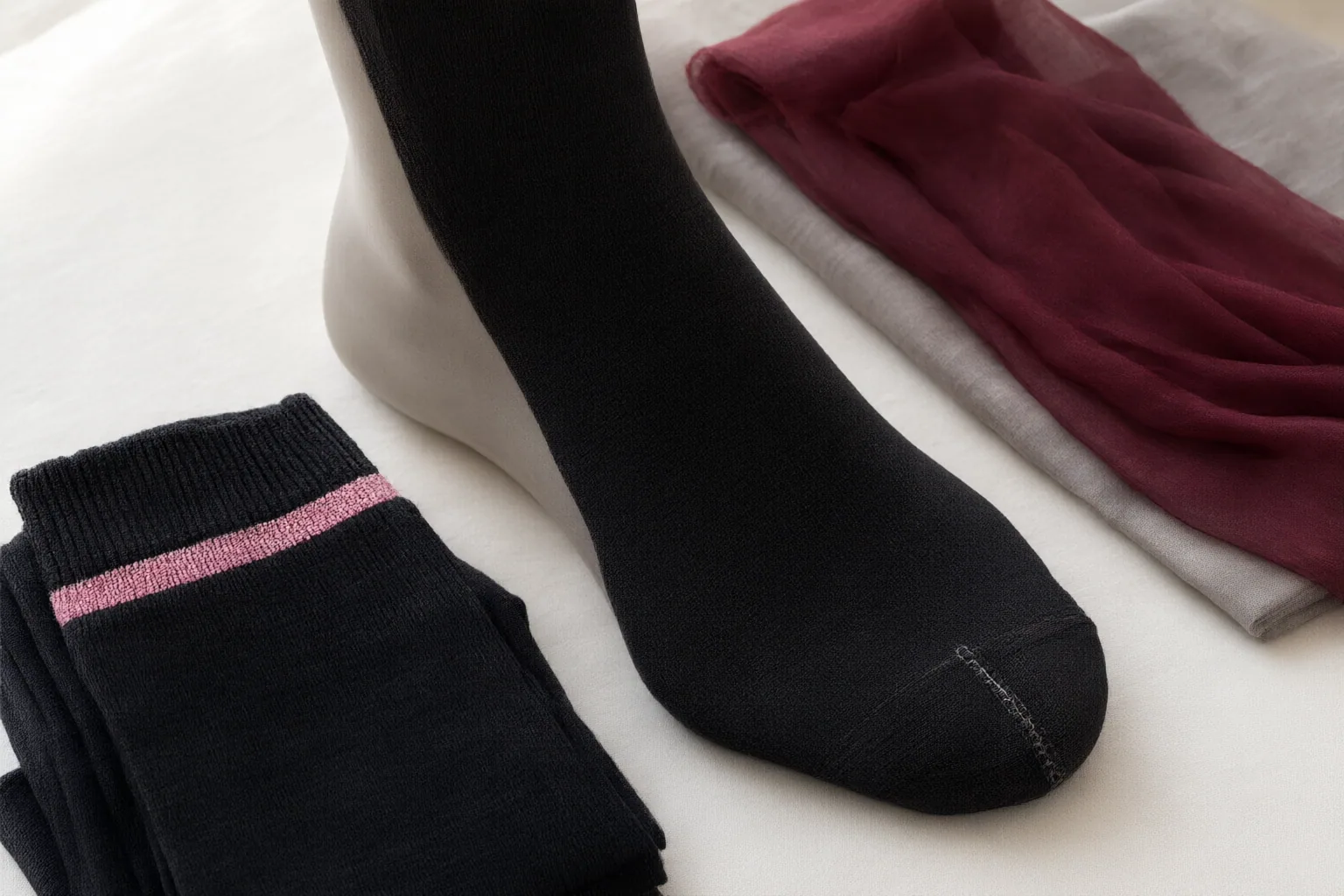
Check Waistband, Gusset, and Seam Placement for Fit
A size label cannot account perfectly for every combination of waist, hip, calf, leg-length, and foot proportions. Tights may therefore fit one area while pulling elsewhere, pooling at the ankle, or digging into the waist.
Check whether the waistband sits at the natural waist and remains flat rather than rolling. Inspect the gusset to see whether it lies smoothly instead of wrinkling, and confirm that the toe seam aligns with the foot rather than sitting raised or twisted across the toes. These checks reveal fit problems that a size chart alone may not capture.
Also examine how the waistband is layered and how the gusset is constructed. “High-waist” and “control-top” are common retail descriptions, but they identify design categories rather than guaranteeing that the garment will suit a particular body shape. Judge the actual placement and pressure across each area before keeping the pair.

Assess Stretch Recovery and Snag-Resistance Clues
Gently stretch the fabric and observe whether it returns toward its original shape. Poor recovery can be a warning sign for fit, particularly if the material remains distorted or creates loose areas. Include the waistband and gusset in this inspection instead of assessing only the leg fabric.
For expected wear, examine the knit, fiber blend, yarn quality, toe reinforcement, gusset design, and waistband layering. Reinforced areas may be relevant where friction or stress is concentrated, but no single feature establishes overall durability.
Most importantly, do not treat high denier as a promise of snag or ladder resistance. Denier primarily describes yarn density and is more useful for anticipating appearance. Construction and materials can also influence abrasion and wear. The supplied sources provide no standardized independent snag-resistance test results, so performance should not be inferred from marketing language alone. Give more weight to disclosed construction details and any clearly described, verifiable testing method.
Conclusion
Use four separate comparison categories. First, match denier and opacity to the appearance you want. Second, check whether the waistband, gusset, and toe seam sit correctly on your body. Third, assess stretch recovery and look for construction details such as reinforcement and waistband layering. Fourth, treat snag resistance as an evidence question, not an automatic consequence of denier.
Retail labels including sheer, opaque, fleece-lined, control-top, reinforced-toe, sheer-toe, thermal, fishnet, and compression can narrow the category, but they should not be read as independently verified performance claims. Before keeping a pair, inspect its waistband, gusset, toe seam, reinforcement, and recovery after gentle stretching, then consider those findings alongside its denier and intended opacity.
Disclosures and limitations
- This article was created with AI assistance from the supplied research package and reflects only its cited sources; marketplace labels are descriptive rather than independent validation.
- No individual products or affiliate links are recommended here. If affiliate links are added later, that commercial relationship should be clearly disclosed and should not influence the comparison criteria.
Related reading
Sources
- How To Choose Tights For Women: A Complete Buying Guide — GradeOneTools
- Amazon.com : Women's Tights — amazon.com
- Women's Tights, Pantyhose & Hosiery | Nordstrom — nordstrom.com
- Denier, Decoded: A Practical Buyer's Framework for Tights — From 8 to — CURATED SENSE
- Amazon.com : tights — amazon.com