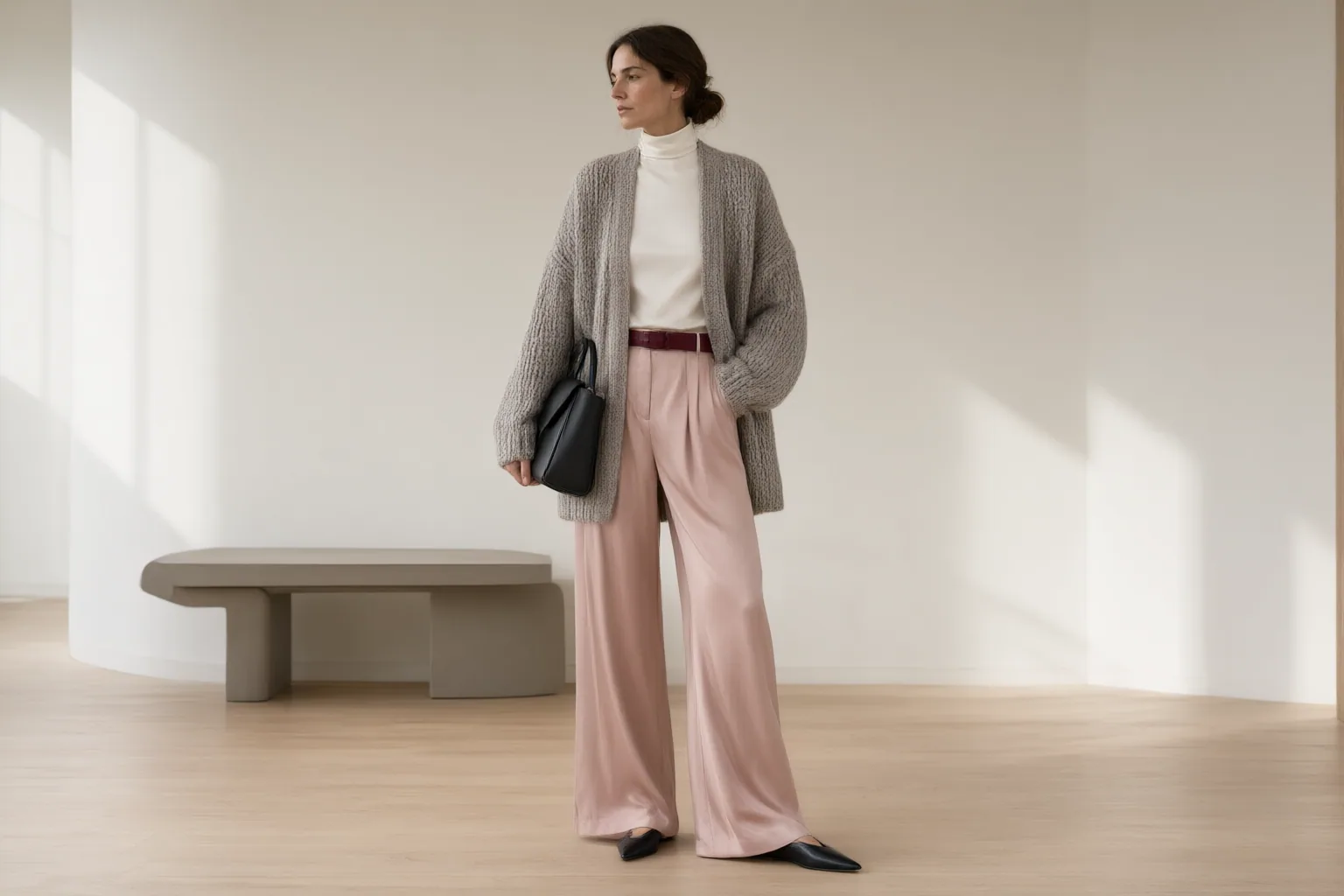
A polished monochrome outfit uses one color family rather than one perfectly matched shade. Combine tonal variation, contrasting textures, balanced silhouettes, and restrained accessories to make the result feel cohesive without looking flat.
Start With One Color Family, Not One Exact Shade
Monochrome dressing can include multiple shades, tints, and tones from the same color family. Exact matches are unnecessary: controlled differences between lighter and darker pieces create depth while maintaining a unified color story.
For an accessible starting point, choose a neutral family such as cream, beige, taupe, camel, brown, gray, navy, or black. Then identify a light, medium, and dark option among the garments you own. A cited layering example places a light camel turtleneck beneath a chocolate-brown coat, using tonal progression to organize the outfit.
If you prefer a vivid hue, vary its shade or saturation instead of repeating the same intensity from head to toe. The practical test is whether every piece clearly belongs to the dominant color family, not whether the colors are identical.
Create Depth by Mixing Textures and Surfaces
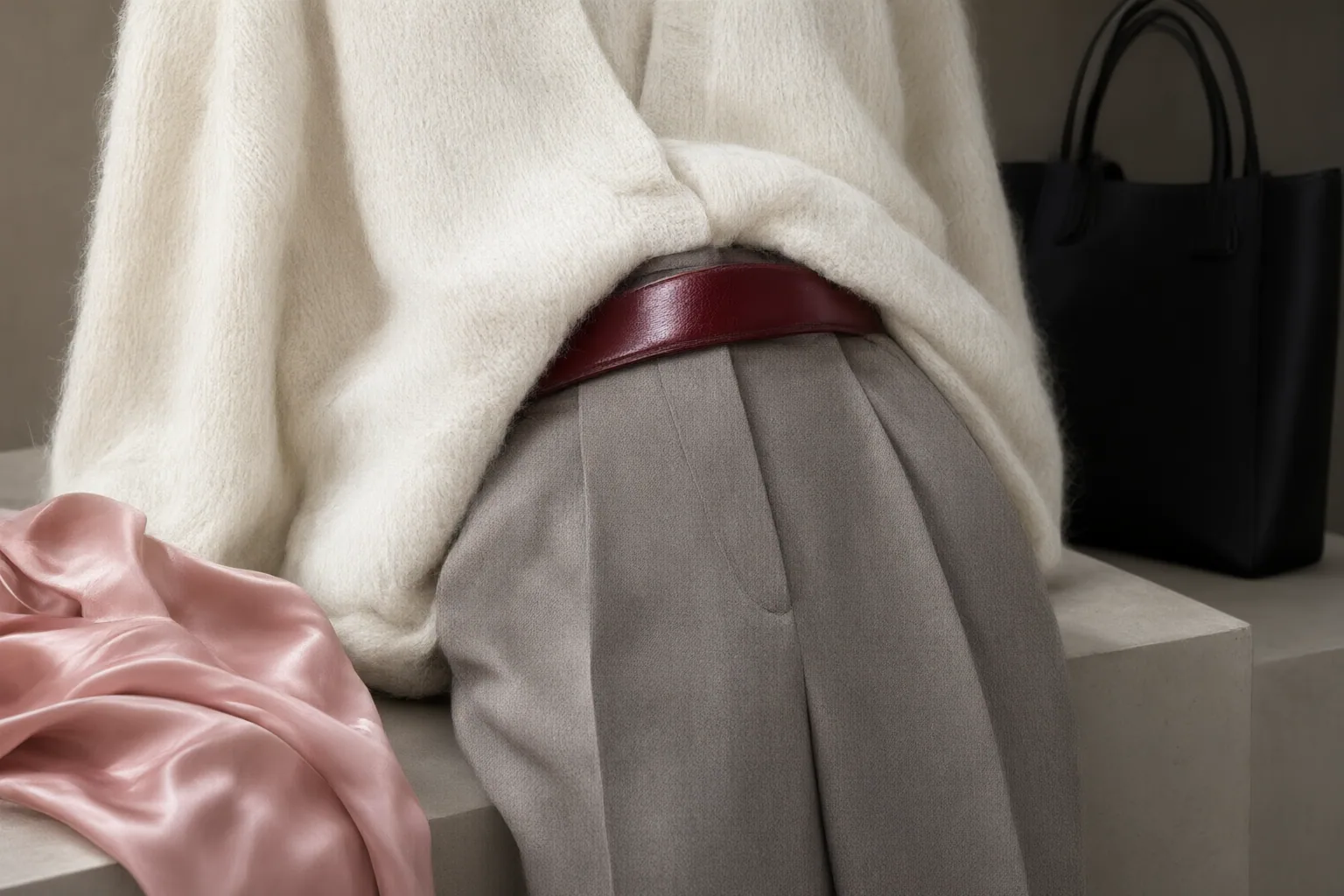
When garments share both a color and a similar surface, their boundaries can visually merge. Contrasting textures help distinguish the layers while preserving the monochrome palette. The cited guides offer combinations such as silk with wool, leather with knit, and denim with cotton.
Use at least two visibly different surfaces. One might be smooth or crisp, while another is soft, substantial, or textured. In monochrome suiting, for example, smooth wool, crisp poplin, and a knit tie can separate pieces that otherwise occupy the same color family.
Evaluate texture visually rather than relying only on fabric names. Place the garments together and check whether changes in sheen, weave, weight, or structure remain noticeable at a glance. If everything still reads as one uninterrupted surface, replace one piece with a more contrasting material while keeping its color related to the rest.
Balance Proportions, Tonal Contrast, and Accessories
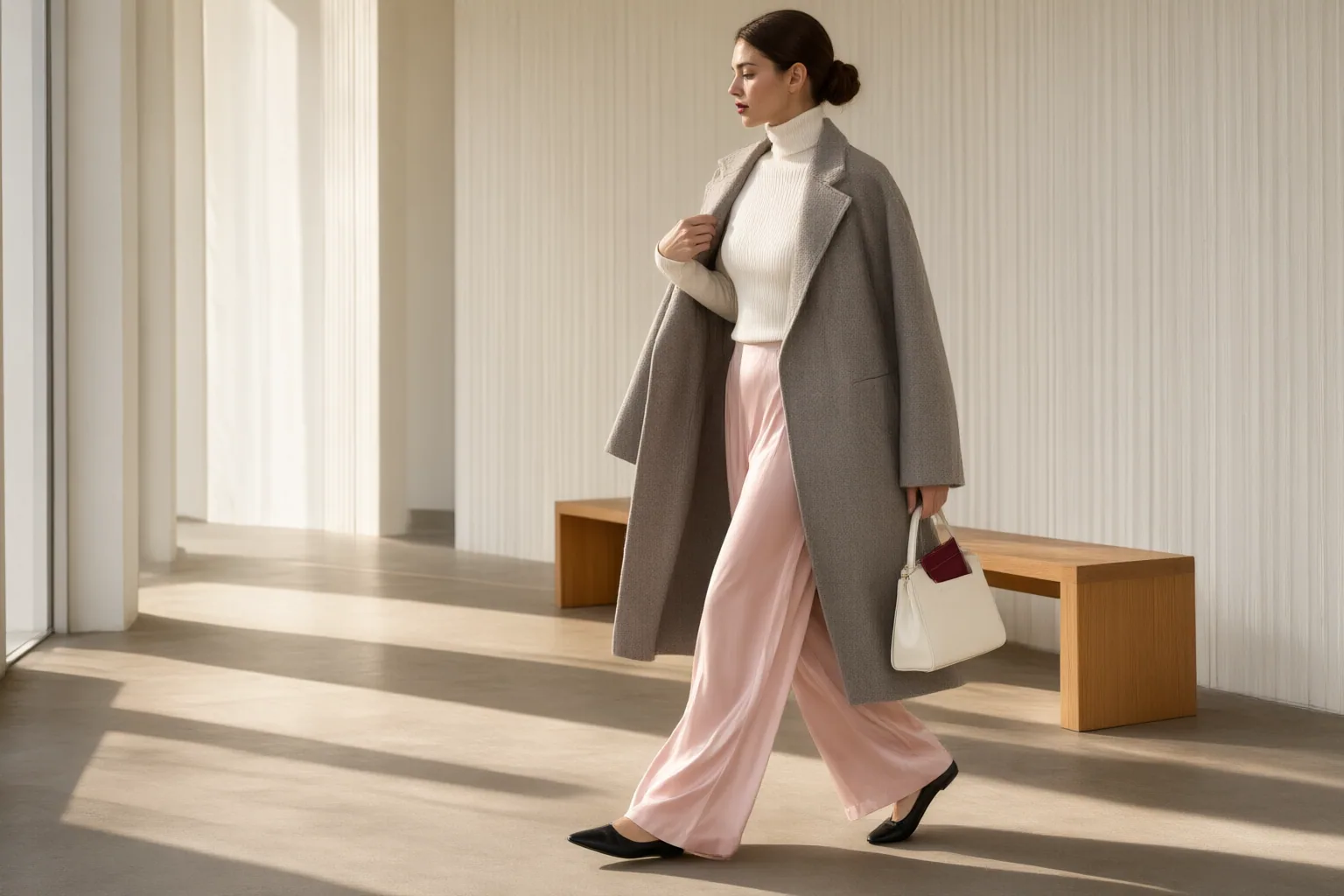
Color cohesion cannot compensate for incompatible proportions. One repeatable formula is to pair a fitted or structured garment with a relaxed one. This creates a clear relationship between pieces instead of allowing every layer to fit with the same degree of volume.
Next, decide how the tones should move through the outfit. A light base under progressively darker layers is one documented method, but the larger principle is intentional variation: arrange light and dark values so the differences appear deliberate. Check the complete silhouette and tonal sequence together, because individually appealing garments can still feel mismatched when their proportions, colors, and fabrics do not relate.
Add accessories only after the main outfit works. Shoes, bags, belts, scarves, and jewelry can contribute texture, shape, or limited contrast. Keep them connected to the dominant color story or use a restrained contrasting accent. If an accessory becomes the only element the eye notices, remove it or choose a quieter alternative and reassess the outfit’s cohesion.
Conclusion
Use a five-point check before leaving the mirror: one recognizable color family, intentional light-to-dark variation, at least two contrasting textures, compatible proportions, and accessories that support rather than interrupt the palette.
Start with garments already in your wardrobe. Choose one color family, combine two distinct surfaces, and balance one fitted or structured element with a relaxed one. Review the full outfit for a deliberate tonal progression, then add only the accessories needed for shape, texture, or restrained contrast.
Disclosures and limitations
- This article was prepared with AI assistance from the supplied research package. Its styling guidance synthesizes commercial fashion, apparel, and styling sources; it does not represent independent product testing or personal wear experience.
- No product recommendations, prices, inventory claims, ratings, or affiliate links are included. Readers should independently evaluate garments for their own fit, comfort, and needs.
Related reading
Sources
- Monochrome Outfits 101: Your Guide to Monochromatic Fashion | Rothy’s — Rothy's
- Master Monochrome Outfits: Step-by-Step Styling Guide — Classic Six
- The Timeless Elegance of Monochrome Fashion with SAFIRO — SAFIRO
- Outfit Formulas: 7 Brilliant Systems That Actually Work – Egella.com — Egella.com
- Autumn Color Type: Guide to Mastering Monochrome Fashion Layers — Color Guru
- How to Create Monochromatic Suit Looks — Capitol Hill Clothiers