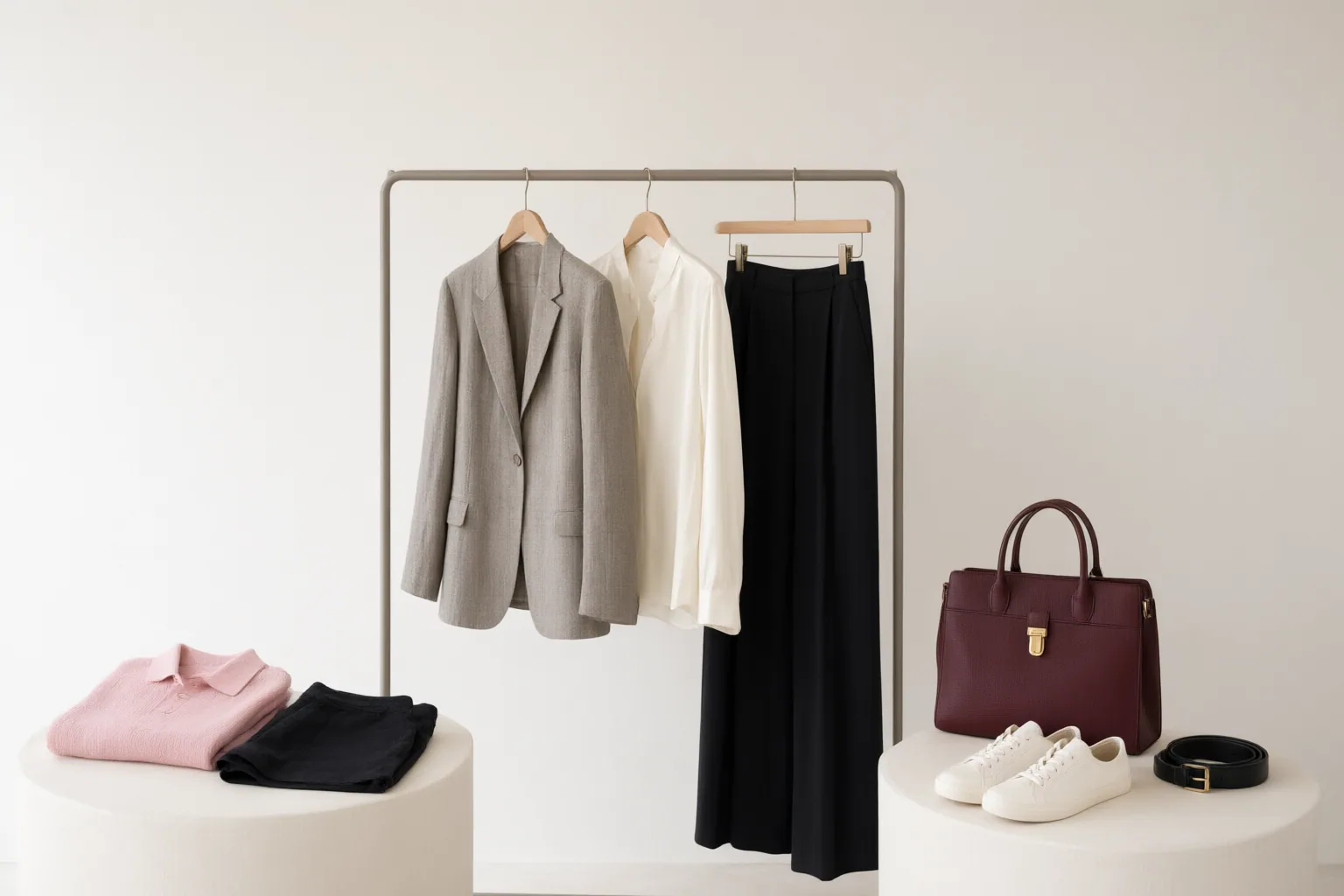
Build a practical summer capsule by starting with clothes you already wear, coordinating their colors, and planning complete work and weekend outfits before buying anything new. The right number of pieces depends on your routine, climate, and laundry schedule—not an arbitrary target.
Start With Your Real Summer Routine
A capsule wardrobe is a curated collection of versatile clothes that can be mixed and matched into multiple outfits. Although 30–40 pieces is sometimes presented as a general range, it is not a requirement. Your useful total depends on your lifestyle, local climate, current season, and how frequently you do laundry.
Begin with evidence from your own closet: identify the clothes you already use and like. This is less overwhelming than starting with a large purge, and it helps reveal what reliably supports your daily life. Consider how often you dress for work, what your weekends usually involve, and which garments repeatedly earn a place in both settings. Keep the initial selection flexible; the goal is a functional wardrobe, not compliance with a fixed number.
Create a Coordinated Color Palette
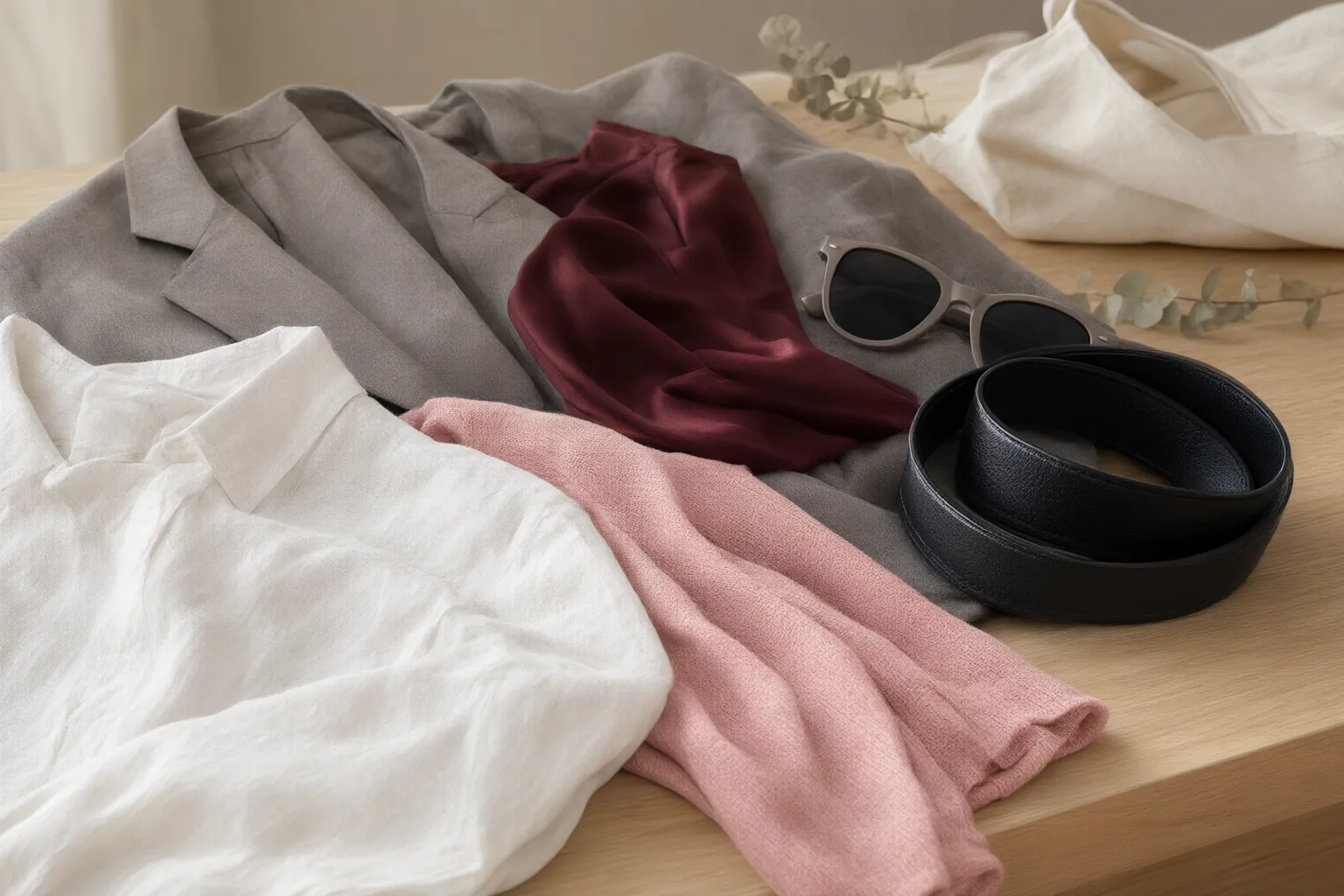
A coordinated palette makes a smaller collection easier to combine. Start by examining the colors already represented among your most-worn summer clothes. Neutral foundations can simplify outfit building, but they do not need to exclude color. Add shades you genuinely enjoy and already use rather than adopting an unfamiliar palette solely because it appears minimal.
Test each garment against several others in the working selection. A piece becomes more useful when it coordinates with multiple tops, bottoms, layers, or accessories instead of requiring one exact pairing. Treat any palette formula as adaptable editorial guidance: the best combination is the one that connects your proven favorites and reduces the number of isolated pieces in your wardrobe.
Plan Work-to-Weekend Outfits Before Shopping
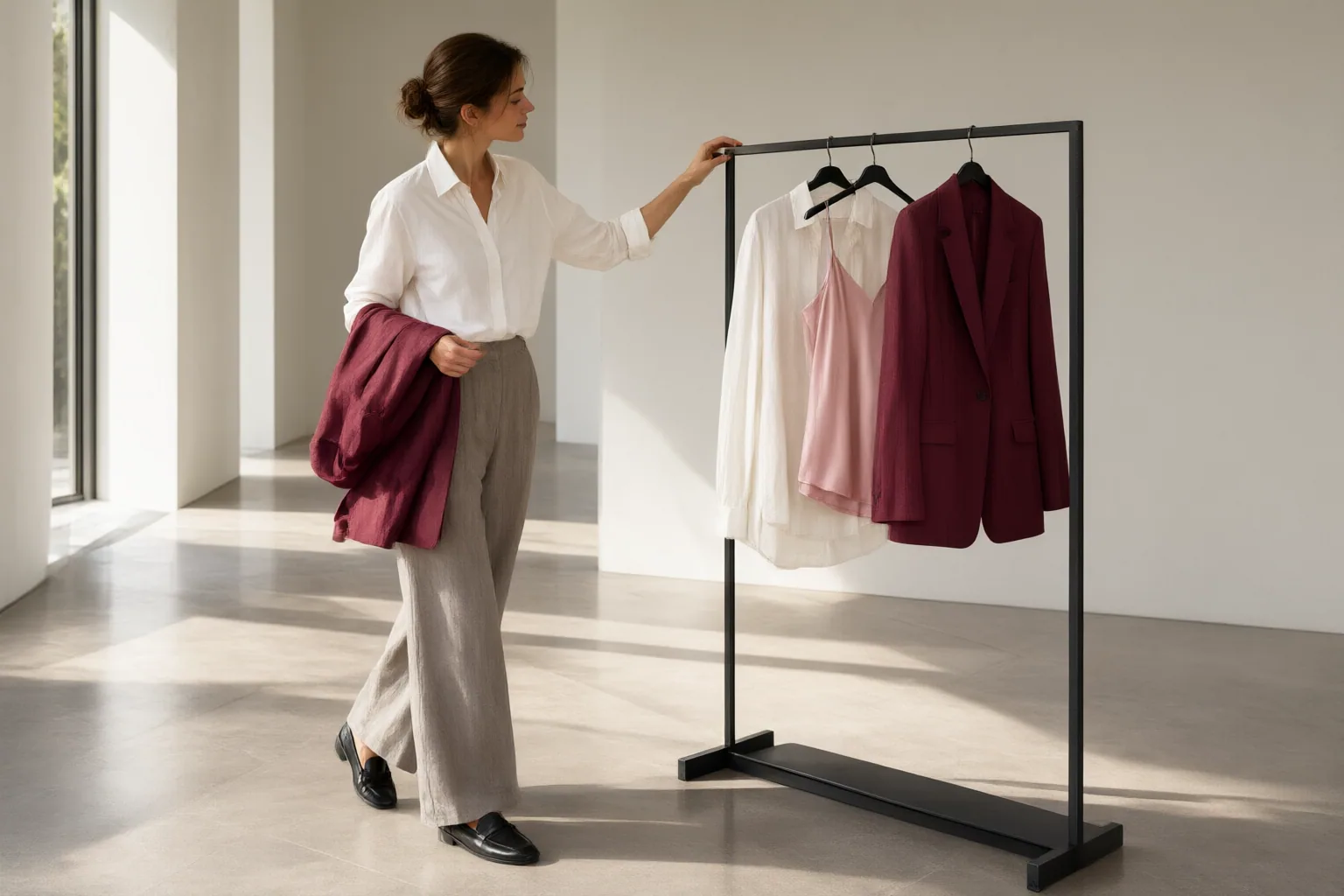
Use your current clothes to assemble 7–10 go-to summer outfits before making a shopping list. Include complete looks for the situations that recur in your schedule, especially workdays and typical weekends. Planning in advance can expose whether apparent wardrobe shortages are actually coordination problems. Record the combinations so you can see which pieces support several outfits and which gaps repeatedly prevent a look from working.
Apply the same test to accessories. Give each pair of shoes a clear purpose across needs such as work, weekends, travel, or seasonal changes. If a pair works with only one outfit, question whether it belongs in a compact capsule. For bags, prioritize one dependable everyday option with clean lines and a versatile shape that can move between work and weekend settings.
Only after this review should you define potential purchases. Write each gap in functional terms—what missing item or role would complete several planned outfits—rather than browsing without a specific need. No fixed shopping checklist is universally appropriate because routines and conditions differ.
Conclusion
Build your capsule in sequence: select proven summer favorites, check that their colors coordinate, assemble complete outfits, and review whether your shoes and everyday bag serve clear roles. Then list only the gaps that stop those outfits from covering your routine.
For a practical first step, create and photograph 7–10 work and weekend outfits from what you own. Use those images for one week, note what is missing, and shop only after the same specific gap appears in your planned combinations.
Disclosures and limitations
- This article was prepared with AI assistance using only the supplied research sources. It contains no product pricing, availability, ratings, personal testing claims, or affiliate product recommendations.
Related reading
Sources
- The Capsule Wardrobe System I Wish I'd Known Sooner — Modern Minimalism
- Capsule Wardrobe (2026) — Build a Timeless Closet That Works — The Capsulist