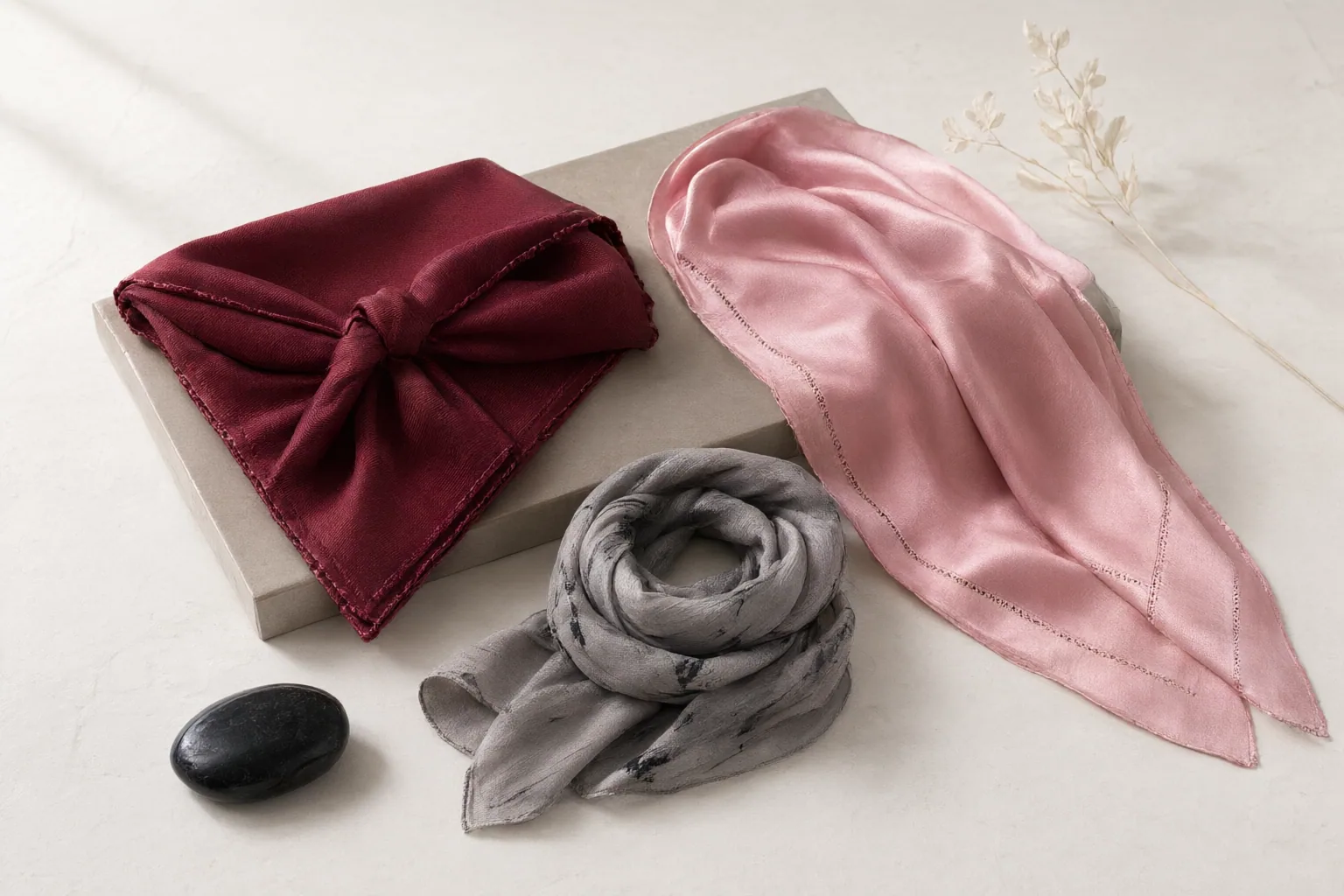
Choose a silk scarf by working backward from where and how you will wear it. Size and shape determine possible placements, while weave, weight, edge construction, and fold compatibility determine whether the result feels controlled for work or relaxed for the weekend.
Choose the Size and Shape Around How You Will Wear It
Start with your likely placements: neck, shoulders, hair, or bag. A 90 cm square is a versatile option because it can be folded into a neck band, worn over the shoulders or hair, or used as a bag accent. Smaller squares offer fewer of these options, while a 140 cm format creates noticeably more volume.
Shape matters as well. Long scarves emphasize a vertical line, and rectangular formats can feel less bulky when layered. Before choosing, identify the one or two placements you will use most. If you want a single scarf to move among neck, hair, shoulder, and bag styling, the documented versatility of a 90 cm square makes it a practical reference point. If streamlined layering matters more than multiple square-based folds, compare long or rectangular formats instead.
Match the Weave and Weight to the Look You Want
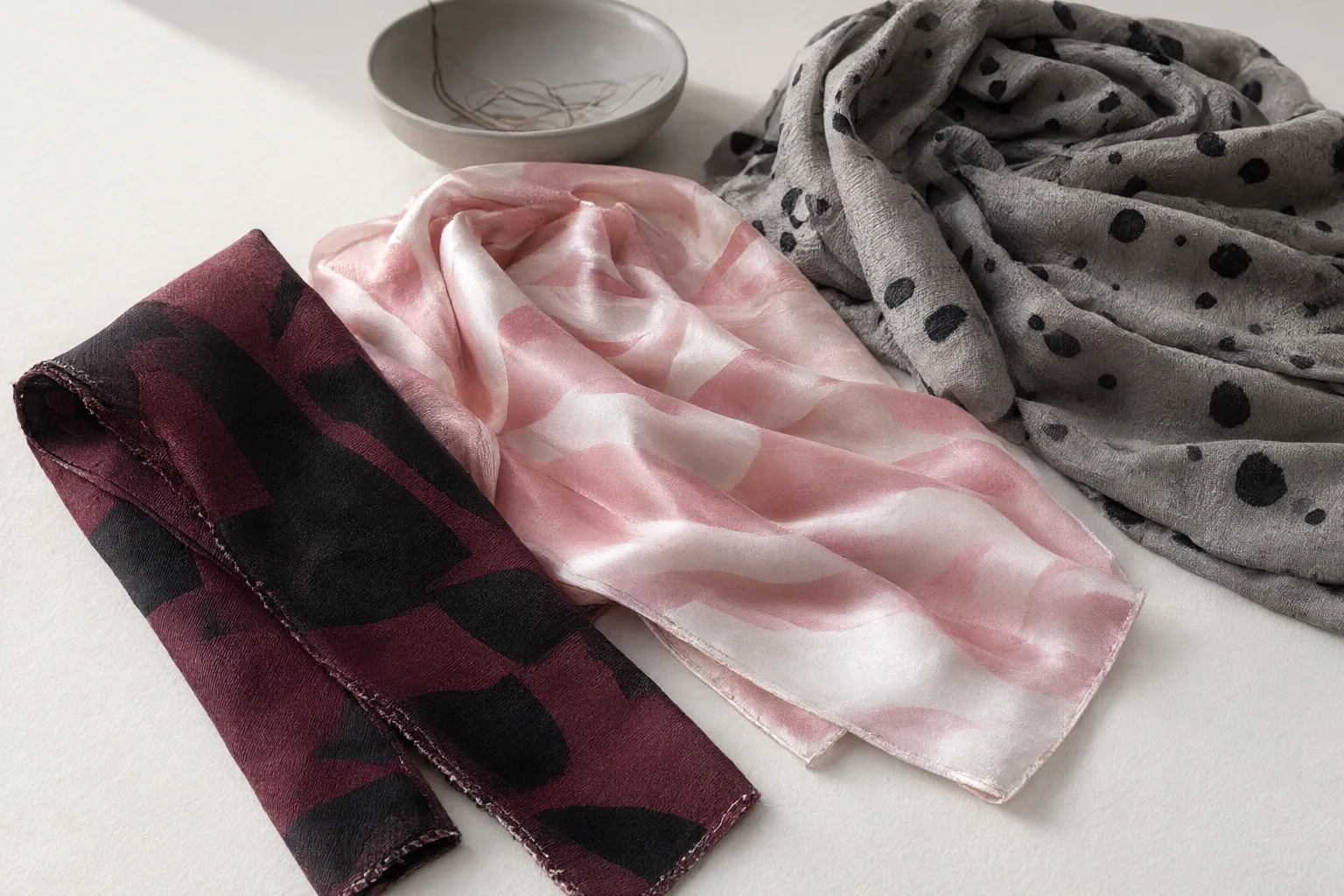
Use the weave name to anticipate surface character and movement. Silk twill has a visible diagonal rib and balances softness with structure, helping it hold more defined folds. Silk satin has a smooth, lustrous face. Crepe de chine is softer, fluid, and comparatively matte, making it better aligned with gently draped effects than sharply defined shaping.
Also check the listed momme, when available. Momme measures silk fabric weight and density; the cited manufacturing guidance says that higher momme generally indicates thicker silk with a more substantial drape, while lower momme indicates a lighter, more translucent fabric. It should therefore be treated as a comparison clue, not an unsupported quality cutoff. For a crisp neck treatment, consider a weave with body, such as twill. For a softer fall, focus on fluidity and drape rather than shine alone.
Inspect the Edge Finish and Test the Intended Fold
Examine the hem as one part of the scarf’s construction, not as conclusive proof of quality or authenticity. Rolled edges are a recognized construction detail, but the cited authentication guidance notes that vintage examples may have hand-rolled hems while some modern scarves use very neat machine stitching. Material, print, labels, construction, and period-specific details need to be considered together.
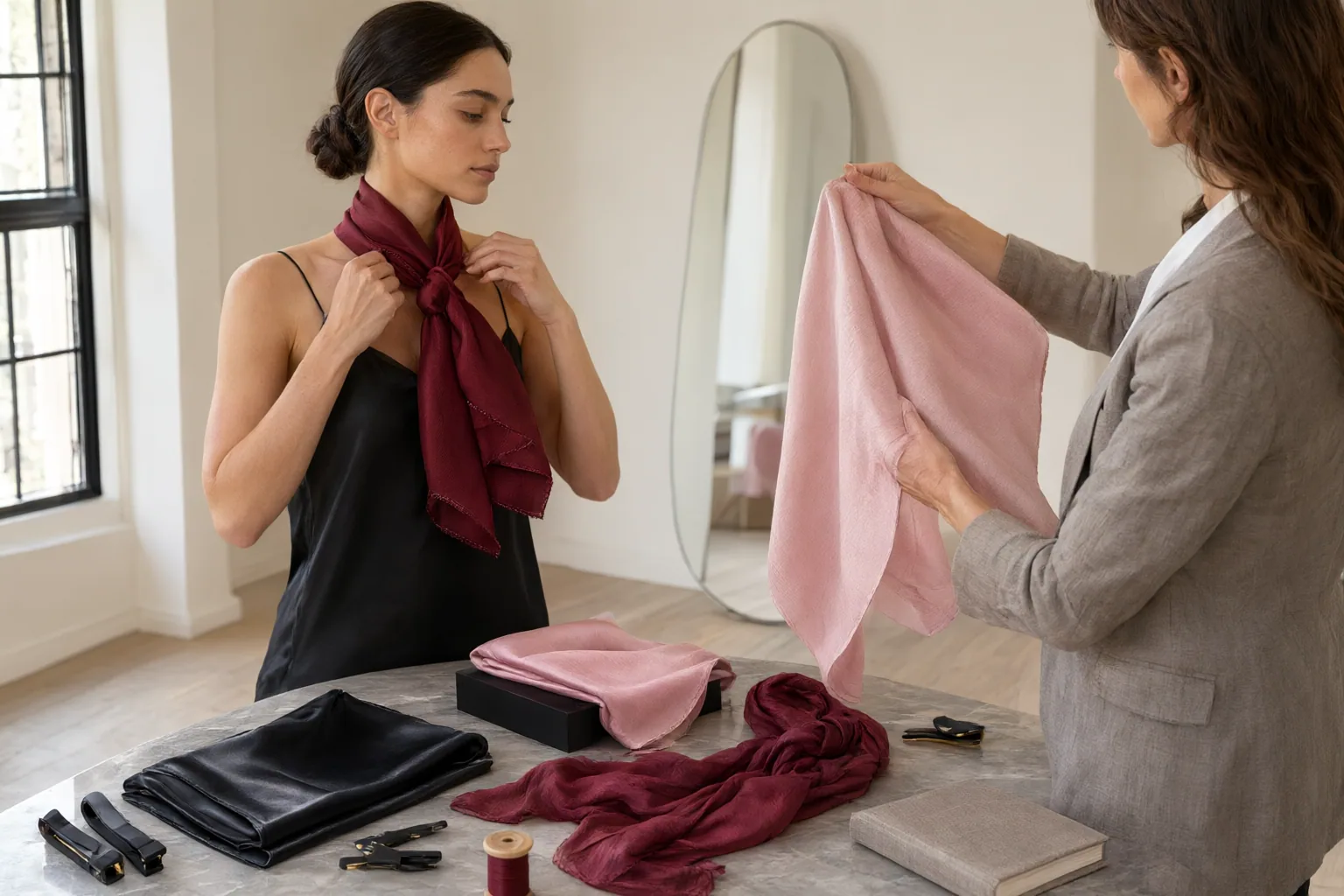
Next, test whether the scarf can become a manageable base shape. Triangle, bias, band, and rectangle folds provide foundations for knots and drapes. The cited tying guidance describes the bias fold for square scarves measuring at least 70 by 70 cm. A band fold turns a square into a compact strip for neck knots, headbands, bows, or bag wraps. Check whether the chosen weave holds that shape: structured twill favors defined folds, while a softer fabric favors fluid draping.
Conclusion
For a conservative workplace, favor controlled volume and placement close to the neckline instead of a loose decorative drape. On weekends, softer knots, more visible draping, or a bag accent can give the scarf greater emphasis.
Before buying, write down the placements you will actually wear. Compare the dimensions and shape, identify whether the weave and weight support a defined fold or fluid drape, and inspect the edge as part of the overall construction. Finally, rehearse the required triangle, bias, band, or rectangle fold with an item of similar dimensions so you can confirm that the format suits both your work and weekend plans.
Disclosures and limitations
- This article was created with AI assistance from the supplied research package. Its material, construction, and styling guidance comes primarily from commercial retailer, manufacturer, or reseller publications and was not independently tested.
- No products, prices, ratings, inventory claims, affiliate links, or compensated recommendations were included in the supplied research.
Related reading
Sources
- Custom Silk Scarf Manufacturing: A B2B Guide to Fabric, Printing & Edge Finishing for Brands | DreamSilk — DreamSilk
- Silk Scarf Outfit Ideas for Any Occasion — SILKSILKY
- How to Authenticate Luxury Silk Scarves (2025 Guide) – Grey Hall Design — Grey Hall Design
- Hermès Scarf Guide: Artists, Styling and Care — Sold Attire
- How to Choose the Perfect Silk Scarf for Your Style | Misciano — misciano.com
- PRINTED SILK SCARF PRODUCTION-EVELYN — EvelynFashions
- Best Silk Scarves for Women — Elizabetta
- Cowtown Wild Rags – The Complete Wild Rag Guide — Cowtown Wild Rags
- How to Tie a Silk Scarf: 15 Elegant Ways to Wear and Style Your Favorite Silk Accessory | DreamSilk — DreamSilk