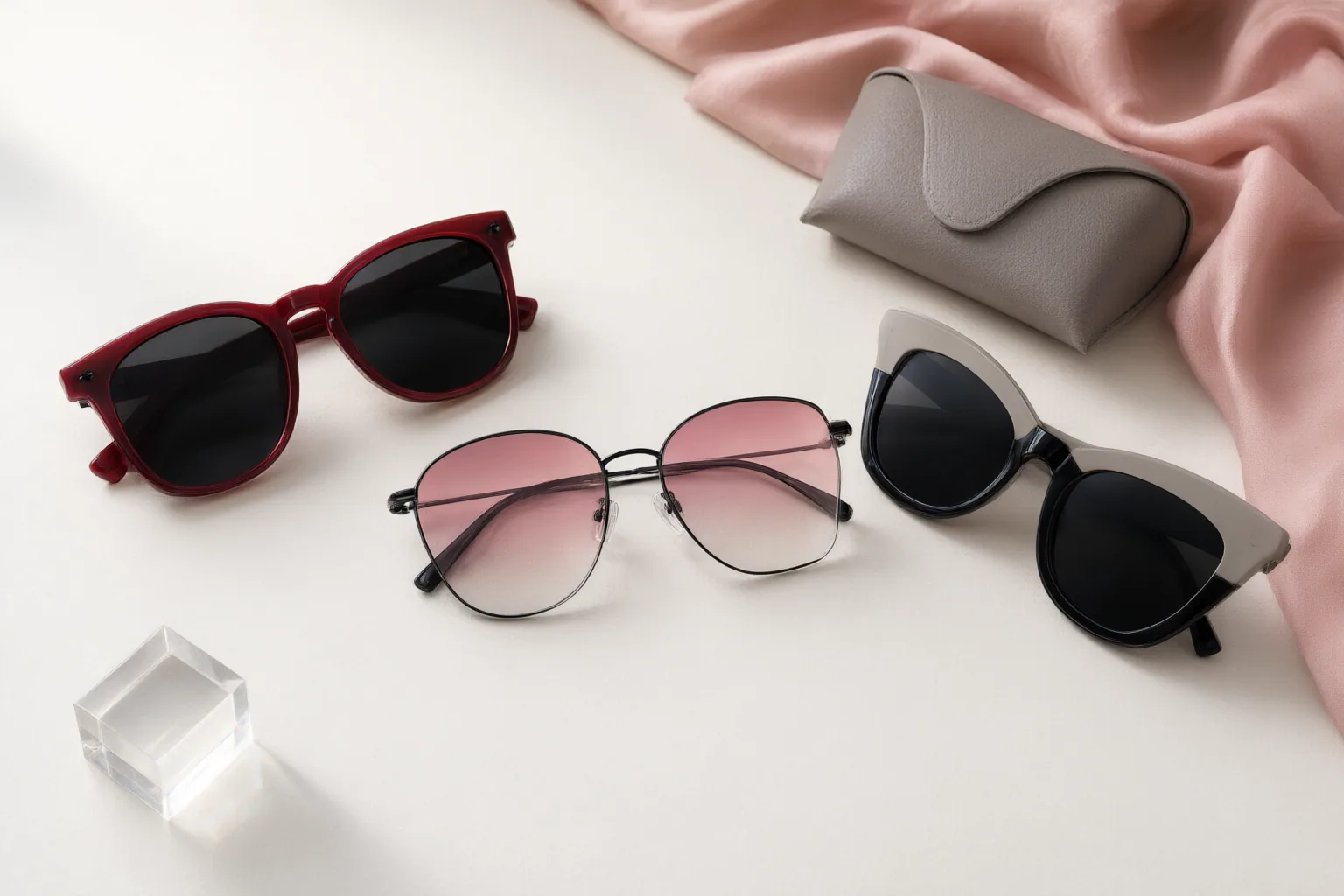
Choose everyday sunglasses by verifying an explicit UV400 or 100% UV-protection statement, considering polarization separately for glare, and checking that the frame fits securely and comfortably for its intended use. Fit-over shoppers should also measure their existing prescription frames.
Decode UV, Tint, and Polarization Claims
Start with the protection statement, not the lens color. Mr. Woodini’s buying guide advises looking for an explicit UV400 or 100% UV-protection claim and cautions that a darker tint does not, by itself, demonstrate stronger UV protection. Tint may affect visible brightness, but the cited guidance treats it as distinct from UV blocking.
Polarization is another separate feature. It is intended to control glare, so its usefulness depends on where and how the sunglasses will be worn. A polarized label should not be treated as proof of UV protection. Check the UV statement independently, then decide whether glare reduction is relevant to your routine. This two-step check prevents lens darkness or polarization terminology from standing in for a clear protection claim.
Understand Impact Resistance and Product Scope
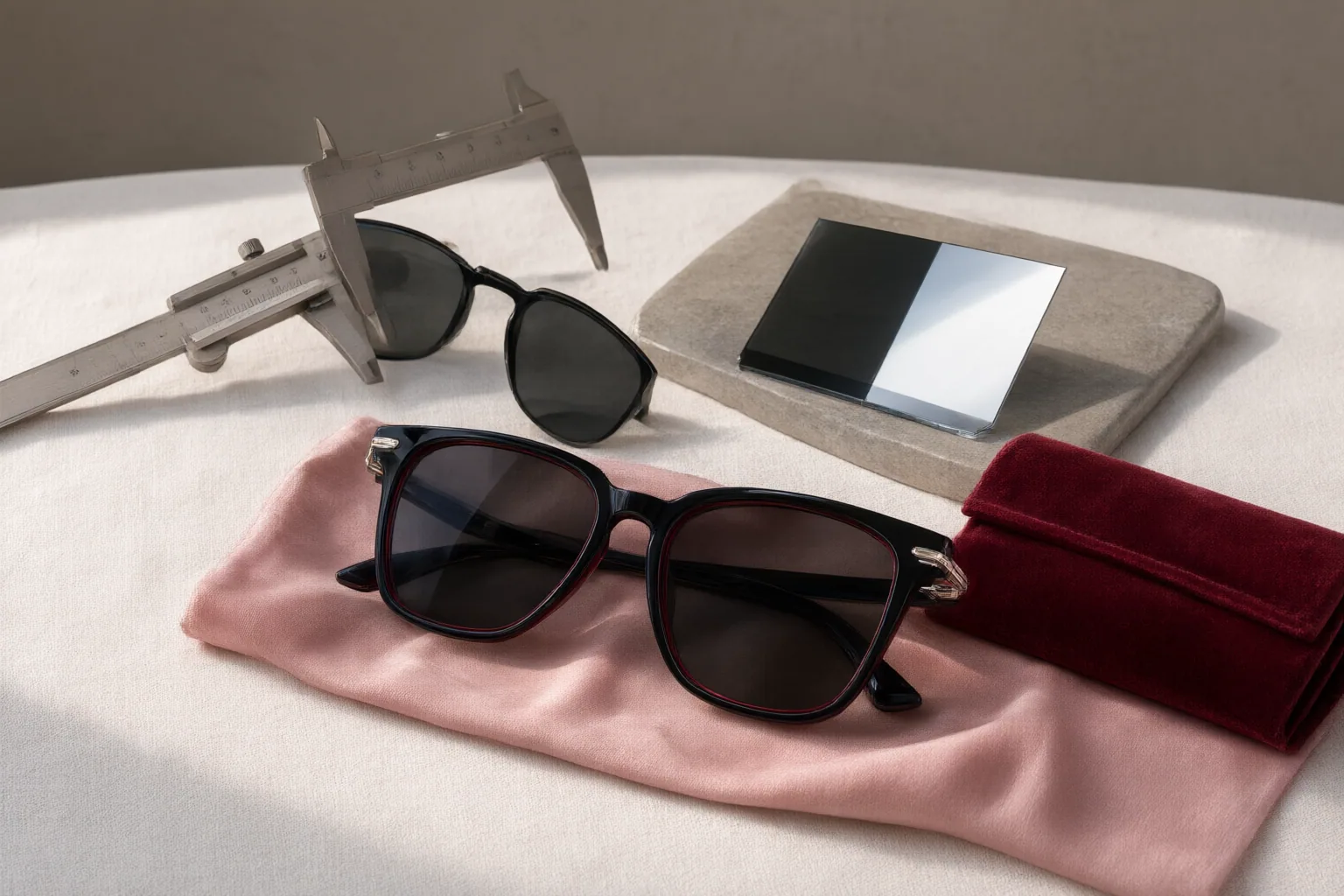
For sunglasses sold in the United States, UV and glare claims are not the entire safety picture. The FDA states that spectacle and sunglass lenses must comply with the impact-resistant lens regulation in 21 CFR 801.410. It also describes sunglasses as medical devices that are exempt from 510(k) premarket notification while remaining subject to other applicable requirements.
Product category matters when interpreting that context. The cited FDA guidance covers Class I over-the-counter sunglasses, including clip-ons, intended for casual or fashion wear and general recreation. It does not cover categories such as prescription or industrial eyewear. The supplied guidance identifies an October 9, 1998 issue date, so its regulatory details should be checked against current official FDA materials before publication or used to evaluate present-day compliance.
Check Fit, Grip, Comfort, and Intended Use
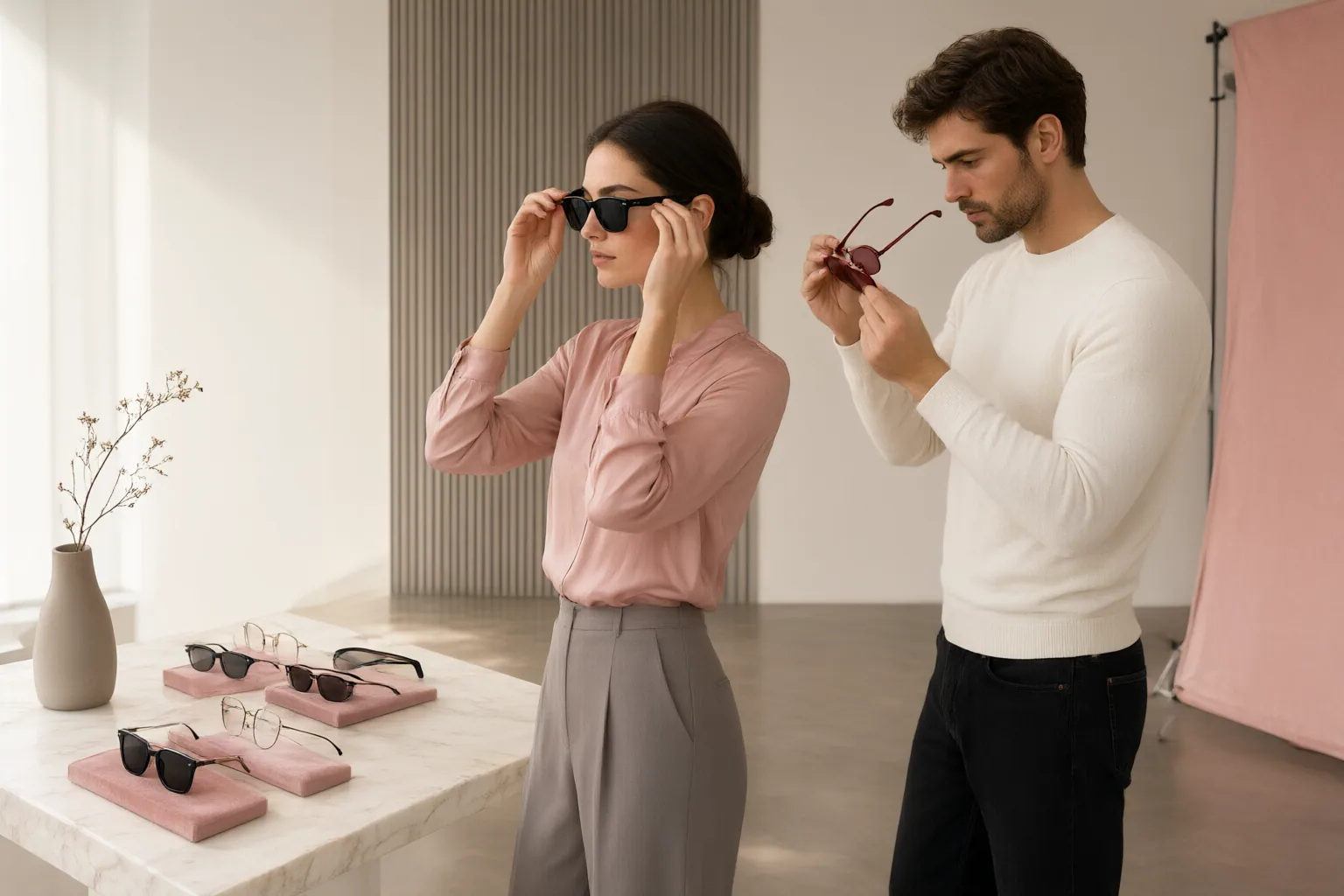
Evaluate fit in the context of your actual day. Runner’s World advises people choosing running sunglasses to consider grip at the nose bridge and temple tips, comfort, fog resistance, prescription options, and whether polarization fits the intended environment. These criteria are also useful prompts for active everyday wear: a frame should remain secure without making comfort an afterthought.
Coverage and styling can involve a tradeoff. Technical wraparound designs emphasize activity-focused coverage, while lifestyle-oriented frames may offer a more everyday appearance yet still remain secure during running. The cited material does not establish one format as universally better, so match the design to the activity and setting rather than choosing by appearance alone.
If the sunglasses must fit over prescription glasses, measure first. Lentiamo describes fit-over sunglasses as frames made to sit over existing glasses and recommends measuring the height and width of the current frame before selecting a size. Confirm that the outer frame has enough room instead of relying only on its advertised style or nominal size.
Conclusion
Use a short sequence before buying: verify an explicit UV400 or 100% UV-protection statement; consider polarization separately as a glare-control feature; and confirm that grip, comfort, coverage, fog resistance, and prescription compatibility suit the intended activity. Remember that US impact-resistance requirements are a distinct regulatory consideration rather than something established by tint or polarization labels. For fit-over designs, compare the product dimensions with the measured height and width of your existing glasses. Before purchasing, complete those checks against the frame and lens information available for the specific pair.
Disclosures and limitations
- This article was drafted with AI assistance using only the supplied FDA, eyewear-retailer, and editorial research sources; material claims remain attributed to those sources.
- No structured product records were supplied, so this article contains no specific product recommendations, prices, ratings, availability claims, or affiliate links. Any commerce links added later should include a clear affiliate disclosure.
Related reading
Sources
- Guidance Document For Nonprescription Sunglasses – Guidance for Indust — U.S. Food and Drug Administration
- Ochranné pracovní brýle | Bollé, uvex, Univet | BS Work — BS Work
- Over-glasses Sunglasses | Lentiamo — Lentiamo.co.uk
- How to Check If Sunglasses Have UV Protection | Mr. Woodini — Mr. Woodini
- men oversized sunglasses sold on Temu United States — temu
- Buy Glasses Online at Lensmart — lensmartonline.com
- Robot or human? — walmart.com
- We Tested Running Sunglasses in Sun, Snow, and Shade—These 14 Protected Our Eyes Best — Runner's World
- Sunglasses, Spectacle Frames, Spectacle Lens and Magnifying Spectacles — U.S. Food and Drug Administration