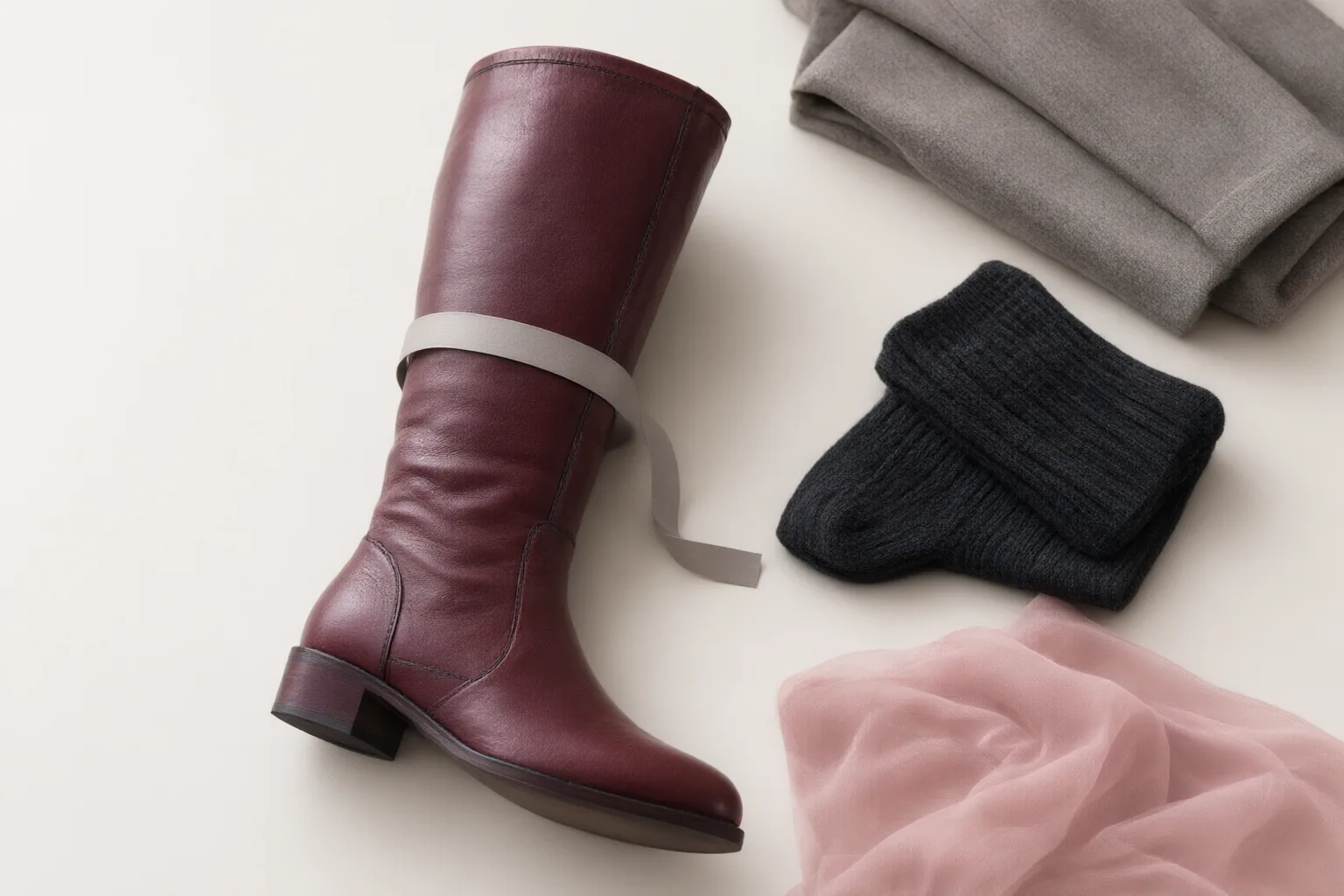
For a more useful knee-high boot calf fit check, measure more than shoe size. Record your calf at several points, your ankle circumference, and your leg height while standing. Then reassess the fit with the socks, tights, or trousers you expect to wear, without assuming a universal allowance for extra layers or swelling.
Measure Your Calf, Ankle, and Leg Height
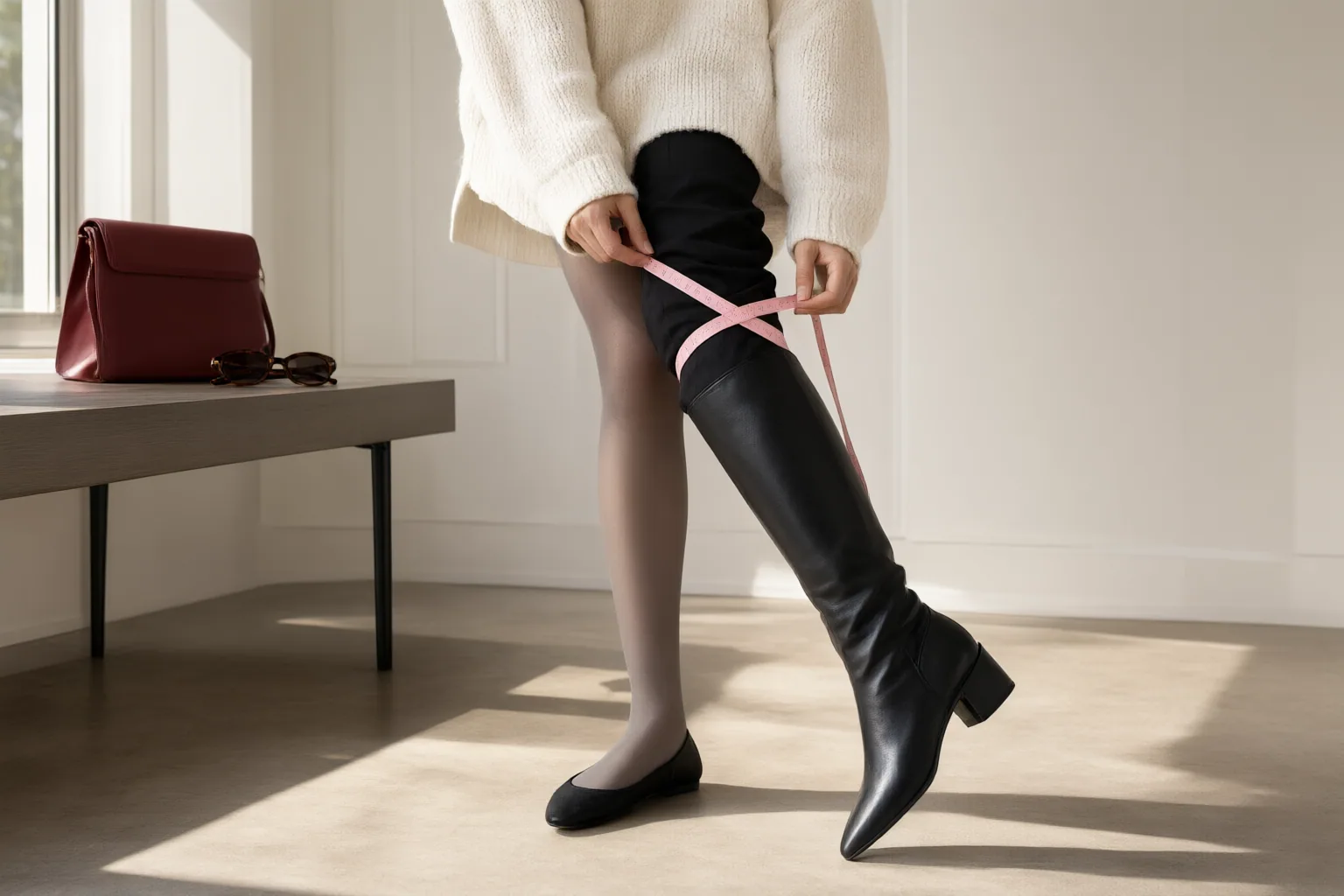
Stand naturally and use a flexible tape that sits snugly without pulling tight. Measure the widest part of your calf, then measure the narrowest part of your ankle with your foot flat. To estimate a suitable boot height, measure from the back of your knee to the floor while standing.
One calf number may not describe your leg shape adequately. Record circumferences just below the knee, at the widest point of the calf, and above the ankle. These three readings can reveal whether a shaft that accommodates the widest point might still be loose near the ankle or elsewhere. They can also help you evaluate a boot shaft as a shaped form rather than treating your lower leg as a cylinder.
Repeat the Fit Check With Socks and Trousers
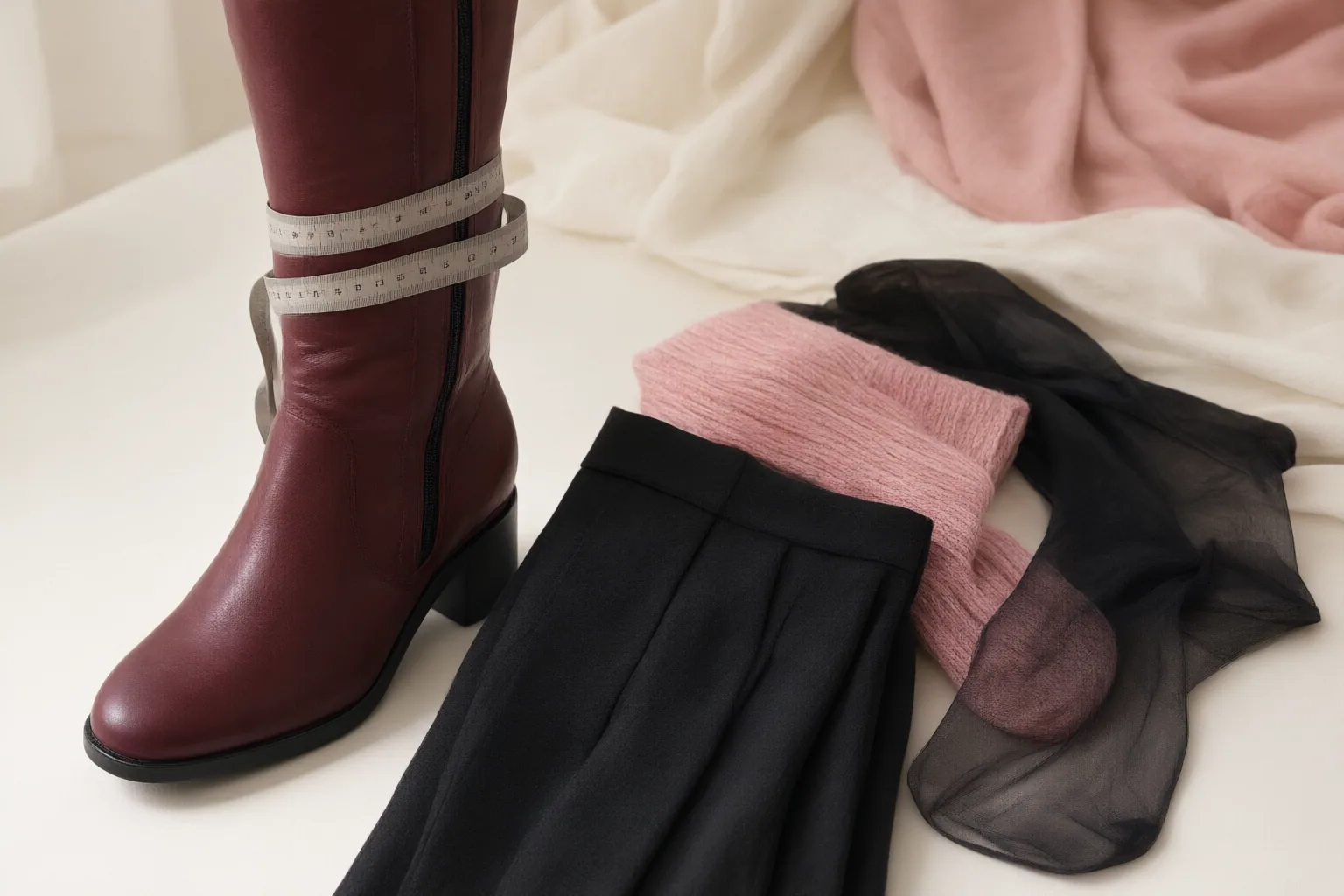
Keep your bare-leg measurements as a baseline, but do not stop there. The boot guide advises wearing the socks or tights intended for the boots because fabric thickness can alter the fit slightly. Repeat the check with each type of legwear you realistically plan to use, especially if some options are thicker than others.
For tucked-in trousers, assess the complete outfit rather than adding a fixed amount to your calf measurement. Extending the layered check to trousers is an editorial fitting method; the sources do not establish a tested allowance for trouser fabric. Look at how the shaft fits over the actual layer and whether the material bunches, pinches, or changes the boot’s position. Because no universal extra-space figure is supported, use the intended clothing itself as the practical comparison.
Account for Swelling and Uneven Shaft Fit
If calf swelling is relevant to your normal wear conditions, check fit when that variation is present rather than relying only on a measurement taken at another time. The compression-sock source notes that swelling can make standard legwear harder to fit and characterizes an appropriate fit as tight but not uncomfortable. This supports checking comfort, but it is not medical guidance and does not establish an ideal boot allowance.
Avoid solving every calf-fit problem by simply choosing a larger overall size. Accommodating the widest area that way may leave excess room at the ankle or another part of the boot. Assess calf and ankle fit together, along with shaft height. Pinching at the calf, looseness around the ankle, a shaft that slips down, or pressure behind the knee indicate that the shaft’s shape or height may not match your leg and layers.
Conclusion
Before buying or deciding to keep knee-high boots, record the widest calf measurement, the narrowest ankle measurement, the three calf-level readings, and the back-of-knee-to-floor length. Repeat the fit assessment with your intended socks, tights, and any trousers you plan to tuck in. Consider relevant changes in calf fit, while remembering that more room at the calf can mean looseness elsewhere.
Finally, compare your recorded measurements with the specific boot maker’s shaft information and size chart. Measure first, test every planned layer, and check the complete shaft fit before purchasing or keeping the boots.
Disclosures and limitations
- This article was prepared with AI assistance from the supplied boot-fitting and compression-sock source material. Claims were limited to that research package and its stated evidence boundaries.
- No products were supplied or recommended, and no prices, inventory, ratings, personal wear tests, or affiliate selections are presented.
Related reading
Sources
- Men and Women's Wide Calf Compression Socks and Stockings – ComproGear — ComproGear
- Choose Knee Boots: 7 Ways to Measure Your Legs Correctly – eazyfree.com — eazyfree.com
- Custom Knee High Socks – Wholesale Manufacturer USA — Hilton Enterprises