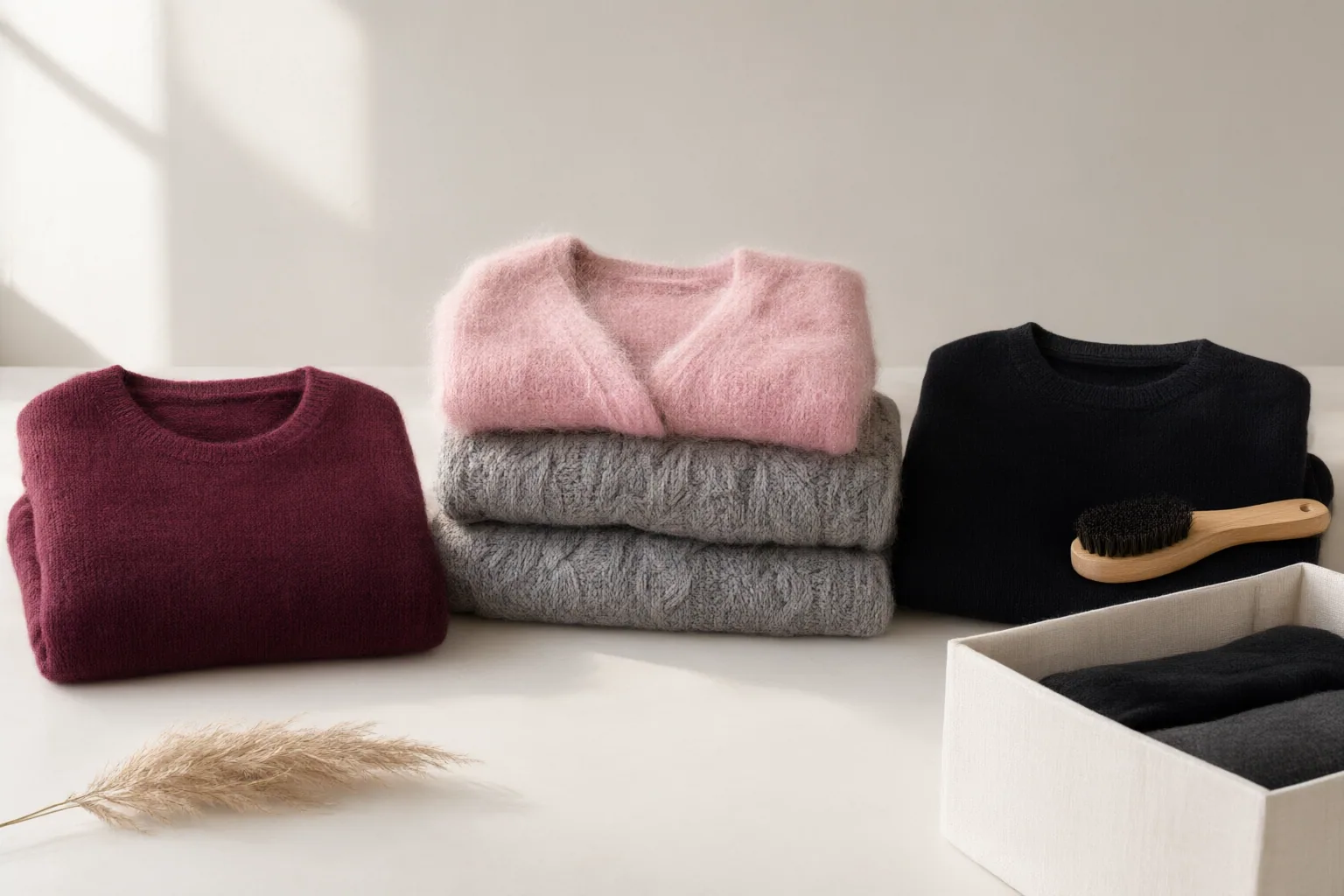
Buy knitwear by checking both its fiber composition and care label, then decide whether its washing, drying, depilling, and storage needs fit your routine. Pilling alone is not proof of poor quality, and no supplied evidence supports an absolute ranking of fibers or products.
Start With Fiber and the Care Label
Fiber information helps frame the purchase, but it does not provide a simple quality hierarchy. Common yarn choices in the supplied guidance include merino wool, mohair, alpaca, cashmere, cotton, acrylic, and blends. Yarn selection can affect feel, weight, price, gauge suitability, and pilling behavior, so compare these characteristics with how and where you expect to wear the garment.
Read the care label before buying as well as before washing. Different materials may require different temperatures, cycles, detergents, and drying methods. If a garment calls for hand washing, a wool cycle, or careful flat drying, decide whether that routine is realistic for you. The available sources do not provide standardized fiber-performance tests or cross-product benchmarks, so composition should be treated as a practical decision factor rather than a definitive score of quality.
Understand Pilling Before Judging Quality
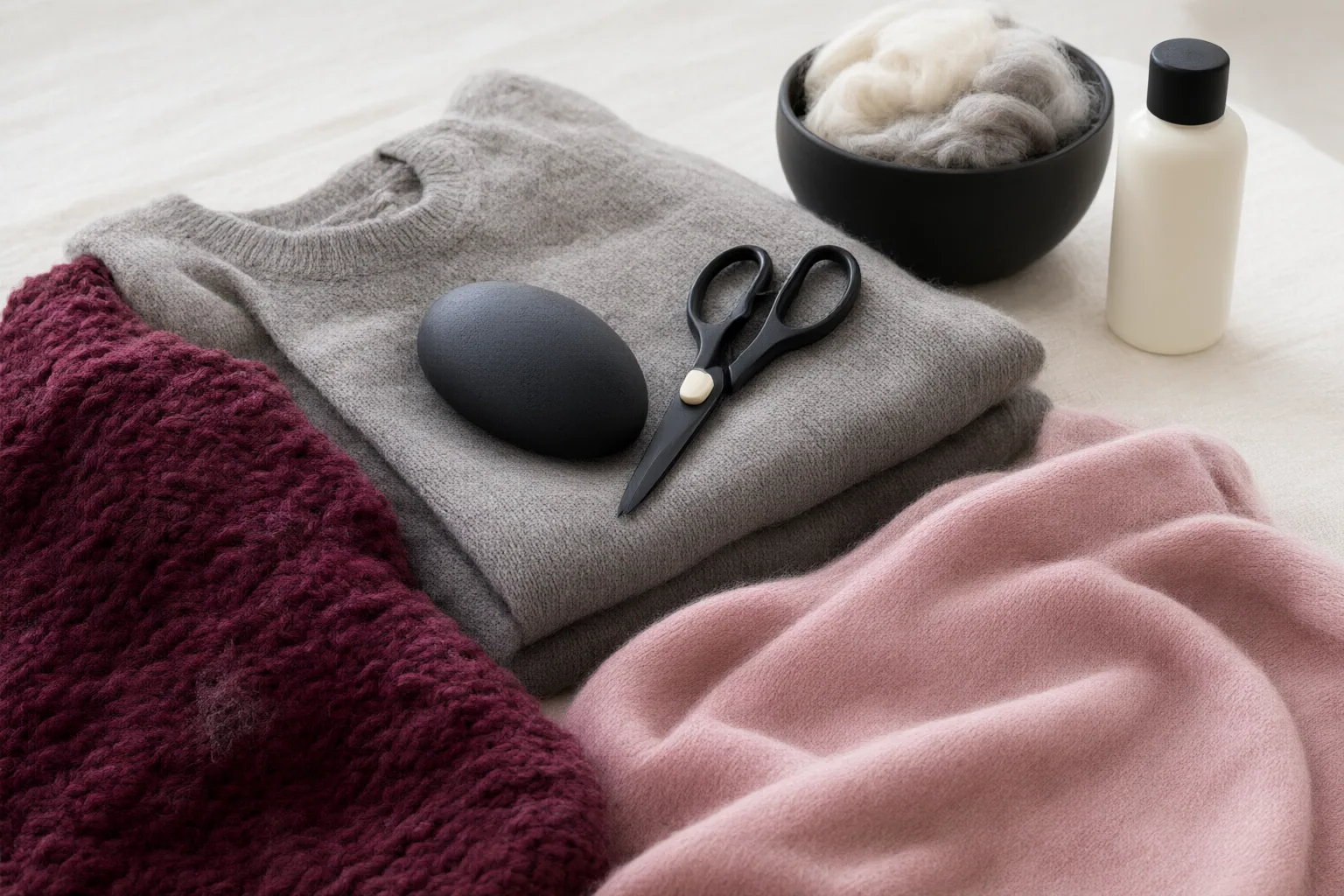
Pilling occurs when friction during wear or washing brings fibers together into small surface balls. Areas exposed to repeated rubbing, including the underarms and hips, are especially susceptible. Natural-fiber knitwear—including higher-quality pieces—can pill, so the presence of pills is not enough to establish that a garment is poorly made.
An “anti-pilling” description may indicate tightly twisted yarn or a treatment intended to reduce loose fiber ends. However, the supplied material gives no common testing standard or comparable resistance grade. Treat the claim as something to investigate, not as proof that one garment will outperform another.
Existing pills can be addressed gently with a pilling comb or fabric shaver. Choose a tool suited to the fineness of the knit, work carefully, and avoid forceful repeated passes that could catch or damage the underlying surface. Prevention also depends on reducing avoidable friction during washing and wear.
Wash, Reshape, Dry, and Store Without Distorting the Knit
Let the garment’s care label control the process. Reduce unnecessary washing and air knitwear after wear when appropriate. If machine washing is permitted, turning the garment inside out or using a laundry bag can reduce friction. Guidance for wool and more delicate knits commonly calls for a wool, delicate, or hand-wash program with a mild or wool-specific detergent.
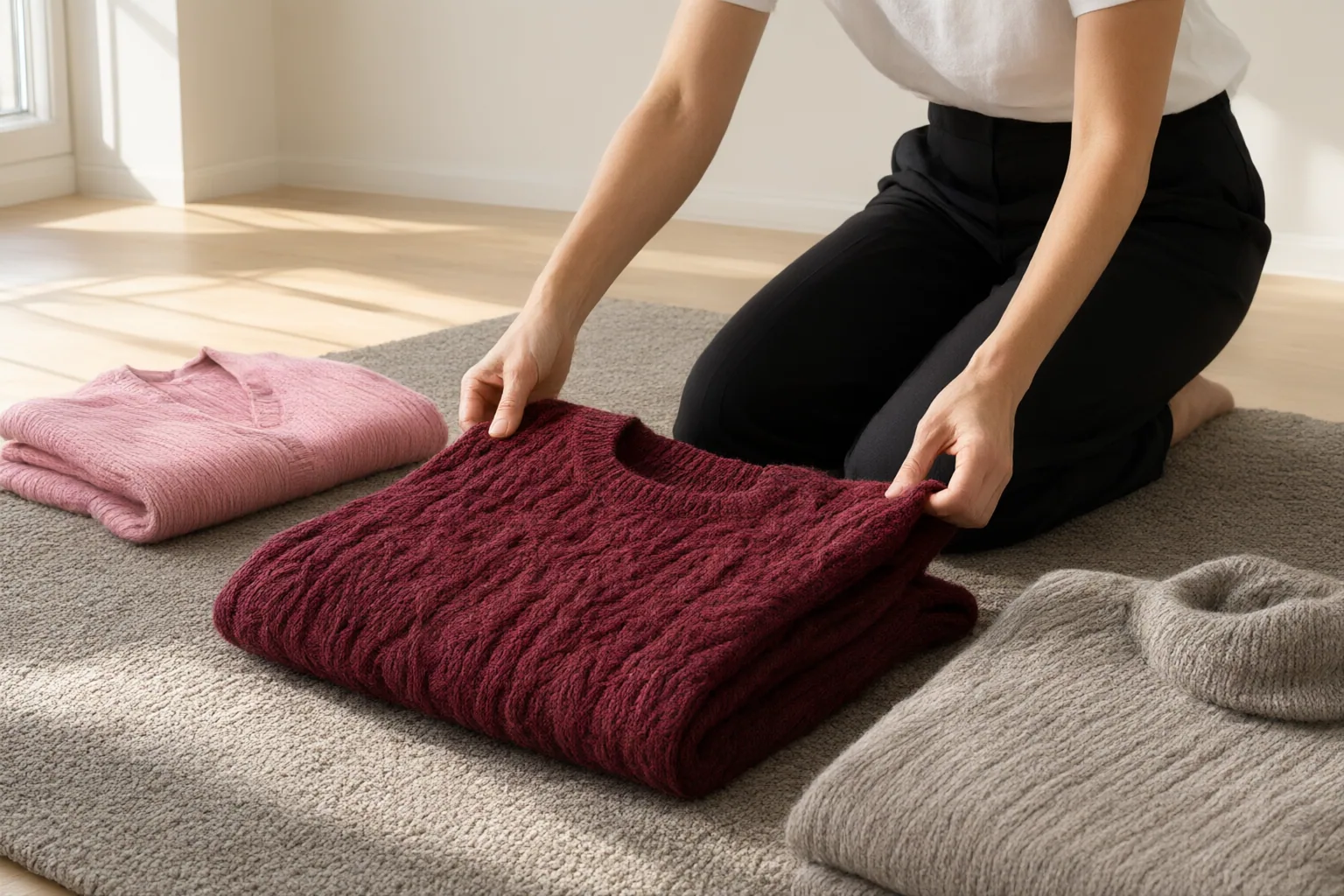
Do not wring wet knitwear. Instead, use a towel to absorb excess water, gently return the garment to its original outline, and dry it flat in the shade. Hanging a wet knit, tumble drying, placing it near a radiator, or exposing it to direct sunlight can increase the risk of shrinkage or distortion.
For storage, fold knitwear and place it flat rather than leaving it on a hanger, which may stretch the shoulders and alter the shape. Longer-term storage should be cool and ventilated, with a breathable container where appropriate. Also account for moisture, dust, and moth risks without overriding the garment’s specific instructions.
Conclusion
Before purchasing, check the composition and care label, inspect likely high-friction areas, and confirm that you can provide any required gentle washing, flat drying, careful depilling, and folded storage. These practical obligations may be more useful than relying on fiber names or “anti-pilling” language alone.
The evidence here comes mainly from brand, supplier, and manufacturer guidance. It does not establish standardized pilling grades, wash-durability counts, or cross-brand quality rankings, and the instructions on the individual garment take priority. Your next step: photograph or note the label before checkout and compare every required care step with the space, equipment, and time available at home.
Frequently asked questions
Does pilling mean knitwear is low quality?
Not necessarily. Pilling results from friction during wear or washing, and it can occur even in higher-quality natural-fiber knitwear. Consider where and how quickly it appears, but do not use pilling alone as a quality verdict.
Should knitwear be hung or folded?
Knitwear should generally be folded and stored flat because prolonged hanging can stretch the shoulders and change its shape. For long-term storage, favor a cool, ventilated setting and breathable storage where appropriate.
Disclosures and limitations
- This article was prepared with AI assistance using only the supplied brand, supplier, and manufacturer materials; specific garment care labels take precedence. No product recommendations, prices, inventory claims, or affiliate links are included.
Related reading
Sources
- Caring for knitted garments, removing bobbles & mending holes | C&A — c-and-a.com
- Anti-Pilling Fabric by the Yard | Free Samples Available — Global Fabric Wholesale
- Our Knitwear Care Guide — Brochu Walker
- How to wash knitwear: care for jumpers, remove pilling & expert tips — Oui Onlineshop
- Uniform Knitwear – Best China Knitwear Supplier — Top China knitwear Manufacturer
- How to care for knitwear | camel active — camelactive.com
- Custom Knitwear Manufacturer Guide – Best China Knitwear Supplier — Top China knitwear Manufacturer