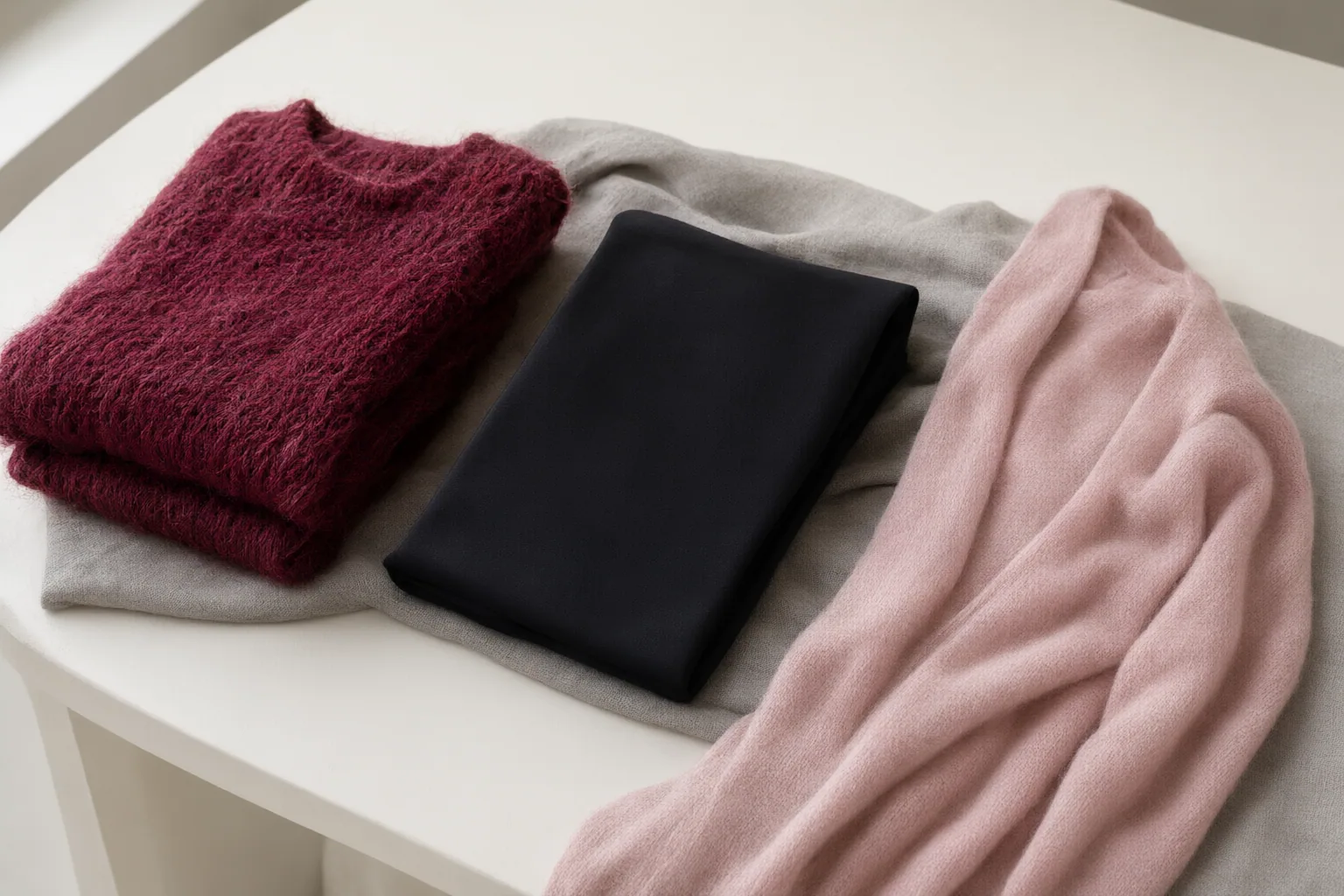
Pilling risk cannot be judged from a fiber name alone. Evaluate a garment’s construction, finish, likely friction, intended use, and supporting evidence, then follow its specific care label to help preserve its appearance, shape, and fit.
What Pilling Is and Why Everyday Clothes Develop It
Pills are small balls of entangled fibers that remain attached to a fabric’s surface. They may form during ordinary wear or laundering, so visible fuzzing is connected to both use and care rather than to a single moment or cause.
A useful durability question is how well a garment performs across repeated wash-and-wear cycles. Relevant testing can examine strength and resistance to abrasion and pilling. In everyday clothing, areas exposed to recurring contact deserve particular attention because abrasion contributes to surface wear. However, the available evidence does not provide a formula for predicting exactly when a particular garment will pill or how long it will last.
How to Assess Pilling Risk Before Buying
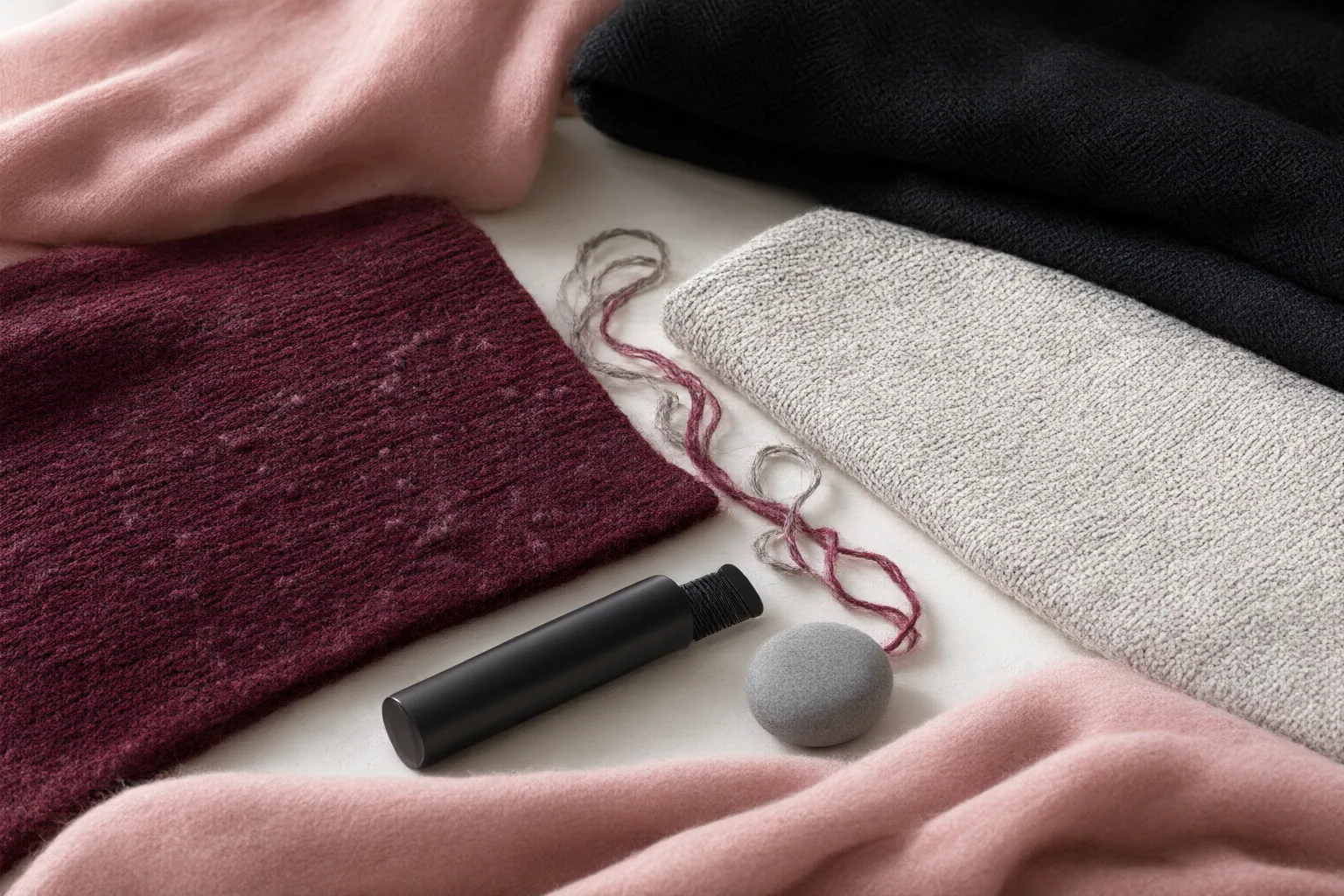
Start with the whole fabric rather than treating the fiber label as a verdict. Pilling can be influenced by the fiber or blend, fiber dimensions, yarn structure, fabric construction, finishing treatments, laundering, and the garment’s end use. A familiar fiber name therefore cannot establish performance by itself.
Use a practical inspection sequence:
- Note the fiber or blend, but keep it in context.
- Examine how the yarns and fabric appear to be constructed.
- Consider whether a finish or treatment is claimed.
- Identify parts likely to experience frequent contact during the garment’s intended use.
- Ask whether any durability or pilling evidence is provided.
Interpret the result according to the product. There is no universal durability standard covering all textile and apparel products, and a satisfactory performance level depends on intended use. A garment meant for frequent wear may face different demands from one reserved for occasional use. This framework estimates relevant risk factors; it does not prove an exact lifespan.
How to Evaluate Anti-Pilling Claims and Follow Garment-Specific Care
Treat “anti-pilling” as a claim that needs context. Global Fabric Wholesale, for example, markets fabrics for high-contact garments and attributes resistance in its products to tightly twisted yarns or treated fibers. That description comes from a commercial supplier, not from independent consumer-product testing in the supplied research. Look for clearly identified test evidence before treating similar language as proof of long-term performance.
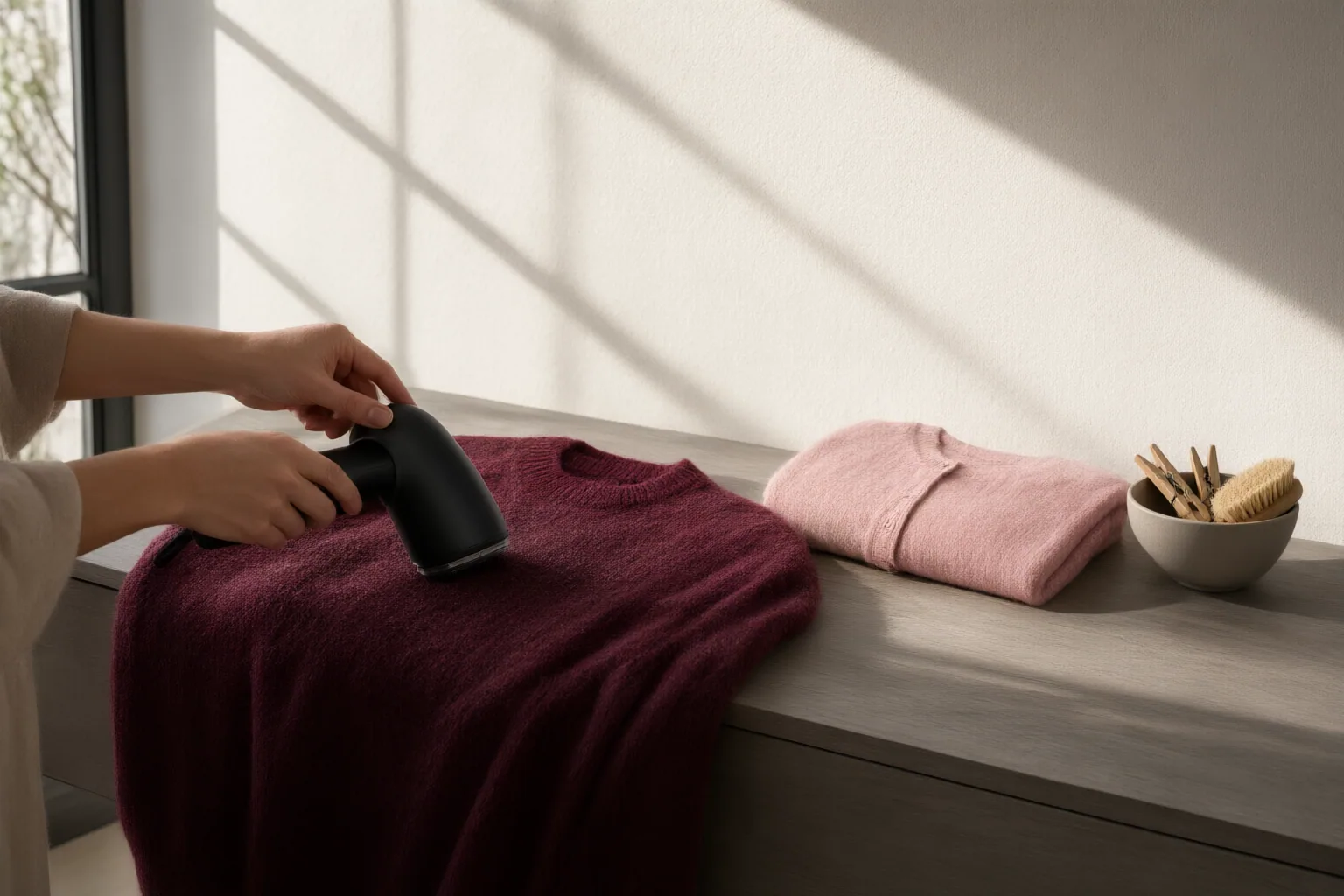
After purchase, read the care label inside the individual garment before washing or cleaning it. Instructions can differ from one item to another, so a single routine should not be applied automatically across an entire wardrobe. Kirrin Finch, for instance, specifies dry cleaning only for its own suits and blazers and says following item-specific instructions should help its clothing maintain shape and fit after washing. This example is brand-specific, not a universal rule for all tailored clothing.
Conclusion
Before buying, consider the fiber or blend alongside yarn and fabric construction, finishing, intended use, and likely friction. If a product promises pill resistance, distinguish attributed supplier language from independently supported evidence. Before cleaning, check the item’s own care label instead of relying on a wardrobe-wide rule.
Apply this checklist to one frequently worn garment before its next wash: review its construction, expected contact points, intended use, any performance claim, and the care instructions sewn inside.
Disclosures and limitations
- This article was prepared with AI assistance from the supplied CottonWorks, Kirrin Finch, and Global Fabric Wholesale research; commercial supplier statements are identified as claims rather than independent proof.
- No products or affiliate links are included. Future product recommendations should disclose any affiliate relationship and independently verify material performance claims.
Related reading
Sources
- Garment Care — kirrin-finch.gorgias.help
- Garment Durability | CottonWorks™ — CottonWorks™
- Spacák pro ženy Mammut Comfort Fiber Bag -18°C Women – SKLADEM | Hudy.cz — Hudy.cz
- Anti-Pilling Fabric by the Yard | Free Samples Available — Global Fabric Wholesale
- Robot or human? — walmart.com
- We print on fabric on demand – cotton woven and knitted — CottonBee – ctnbee.com