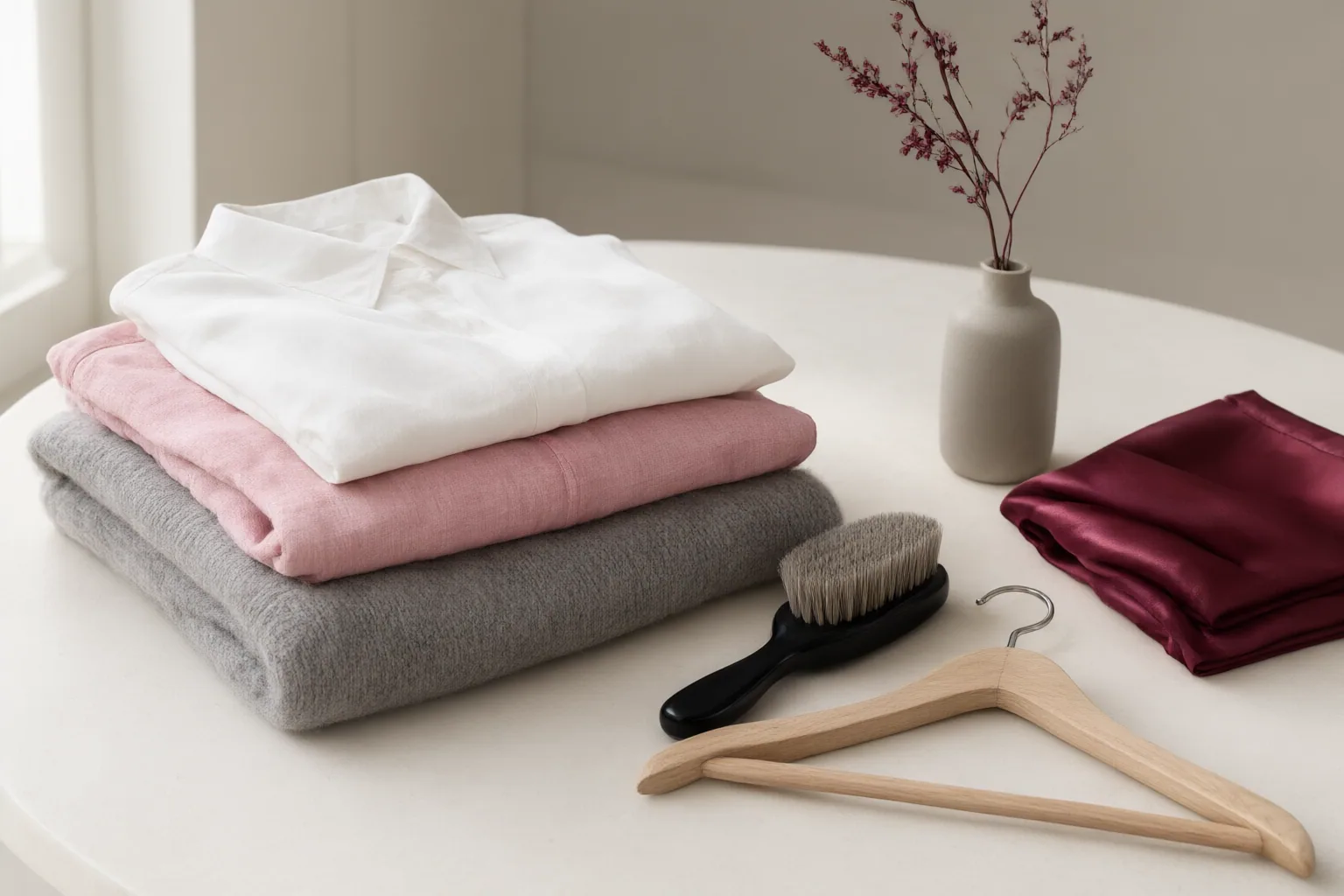
Before buying a garment, read its full care label and compare the required washing, drying, and storage routine with your available time, space, and laundry facilities. A practical wardrobe starts with choosing items whose upkeep you can realistically manage.
Read the Care Label Before You Commit
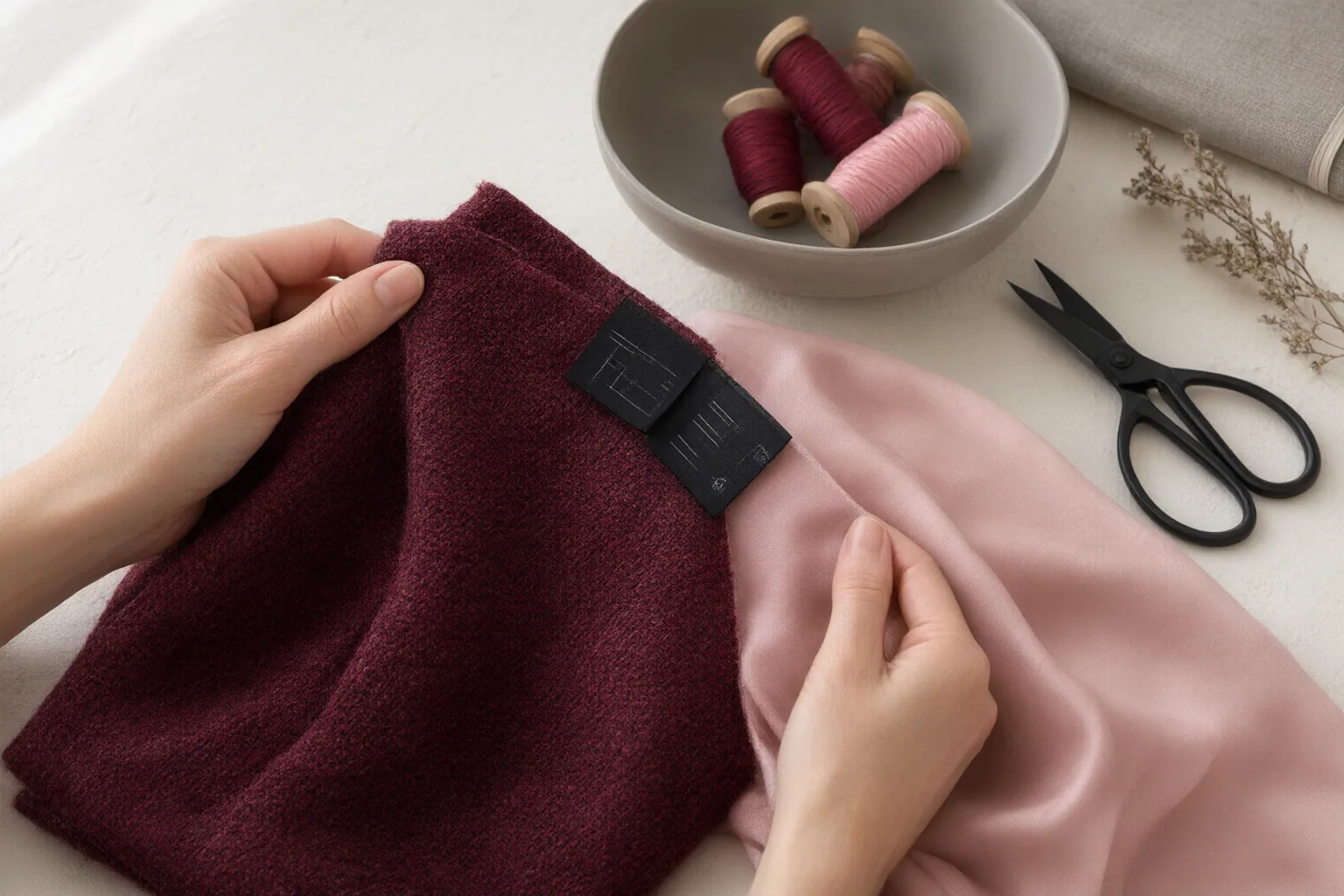
Start with the care label rather than assuming that a familiar-looking garment will fit your usual laundry routine. Check both the washing instructions and fiber content, since these details help determine appropriate care. Look specifically for requirements such as hand washing, dry cleaning, restricted temperatures, or other special handling.
Translate every instruction into a practical commitment. If an item must be hand-washed, consider whether you are willing to do that consistently. If it requires dry cleaning, decide whether that routine realistically fits your lifestyle. Different garments and materials need different treatment, so an easy-care wardrobe cannot be judged by appearance alone. Before committing, make sure the label’s requirements match how you actually maintain clothing—not how you hope you might care for it later.
Check the Real Washing and Drying Routine
Next, map the label to your normal laundry setup. Cold-water washing can be a gentler option that helps limit fading, shrinking, or deterioration, but the specific garment instructions should always determine the appropriate method. Consider whether the piece can safely join your typical load or needs separation from other colors, delicate garments, or tougher materials. A single routine for mixed items can expose some clothing to color transfer, snagging, shrinkage, or other damage.
Drying requirements deserve equal attention. Air-drying is advised where practical because dryer heat can contribute to shrinkage or fabric damage. Ask whether you have enough space and time to air-dry the item, especially if your home or laundry facilities are limited. If machine drying is permitted and necessary, a low setting and avoiding overdrying can reduce heat exposure. A garment is not truly low-maintenance if its safest drying method is consistently impractical for you.

Account for Storage, Wear Frequency, and Repairs
Care continues after laundry day. Check whether you can store the garment in a way suited to its type. Guidance cited in the research recommends folding knitwear and shirts, hanging trousers, coats, and dresses, and appropriately protecting shoes or delicate fabrics. Before buying, consider whether you have the necessary drawer, shelf, hanging, or protective-storage space.
Also think about how often the item will actually need washing. Pants, jackets, sweaters, skirts, pajamas, and other outer layers can sometimes be aired and reworn instead of being washed after every use, which may avoid unnecessary wear. The appropriate choice still depends on the particular item.
Finally, assess your willingness to handle ordinary upkeep. Sewing a small hole, patching damage, or hemming can extend a garment’s usable life. If you cannot or do not want to arrange those repairs, include that limitation in the purchase decision.
Conclusion
A lower-maintenance wardrobe depends on compatibility between each garment and your real routine. Verify the care label, identify the complete washing and drying process, confirm that you have suitable storage, and consider whether you can manage occasional basic repairs. Do not apply one care method to every material or garment. Before your next purchase, read the full label and buy only if you can realistically wash, dry, store, and maintain the item with the time, space, and facilities available to you.
Disclosures and limitations
- This article was prepared with AI assistance using only the supplied research package and its identified sources. It contains no specific product recommendations or affiliate links; readers should verify the care label on the individual garment before purchasing.
Related reading
Sources
- Clothing Care and Repair | Oberlin College and Conservatory — www.oberlin.edu
- Prolong the Life of Your Clothes With These Simple Tips – Mind, Body and Soul — wp.nyu.edu
- Clothing Care | Mindful Wardrobe Checklist — sites.udel.edu
- Nordstrom Online & in Store: Shoes, Jewelry, Clothing, Makeup, Dresses — nordstrom.com
- Personal Banking, Credit Cards, Loans & Investing | U.S. Bank — usbank.com