Before buying a garment, read its care label, note the fiber content, and check whether its washing and drying requirements fit your available time, facilities, and space. A piece is only a practical purchase if you can realistically maintain it as directed.
Start With the Care Label and Fiber Content
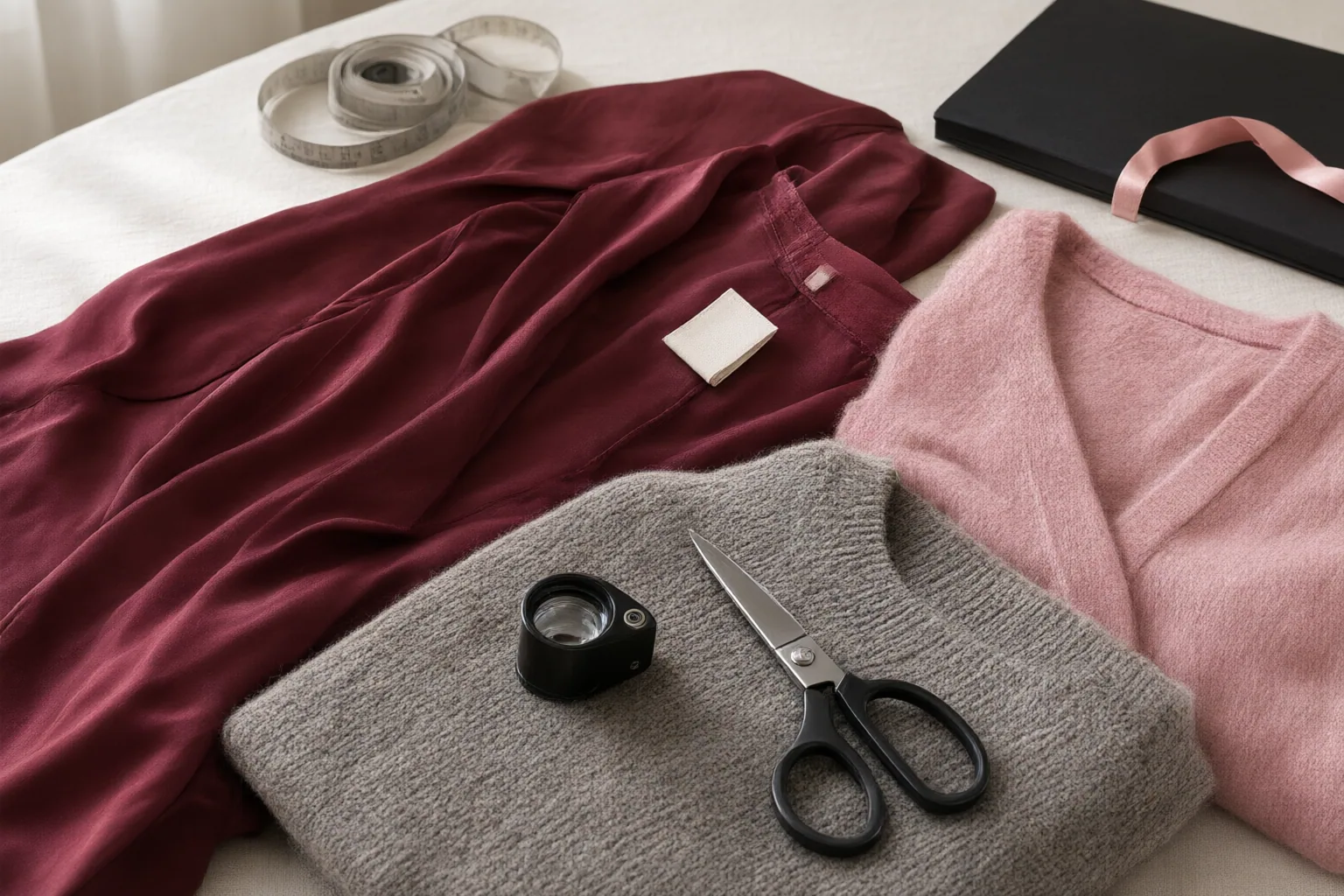
Begin by finding the garment’s care tag and reading it before checkout. Look for the fiber content, washing instructions, drying method, and any special maintenance requirements. These details are part of the purchase decision, not something to discover after the first wash.
Do not assume that one laundry routine will suit everything in your wardrobe. Wool, silk, synthetics, and other materials can require different treatment. The label provides the garment-specific starting point for deciding how to care for the item and whether that care is manageable. If you cannot inspect the tag clearly, pause the purchase until you can confirm what it requires.
Check Washing and Drying Requirements
Translate the label into practical questions. Does the garment call for hand-washing or dry cleaning? Is cold washing appropriate? Can it be air-dried, or will you need to use a dryer? If a dryer is permitted, does the routine require a low setting and careful timing to avoid overdrying?
Temperature matters. The cited guidance connects excessive or unsuitable heat with fading, shrinkage, fiber deterioration, and changes in shape. Cold washing can be a useful option where the care label allows it. Air-drying is also described as a gentler choice for appropriate garments; when machine drying is necessary, low heat and avoiding overdrying may reduce unnecessary stress.
Treat every instruction as a real ownership requirement. If your home lacks suitable drying space or your normal laundry setup cannot accommodate the prescribed method, include that constraint in the buying decision.
Match the Maintenance Routine to Your Lifestyle
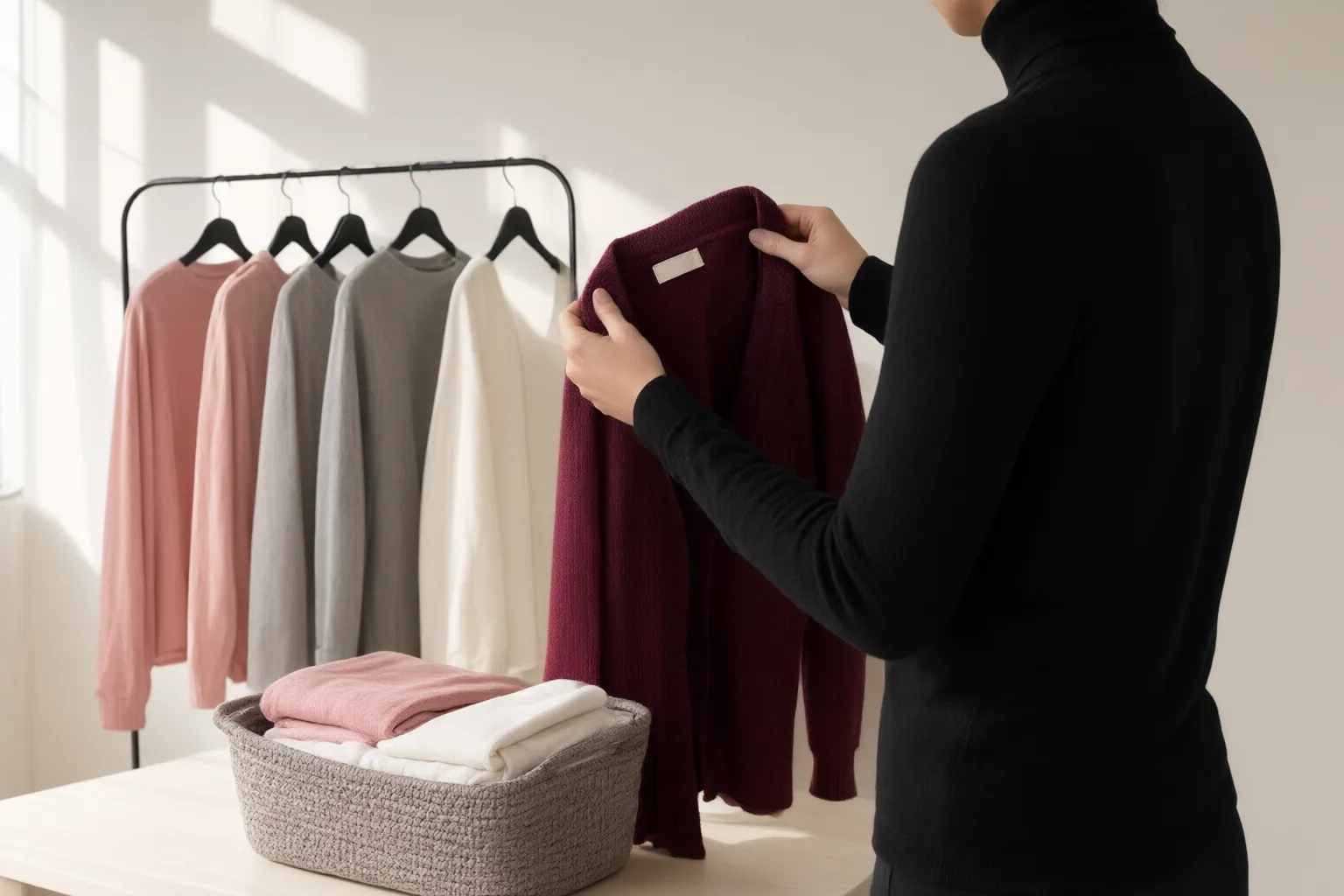
Before purchasing, run through this short compatibility checklist:
- Time: Are you willing to complete any required hand-washing or arrange dry cleaning?
- Facilities: Does your laundry setup support the indicated washing method and temperature?
- Drying space: Can you air-dry the garment when appropriate, or follow any dryer limits?
- Stain response: Can you treat stains promptly? Delays can make them harder to remove.
- Wash frequency: Will the item genuinely need laundering after each wear? Some lightly worn garments, particularly selected outer layers, may sometimes be aired and worn again when appropriate.
Answer according to your actual habits, not an ideal future routine. A garment that depends on care you routinely cannot provide may be a poor practical match, even if its style, fit, or fabric initially appeals to you.
Conclusion
Good garment care starts before ownership. Compare the label’s requirements with your real schedule, laundry facilities, drying space, and willingness to handle special care. This check can help you avoid choosing an item whose maintenance is unrealistic and support longer use through suitable washing and drying.
Before checkout, reread or photograph the care label and confirm that you can follow every required washing and drying step. If you cannot realistically manage the routine, decline the garment and keep looking for a more compatible option.
Disclosures and limitations
- This article was prepared with AI assistance from the supplied Oberlin, NYU, and University of Delaware source material; practical decision prompts are editorial guidance based on those sources.
- No products or affiliate links are included in this guide.
Related reading
Sources
- Clothing Care and Repair | Oberlin College and Conservatory — www.oberlin.edu
- Prolong the Life of Your Clothes With These Simple Tips – Mind, Body and Soul — wp.nyu.edu
- Clothing Care | Mindful Wardrobe Checklist — sites.udel.edu
- Custom socks | YourSurprise — yoursurprise.ie
- Nordstrom Online & in Store: Shoes, Jewelry, Clothing, Makeup, Dresses — nordstrom.com
- US Clothing Label Requirements: FTC Rules 2026 — Plucky Reach
- Personal Banking, Credit Cards, Loans & Investing | U.S. Bank — usbank.com