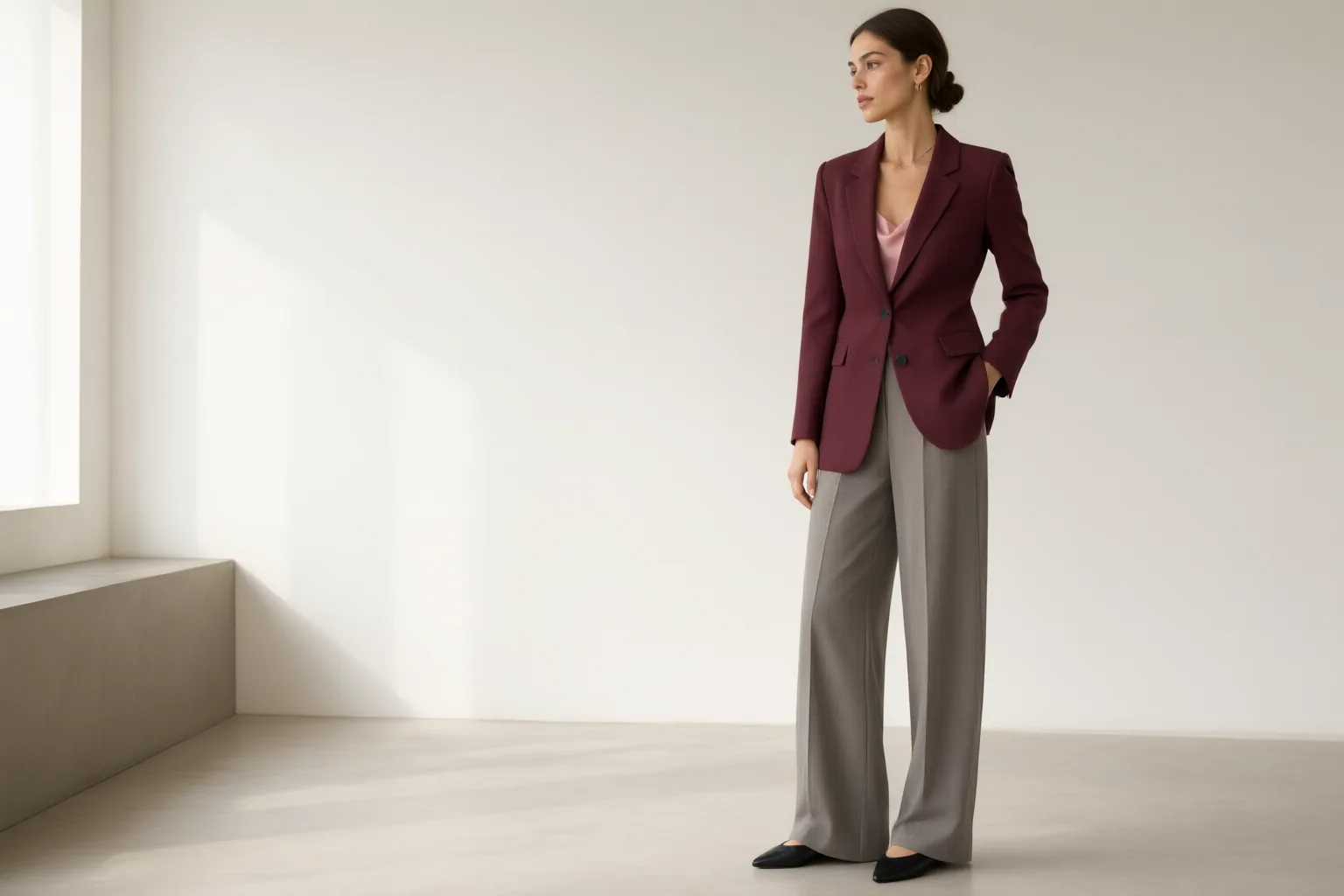
Choose a blazer by checking the shoulders first, then assessing the buttoned chest, waist, back, sleeves, and freedom of movement. The label size is only a starting point: the right cut should look smooth, accommodate your usual layers, and remain comfortable while you sit, walk, reach, and raise your arms.
Start With the Shoulders and Overall Silhouette
Begin with the shoulder line because significant shoulder alterations are considered structurally difficult. On a conventionally fitted blazer, the seam should follow or finish near the end of your natural shoulder. A seam extending well beyond that point can appear oversized, while one sitting too far inward may restrict movement.
Judge this detail in the context of the intended silhouette. A relaxed blazer may deliberately use dropped shoulders and extra volume, but the fabric should still look purposeful rather than collapsed or unintentionally bulky. Compare the blazer with the trousers, skirt, or dress you expect to wear, since cropped, hip-length, and longer proportions can all be intentional. If the shoulder structure is wrong even though the rest appears acceptable, trying another size or cut is generally more practical than planning major reconstruction.
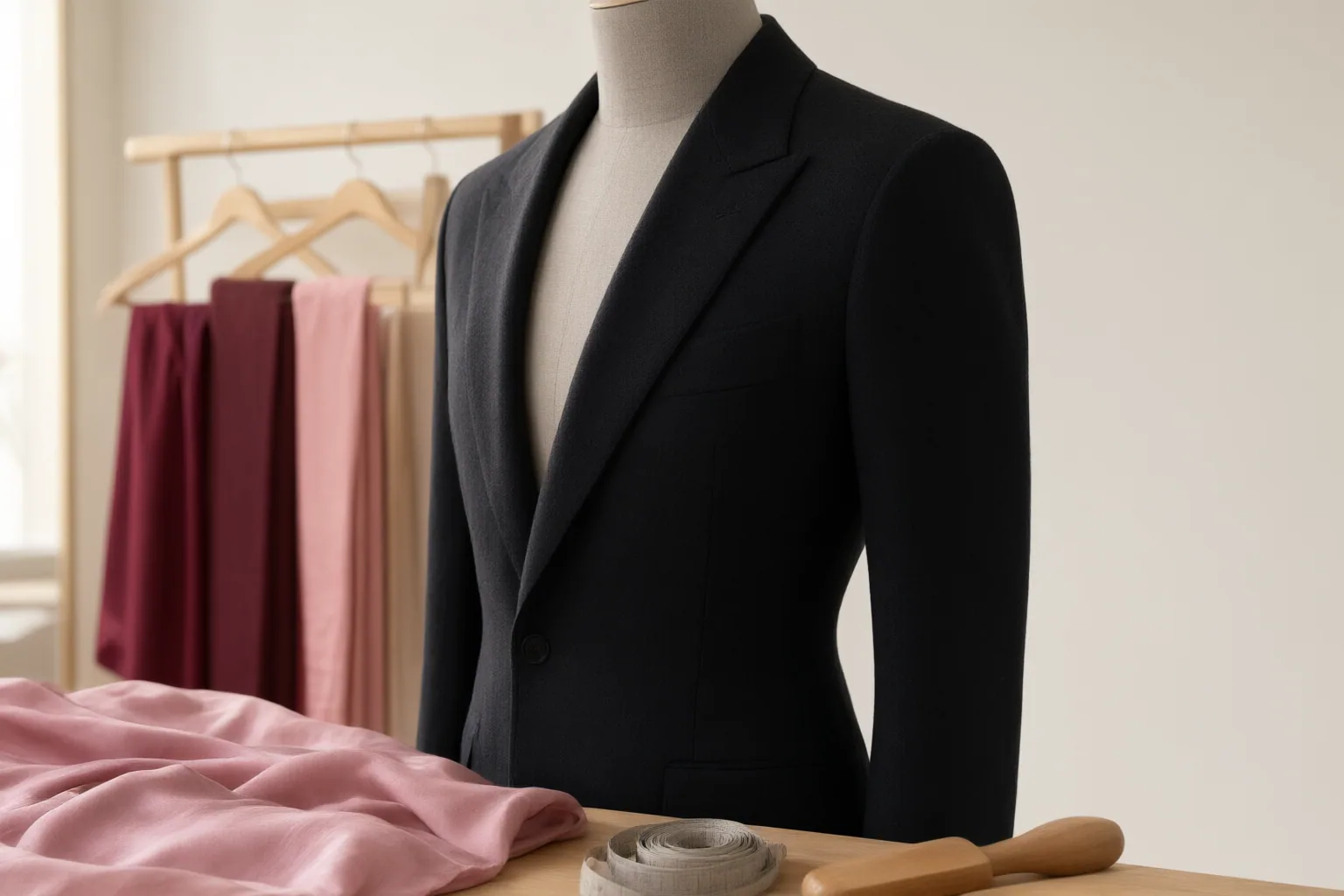
Check the Chest, Waist, and Back With the Blazer Buttoned
Button the blazer as designed and examine the front. It should lie smoothly, without a strained button, sharply pulled lapels, or tension lines radiating from the closure. If the shoulders fit but the chest gaps or pulls, do not assume that simply sizing up is the only solution. Chest and bust proportions vary among cuts, so a different shape may provide room without making the shoulders too large.
A fitted waist should follow the body without squeezing. Sit while the blazer remains buttoned: a pulling closure or hem that kicks outward may indicate that a larger size or straighter cut would work better. Then inspect the back. Horizontal wrinkles can suggest tightness, whereas vertical wrinkles or persistent bunching can signal excess room. Consider all these areas together, because a label size cannot guarantee a balanced fit across the shoulders, chest, waist, and back.

Evaluate Sleeve Length, Layering, and Movement
For a conventional blazer, the sleeve commonly ends around the wrist bone; some guidance allows it to reach toward the base of the thumb while revealing a small amount of shirt cuff. Sleeve shortening is a common alteration, but vents or working cuff buttons can make the job more complex than shortening a plain cuff. Assess that construction before treating excess sleeve length as an easy fix.
Try the blazer over the type of shirt or knitwear you normally wear. Slim sleeves and a sharply shaped waist may look correct while you stand still yet leave too little room for everyday layers. Walk, sit, reach forward, and raise your arms. Pulling across the upper back, pinching, restricted shoulders, or bunching that persists through normal movement indicates that the size or cut may not suit you. Some resistance is inherent to structured clothing, but the blazer should still support the movements required in your routine.
Conclusion
Make the final decision by prioritizing a sound shoulder fit, then confirming a smooth buttoned front, comfortable waist, suitable sleeves, and an unstrained back. Treat jacket length as a proportion and styling choice rather than a universal measurement; evaluate it with the layers and bottoms that will form the actual outfit.
Sleeve shortening and limited body shaping may be more approachable than major work at the shoulders or collar, but an alteration is worthwhile only if the blazer is fundamentally comfortable. Before buying or arranging adjustments, put on your normal layers and bottoms, button the blazer, then sit, walk, reach, and raise your arms one final time.
Disclosures and limitations
- This article was prepared with AI assistance using only the supplied publisher and retailer-style fit guidance; that guidance should not be treated as an independent universal fitting standard.
- No products, prices, inventory, reviews, or affiliate offers were supplied or recommended. If commercial links are added later, any affiliate relationship should be disclosed clearly.
Related reading
Sources
- The Blazer Fit Guide: Shoulders, Length, and Sleeve — howtofashionedition.com
- How to Choose Blazer Fit That Works — ZAVI
- Master Fit: How To Tailor A Blazer For A Woman At Home — mytailorkit
- How to Choose a Blazer That Actually Fits — howtofashionedition.com