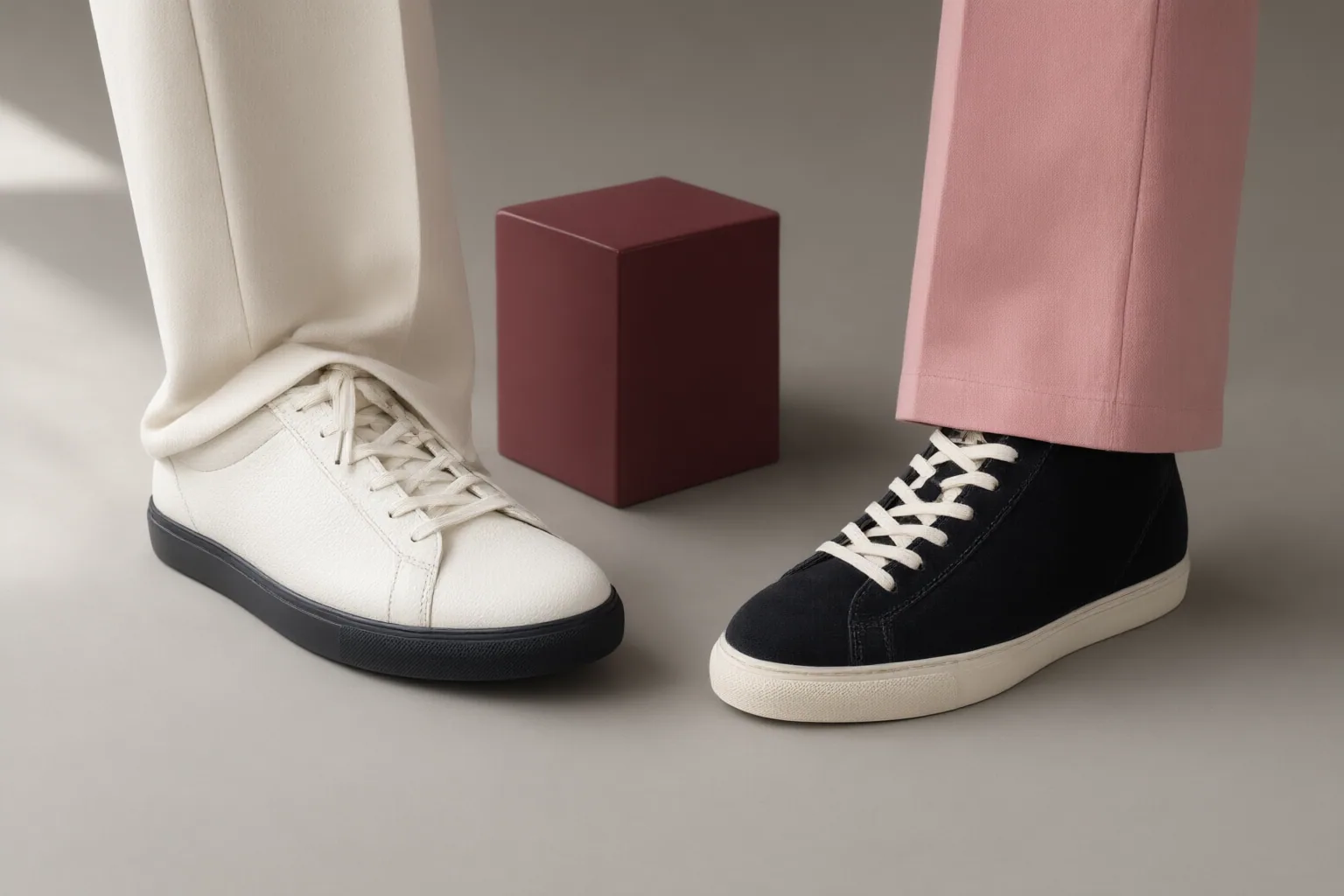
Choose everyday sneakers by checking forefoot space, arch comfort, insole options, and heel security before judging their appearance with your usual trousers. A familiar size alone cannot confirm that a particular model will fit.
Start With Forefoot Room and Overall Fit
Begin with the larger foot, because feet can differ in size. Giesswein recommends leaving roughly a thumb’s width between the toes and the front of the shoe. The forefoot should feel contained without pinching, concentrated pressure, or excessive looseness.
Width deserves a separate check from length. A narrow shoe can create pressure points, but simply sizing up may produce a shoe that is too wide to support the foot securely. Treat the labeled size as a starting point rather than proof of fit, since brands and models can fit differently. Stand in each pair and notice whether the toes have room without the foot sliding around. If one size solves toe pressure only by making the rest of the shoe loose, compare another width or model instead.
Check Arch Comfort, Insoles, and Interior Construction
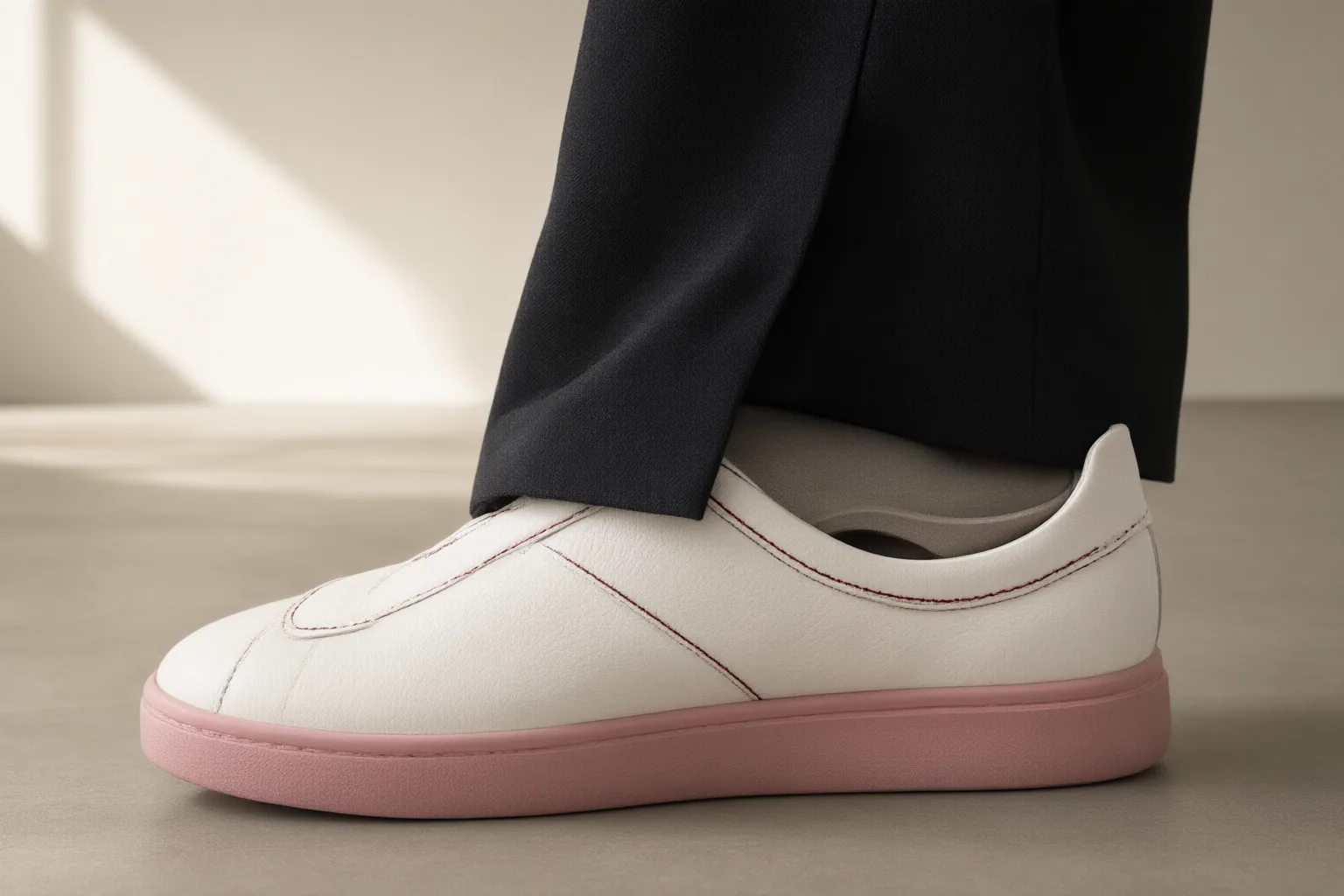
Assess how the shoe feels under your arch rather than assuming that one support level suits everyone. Giesswein identifies differences such as flat feet, splayed feet, and high arches as relevant to fit, but the supplied sources do not establish a universal or medical prescription for matching arch type to footwear.
Check both the support already inside the sneaker and its capacity for adjustment. Esquire describes one featured model with limited built-in arch support but enough space for an additional insole, illustrating why these are separate questions. A removable insole may also make customization easier. Examine whether the interior feels soft and breathable and whether the sole is flexible and shock-absorbing. If you plan to add an insole, evaluate the resulting space and fit rather than considering insole compatibility in isolation.
Test Heel Hold and Trouser Compatibility Separately
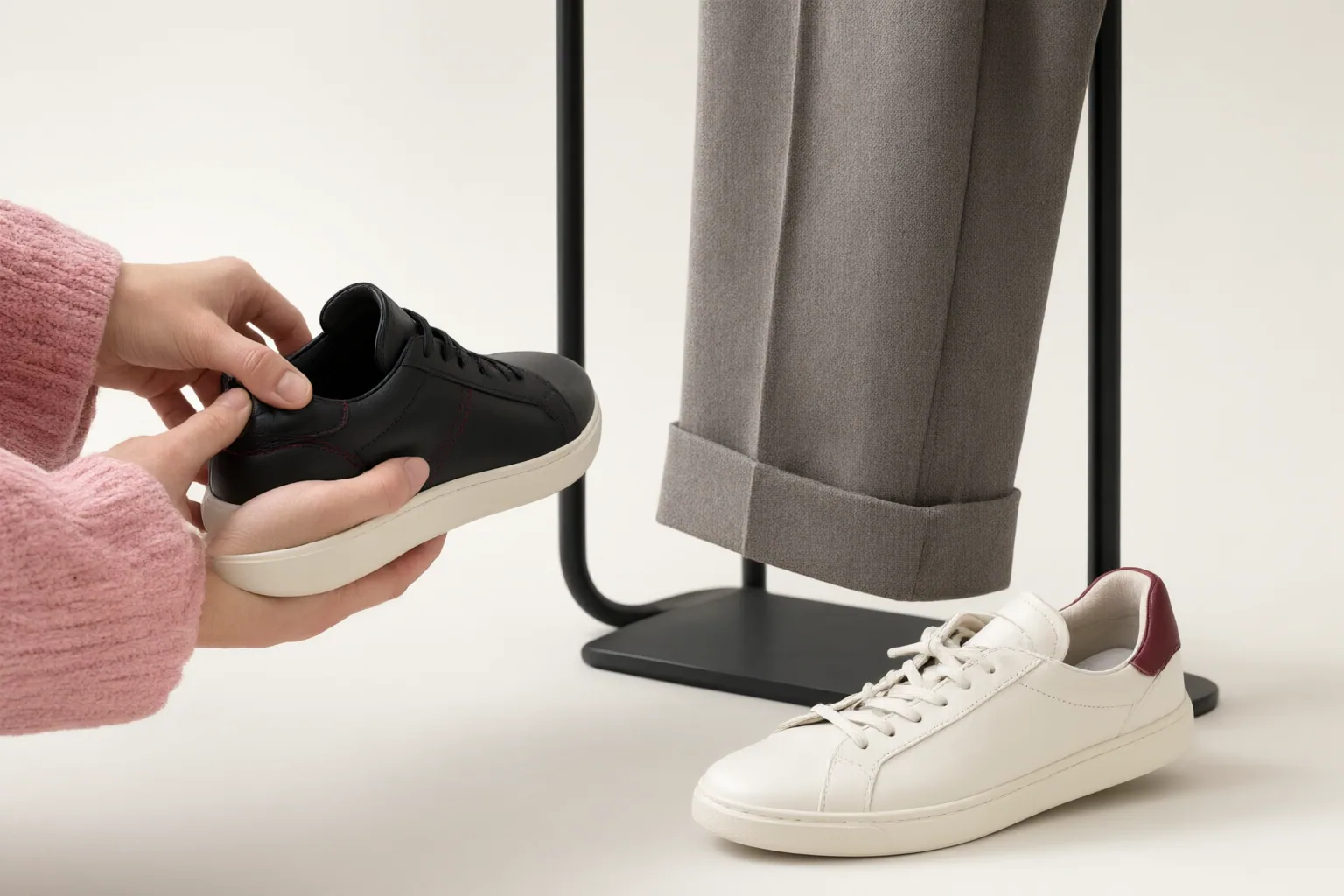
A suitable heel fit should feel snug while you walk, without slipping or letting the foot come out of the shoe. Test this after confirming forefoot room: adequate toe space does not compensate for an unstable heel, and a locked-in heel does not justify forefoot pressure. Walk for several minutes in the socks you normally intend to wear.
Then make a separate styling judgment with your everyday trousers. Vogue and Esquire both present streamlined or low-profile sneakers as versatile options for settings that include work, dinner, jeans, and more dressed-up clothing. Vogue’s editor comments include an ultra-slim sneaker paired with jeans and a classic sneaker worn with grey pants. Esquire also presents more substantial, running-inspired shapes, showing that everyday sneakers need not share one silhouette. Compare each candidate with the trousers you actually wear; comfort and visual compatibility answer different questions, and neither should be inferred from the other.
Conclusion
Use the same check for every shortlisted pair. Put on your normal socks, stand, and walk for several minutes. Confirm roughly a thumb’s width in front of the toes, enough forefoot width to avoid pressure, and a snug heel that does not slip. Note the present arch comfort, whether the insole is removable, and whether there is practical room for any supplementary insole you expect to use.
Finally, view each pair with your most-worn jeans, grey pants, or dressier trousers. Decide whether its streamlined or more substantial shape works for your routine. Repeat the full fit-and-styling check for every candidate before choosing.
Disclosures and limitations
- This article was prepared with AI assistance from the supplied Giesswein, Vogue, and Esquire material. It includes no product-specific recommendation, price, availability, standardized test result, or medical advice; any future affiliate links should be clearly labeled.