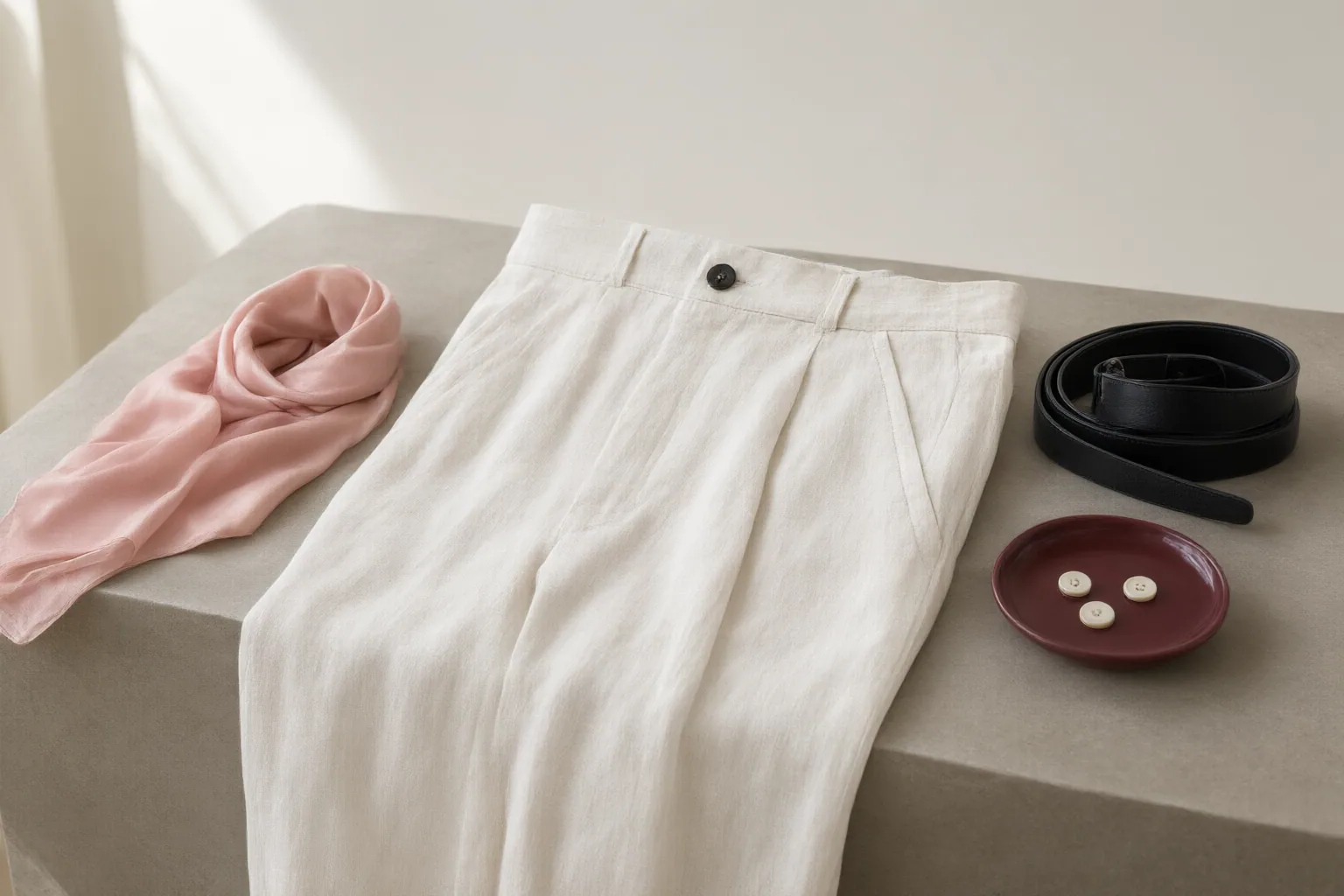
Choose linen trousers by checking pale fabric in natural light, inspecting pocket construction, testing waistband comfort while moving, and comparing your measurements with the seller’s size guide.
Check Opacity, Lining, and Pocket Show-Through
Pale linen can reveal the body, underwear, or pocket outlines even when it appears opaque online. Before committing, examine the trousers in strong natural light. A midweight fabric may provide more coverage, while a light or partial lining can add coverage without requiring the trousers to be fully lined.
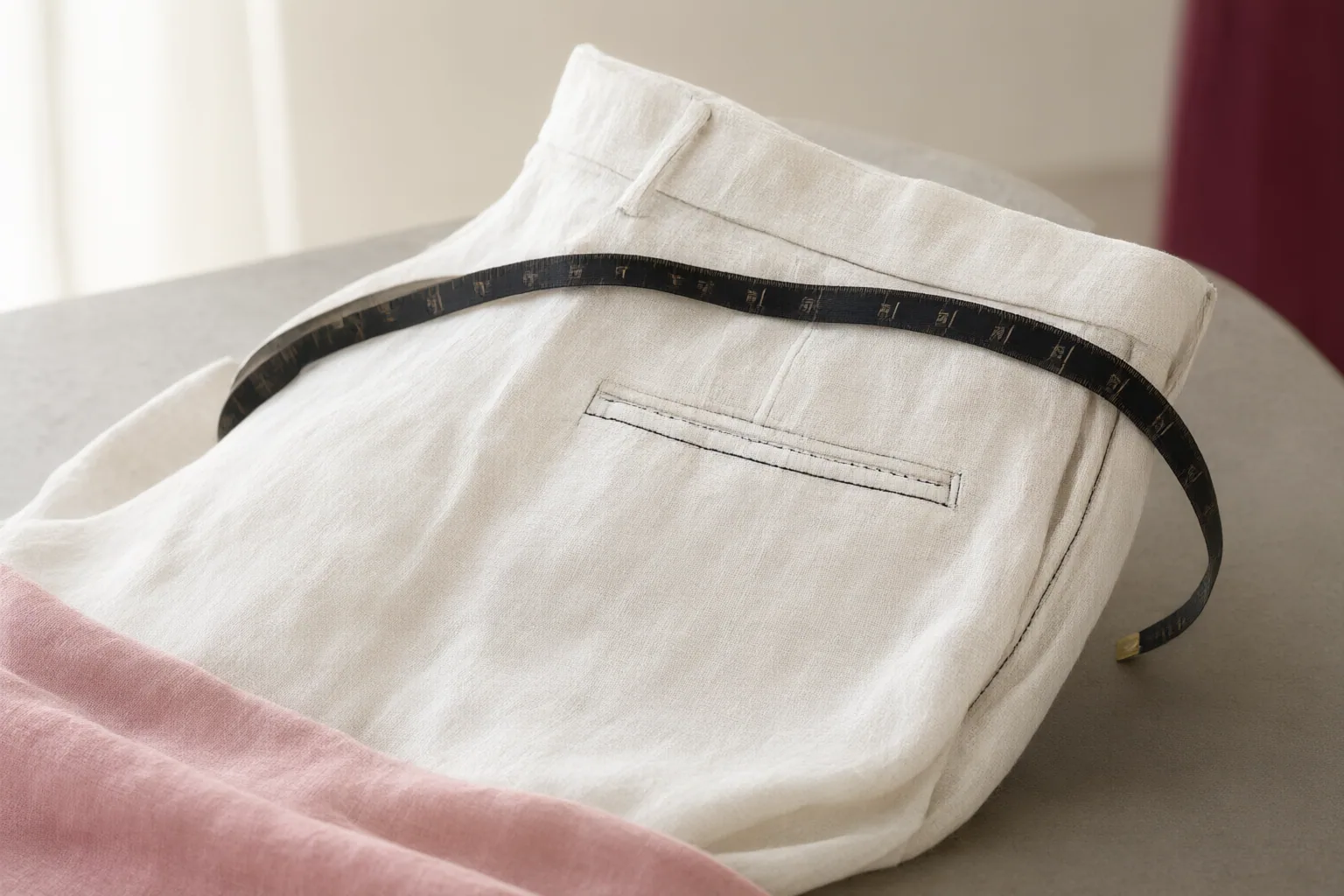
Inspect the pockets as carefully as the main fabric. Flat pocket bags and light or partial lining can help reduce visible outlines and bulging. Then move around and watch whether the pocket openings pull or the bags become more prominent. These checks reflect guidance from retailer, marketplace, and brand sources; they should be treated as practical shopping guidance rather than independently tested performance findings.
Choose a Waistband That Stays Comfortable in Motion
Waistband construction changes both adaptability and appearance. A full elastic waistband prioritizes flexibility. A flat-front, elastic-back design can retain some flexibility while creating a smoother front. A fixed zip or button waist needs to feel comfortable while seated as well as standing.
Do not judge the waist from a static mirror check alone. Sit, walk, and bend in the trousers. Look for a waistband that pulls, slips, or gapes, as well as tension at the rise or strain around the pockets. A waist that initially seems acceptable may become uncomfortable once your posture changes. If the trousers fit only when you stand still, the waistband or overall size may not provide enough functional room for everyday movement.
Find Wearable Ease Through the Hips, Seat, and Legs
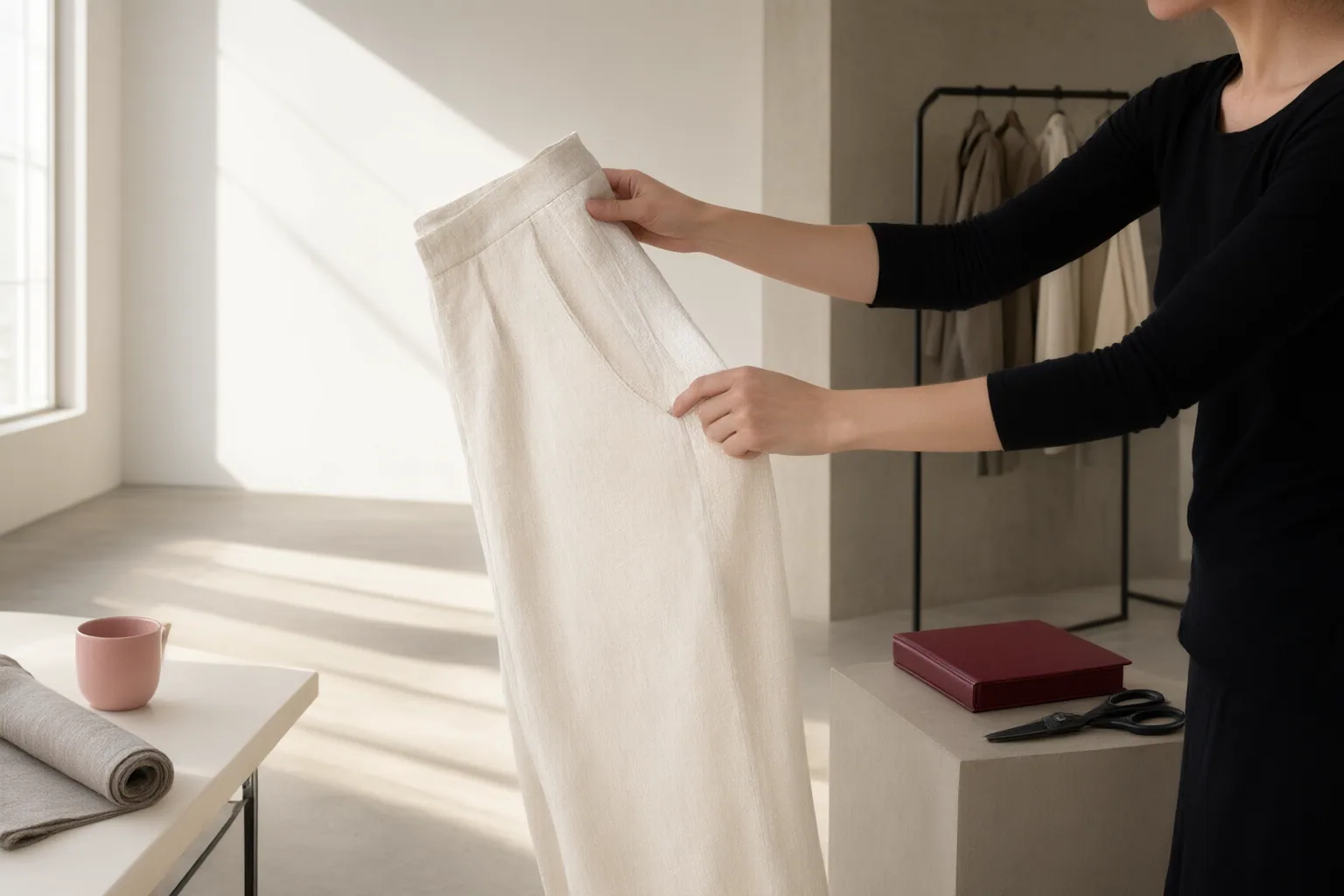
Useful ease gives the hips, seat, and thighs room to move without making the trousers shapeless. Too little room can create pull lines, rise tension, and strain at the pockets. Too much can cause billowing through the legs or fabric pooling at the seat and waist. Check the silhouette while standing, but repeat the assessment while sitting, walking, and bending.
For non-stretch linen, measure your waist, fullest hip, and preferred inseam, then compare those numbers with the seller’s size guide. If your waist and hip measurements correspond to different sizes, the hip measurement is especially relevant because insufficient room there can produce strain.
Composition also matters. Pure linen has characteristic texture and creasing. Blends containing cotton, viscose, or stretch fiber may change the fabric’s drape, wrinkle behavior, or give. Treat the fiber label as one comparison point rather than assuming every fabric with the same broad composition will fit identically.
Conclusion
Before buying, use a short fit-and-coverage checklist: inspect pale fabric in natural light; check whether pocket bags show, bulge, or pull; sit down to assess waistband comfort; and walk and bend to identify rise tension, gaping, or excess pooling. Note whether the fabric is pure linen or a blend, since composition may affect texture, drape, creasing, and give. Finally, compare your waist, fullest-hip, and preferred-inseam measurements with the seller’s size guide before purchasing.
Disclosures and limitations
- This article was created with AI assistance from the supplied retailer, marketplace, and brand-published guidance. The sources were not independent textile-performance tests, and no individual products, prices, reviews, or affiliate recommendations are included.
Related reading
Sources
- How to Choose Men's Linen Trousers — A Practical 2026 Guide — apparel.alibaba.com
- Subtle Styling Rules to Keep White Linen Trousers Casual and Polished — ASCENO
- Men's Linen Pants Guide: Fit, Fabric and Summer Style — ELVARA
- How to Choose Linen Trousers That Flatter — I Love Tunics
- Men's Linen Trousers: How to Choose and Wear Them | Giza Mills — GIZA MILLS
- Amazon.com : Linen Trousers — amazon.com