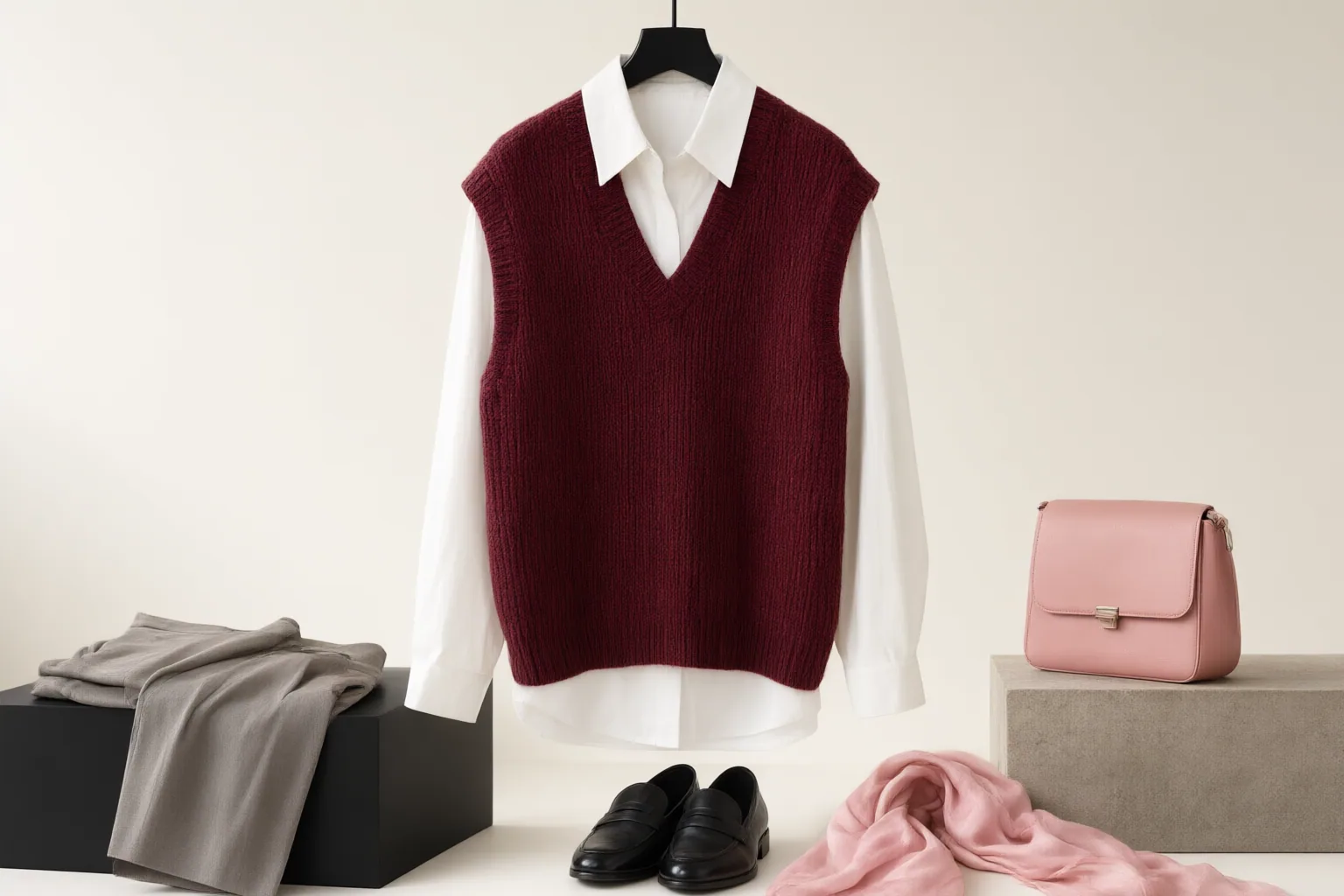
For comfortable, balanced layering, choose a sweater vest with enough room through the chest and armholes, keep the base layer relatively smooth, and coordinate the vest’s neckline with the shirt collar. Then use the vest length to create either a clear waist break or an intentionally elongated silhouette.
Start With Fit, Fabric, and Neckline
Begin with ease: the shirt or dress should sit beneath the sweater vest without bunching at the armholes or forming horizontal pulling lines across the chest. A thin, smooth shirt or knit usually creates less bulk; a thicker base layer needs a roomier vest.
Next, compare the necklines. A V-neck leaves visible space for a button-down or compact point collar. With a higher vest neckline, less of the shirt is exposed, so a compact, stable collar is less likely to shift or emerge unevenly. After dressing, smooth the base layer before judging the fit. If fabric keeps gathering or the vest pulls, change either the underlayer’s thickness or the vest’s ease rather than repeatedly adjusting the outfit.
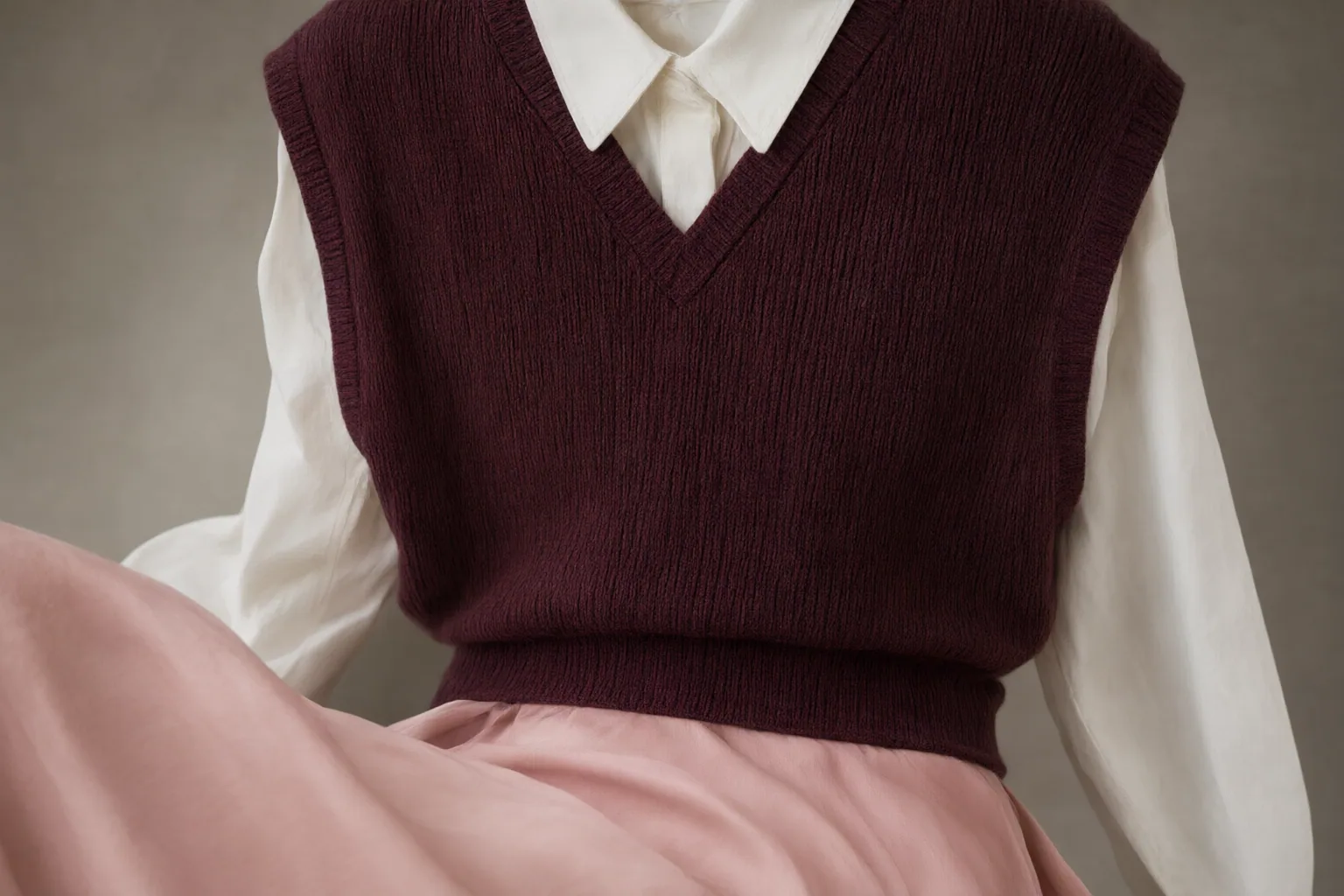
Balance a Sweater Vest Over a Shirt
Vest length determines where the outfit is visually divided. A cropped sweater vest can emphasize the waist and works clearly with high-rise bottoms. A regular hem can finish around the hip bone, while a longline vest creates an extended column.
Pay equal attention to the shirt hem. A tail that hangs far below a short vest can look unresolved instead of deliberately layered. Consider whether the visible shirt creates a controlled break or interrupts the silhouette without a clear relationship to the vest and bottoms.
Pattern also affects balance. When the vest has a strong motif, a plain shirt and simpler remaining pieces keep the collar area and layers from competing. This lets the vest supply the visual focus while length and fit organize the overall proportions.
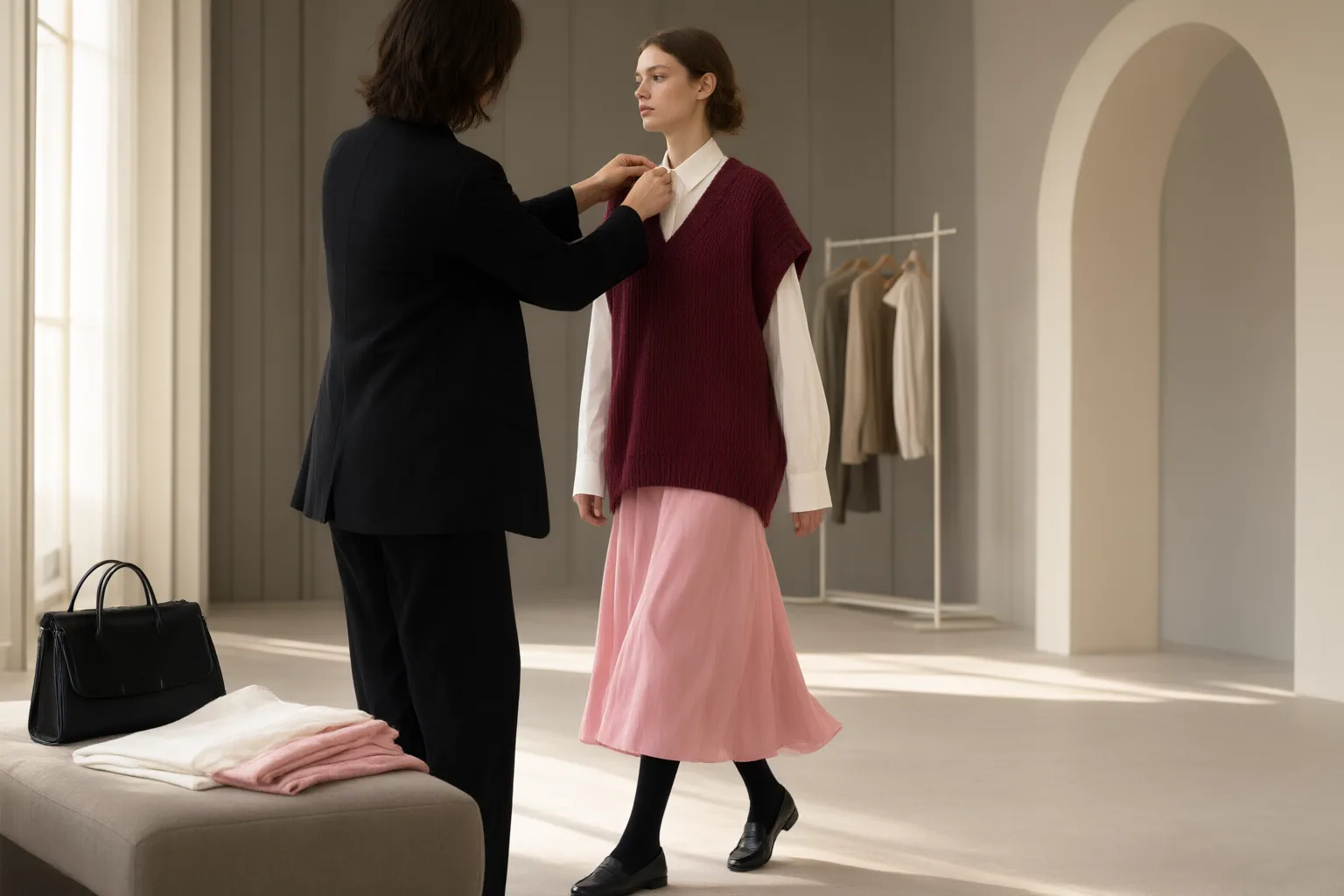
Layer a Sweater Vest Over a Dress
Over a dress, decide whether the vest should divide or extend the silhouette. A cropped vest creates a visible break and can emphasize the waist, which may help organize the volume of a long or flowing dress. One supported formula pairs a cropped sweater vest with a lightweight maxi dress, leaving enough of the dress visible beneath the knit.
A longer vest takes the opposite approach: it extends the line of the outfit and produces a more coat-like layered effect. The vest’s construction changes the result as well. A tailored style can add structure over a flowing dress, whereas a knit vest creates a softer layer over a slip dress or lightweight cotton dress. Choose one clear proportion strategy rather than combining an emphatic waist break with an unrelated long line.
Conclusion
Use a short checklist before leaving: confirm that the chest and armholes do not pull, the collar remains stable, and the visible shirt or dress hem looks intentional. Check that a patterned vest is not competing with another strong pattern, and make sure enough of the base layer remains visible to communicate the chosen proportions.
Finally, assess comfort in motion rather than only in a standing mirror. Build one outfit using these checks, then sit down and reach forward before wearing it out.
Disclosures and limitations
- This article was prepared with AI assistance from the supplied research package and was limited to the cited source material. It contains no specific product recommendations or affiliate links.
Related reading
Sources
- Sweater Vest Outfits: 12 Modern Formulas + Fit & Layering Rules — xtclothes
- Amazon.com : Women's Sweater Vests — amazon.com
- How to Layer a Vest Without Looking Overdone — FASHION TIPS & ADVICE –
- Women's Sweater Vest | Nordstrom — nordstrom.com
- Sweater Vest Over a Shirt: Fit, Color and Collar Rules — coofandy
- 30 How to Style Sweater Vest Outfits for Cool Layers — Sew Mama Sew