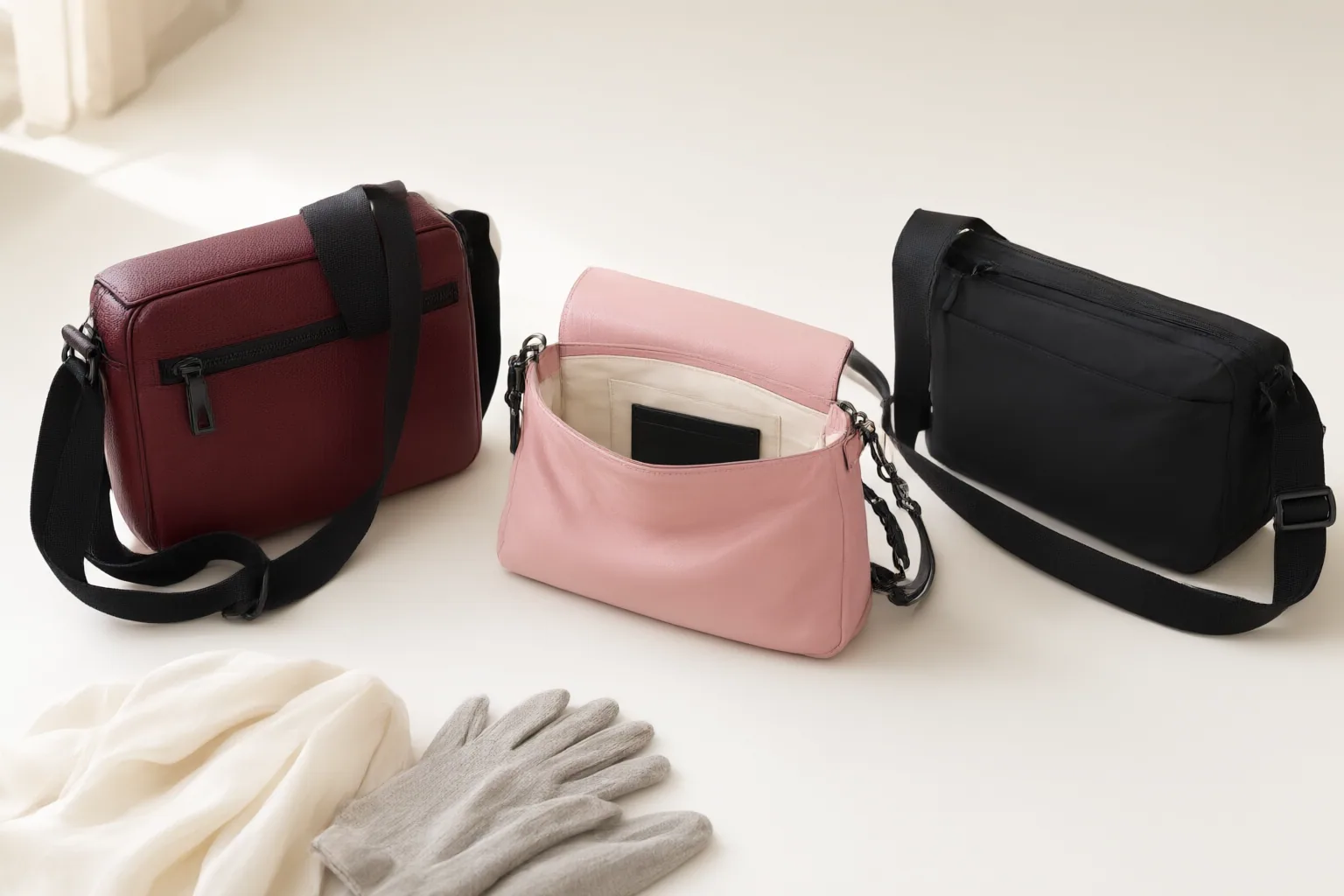
Compare crossbody bags by matching usable capacity to your daily essentials, checking the complete strap specification, identifying exactly where security features apply, and balancing organization, material weight, durability, and weather suitability.
Start With Capacity and Daily Carry
Begin with an inventory of what you actually carry. Separate essentials such as a phone and wallet from larger or occasional items, including a tablet or bulky daily gear. The supplied comparison source describes a spectrum from minimalist pouches to roomier carryalls, so the useful question is not simply whether a bag is “small” or “large,” but whether its dimensions and internal space suit your specific load.
Compare capacity with bulk at the same time. Extra room can accommodate larger items, but it can also produce a bulkier bag. A compact, lightweight design may be easier to carry yet leave necessary items behind. Before buying, check the stated dimensions and compartment layout against the items on your list rather than treating a general size label as sufficient.
Check Strap Fit and Carrying Configuration
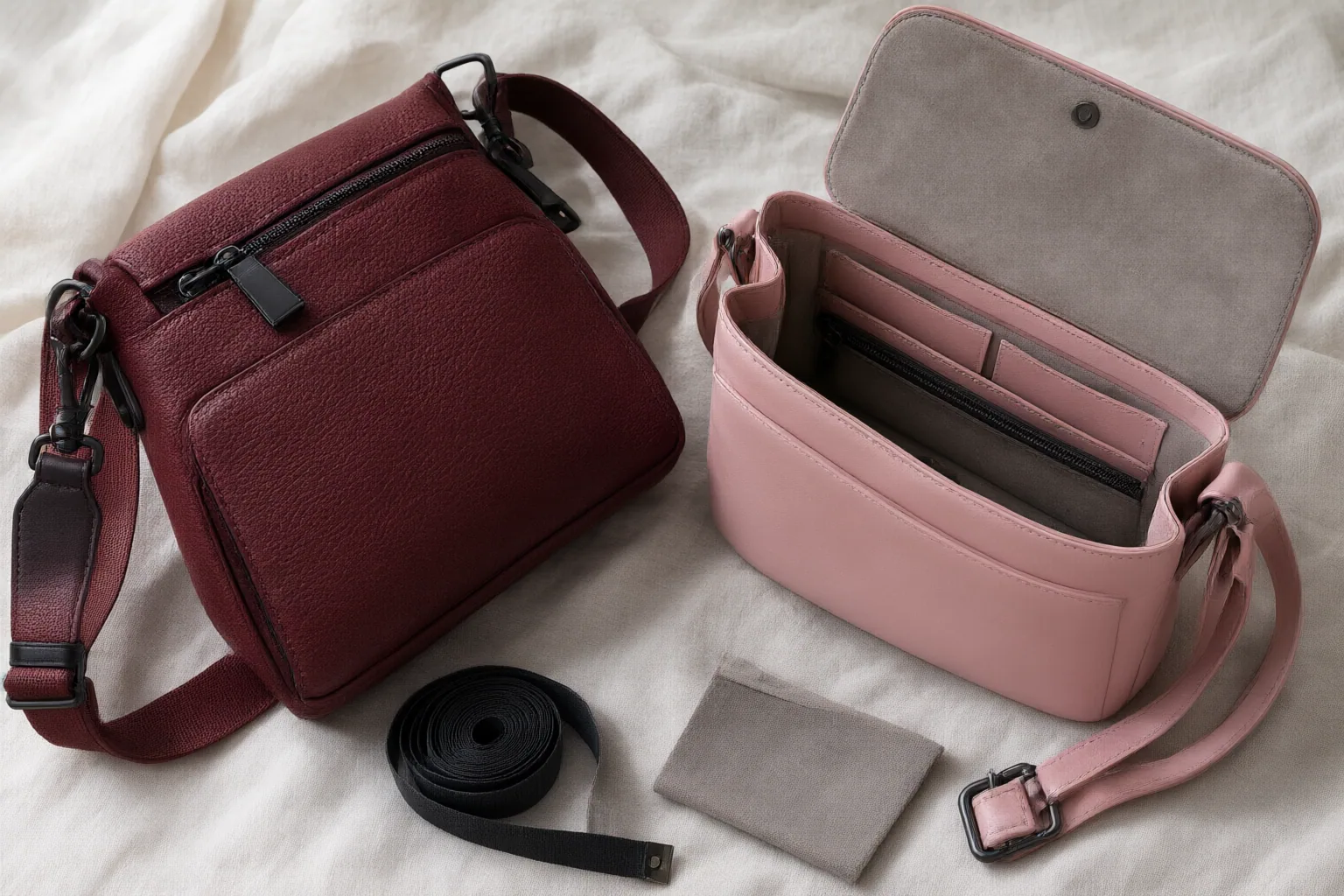
An adjustable strap is useful, but adjustability alone does not establish that a bag will fit as intended. Check the stated maximum strap length and the available carrying configurations, then compare them with where you want the bag to sit. Consider whether you expect to wear it across the body consistently or use another supported configuration.
Inspect the strap attachment points as a separate detail. The supplied evidence discusses adjustability and carrying options, but it does not establish how a particular attachment-point position changes comfort. Avoid assuming that a placement is more stable or comfortable without further product-specific information. For a practical comparison, record the adjustment range, maximum length, supported configurations, and attachment design for every candidate, then eliminate any bag whose published specifications do not match your intended fit.
Compare Security, Organization, and Materials
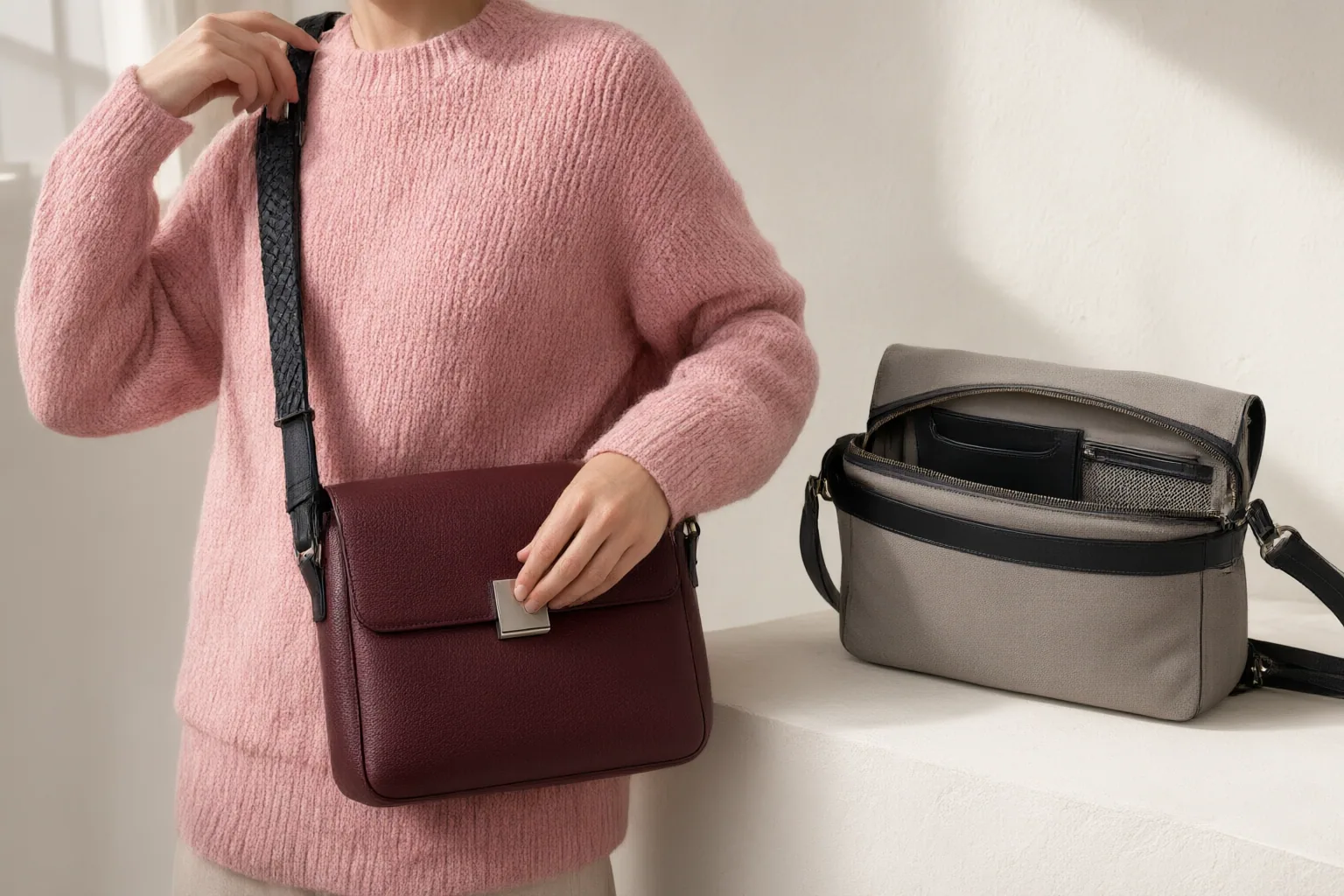
Multiple compartments can help organize daily items, while lockable zippers and RFID-blocking linings are identified by the supplied comparison source as security-related features. However, the label alone is not enough. RFID protection may apply to only one compartment, so verify precisely which area is protected. Likewise, identify which openings have lockable zippers instead of assuming that every pocket is secured.
Materials also affect the comparison. The source identifies leather and nylon among choices that can influence weight and durability. Evaluate those characteristics alongside the loaded bag rather than considering empty weight in isolation. A lighter security-focused bag may lack water resistance, creating a tradeoff among carrying comfort, protection, and weather suitability.
Use consistent comparison fields: number and purpose of compartments, location of RFID protection, openings with lockable zippers, material, weight information, durability considerations, and stated water resistance. These checks reveal feature limits that broad marketing labels may not communicate clearly.
Conclusion
Crossbody bags are established retail categories at both Nordstrom and Nordstrom Rack, but the supplied retailer sources support only that category context—not particular products, prices, availability, or endorsements. Make the decision from specifications relevant to your own routine.
Before buying, list what you carry; compare those items with the bag’s dimensions and compartments; verify the strap’s maximum length, adjustment range, configuration, and attachment design; confirm exactly where each security feature applies; and assess the material, weight, durability, and stated weather suitability. Choose the candidate that meets those documented needs without adding unnecessary bulk.
Disclosures and limitations
- This article was prepared with AI assistance from the supplied research package. Substantive comparison claims rely primarily on one affiliate-disclosed comparison source and were not independently verified through product testing.
- No products are recommended here. If affiliate links are added later, they should be clearly labeled because the publisher could earn compensation from qualifying purchases.
Related reading
Sources
- Crossbody Bags for Women | Nordstrom — nordstrom.com
- 13 Best Crossbody Bags for Hands-Free Everyday Carry in 2026 – Best Vacuum Expert — Best Vacuum Expert
- Crossbody Bags For Women – Nordstrom Rack — nordstromrack.com