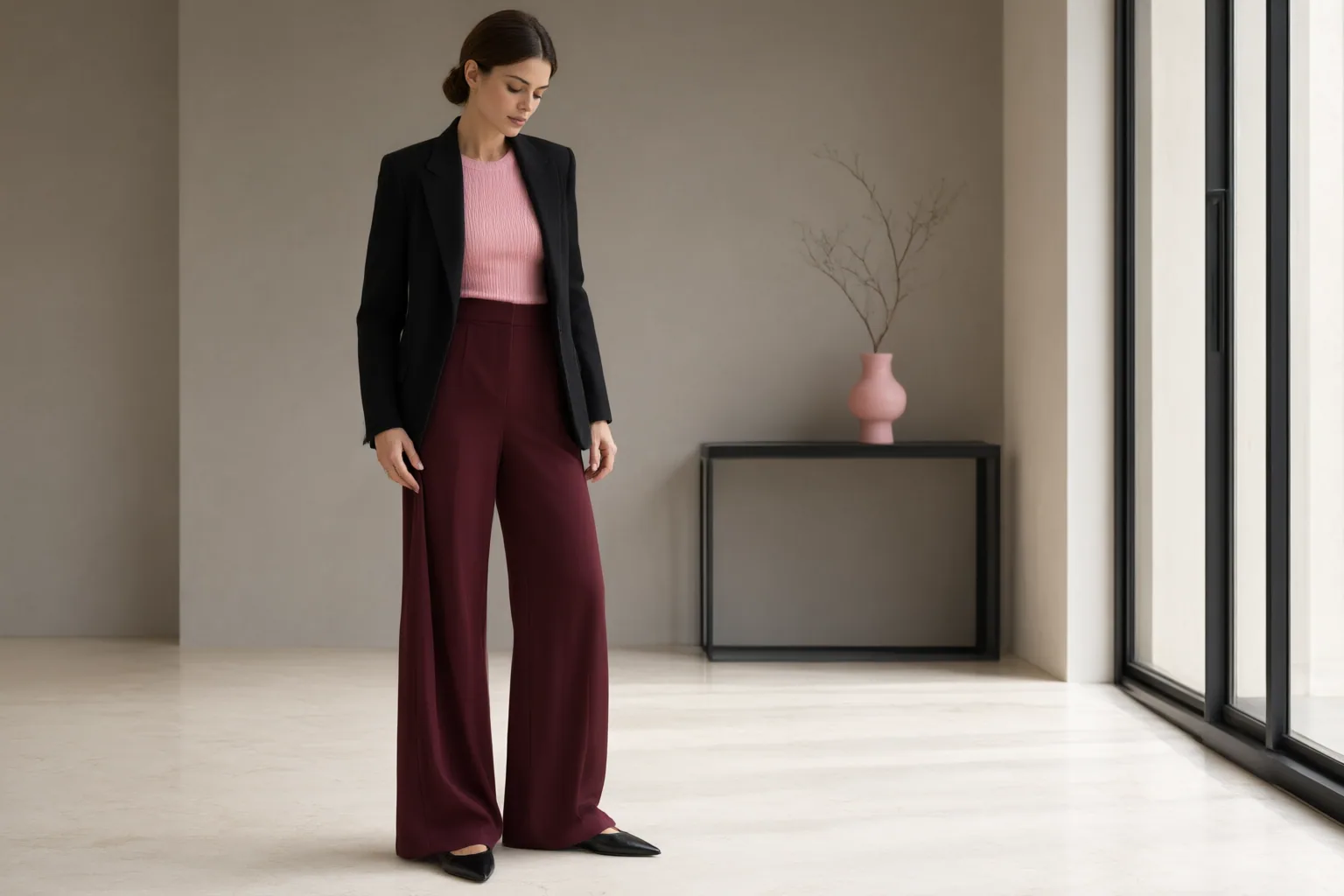
Build the outfit around controlled proportions: choose high-rise wide-leg trousers with a carefully checked hem, add a fitted or tucked-in top, define the waist, and finish with a structured layer and streamlined work shoes. These are editorial styling principles, not universal fit guarantees.
Start With the Trouser Fit and Hem
Begin with high-rise, fluid trousers that skim the body rather than adding unnecessary bulk. This gives the wide leg a clear starting point while keeping the waist visible. The supplied petite-focused guide uses this approach for an office outfit, while broader styling guidance recommends balancing trouser volume instead of repeating it throughout the look.
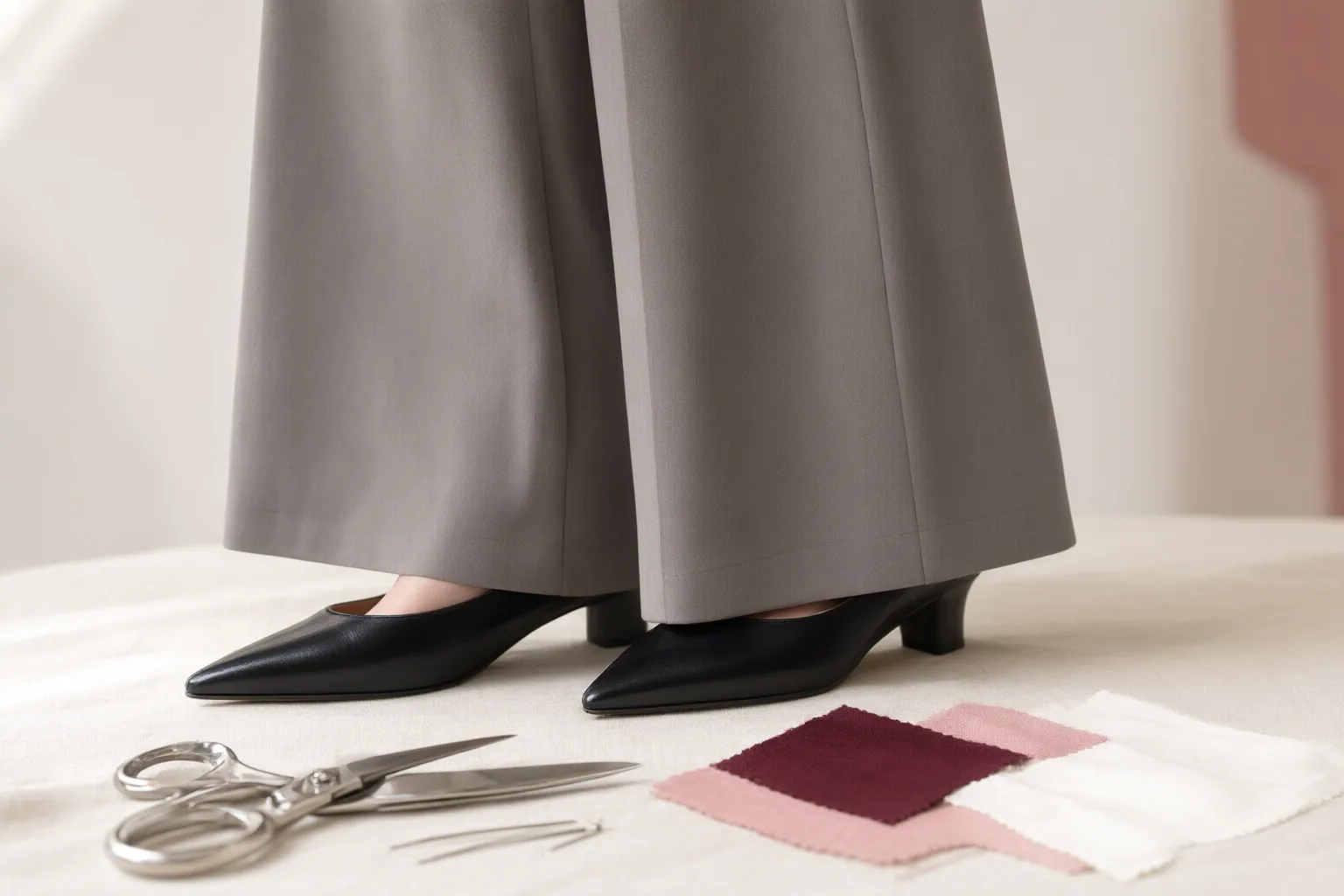
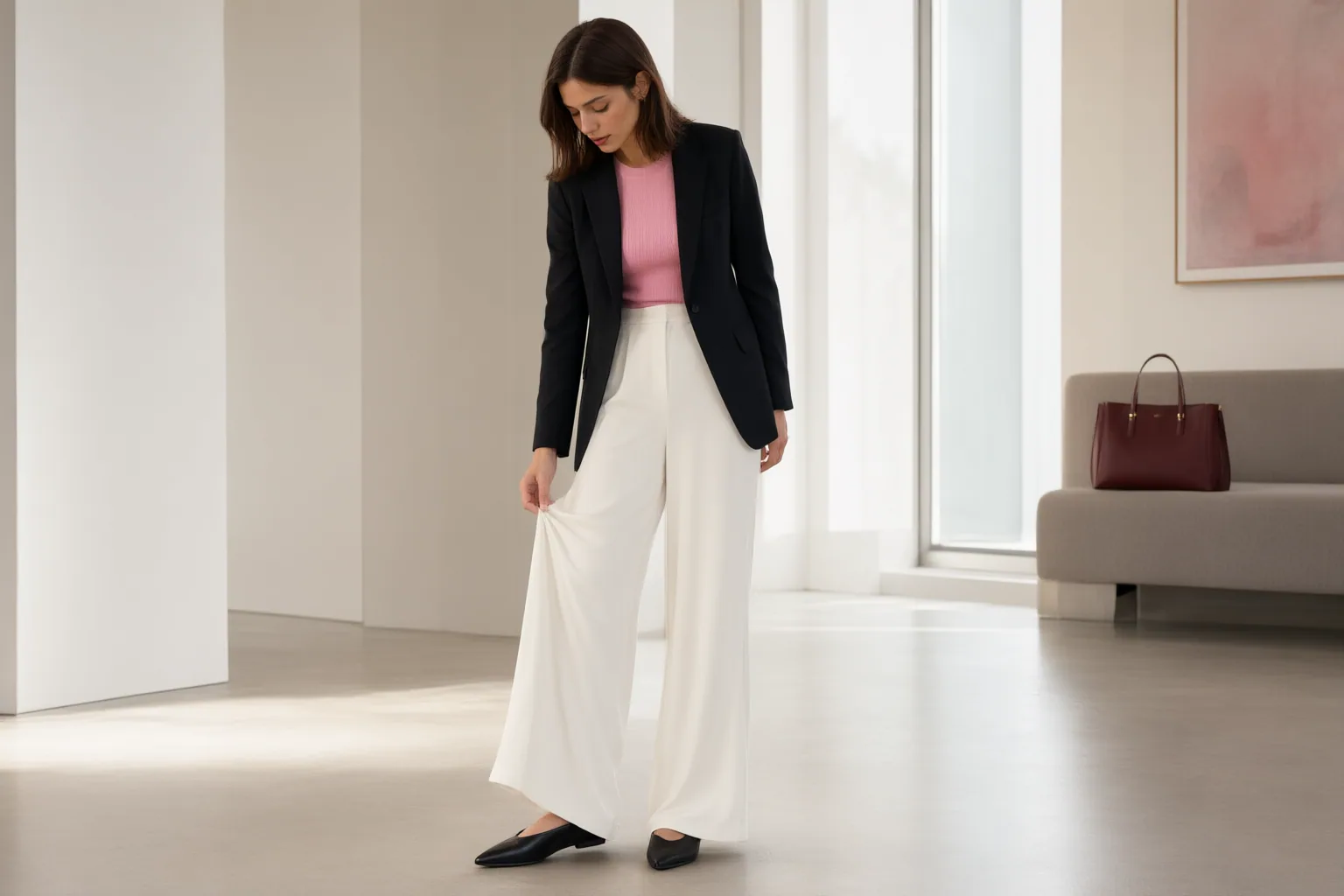
Hem length deserves particular attention because fabric pooling around the ankles is a recurring concern for shorter frames. Assess the trousers while wearing the exact shoes planned for work: a hem that works with pumps may sit differently with flats or loafers. If fabric gathers excessively at the bottom, tailoring can create a cleaner finish. Treat this as styling guidance rather than a fixed rule; the sources are editorial guides, not controlled studies, and the best finished length depends on the individual trousers and footwear.
Balance Volume With a Defined Waist and Streamlined Top
Pair the trousers with a fitted knit, slim turtleneck, or fully tucked button-up shirt. Multiple supplied guides return to this combination because a close-fitting or tucked top keeps the wide trouser leg as the outfit’s main source of volume. A full tuck also makes the waistband visible and creates a more deliberate division between the upper and lower halves of the outfit.
If the trousers accommodate one, a slim belt can reinforce that waist definition without introducing another bulky element. Keep the effect practical: the goal is to make the outfit’s proportions easy to read, not to promise that one technique will lengthen every petite frame. For a simple office formula, try high-rise trousers, a tucked shirt, and a narrow belt, then view the complete silhouette before adding more pieces.
Add an Office-Ready Layer and Streamlined Shoes
A cropped jacket can preserve the visible waist, while a structured blazer can give the outfit a polished office finish. Whichever layer you choose, check where its hem meets the trousers and whether the combination still shows the intentional proportions established by the tucked or fitted top. The supplied guides repeatedly feature cropped or structured layers rather than relying on unbroken volume from shoulder to hem.
High heels are optional. Source-supported work choices include pointed flats, loafers, pumps, mules, low block heels, and heeled ankle boots. Pointed footwear offers a visually streamlined option, while loafers provide a structured, office-ready base. Choose according to dress code and comfort, then reassess the trouser hem with that pair. The essential consideration is the relationship between shoe and hem: footwear should sit cleanly beneath the leg rather than causing the fabric to bunch.
Conclusion
The practical formula is straightforward: high-rise wide-leg trousers, a fitted or tucked-in top, visible waist definition, a cropped or structured layer, and streamlined footwear. It reflects recurring recommendations across the supplied editorial guides, but it should be treated as a flexible styling framework rather than a measured fit result.
Try the formula first with pieces already in your wardrobe. Put on the complete outfit with your intended work shoes, check that the waist remains visible, and look closely at how the hem falls. If it pools at the ankles, arrange tailoring only after confirming the length with the shoes you expect to wear.
Disclosures and limitations
- This article was prepared with AI assistance using only the supplied editorial styling sources. Their recommendations are guidance rather than controlled fit-study results; no products, prices, inventory, or personal wear tests were evaluated.
Related reading
Sources
- 30 Chic Wide Leg Pants Outfit Ideas For Polished Style — Sew Mama Sew
- 21 Chic Wide Leg Pants Outfit Ideas for Work for Women – Girl Shares Tips — Girl Shares Tips
- 15 Chic Wide Leg Pants Outfit Ideas for Work – ClosetLoom — My Blog
- MStil Studio — MStil Studio
- 25 Petite Work Outfit Ideas With Pants For Office Polish — Sew Mama Sew