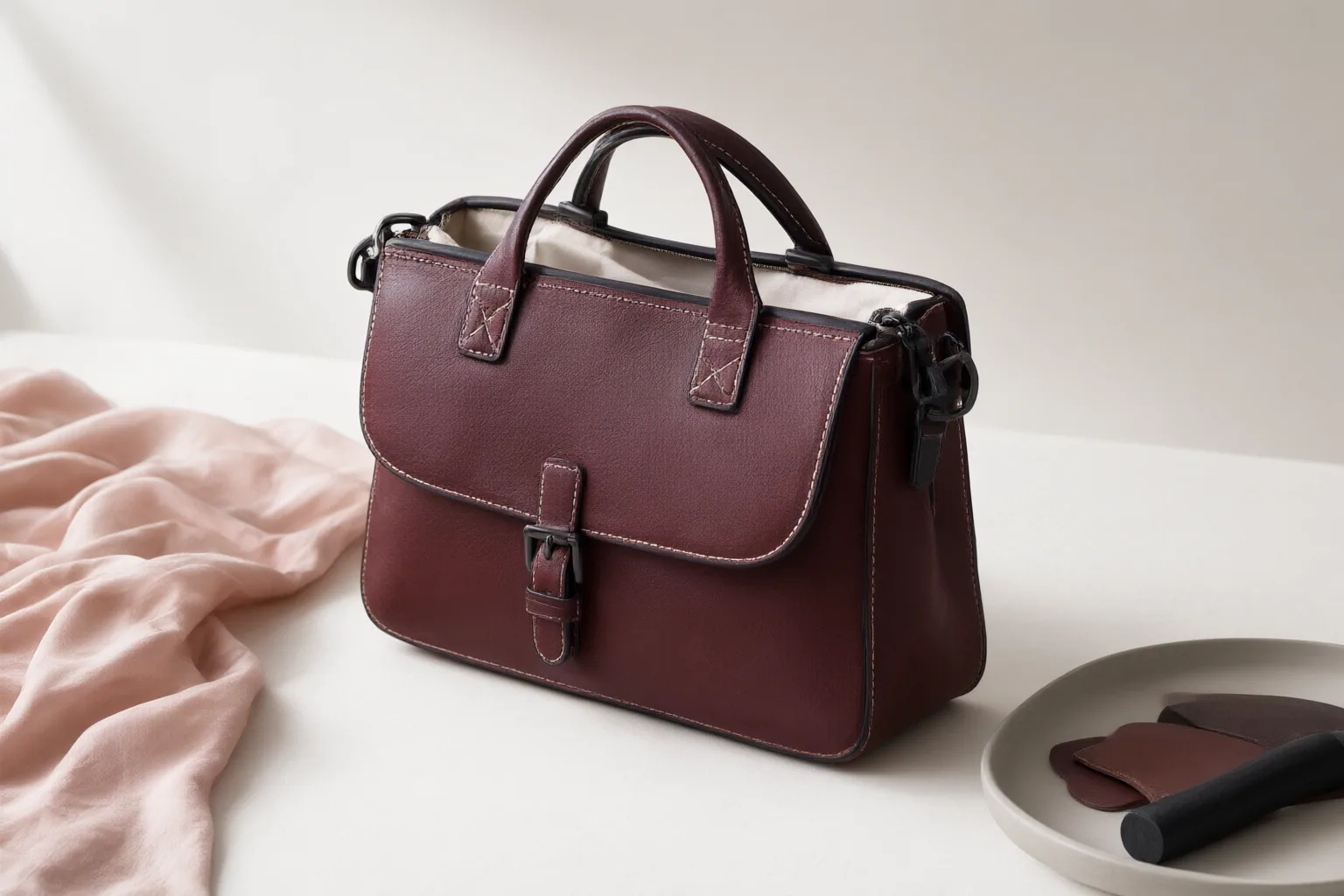
Inspect an everyday leather bag as a complete system: check its stitching and reinforced stress points, operate every closure, examine the edges and lining, and confirm that its dimensions, organization, and carrying comfort fit your routine.
Start With Stitching, Stress Points, and Edge Finish
Begin with the seams. Stitching should have consistent spacing and tension, without skipped stitches, loose threads, sudden spacing changes, puckering, or distortion around corners and curves. Examine handles, strap attachments, zipper ends, corners, and hardware junctions especially closely. These high-stress areas should appear securely stitched or otherwise reinforced with features such as backing or rivets; attachments should not look loose or stretched.
Next, follow every exposed leather edge. Depending on the design, an edge may be folded, bound, painted, sealed, polished, or burnished. The method matters less than whether the result looks deliberate and consistent. Roughness, peeling, cracks, uneven coverage, or stray edge paint are reasons to look more carefully.
Do not use surface appearance as a shortcut. Natural variation does not independently prove superior quality, while a uniform finish does not necessarily indicate inferior leather because correction, embossing, and coating may be intentional. Construction, materials, hardware, design, and intended use need to be considered together.
Test Every Closure and Inspect the Interior
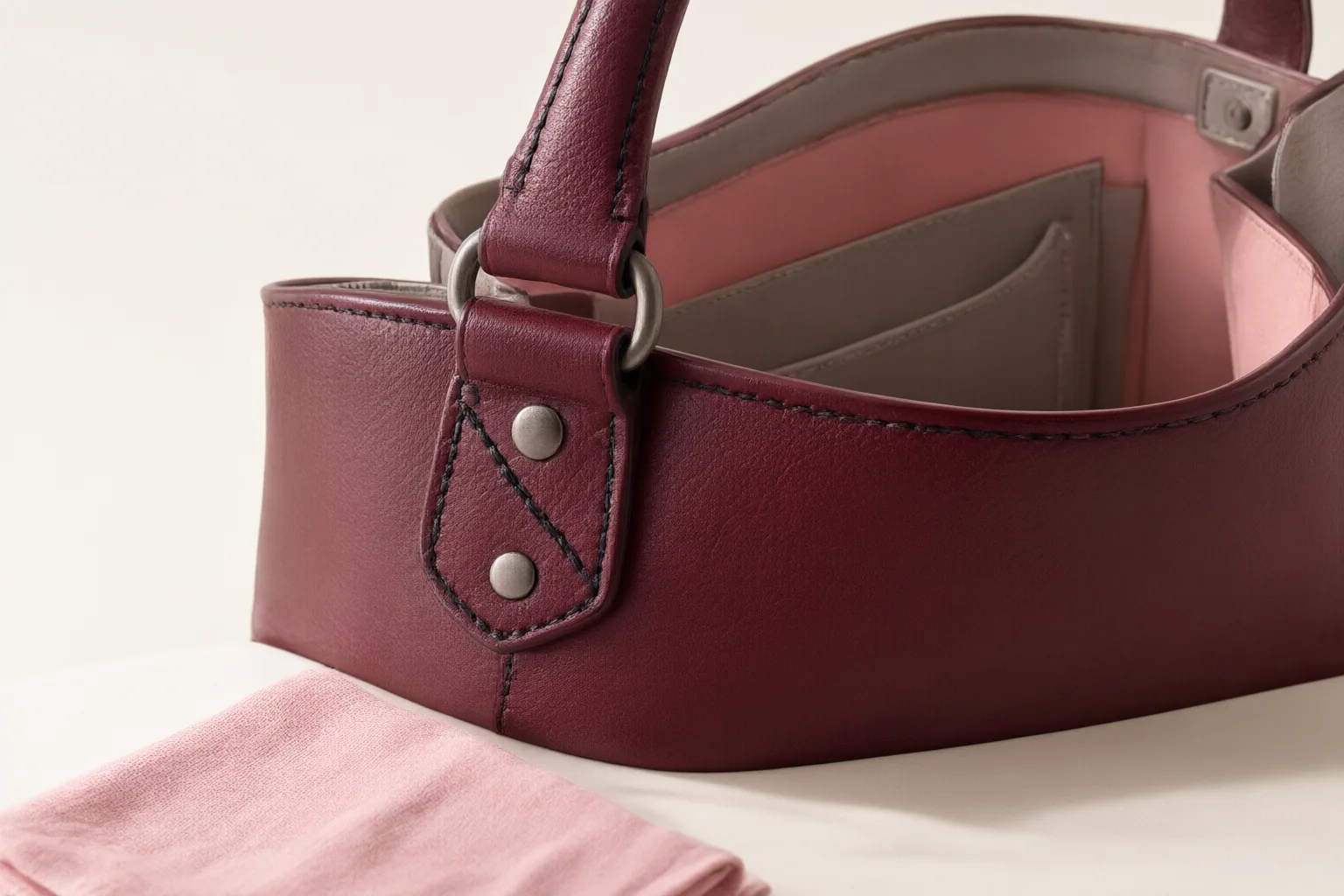
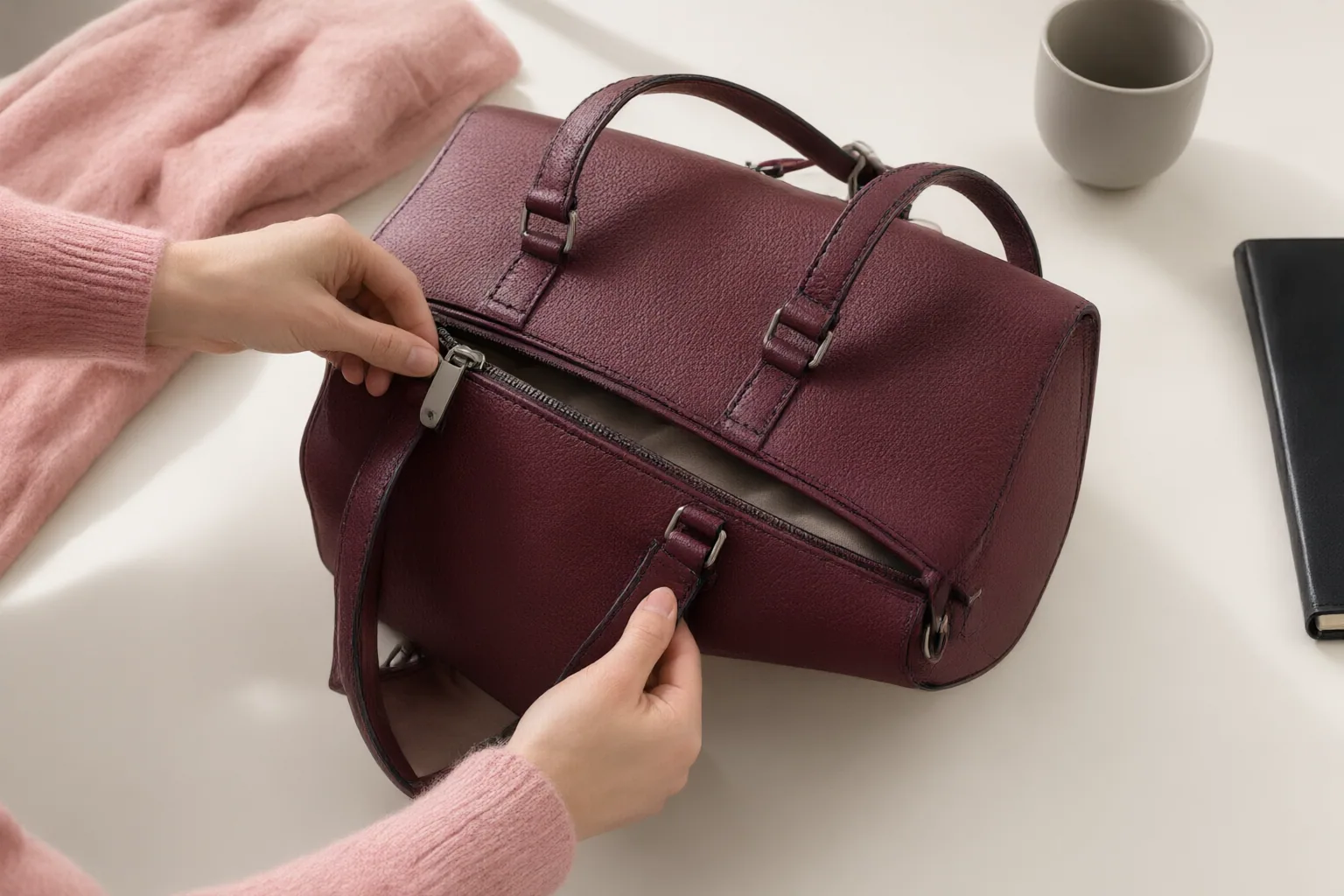
Open and close each zipper repeatedly, and operate every clasp and buckle. The parts should move smoothly, align correctly, and remain firmly installed. Catching, wobbling, twisting, visible gaps, loose screws, or sharp edges are warning signs. Also inspect the rings and junctions connecting hardware to leather, rather than judging hardware by its weight or appearance alone.
Turn to the interior, which product photos may not show clearly. The lining should be neatly fitted and securely attached, without excessive pulling, puckering, bunching, loose sections, exposed unfinished seams, or visible adhesive. Check inside pockets and along their attachment points as well. Confirm that pockets are positioned and sized for the belongings you actually need to organize. An attractive exterior cannot compensate for an interior that interferes with access or leaves frequently used items unsecured.
Check Whether the Bag Works With Your Daily Load
Evaluate the bag against a specific routine, not an imagined light load. Check whether the opening gives easy access, the closure suits how often you reach inside, and the pockets accommodate your usual essentials. Consider strap length, handle drop, balance, and comfort when loaded. A narrow strap, excessive loaded weight, or unsuitable drop can make daily carrying uncomfortable even when the empty bag feels manageable.
For a work bag that will carry a device, compare the device—including its case—with the stated sleeve or compartment measurements. Check for padding, a secure compartment closure, reinforced handles, and a base stable enough for the intended load. If inspecting remotely, request exact measurements and close-up photographs of attachment points, closures, edges, and the interior. These functional checks are more informative than relying on price, branding, or one premium-looking detail.
Conclusion
No single visible feature establishes a leather bag’s overall quality. Review the stitching, reinforcement, hardware, edge treatment, lining, and daily function as connected parts of the purchase decision. Before committing, also ask whether zippers, straps, or hardware can be serviced or replaced, and read the warranty, repair, and return policies.
Use this checklist in person or request detailed photos and measurements online. Then load the bag with your normal essentials, test access and carrying comfort where permitted, and buy only after both its construction and practical fit meet your needs.
Disclosures and limitations
- This article was prepared with AI assistance using the supplied research sources; it does not represent personal testing, purchasing, or product use.
- The supplied sources are primarily commercial sellers or fashion blogs rather than independent durability tests. No product-level recommendations, prices, availability claims, or affiliate offers are included.
Related reading
Sources
- How to Tell If a Leather Bag Is Well Made: 10 Details to Inspect — L'Atelier Global
- BIFL Leather Bag: 7 Quality Checks Before You Buy — Anuent
- 15 Features of a Quality Leather Bag (2026 Buyer Checklist) — Gorgeous & Beautiful – Easy Fashion Tips, Styles and Ideas.
- How to Choose a Leather Bag: The Complete Buyer's Guide — Bags In Leather
- What to Look for When Buying a Leather Bag — Nadin's Leather Studio
- The Five Questions Every Buyer Should Ask Before Buying a Bag — Silver & Riley
- Genuine Leather Tote Bag Quality Checklist for Buyers — Bag Bag Sitter
- Quality Leather Bag: What to Look for Before You Buy — Bags In Leather