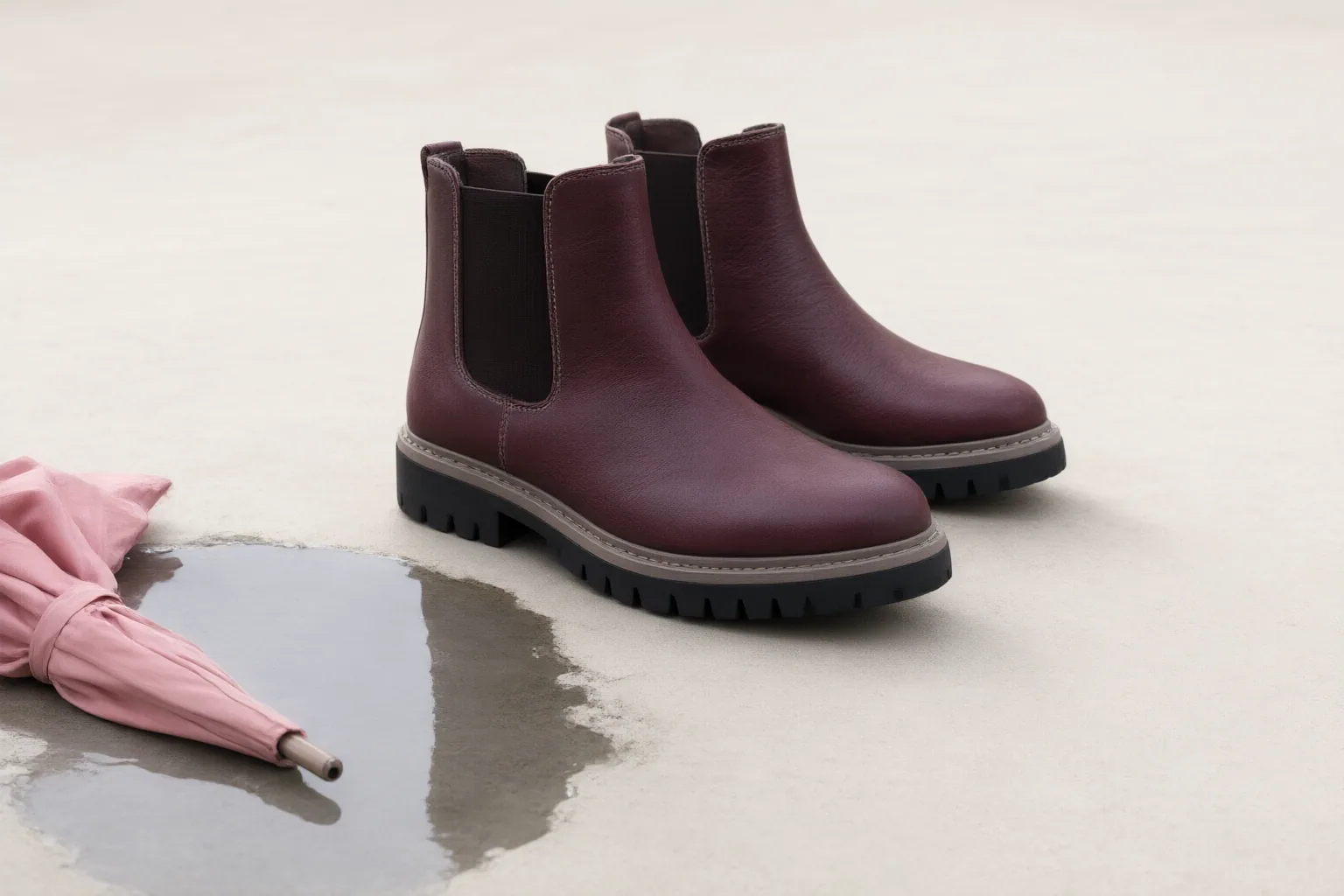
Choose ankle boots around your actual commute: its surfaces, weather, walking time, and usual socks. Prioritize purposeful traction, a secure but comfortable fit, manageable weight and flex, and weather protection suited to your expected exposure—not style or a waterproof label alone.
Match the Boot to Your Route and Weather
Start by mapping the conditions the boots must handle. An urban winter route can include dry or wet pavement, station floors, slush, packed or loose snow, and different forms of ice. These surfaces do not create identical footwear needs, so select protection according to the intended use and likely weather. Check whether a boot is described as waterproof or only as having a water-resistant exterior; the terms should not be treated as interchangeable. Boot height, traction, insulation, fit, and wardrobe compatibility are also relevant, but their importance depends on the route. A wet, mild commute may call for a different balance than prolonged exposure to snow or cold. More protection is not automatically better: waterproof or insulated construction may feel warmer, stiffer, bulkier, or clammy in mild conditions.
Check Traction, Shape, and Flex Before Style Details
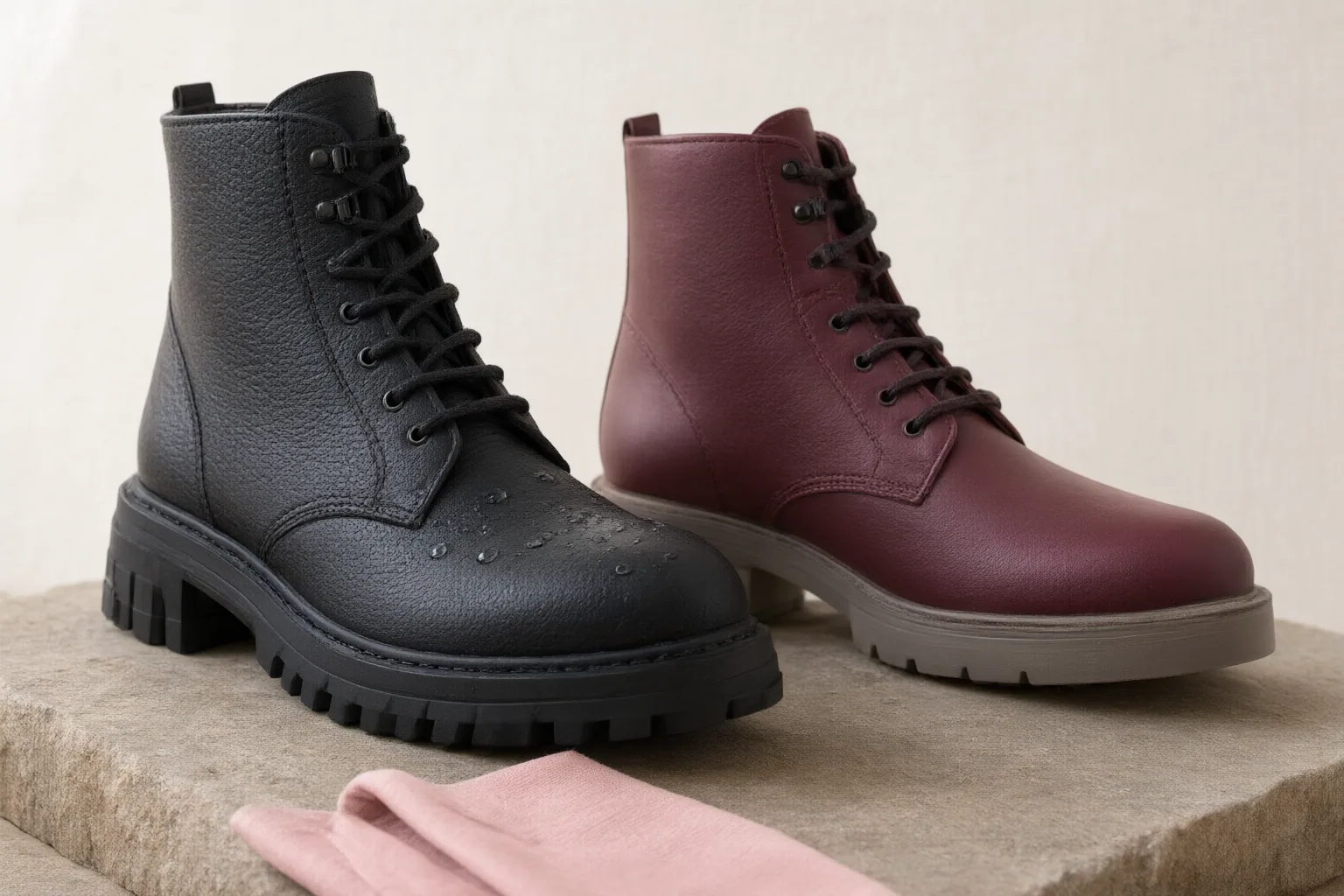
Inspect the outsole for functional, multidirectional lugs rather than assuming decorative tread will grip wet streets. Consider whether the heel feels stable on wet sidewalks, stairs, tile, and painted road markings. Shape matters too: Wirecutter found an ankle-high, wide-mouthed, round-toed rain boot easier to walk and drive in because it did not restrict calf movement, while narrow, tapered toe boxes rubbed testers’ toes. Flex the boot at the point where your toes naturally bend, and notice whether the material fights the movement. This is especially relevant for rubber boots, which do not conform like leather footwear; some tested models eventually cracked at that flex point. Also assess overall weight and ankle mobility. No ordinary tread eliminates slipping risk across wet pavement, snow, and ice, and ice cleats may be appropriate when substantial time on ice is expected.
Test Fit for a Full Commute, Not a Few Steps
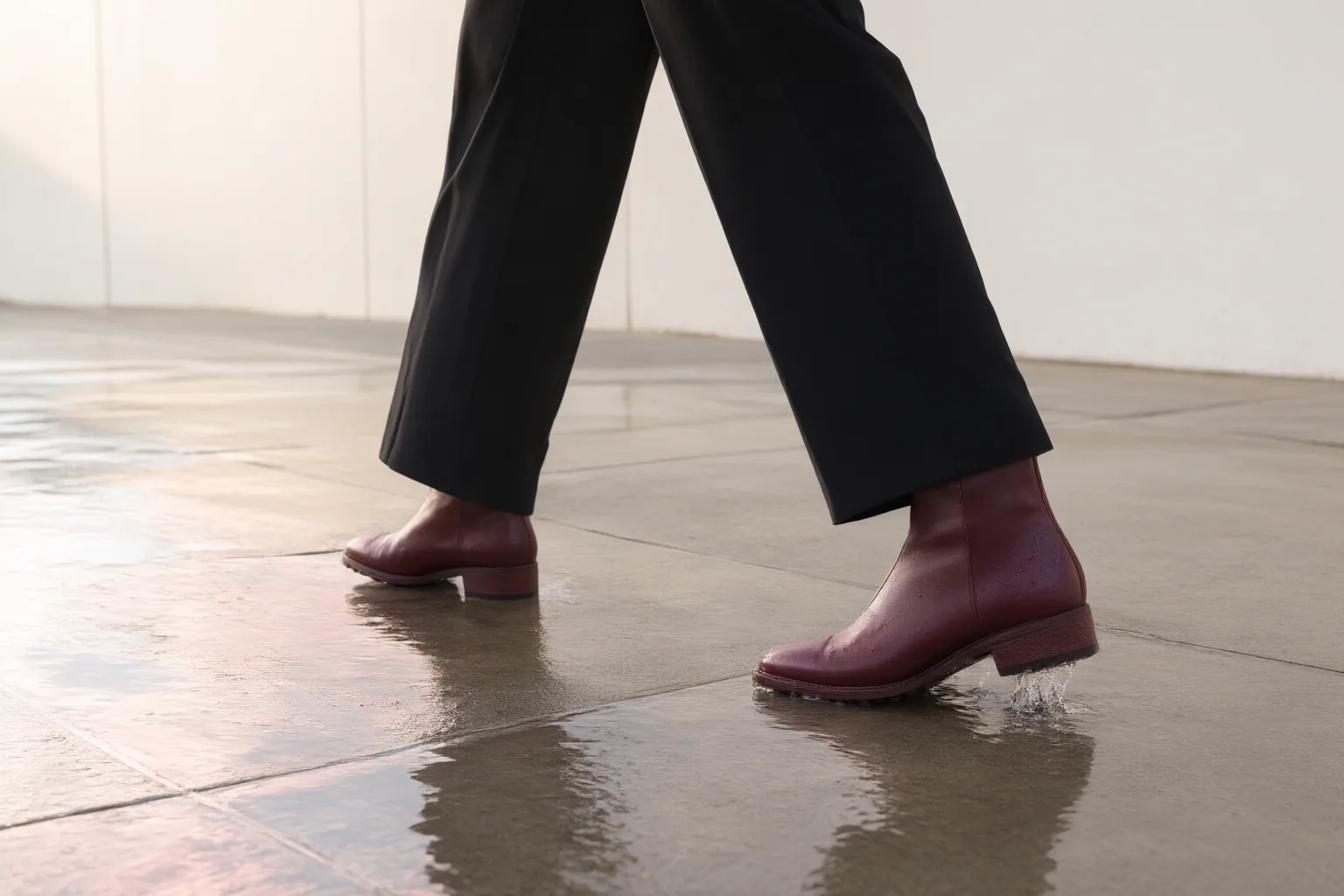
Try boots with the socks you normally wear and allow enough toe room without accepting excessive heel movement. Check shaft circumference, heel security, ankle flex, lining, footbed support, removable-insoles compatibility, and whether the boot permits a natural stride. Walk longer than a few steps if the store’s policy allows: weight, stiffness, limited support, and foot swelling may become more noticeable over time. Watch for toe rubbing, calf chafing, pressure at the shaft, blisters, or an awkward gait. Fit deserves particular attention in rubber rain boots because the material does not readily shape itself to the foot. Finally, weigh protection against comfort. Waterproofing or insulation can be useful in rain and cold, but a warm, bulky, stiff, or clammy boot may be poorly matched to a mild commute or long indoor periods.
Conclusion
The most practical ankle boot balances route-specific traction, secure fit, walking comfort, useful flexibility, and suitable weather protection. Treat each feature as part of a system: deep-looking tread cannot correct a poor fit, and waterproof construction cannot make an ordinary outsole safe on every icy surface. Before deciding, wear your normal commuting socks, walk and turn, flex at the ankle and toe bend, check heel movement and toe space, and notice the boot’s weight. Then compare those results with the wet pavement, stairs, indoor flooring, slush, snow, or ice you actually encounter.
Disclosures and limitations
- This article was prepared with AI assistance using only the supplied research from JapaneseWorkwear.com, Wirecutter, and Zappos; claims were synthesized rather than based on personal testing.
- No specific products, current prices, inventory claims, or affiliate recommendations are included. Any future shopping links should clearly disclose potential affiliate relationships.
Related reading
Sources
- How to Choose Rain Boots for City, Travel, and Outdoor Use — JapaneseWorkwear.com
- The Best Rain Boots for Women and Men — Wirecutter: Reviews for the Real World
- How to Choose the Perfect Winter Boots | Zappos.com — zappos.com
- Women's Originals Ankle Boot — The Original Muck Boot Company
- The Best Winter Boots — Wirecutter: Reviews for the Real World