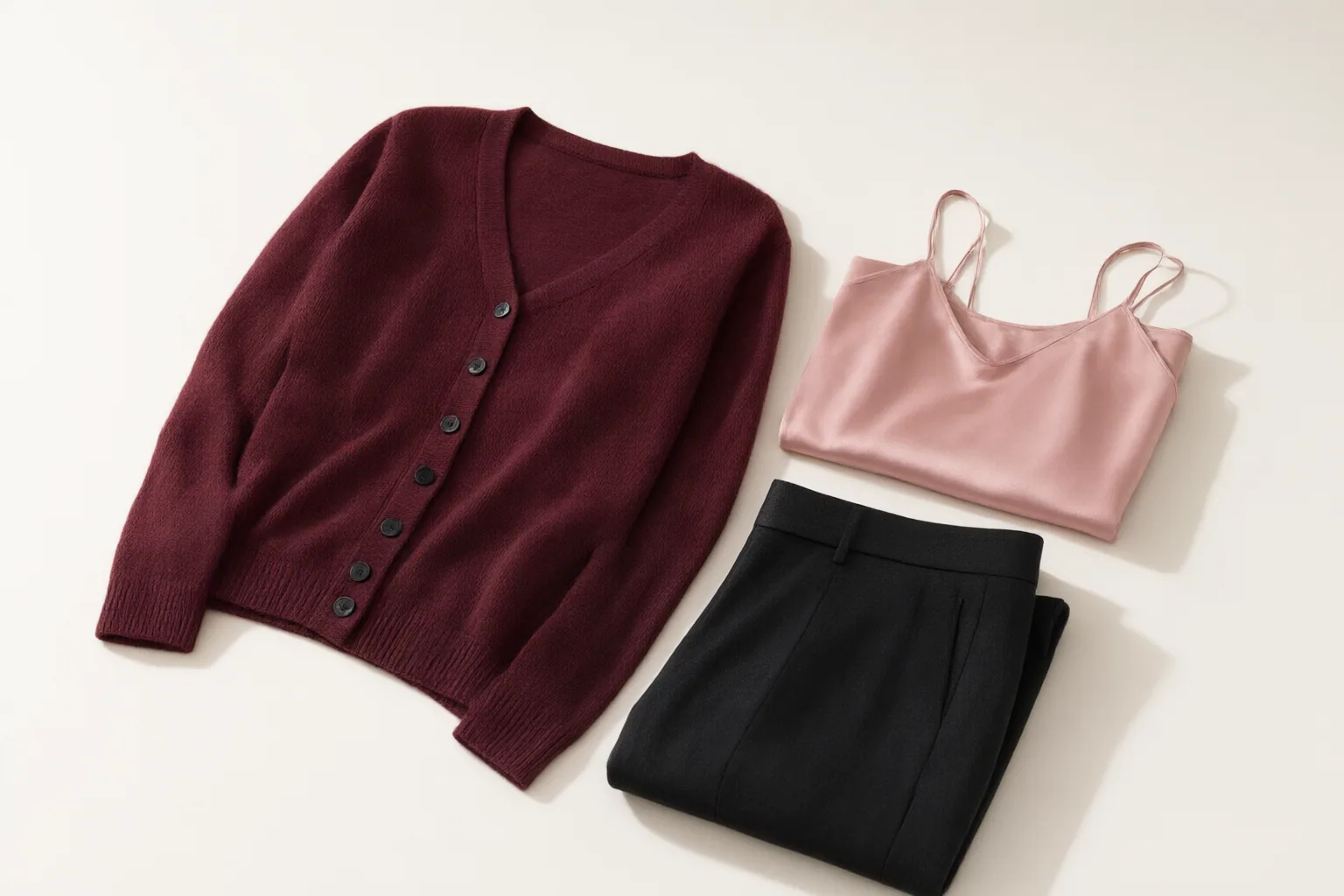
Choose a button-front cardigan by comparing its length, silhouette, knit construction, garment measurements, and care requirements with your most-worn bottoms and intended underlayers. The size label alone cannot show whether a cardigan will feel slim, boxy, cropped, or oversized.
Start with Length and Outfit Proportions
Begin with the bottoms already in your wardrobe. The supplied styling guidance pairs cropped cardigans with high-waisted or wide-leg jeans, where the shorter length can keep the waist visible and balance a fuller leg. Longer open cardigans are generally paired with straight-leg or slim cuts; another option is to add waist definition.
Treat these combinations as starting points, not universal rules. Note where the cardigan hem would meet your torso, then compare that point with the waistband and widest part of your trousers. A hip-length style may be a practical middle ground when you want more coverage than a crop without the visual length of a longline layer.
Evaluate the Silhouette Beyond the Size Label
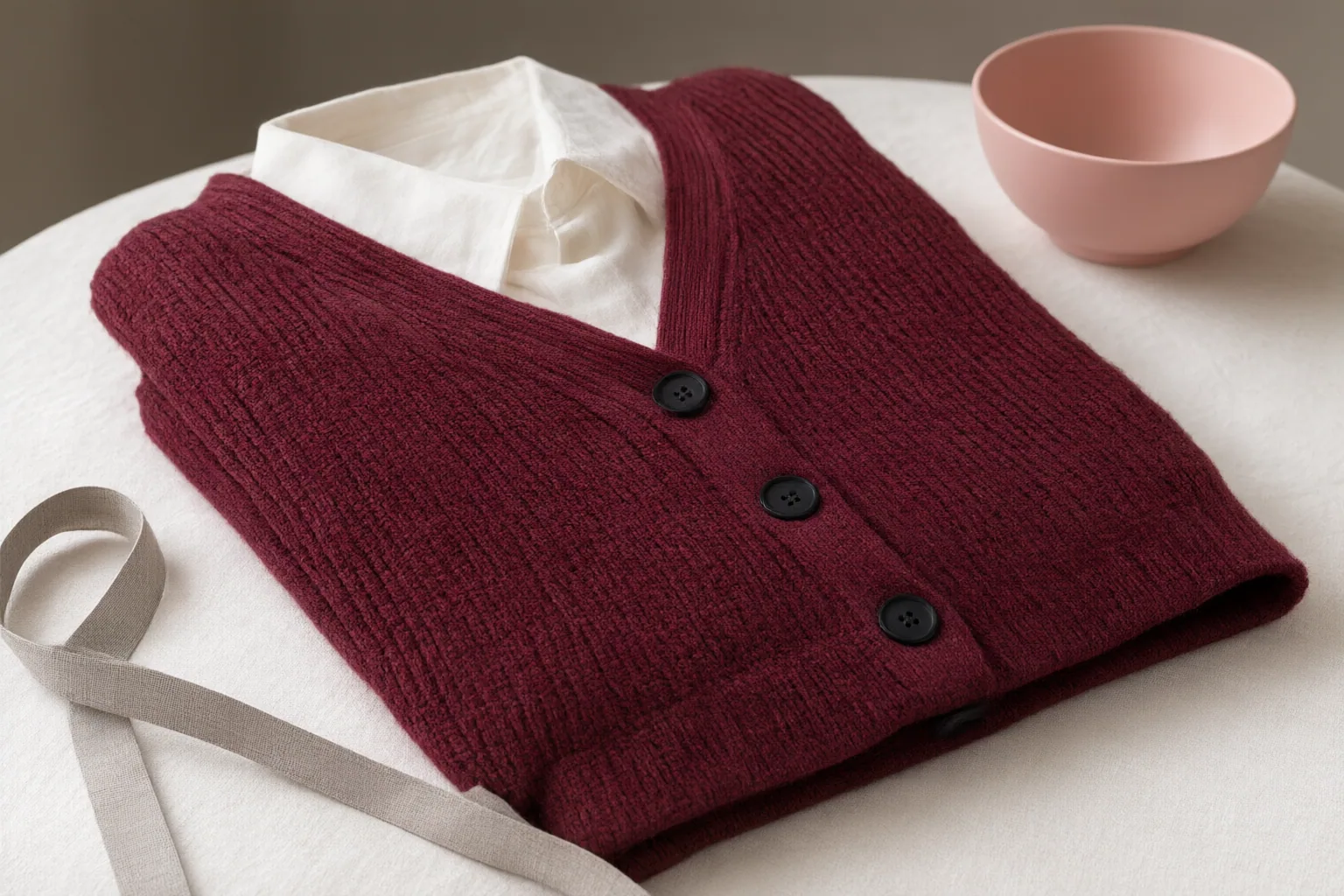
Fit descriptions need context. The sourced examples range from a slim, high-stretch cotton-cashmere cardigan to a boxy, mid-weight fisherman knit and a longer oversized style. Another product page describes its stretch-blend cardigan as true to size, but that merchant statement does not guarantee the same result for every body or preferred fit.
Use garment measurements whenever they are available. For example, the Brinn listing gives a size-S length of 21.5 inches and an 18-inch chest. Compare the listed length and chest width with a cardigan you already like, measured in the same way. Also decide how much room you need for a blouse, T-shirt, or other underlayer. If measurements are absent, recognize that choosing between sizes involves more uncertainty; one tested cropped style in the supplied editorial coverage was deliberately sized up for a more relaxed silhouette.
Match Knit Weight and Construction to Your Layers
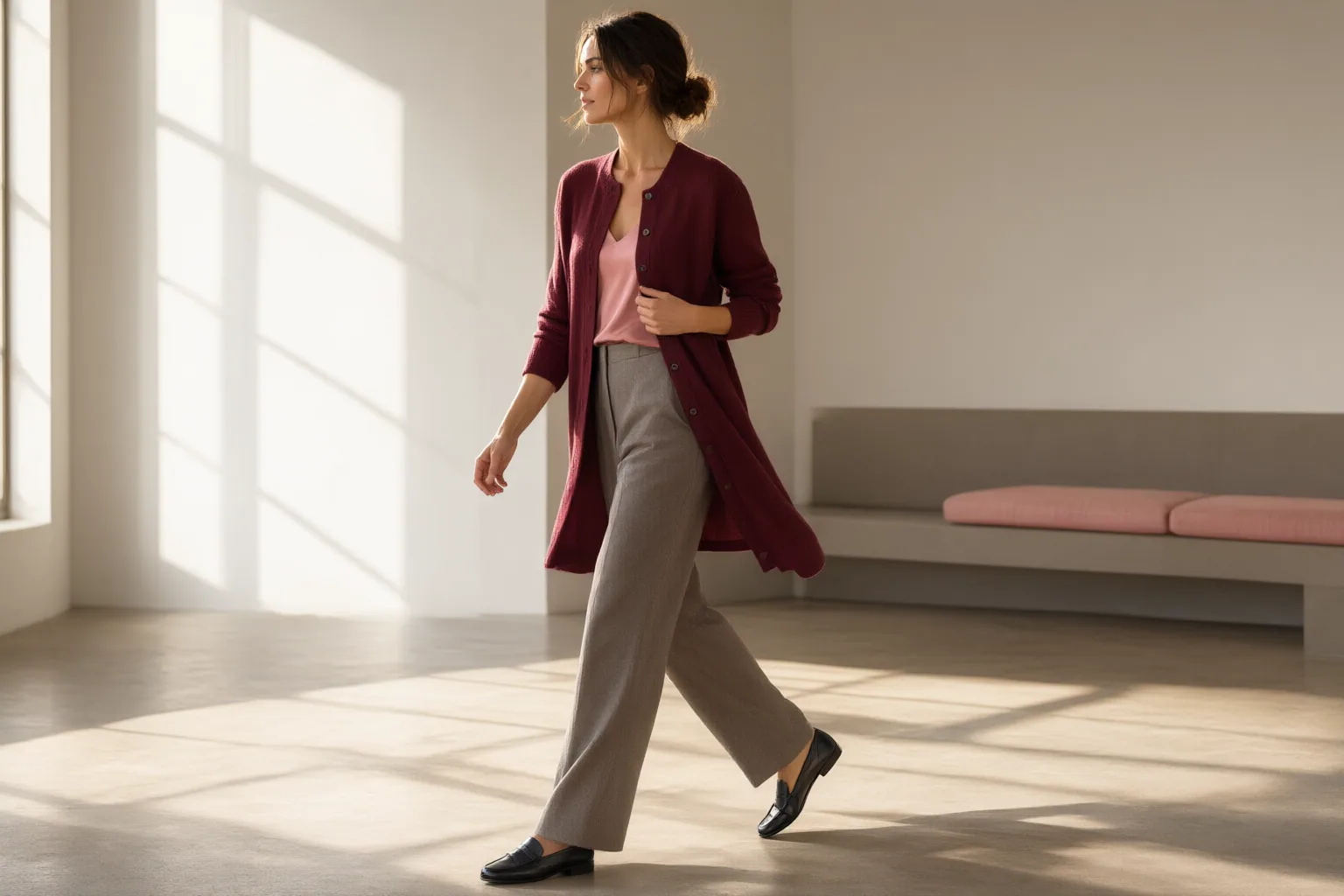
Match construction to the role the cardigan must fill. The editorial sources distinguish lightweight cropped cotton, a mid-weight boxy fisherman knit, and a longer oversized cotton design. Their different weights and proportions indicate different layering profiles, so “100% cotton” alone is not enough information.
For a polished office outfit, the supplied styling guide suggests a fine-knit button-front cardigan over a blouse or shell with tailored trousers. It also presents a light knit as a removable layer for transitional weather. An openwork cropped design offers less continuous coverage than a solid knit, while stretch-blend constructions emphasize flexibility in the fabric specification. Examples include a merchant-listed blend of 50% viscose, 28% recycled nylon, and 22% spandex, and a slim cardigan listed as 95% cotton and 5% cashmere with high stretch.
Check care before buying. Two merchant listings call for gentle or hand washing and flat drying, which may require more effort than your usual laundry routine.
Conclusion
Before purchasing, check six things: where the hem falls; how that length works with your usual trouser rise and leg shape; the actual garment measurements; room for intended underlayers; knit weight and construction; and the washing and drying instructions. Give merchant fit labels less weight than comparable measurements, because slim, boxy, and oversized shapes can fit differently despite familiar sizing.
Now place the listing beside a favorite cardigan and the bottoms you wear most. Compare their measurements, proportions, layering space, and care needs before adding the new cardigan to your cart.
Disclosures and limitations
- This guide was prepared with AI assistance using only the cited editorial and merchant-source material. Product-page fit, composition, and care details are merchant-provided claims.
- No affiliate relationship is established by the supplied research. If the publisher later adds commerce links, they may generate compensation and should be identified as affiliate links.
Related reading
Sources
- How to Style a Cardigan: 10 Outfit Ideas for Women | Charlie B — Charlie B Collection USA
- Carson Button-Front Cardigan — moderncitizen.com
- YESFASHION Women’s Short Hollow Openwork Knit Cardigan Button Front Four Season Light Layering Sweater — target.com
- I Tried All the Under-$150 Office Cardigans — The Strategist
- Brinn Cardigan | Ballet Pink — DL1961
- Style a Cardigan for Women – From Casual Days to Chic Nights — dāl the label