Before buying a garment, read its care label, identify its fiber content, and translate every washing, drying, and storage instruction into a real task. The right purchase is one whose maintenance requirements fit your time, space, facilities, and normal routine.
Start With the Care Label and Fiber Content
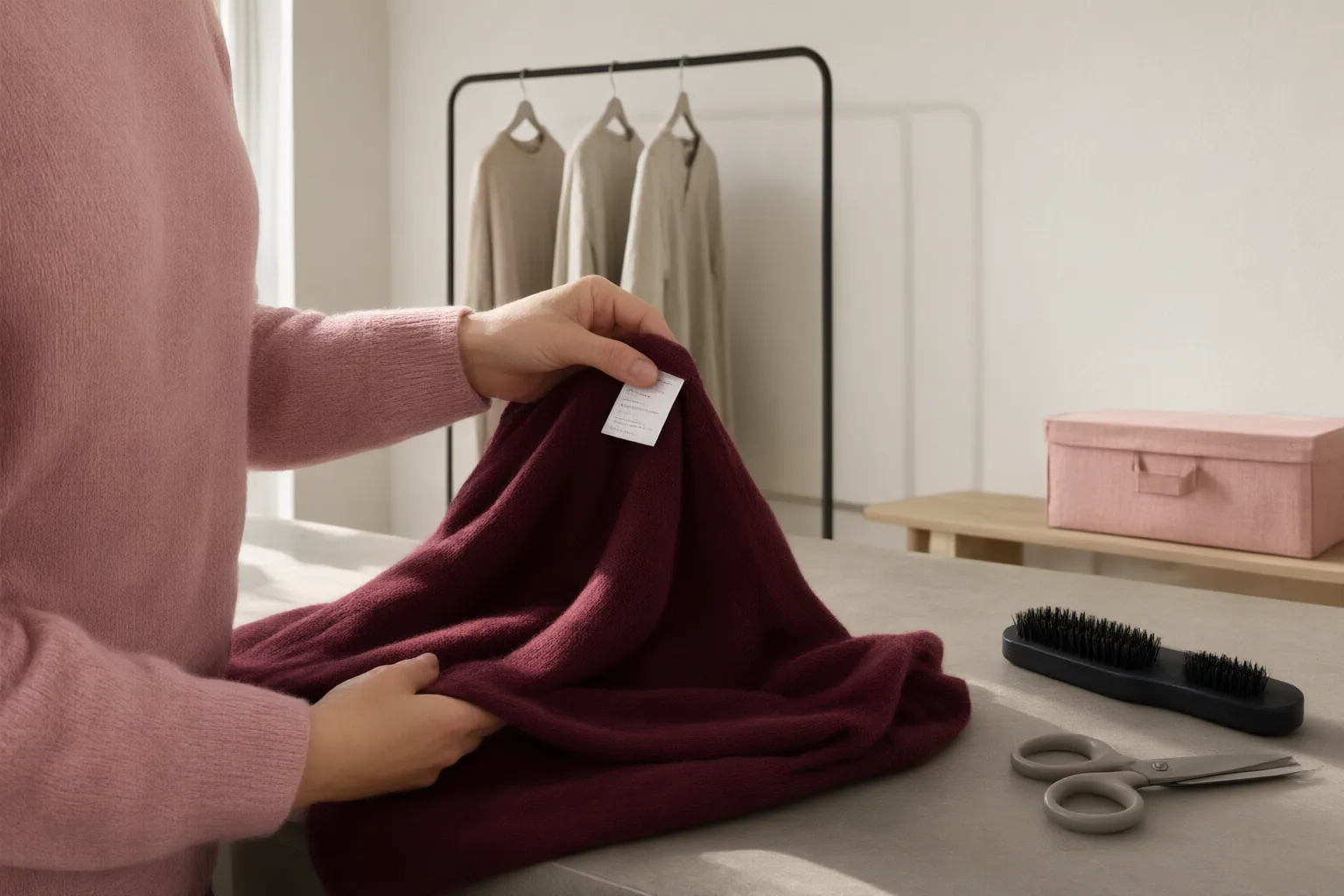
Begin with the garment-specific information rather than assumptions based on appearance. The care label may identify fiber content and provide washing instructions or other maintenance details. Read the complete label and note the material, permitted washing method, drying direction, and any special handling requirement.
Consider the fiber information and instructions together. Materials can require different routines, so one familiar laundry method will not suit every garment. Even if you normally use cold water or a standard dryer cycle, the item’s own directions should govern its care.
Before committing, turn every instruction into a simple checklist: Can it enter your usual wash? Does it require hand-washing or professional cleaning? Can it be tumble-dried? Does it introduce a storage requirement you can realistically meet?
Test the Care Routine Against Your Lifestyle
A care instruction is also a recurring commitment. Ask whether you are genuinely prepared to hand-wash the garment or use a dry cleaner whenever necessary. Consider the time, facilities, and effort involved—not merely whether the task is technically possible once.
Drying space can be a decisive constraint. If an item should not be tumble-dried, confirm that you have a practical place and enough time to air-dry it. This matters particularly when space is limited or quick laundry turnaround is important.
Match the routine to the garment’s expected role. A demanding process may be manageable for an occasionally worn piece but inconvenient for everyday clothing. If you cannot realistically follow the required washing, drying, or storage routine, the garment may be a poor practical purchase regardless of how appealing it looks.
Check Washing, Heat, Drying, and Wear Frequency
Review how much heat the garment can tolerate. Cold-water washing is generally described as gentler on clothing, while heat can contribute to fading, shrinkage, misshaping, or deterioration of fibers. This is not permission to substitute a universal cold cycle for the stated method: always follow the garment’s specific instructions.
For drying, determine whether air-drying is practical in your home. When machine drying is allowed and necessary, the cited guidance favors a low setting and avoiding overdrying. Make sure those limits fit the equipment and attention you can provide.
Also consider how often the garment is likely to need washing. Frequent laundering can accelerate wear. Some outer layers and other lightly worn pieces may sometimes be aired and worn again, provided hygiene needs and garment instructions allow it. This possibility can reduce maintenance, but it should not be used to override cleaning directions or reasonable hygiene.
The goal is compatibility: the correct wash method, safe heat level, workable drying process, and realistic cleaning frequency should all fit your routine.
Conclusion
Make the purchase decision in four steps: read the entire care label, identify the fiber content, list the required washing, drying, and storage tasks, and compare them with your actual routine. Account for hand-washing, dry-cleaning access, drying space, available time, and any limits on heat.
Appropriate laundering and drying can help extend a garment’s useful life, but only when the required routine is one you can consistently follow. Declining a high-maintenance item that does not fit your circumstances is a practical wardrobe decision. Before your next clothing purchase, read or photograph the care label and confirm that you can follow every instruction.
Disclosures and limitations
- This article was prepared with AI assistance using only the supplied research package and its cited sources; no products were personally tested or used.
- No products or affiliate links are recommended here. If commerce links are added later, any affiliate relationship should be disclosed clearly.
Related reading
Sources
- Clothing Care and Repair | Oberlin College and Conservatory — www.oberlin.edu
- Prolong the Life of Your Clothes With These Simple Tips – Mind, Body and Soul — wp.nyu.edu
- Clothing Care | Mindful Wardrobe Checklist — sites.udel.edu
- Personal Banking, Credit Cards, Loans & Investing | U.S. Bank — usbank.com
- List of states and territories of the United States – Wikipedia — en.m.wikipedia.org